Discover our engaging Alphabet Tracing Worksheets designed for English beginners aged 6-8! These fun and interactive printables help young learners master the alphabet while enhancing their fine motor skills. Ideal for children starting their English language journey, our worksheets feature colorful designs and simple tracing exercises, making learning enjoyable. Each worksheet provides ample practice with both uppercase and lowercase letters, fostering confidence in letter recognition and writing. Whether used at home or in the classroom, our Alphabet Tracing Worksheets are a fantastic resource to support early literacy development. Start your child's learning adventure today!

Check out this FREE Trial Lesson on English for Beginners for age 6-8!

P

Favorites
With answer key
Interactive
  • 6-8
  • Alphabet tracing
  • English for Beginners
Letter R worksheets
Letter R worksheets

Letter R Tracing Page

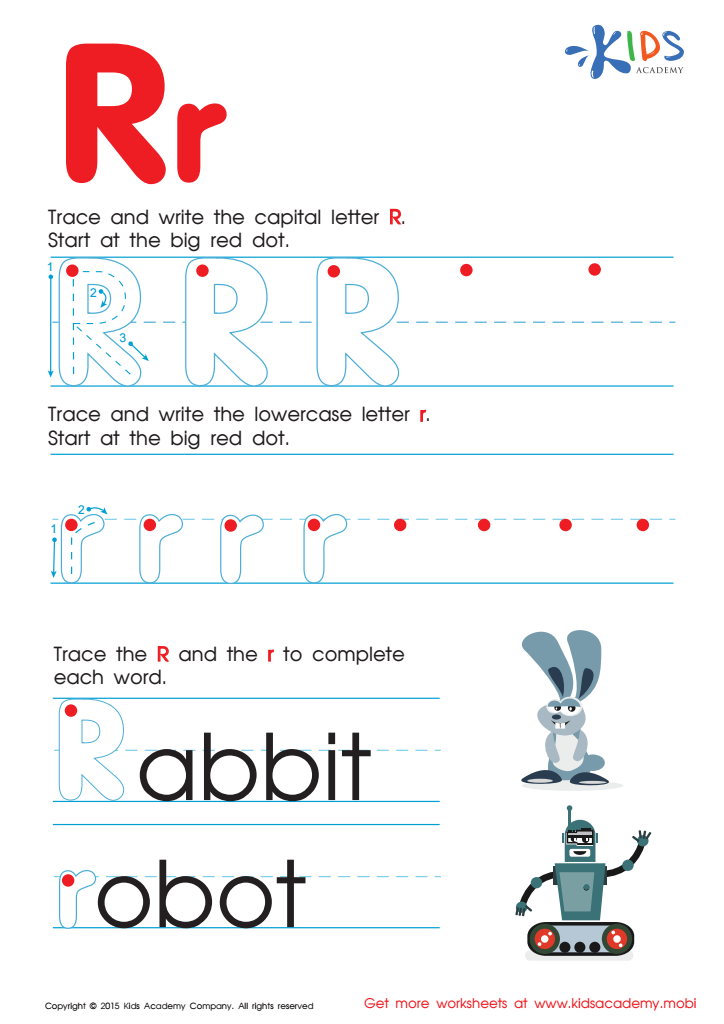
Trace and write the letter "R" with this worksheet for kindergarten. Start with the uppercase, then move on to the lowercase. Write the letters several times for practice. Then help complete the words for the rabbit and robot, spelling carefully. More ABC worksheets can be found at Kids Academy.
Letter R Tracing Page
Worksheet
Letter P worksheets
Letter P worksheets

Letter P Tracing Page

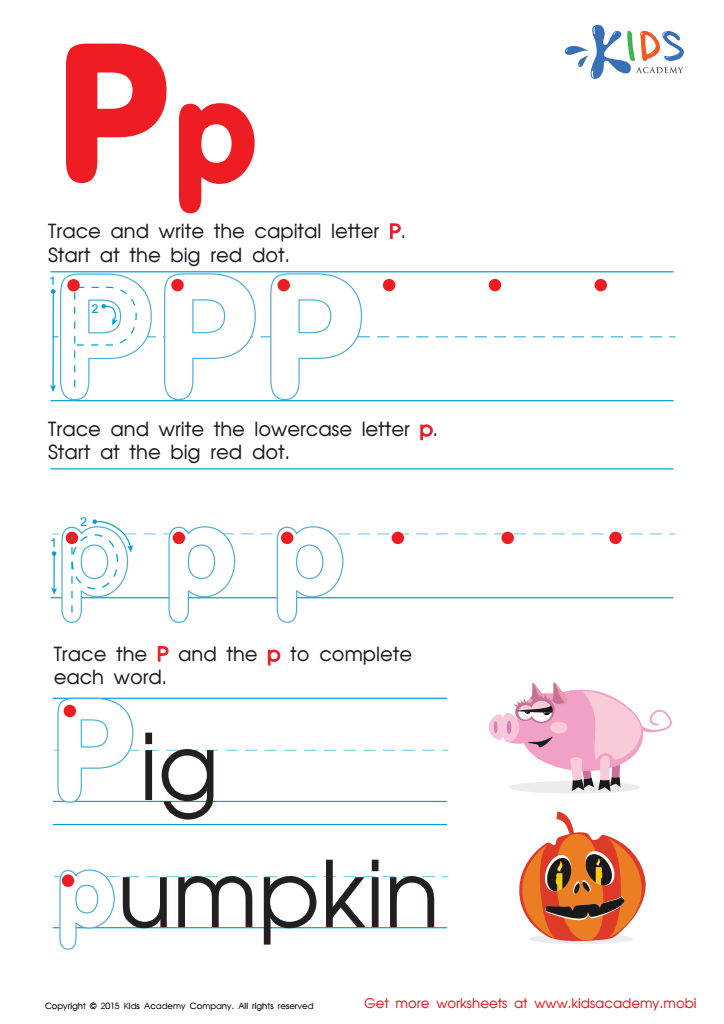
Trace the lines from the red dot to learn to write "P"! Then practice this letter with the fun activities: complete the word "Pig" and "Pumpkin". Check out Kids Academy to get more free ABC worksheets.
Letter P Tracing Page
Worksheet
Letter Q worksheets
Letter Q worksheets

Letter Q Tracing Page

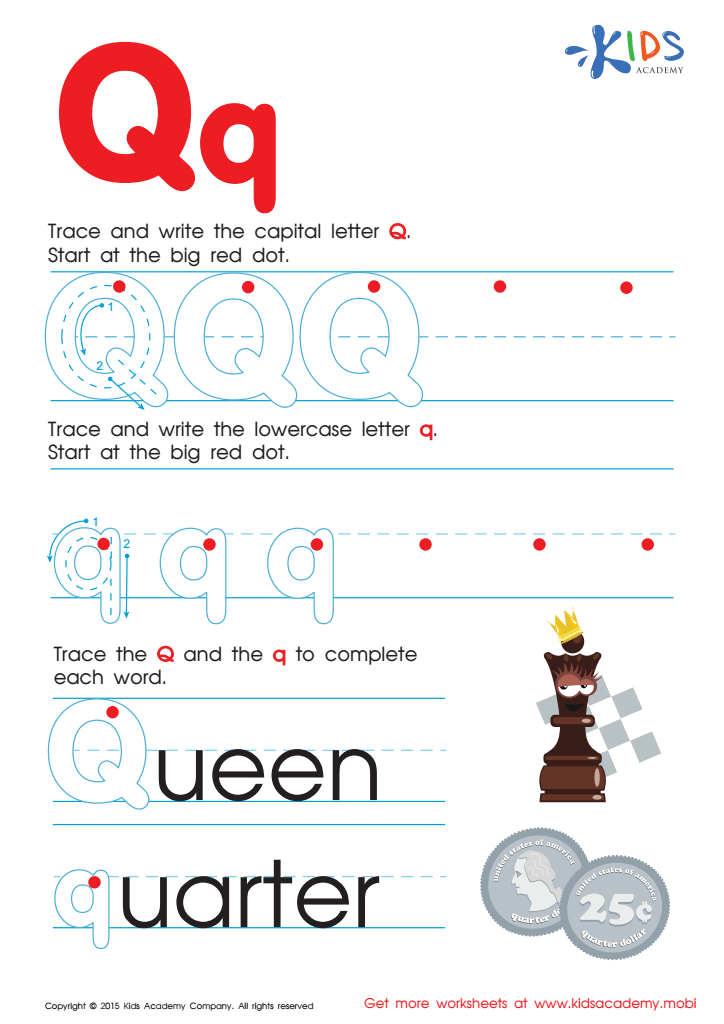
Learn the letter "Q"! Trace and write it a few times in upper and lowercase. Then help the Queen by writing her initial letter. Finally, write "quarters" and practice with more alphabet worksheets.
Letter Q Tracing Page
Worksheet
Letter H worksheets
Letter H worksheets

Letter H Tracing Page

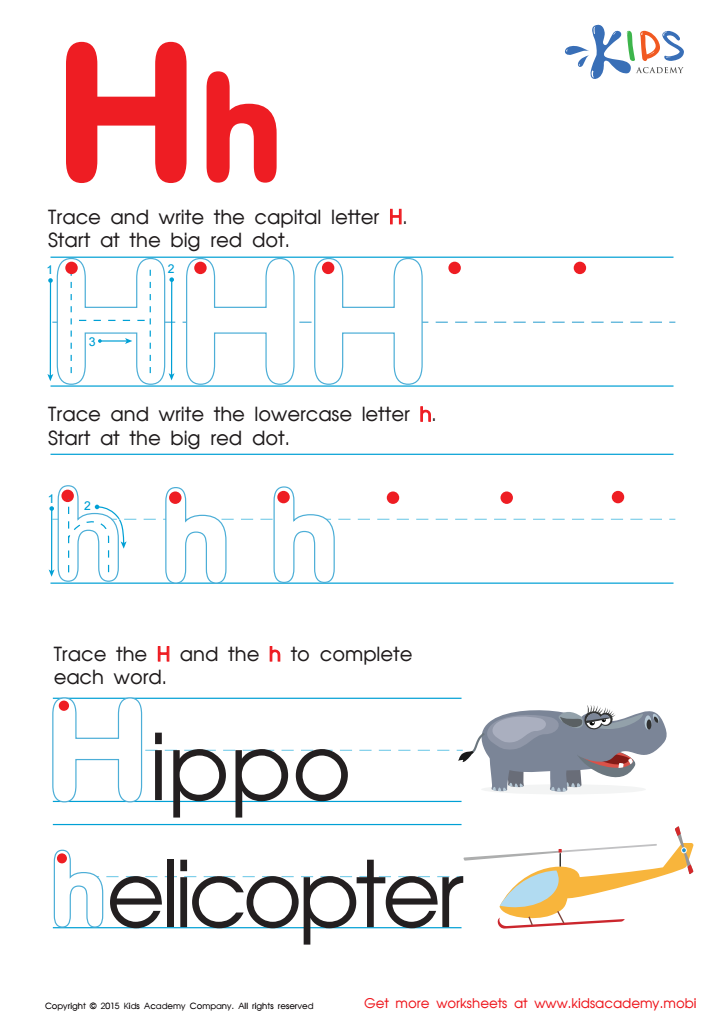
Trace the letter "H", then practice writing its lowercase form. Finally, choose your favorite form of transport and ride away! Get our worksheets to make learning fun and easy.
Letter H Tracing Page
Worksheet
Letter A Tracing Worksheet Preview

Letter A Tracing Worksheet

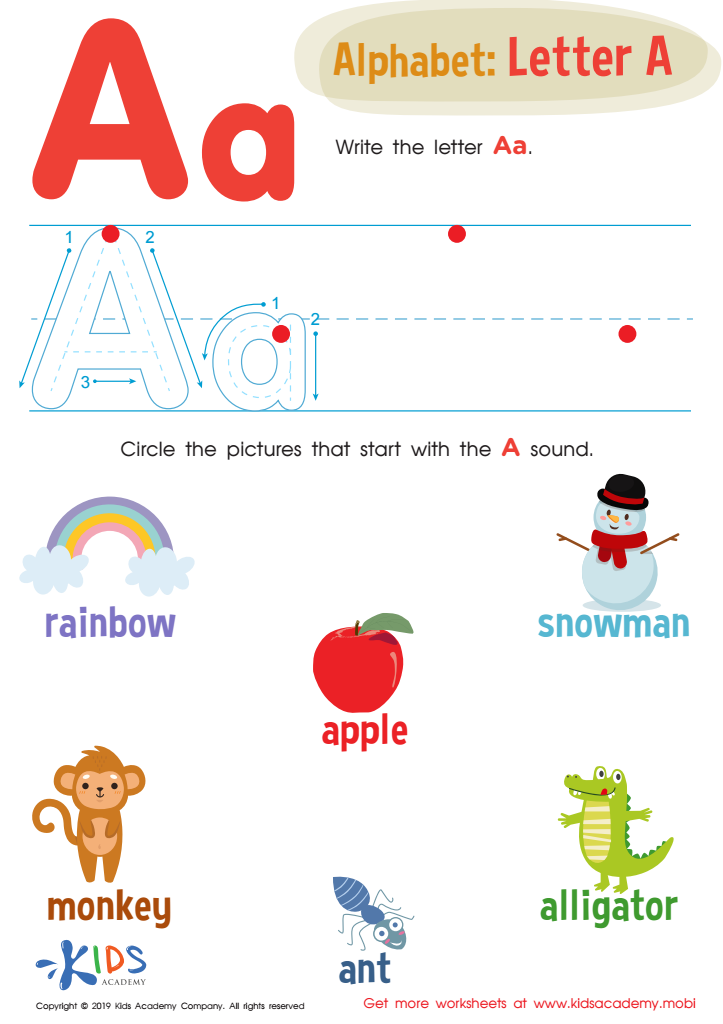
Learning the letter "A" is essential. This worksheet helps kids trace and write it, boosting their skill. They also circle pictures with the "A" sound, with both the word and picture provided. This helps them learn how to pronounce words like "apple" correctly.
Letter A Tracing Worksheet
Worksheet
Letter T worksheets
Letter T worksheets

Letter T Tracing Page

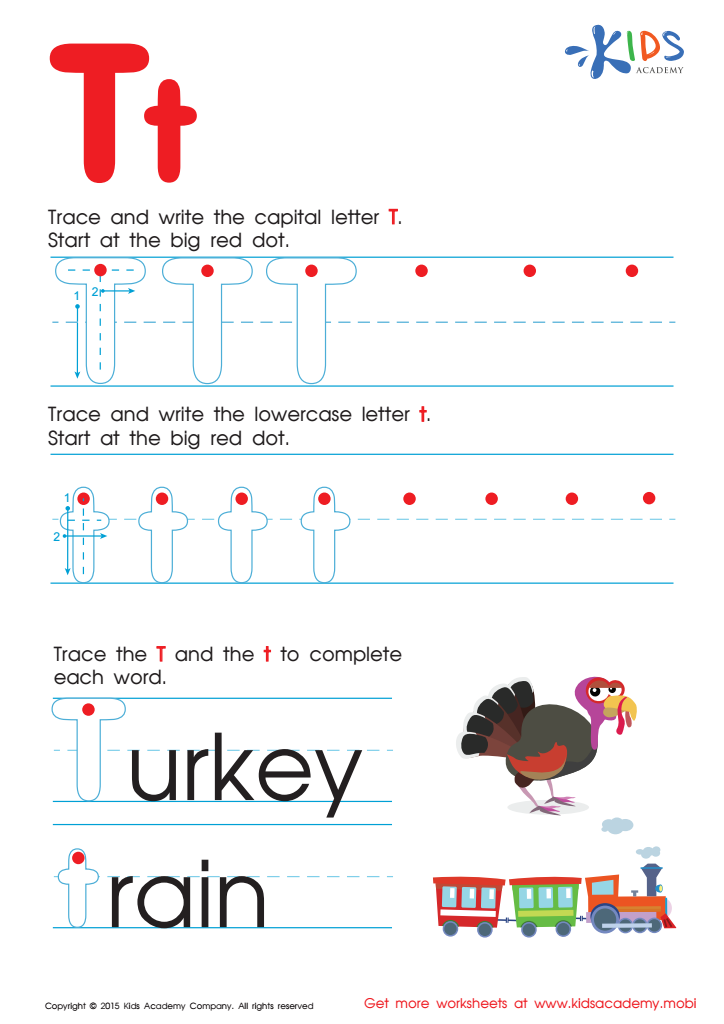
Trace letters, complete words, draw pictures and see your kids having fun! Kids Academy offers alphabet tracing worksheets to learn to write letters. Start with the big red dot, trace the letter, then write it. Practice uppercase and lowercase. Have fun completing words with a Turkey or a rain-train and draw pictures. Get more printable worksheets to make learning enjoyable.
Letter T Tracing Page
Worksheet
Letter X Coloring Page

Letter X Coloring Sheet

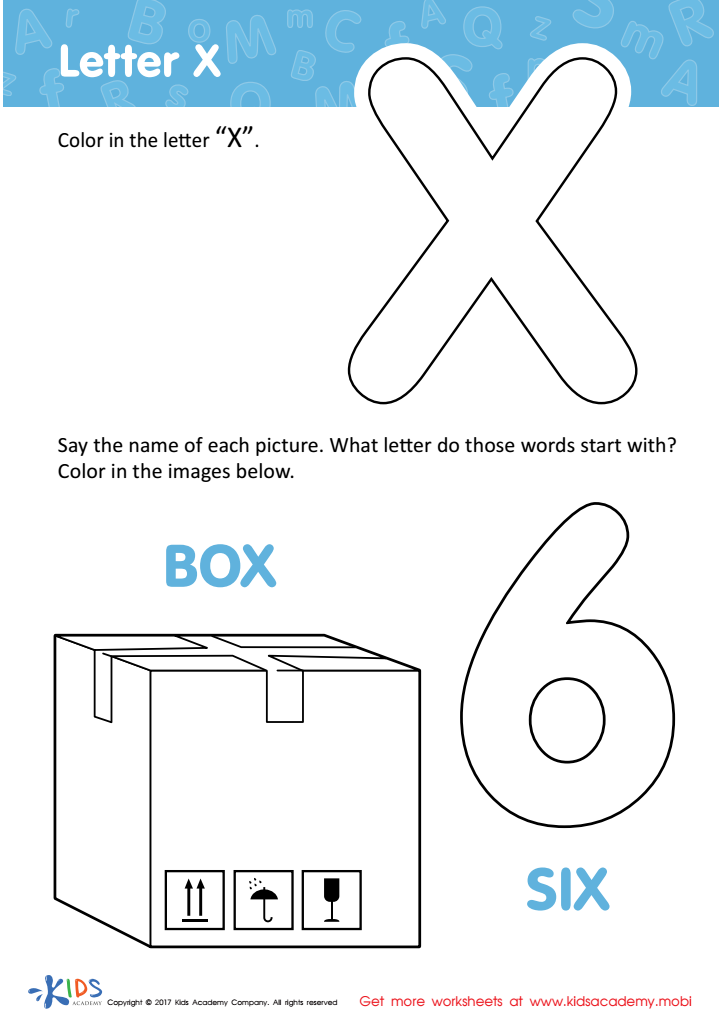
Help your little learner find the letter "X" with this coloring page. Go over the sounds it makes and how to find it at the end of words. Unlock the mystery of this unique letter - it's one of the most challenging but rewarding letters to learn!
Download (PDF)
Assign to My Students
Letter X Coloring Sheet
Worksheet
letter d worksheets
letter d worksheets

Letter D Tracing Page

Trace and write capital and lowercase letter "D" with our free printable alphabet worksheet! Be careful not to mix up "b" and "d" - just look at the ducks and write their first letter. The dolphin wants to join the fun too - do you like dolphins? Get more fun worksheets and activities at Kids Academy!
Letter D Tracing Page
Worksheet


Alphabet tracing is a fundamental activity for children aged 6-8, as it plays a crucial role in their early literacy development. For parents and teachers, recognizing the importance of this exercise is essential in fostering a love for reading and writing.

First, alphabet tracing helps children develop fine motor skills, which are necessary for writing and other daily tasks. As they trace letters, they gain better control over their hand movements, leading to improved handwriting. This foundational skill paves the way for academic success and boosts confidence in their writing abilities.

Second, tracing reinforces letter recognition and phonetic awareness. By engaging in these activities, children learn the shapes and sounds of letters, which are key components of reading readiness. This helps them decode words and build vocabulary, setting a strong foundation for future literacy skills.

Moreover, alphabet tracing nurtures patience and focus, essential traits in learning. As they practice, children learn the value of persistence and accuracy.

In summary, parents and teachers should prioritize alphabet tracing for beginners as it not only develops vital motor skills but also supports literacy, encouraging a lifelong love for learning. By investing in these early skills, adults are setting their children on a path toward academic achievement.