Analog Clock Understanding Worksheets for Ages 6-8
3 filtered results
-
From - To
Help your child master time with our engaging Analog Clock Understanding Worksheets for ages 6-8! These worksheets provide interactive activities that make learning to read an analog clock fun and exciting. Through a variety of exercises, including identifying hour and minute hands, telling time to the nearest hour and half-hour, and solving time-related puzzles, your child will build essential skills. Designed to support classroom learning and promote independence, these resources cater to different learning styles. Download our worksheets today and transform the way your child experiences the concept of time, laying a strong foundation for lifelong learning!
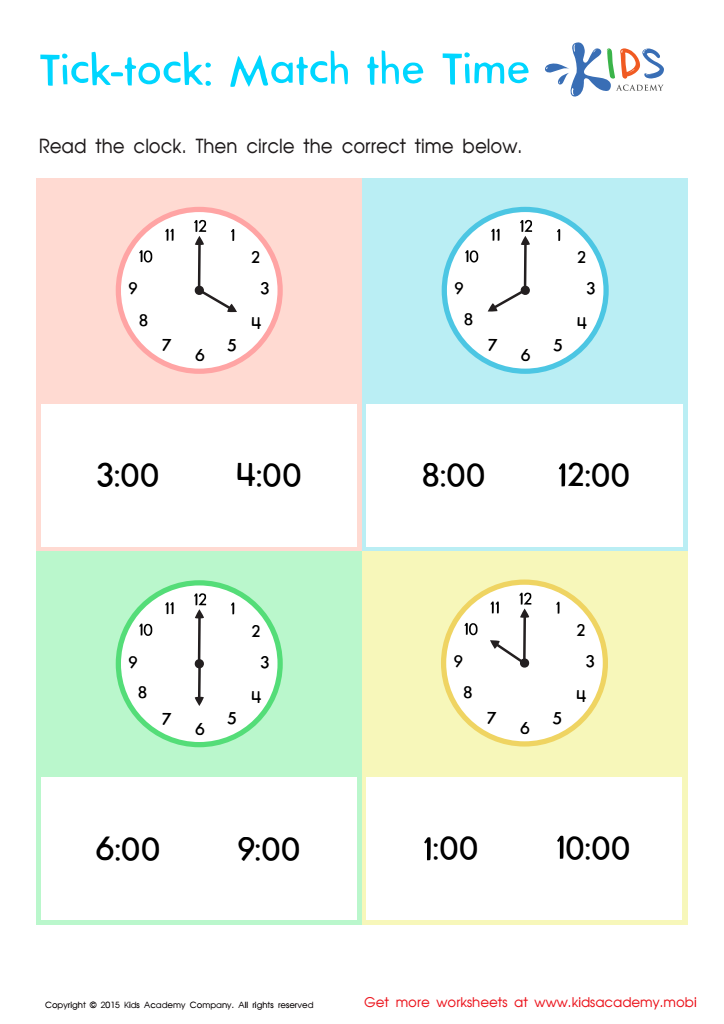
Telling The Time Worksheet: Part 4
 Assign to My Students
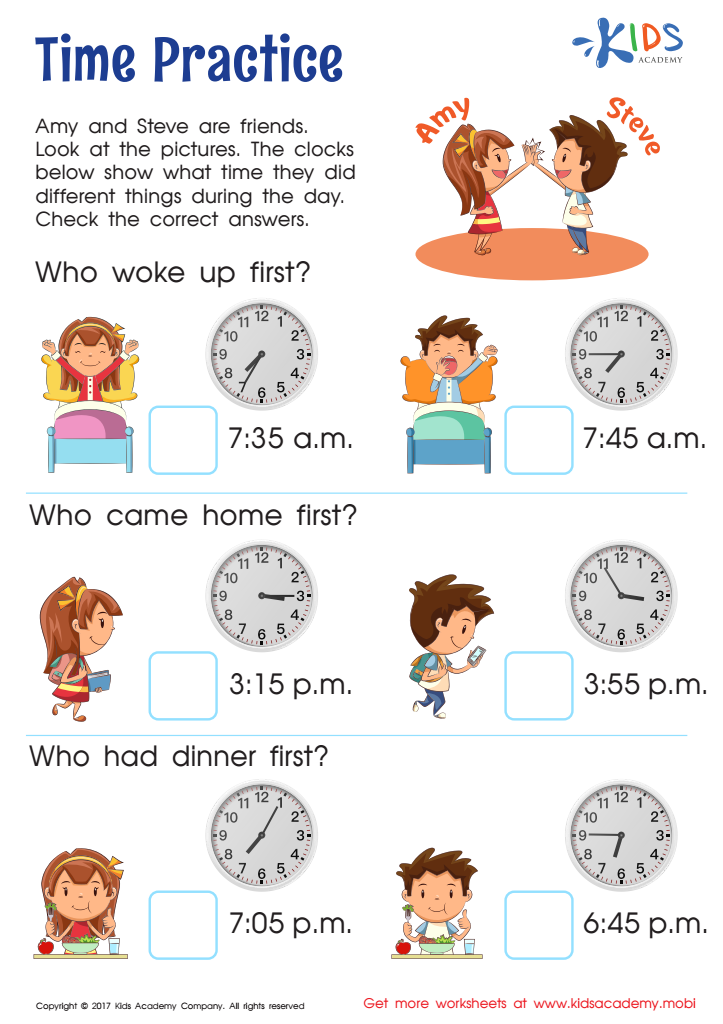
Time Practice Worksheet
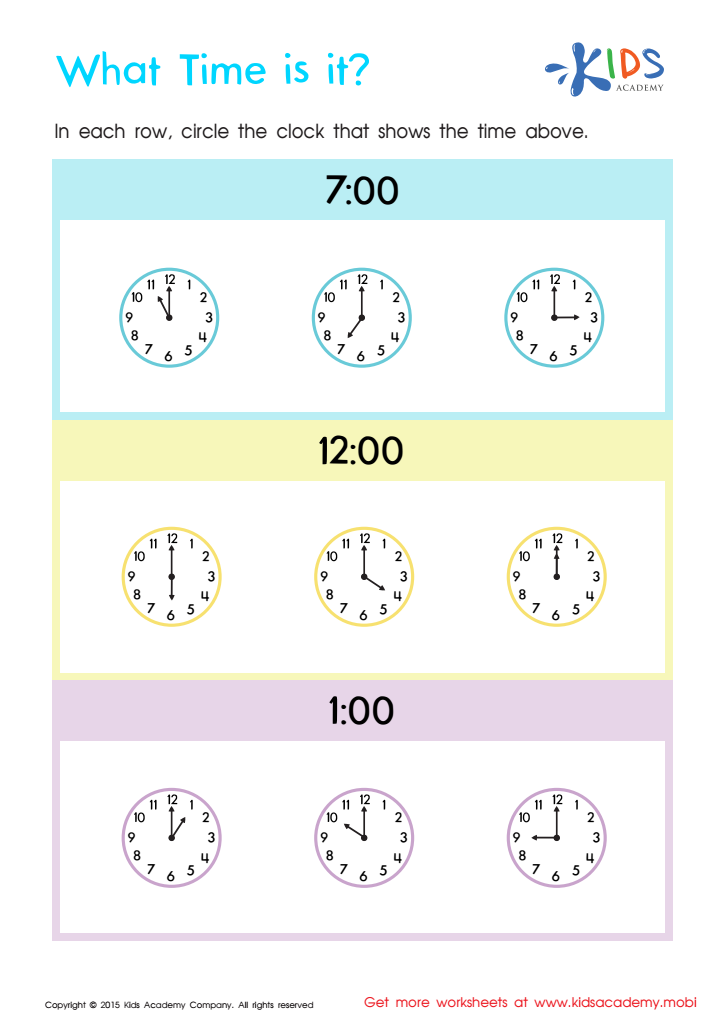
Telling The Time Worksheet: Part 3








Understanding analog clocks is crucial for children aged 6-8, as it lays the foundation for time management and develops essential math skills. In a world where digital clocks dominate, analog clock comprehension fosters critical thinking, spatial awareness, and a deeper understanding of time as a continuous phenomenon rather than a series of discrete units.
Learning to read analog clocks enhances number sense as children engage with concepts of fractions (dividing the clock face into hours and minutes) and the connections between these divisions. It also aids in developing fine motor skills, as young learners manipulate the hands of a clock in classroom activities.
Additionally, knowing how to tell time on an analog clock is a practical life skill that promotes independence. Kids learn to manage their daily routines, from school hours to bedtime, fostering a sense of responsibility. Incorporating clock reading into play and daily activities creates opportunities for bonding and practical learning experiences between parents and children.
In essence, an understanding of analog clocks not only equips children with fundamental math and time-management skills but also enriches their social interactions and fosters a sense of accomplishment as they navigate their daily lives.








