Astronomy basics Worksheets for Ages 6-8
3 filtered results
-
From - To
Discover the wonders of the universe with our engaging Astronomy Basics Worksheets designed for ages 6-8! These fun, interactive activities introduce young learners to essential astronomy concepts, including planets, stars, the moon, and the solar system. With vibrant visuals and age-appropriate questions, children will develop critical thinking and literacy skills while igniting their curiosity about space. Our printable worksheets provide a perfect blend of education and enjoyment, making learning about astronomy both accessible and exciting. Whether at home or in the classroom, these resources will inspire a love for discovery and a deeper understanding of the cosmos. Explore the stars today!
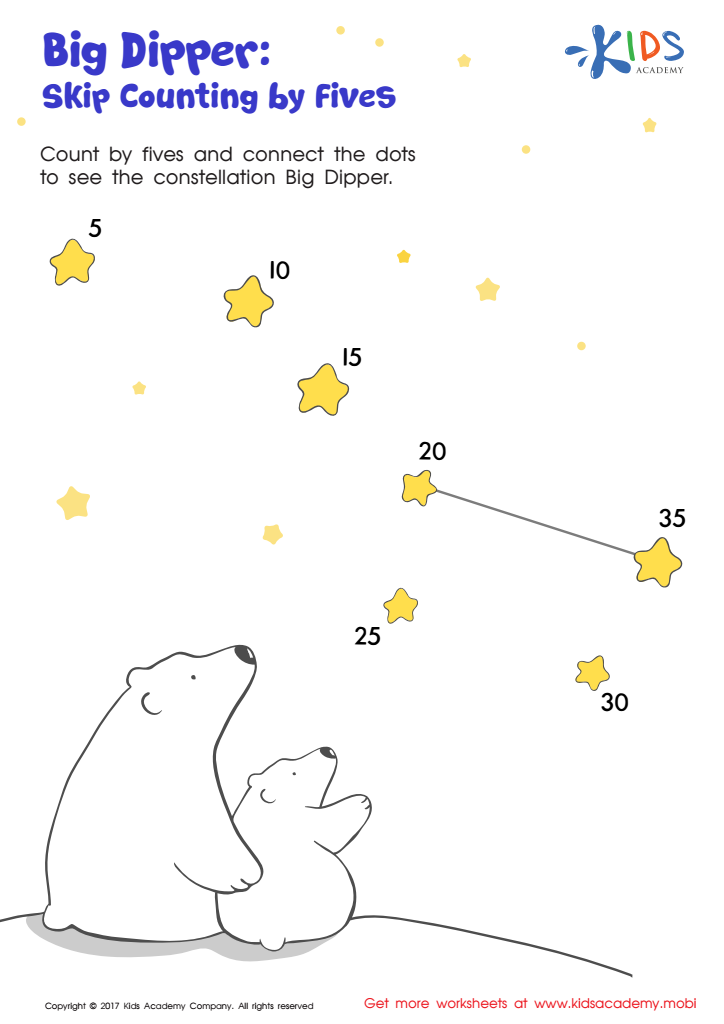
 Assign to My Students
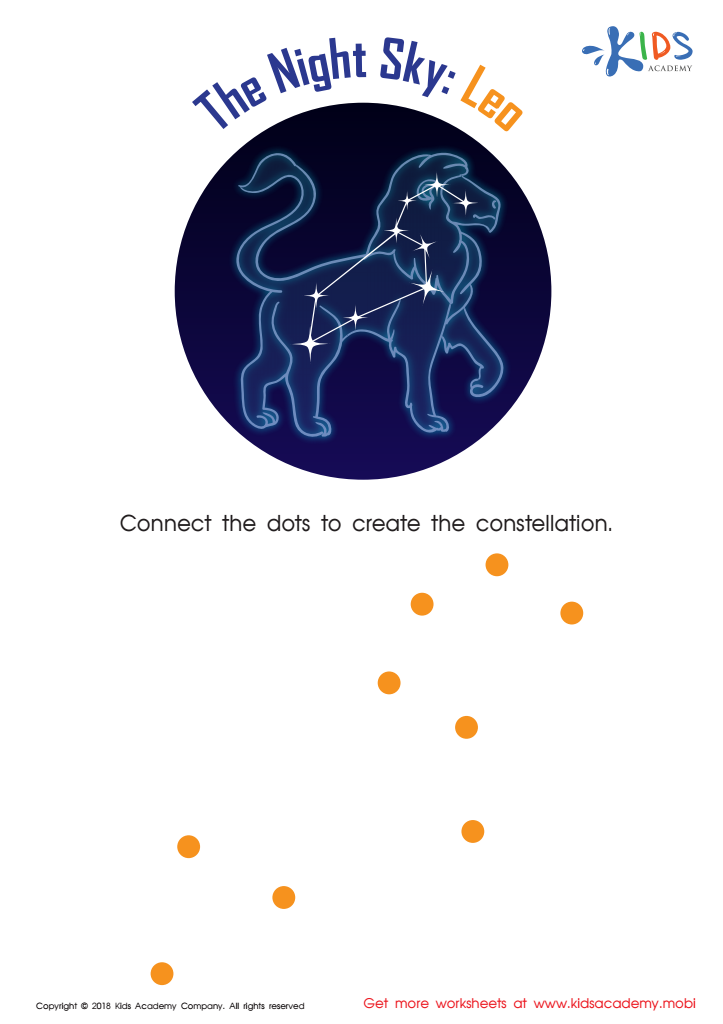
The Night Sky: Leo Worksheet
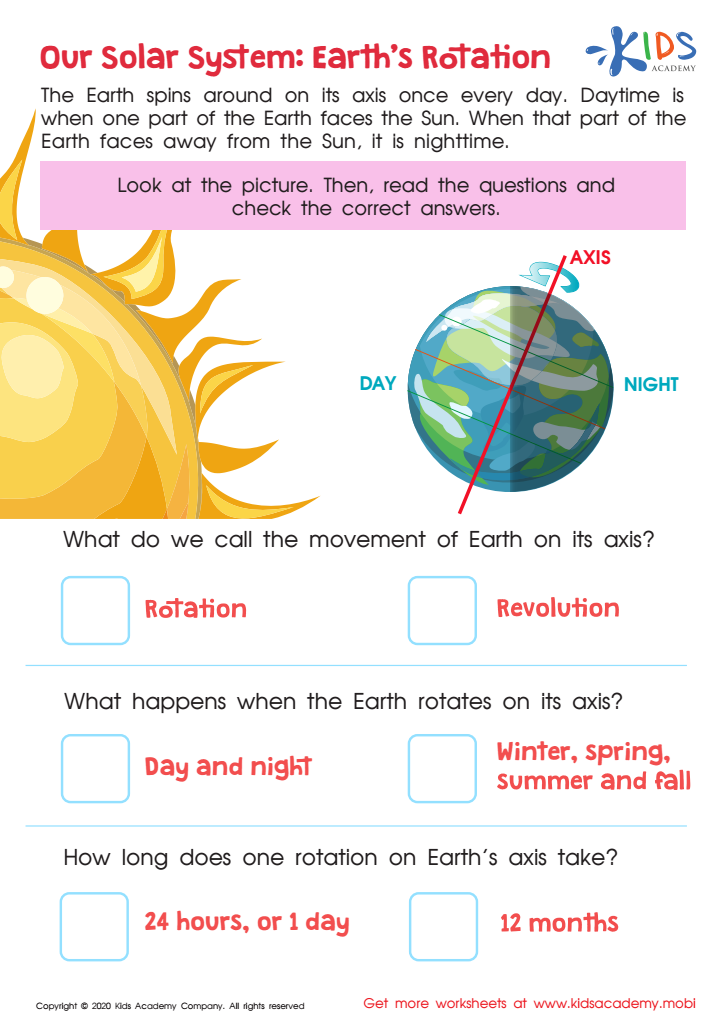
Our Solar System: Earth's Rotation Printable







Parents and teachers should care about astronomy basics for children aged 6-8 because this foundational knowledge fosters curiosity, critical thinking, and a sense of wonder about the universe. At this age, children are naturally inquisitive, making it an ideal time to introduce them to the basics of space, stars, planets, and our solar system. By learning about astronomy, kids can develop an understanding of scientific concepts, like gravity and light, in an engaging way.
Astronomy also encourages them to ask questions, think analytically, and make connections to the world around them. Exposure to space themes can help them appreciate the scale of the universe, fostering a sense of humility and interconnectedness with nature and the great mysteries beyond Earth.
Additionally, engaging with astronomy can enhance language skills as children learn new vocabulary and share discoveries. It can serve as a springboard for interdisciplinary learning, linking science to history, geography, and even art through the exploration of celestial objects. Ultimately, instilling a passion for astronomy not only broadens their horizons, but also cultivates future generations of thinkers, innovators, and responsible stewards of our planet and beyond.








