Basic measurement concepts Worksheets for Ages 6-8
6 filtered results
-
From - To
Discover our engaging Basic Measurement Concepts Worksheets designed for children ages 6-8! These worksheets provide a fun and interactive way for young learners to grasp essential measurement skills, including length, weight, volume, and time. Tailored to align with early learning standards, our resources feature colorful visuals and relatable examples that capture children’s interests. Each worksheet encourages hands-on practice, promoting critical thinking and problem-solving abilities. Ideal for use at home or in the classroom, these worksheets are perfect for reinforcing key concepts while making learning enjoyable. Help your child build a strong foundation in measurement with our comprehensive collection!
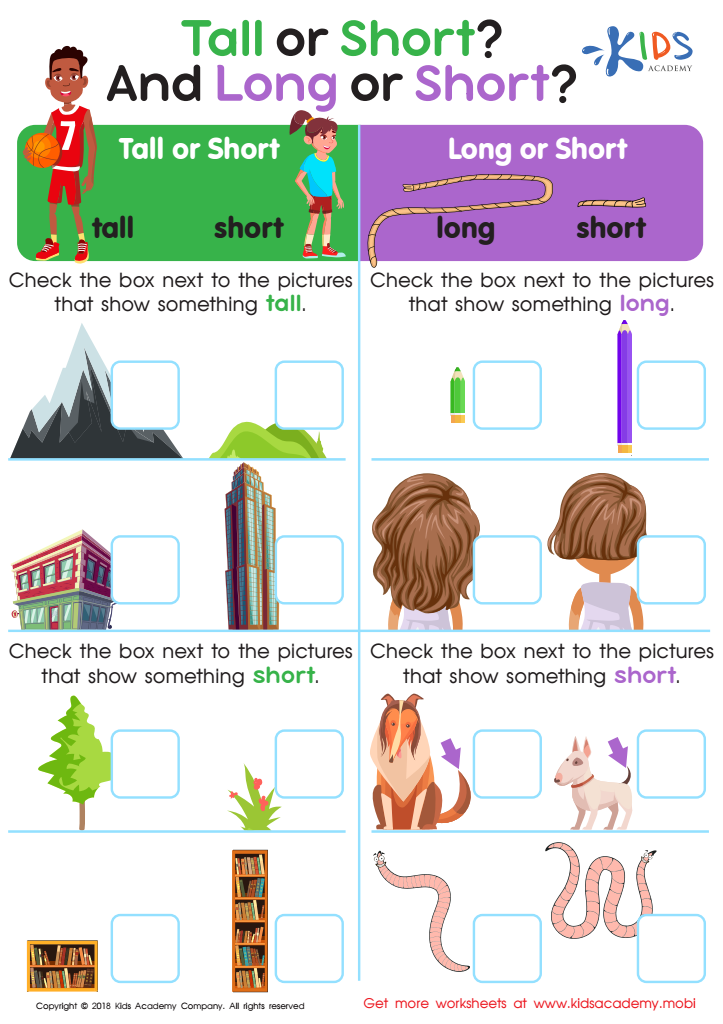
Tall or Short and Long or Short? Worksheet
 Assign to My Students
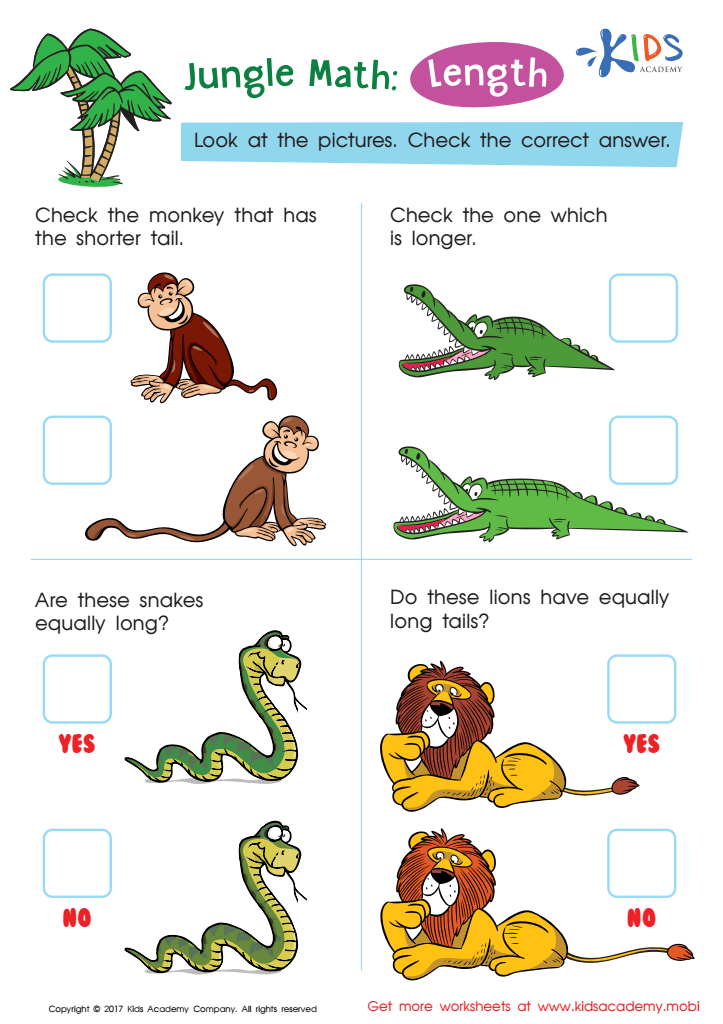
Which One Is Longer - Length Worksheet
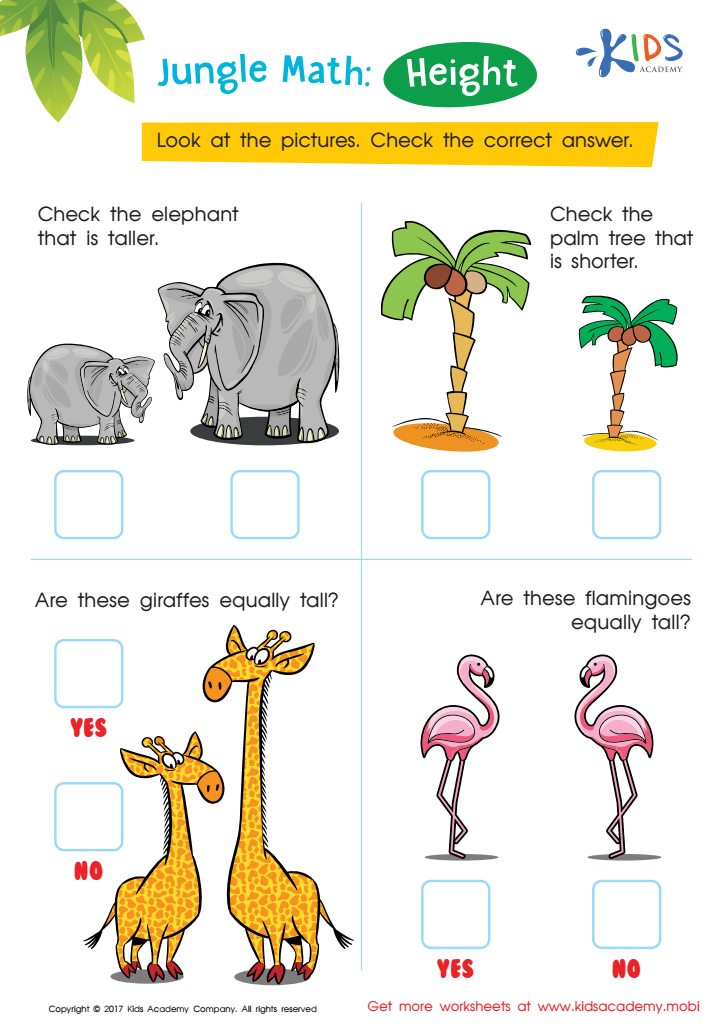
Which Is Taller Worksheet
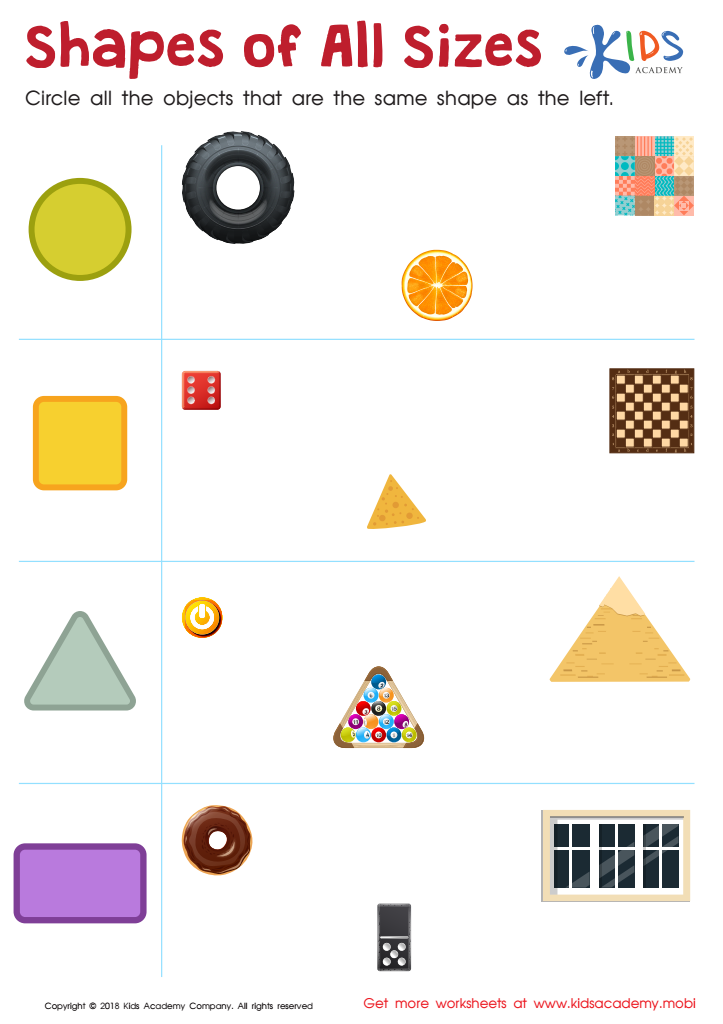
Shapes of All Sizes Worksheet
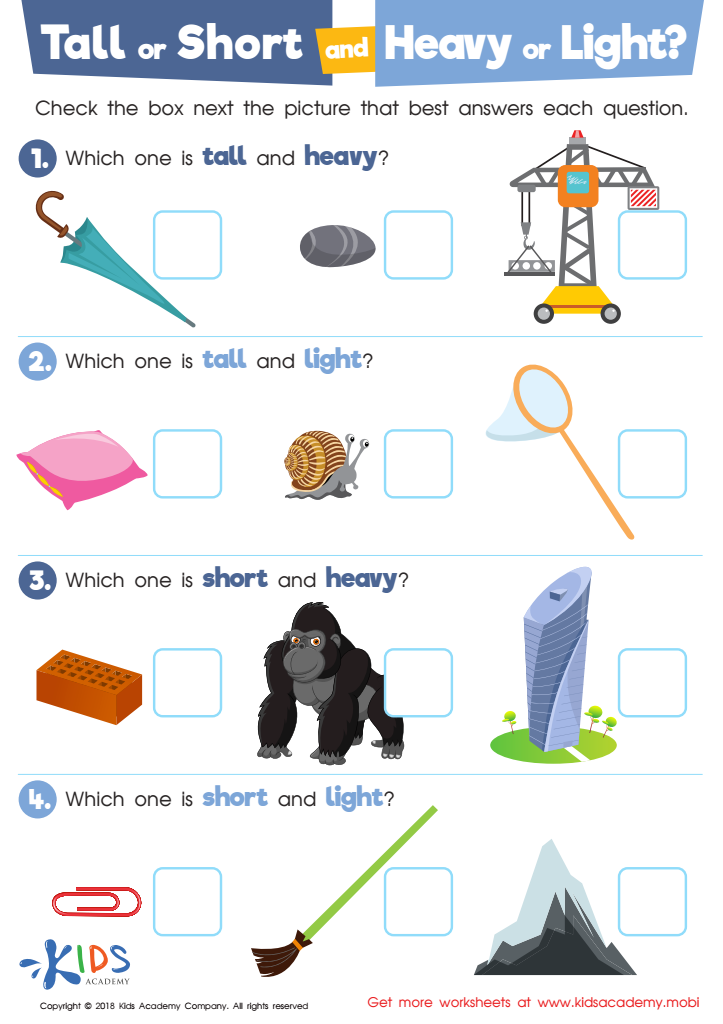
Tall or Short and Heavy or Light? Worksheet
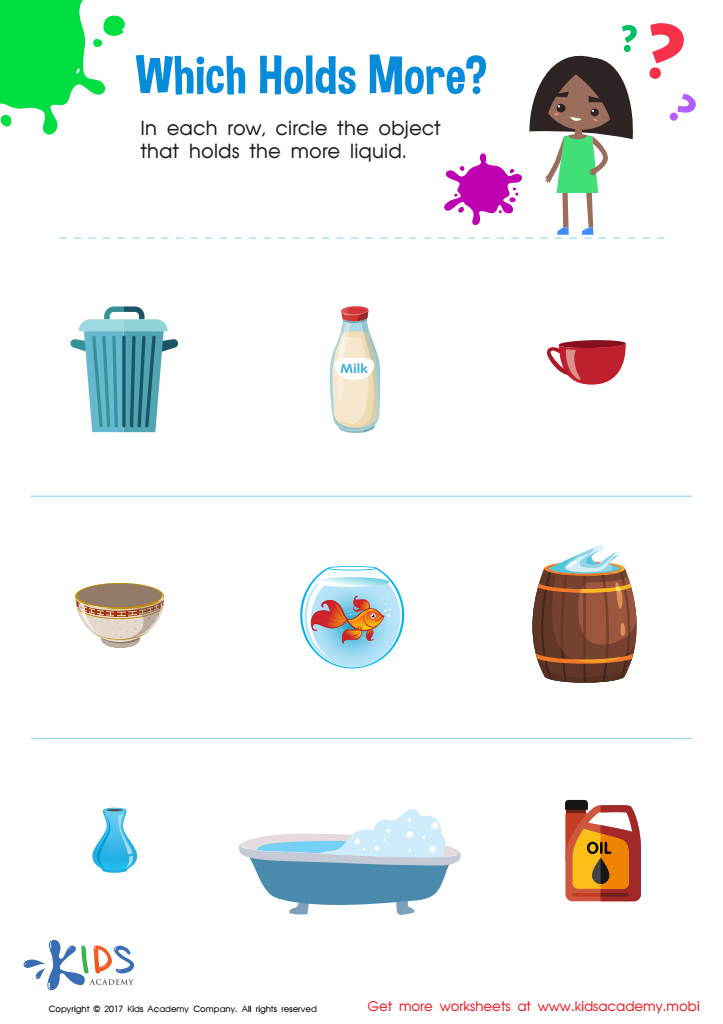
Which Holds More: Capacity Worksheet


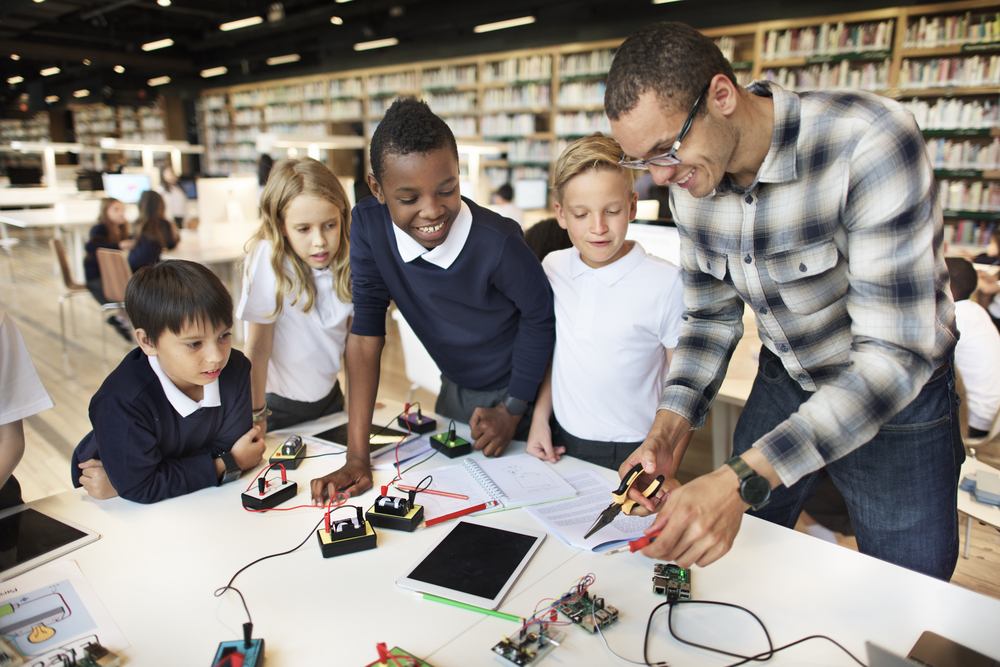


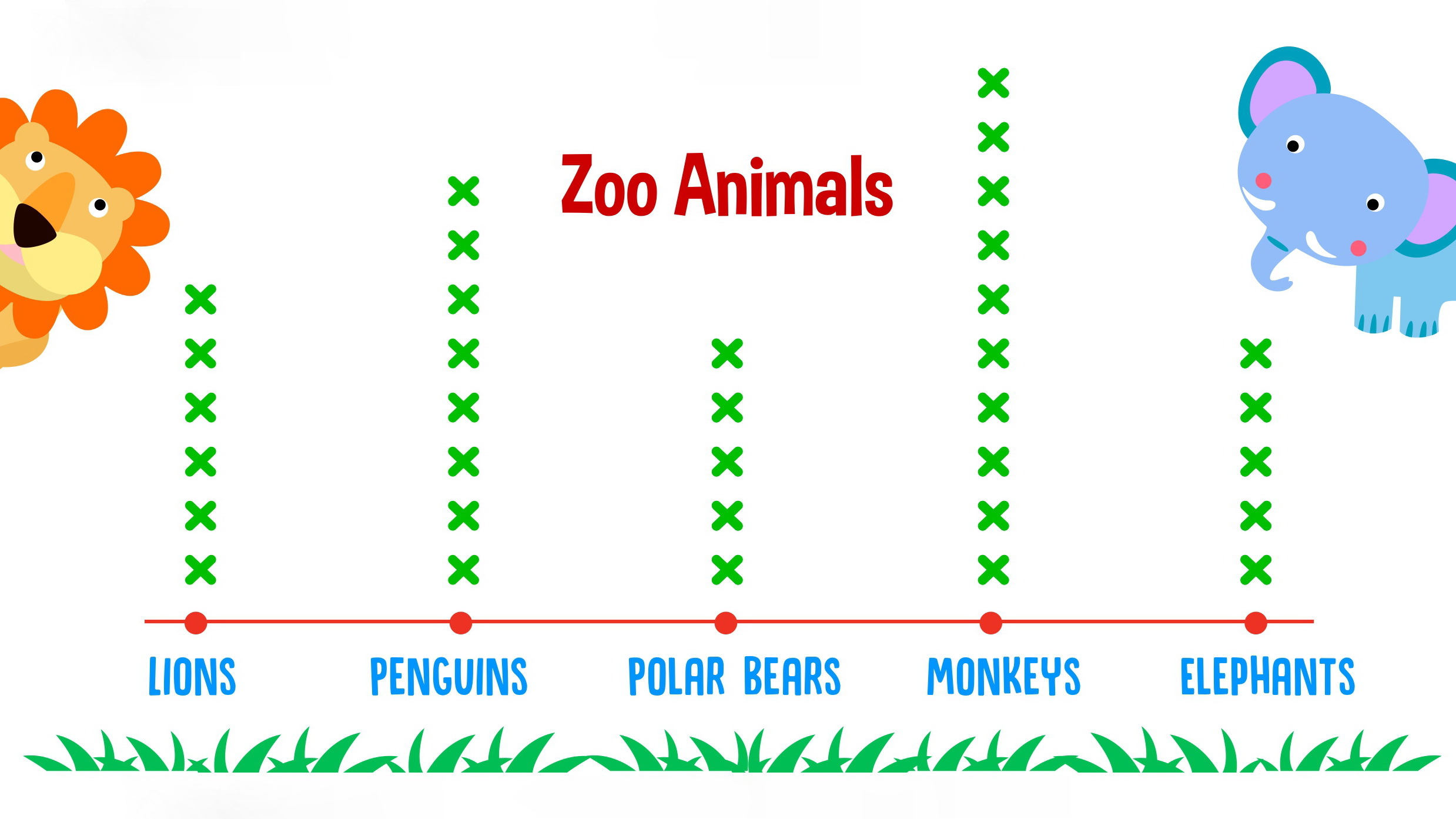

Understanding basic measurement concepts is crucial for children aged 6-8, as it lays the foundation for mathematical comprehension and practical life skills. At this age, children are naturally curious and keen to explore their environment, making it an ideal time to introduce them to concepts such as length, weight, volume, and time.
Firstly, measurement skills enhance critical thinking and problem-solving abilities. When children measure objects around them, they learn to make comparisons and draw conclusions, fostering a deeper understanding of mathematical principles. Engaging with measurement activities can also reinforce their counting skills and improve their ability to recognize patterns.
Moreover, knowing how to measure helps children relate mathematics to everyday experiences, such as cooking, building, or even organizing their belongings. This real-world application makes math more engaging and relevant, encouraging a positive attitude toward learning.
Parents and teachers play vital roles in instilling these concepts. When they provide opportunities for measurement activities—like cooking together or measuring heights—they can cultivate a child’s enthusiasm for learning. Ultimately, equipping children with these early measurement skills empowers them for future academic success and everyday tasks, promoting lifelong learning and confidence in their abilities.








