Character recognition Worksheets for Ages 6-8
3 filtered results
-
From - To
Unlock the power of reading with our Character Recognition Worksheets for Ages 6-8, specially designed to enhance your child's learning journey. Each worksheet presents fun and engaging methods to help young learners recognize, differentiate, and write various characters, building a strong foundation for literacy skills. With visually appealing activities and age-appropriate exercises, your child will develop essential reading and writing competencies while having loads of fun. Perfect for both classroom and home settings, these worksheets are an invaluable resource for nurturing confident and proficient young readers. Discover the joy of learning with educational tools crafted for success!
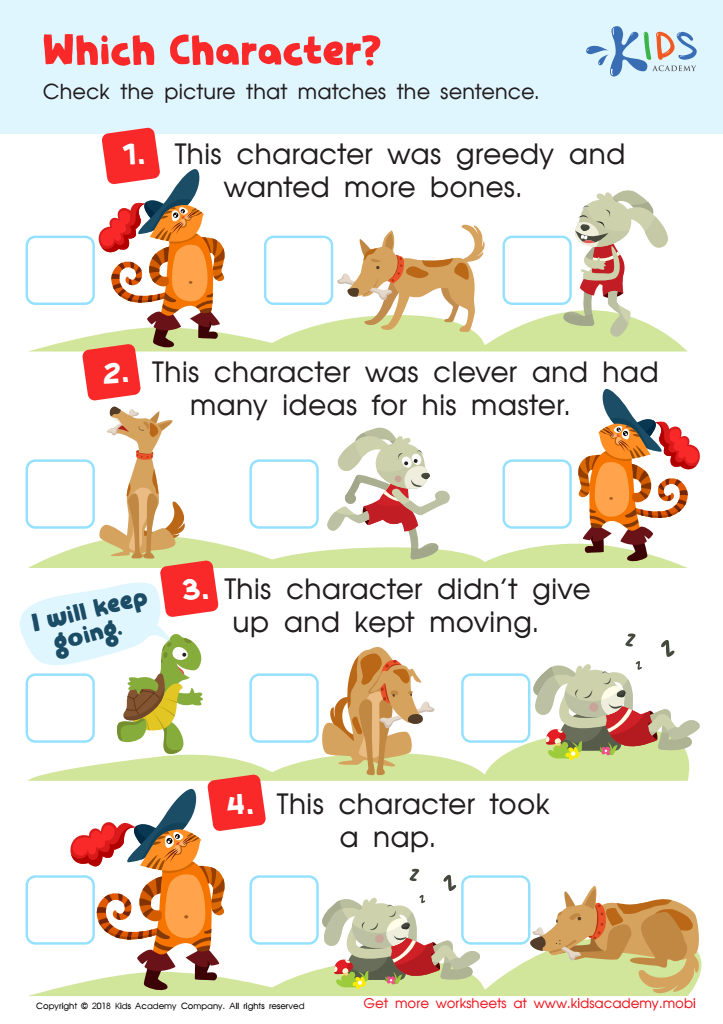
Which Character Worksheet
 Assign to My Students
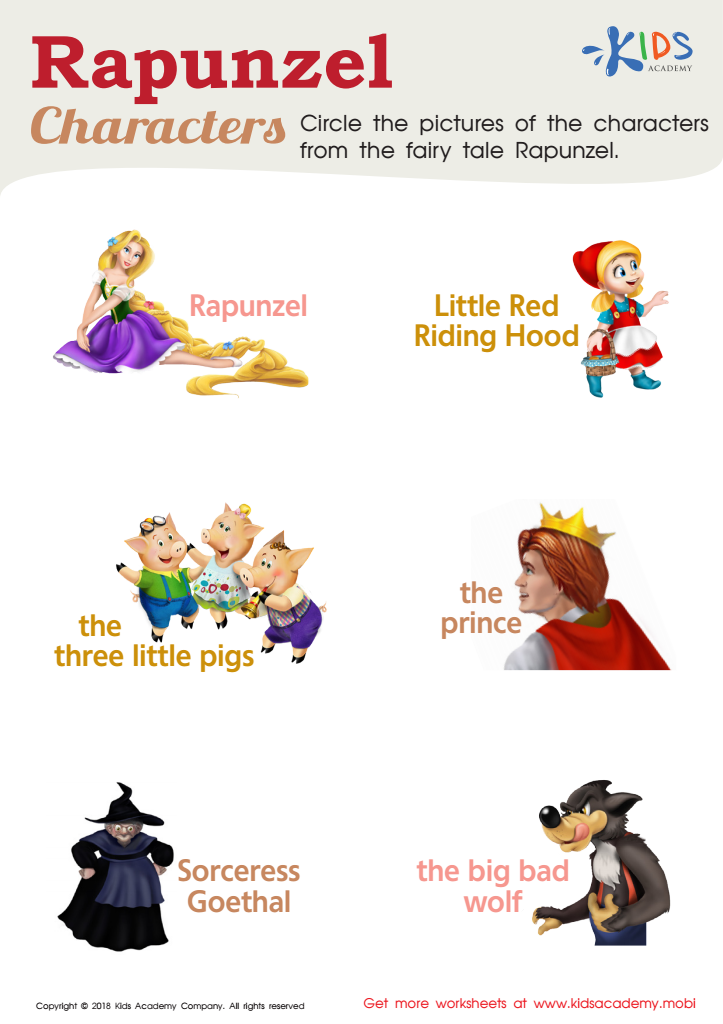
Rapunzel Characters Worksheet
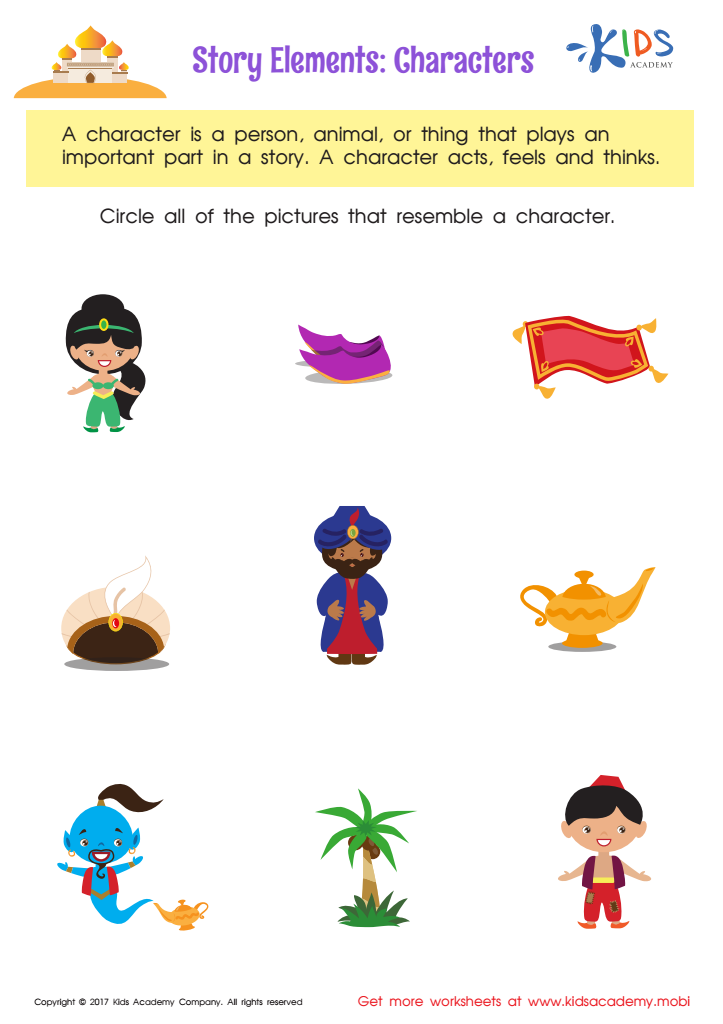
Story Elements Printable






Character recognition is a crucial skill for children aged 6-8 as it forms the foundation for their reading and writing abilities. During these formative years, kids transition from recognizing letters to understanding words and sentences. Strong character recognition enables them to read fluently, which is vital for academic success across all subjects.
For parents, ensuring their child can recognize characters accurately boosts confidence and fosters a love for reading. It enhances their child’s ability to learn independently, increasing engagement in educational activities. Moreover, reading together can be a bonding experience that also instills good literacy habits.
Teachers, on the other hand, find that students with solid character recognition skills can better follow along with classroom instructions, comprehend reading materials, and participate in discussions. This ability helps create a more effective and inclusive learning environment where all students have the opportunity to succeed. Additionally, character recognition lays the groundwork for vocabulary expansion, critical thinking, and imagination.
Undoubtedly, prioritizing character recognition from an early age equips children with essential tools for lifelong learning. Thus, both parents and teachers should support and encourage activities that promote this critical skill, such as reading aloud, engaging in letter games, and providing supportive resources at home and in the classroom.








