Filters

149 filtered results

Clear all filters
Favorites
With answer key
Interactive

149 filtered results

Difficulty Level

Grade


Check out this FREE "Cognitive Development" Trial Lesson for age 6-8!

Use the Illustrations and Details in a Text to Describe its Key Ideas

Favorites
With answer key
Interactive
  • 6-8
  • Cognitive Development
Night Sky Numbers Worksheet

Night Sky Numbers Worksheet

Help your child develop their writing skills with this fun PDF worksheet! Using guiding stars, it teaches them the correct patterns for numbers 1, 2 and 3. They'll have a great time tracing their way from the top and will feel a sense of achievement when they finish.
Night Sky Numbers Worksheet
Worksheet
Check Memory Worksheet

Check Memory Worksheet

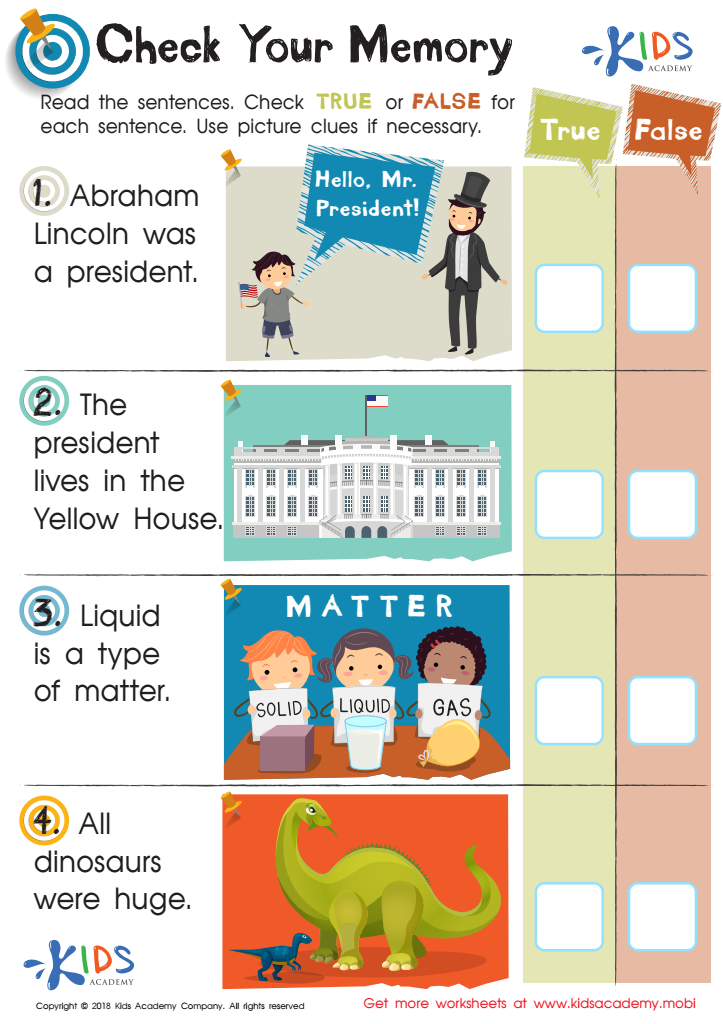
Assisting your kids with their homework and using worksheets is a great way for them to learn. The vibrant visuals in this printout can help stimulate the mind and motivate your child. Have them read the sentences and then point to the associated images. Afterwards, ask them to state True or False for each sentence. If they are still uncertain, offer them the picture clues to assist further.
Check Memory Worksheet
Worksheet
Finish the Word Worksheet

Finish the Word Worksheet

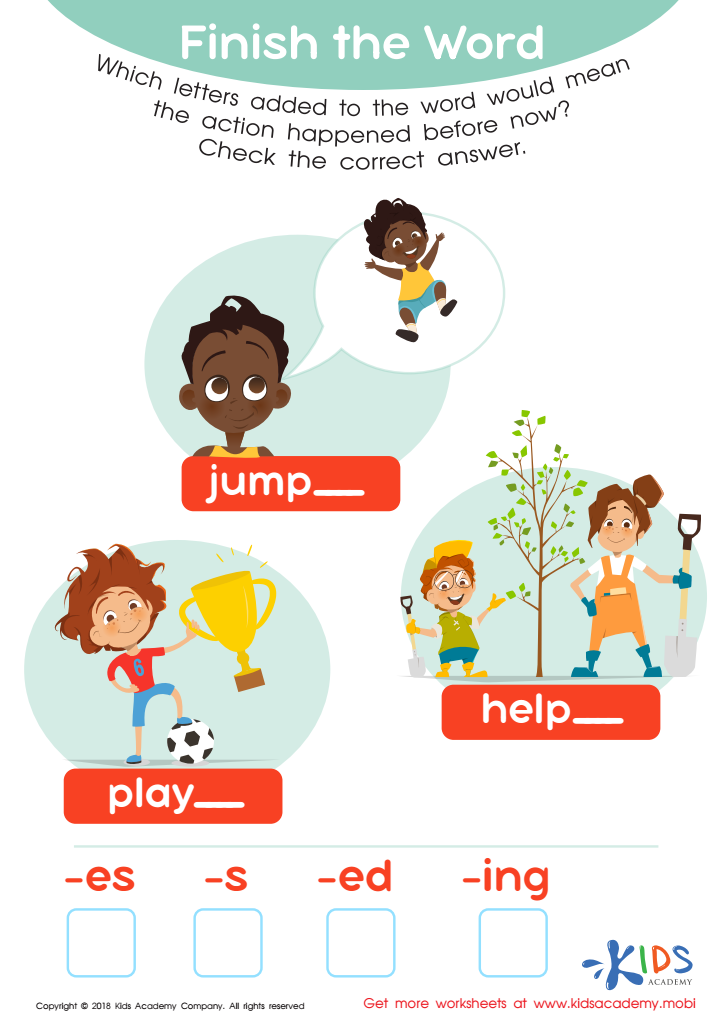
Does your kid know tenses? Listen to see if they are using words correctly. With this worksheet, your kids will learn to use the appropriate past tense forms. Ask them which letters added to words make the action past. Help them check the answers.
Finish the Word Worksheet
Worksheet
What Does Not Match? Worksheet

What Does Not Match? Worksheet

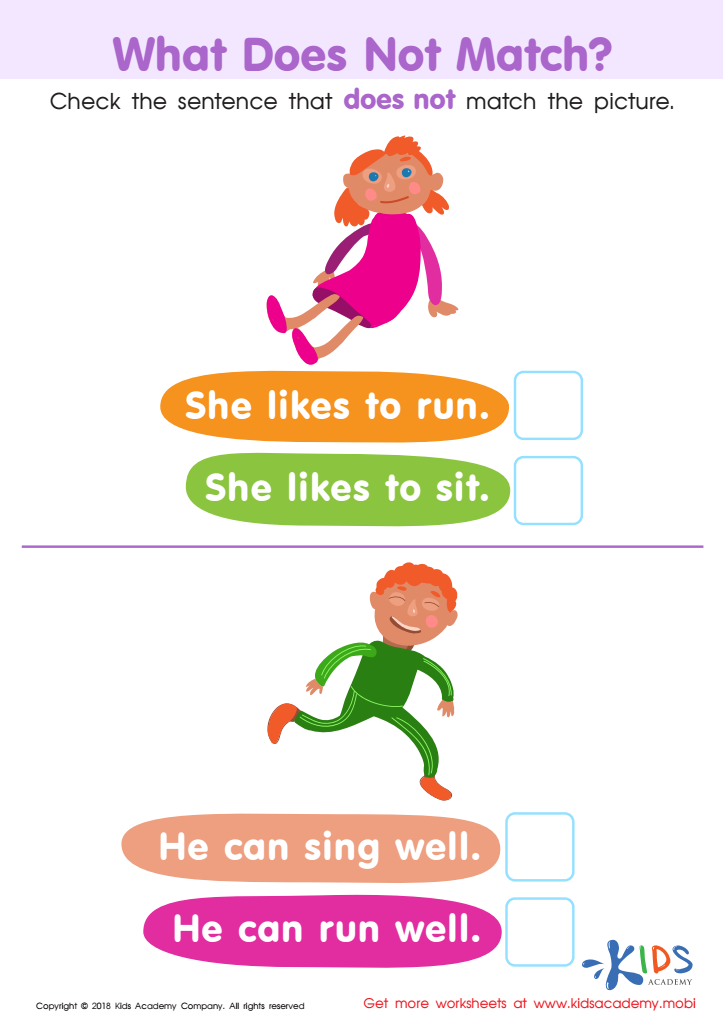
Emerging readers need to practice using visual cues and repetitive text. This colorful PDF provides them with an opportunity to look at pictures, use discrimination and discern which phrase does not match. It also enables them to gain familiarity with high-frequency words to aid decoding longer sentences.
What Does Not Match? Worksheet
Worksheet
Grade 1 Sight Words: Some

Grade 1 Sight Words: Some

Grade 1 Sight Words: Some
Worksheet


... 6 7

Cognitive development during ages 6-8 is a crucial period, as children develop critical thinking skills, problem-solving abilities, and a sense of understanding about the world around them. This phase, often termed the "concrete operational stage" according to Piaget’s theory, is when children begin to think logically about concrete events, leading to improved reasoning skills and the ability to classify and organize information.

Parents and teachers should prioritize cognitive development because it lays the foundational skills necessary for academic success and lifelong learning. During these years, children learn to make connections between concepts, enhancing their abilities in subjects such as math, reading, and science. Engaging activities—like puzzles, discussions, and hands-on projects—stimulate curiosity and promote higher-order thinking skills.

Moreover, cognitive development is closely tied to emotional and social growth. Building critical thinking enables children to navigate social situations, make decisions, and understand different perspectives. Supporting cognitive development fosters resilience and adaptability, essential traits in today’s fast-changing world. Ultimately, by emphasizing cognitive growth, caregivers ensure that children not only thrive academically but also develop the social and emotional intelligence needed to succeed in life.