Community awareness Worksheets for Ages 6-8
5 filtered results
-
From - To
Explore our engaging Community Awareness Worksheets designed specifically for children aged 6-8. These fun and informative activities help young learners understand their communities and the importance of being active, responsible citizens. With a variety of exercises like identifying community helpers, learning about local landmarks, and understanding the roles of different community members, students will enhance their social awareness and critical thinking skills. Perfect for classroom use or at-home learning, these worksheets promote curiosity and help instill values of teamwork and community spirit. Equip your students with the knowledge they need to thrive in their communities with our printable resources today!
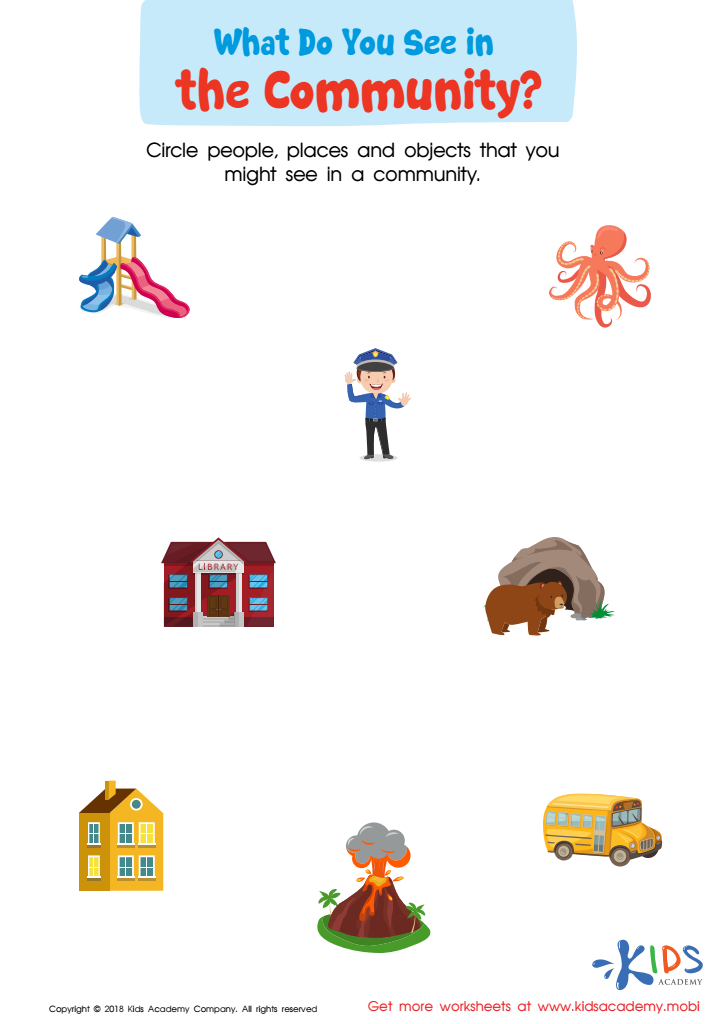
What Do You See in the Community Worksheet
 Assign to My Students
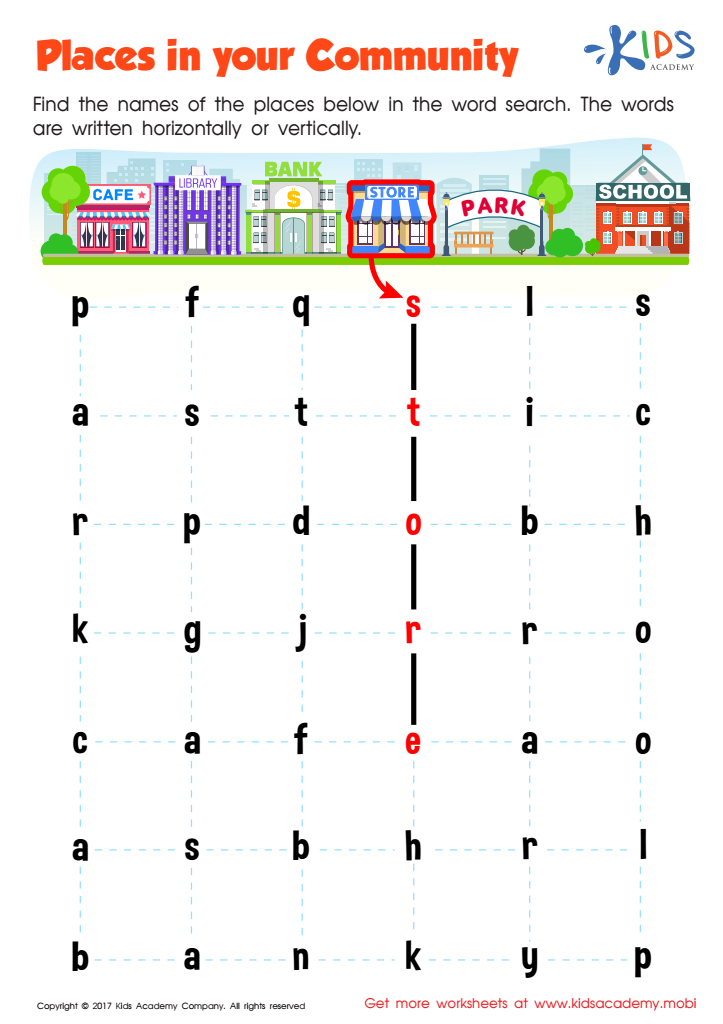
Places in Your Community Worksheet
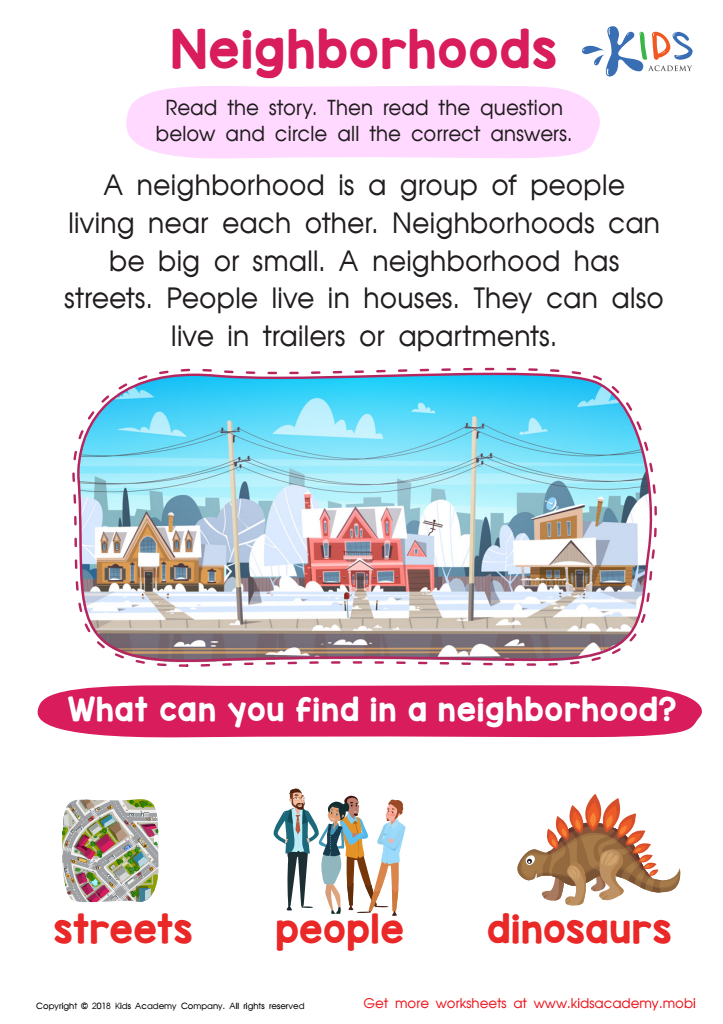
Neighborhoods Worksheet
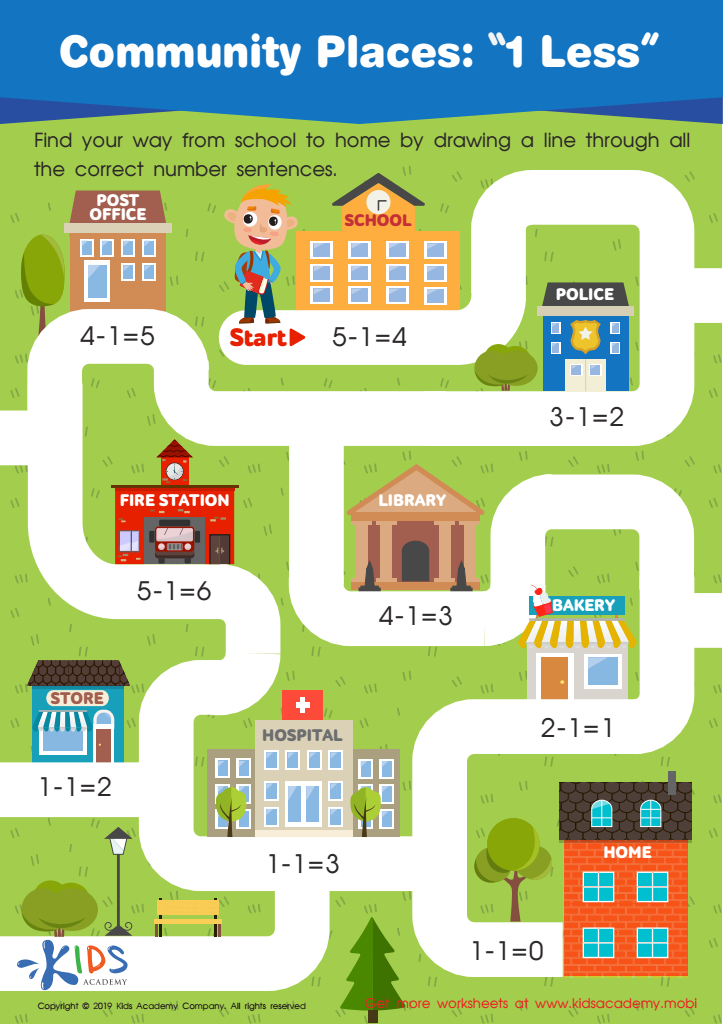
Community Places: 1 Less Worksheet
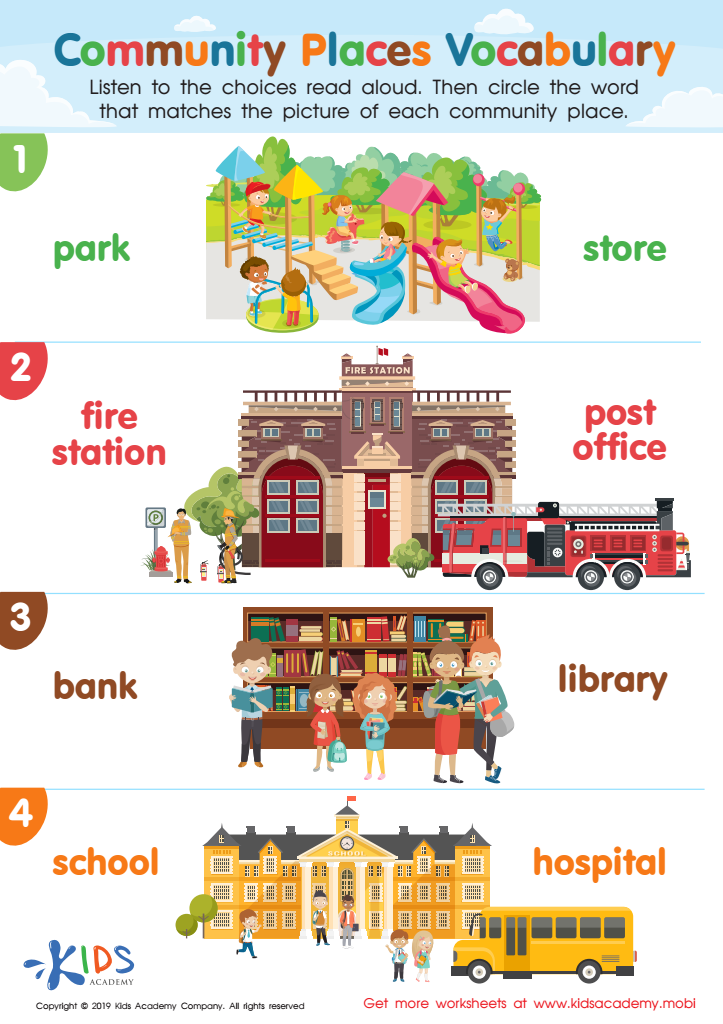
Community Places Vocabulary Worksheet








Community awareness is crucial for children aged 6-8 as it lays the groundwork for responsible citizenship. At this age, children begin to understand their surroundings and the value of cooperation and empathy. By fostering awareness of their community, parents and teachers can help children develop a sense of belonging and responsibility towards others, which is fundamental for their social development.
Incorporating community awareness in education encourages children to engage in local activities and understand the diverse cultures, traditions, and challenges that coexist in their environment. This knowledge fosters inclusivity and acceptance, nurturing a generation that values diversity.
Parents and teachers play a pivotal role in facilitating this understanding through projects, discussions, and outdoor activities that highlight community roles. Involving children in local events or volunteer work teaches them the importance of giving back, enhancing their self-esteem and teaching them that their contributions matter.
Moreover, community awareness cultivates critical thinking by encouraging children to question and understand social issues. Ultimately, prioritizing community awareness in early education helps raise empathetic, informed individuals who can positively impact their neighborhoods, leading to a more engaged and compassionate society.








