
Comparing objects Worksheets for Ages 6-8
8 filtered results
Difficulty Level
Grade
Age
-
From - To
Subject
Activity
Standards
Explore our "Comparing Objects Worksheets" designed for children aged 6-8, perfect for enhancing math and critical thinking skills! These engaging worksheets encourage young learners to identify, compare, and contrast various objects based on attributes like size, weight, and shape. With a variety of fun activities including visual comparisons and hands-on exercises, children will develop keen observation skills while learning essential math concepts. Perfect for home or classroom use, our worksheets foster independent learning and are aligned with early learning standards. Download now to provide your child with the tools they need for successful comparisons in a fun and interactive way!
Favorites
With answer key
Interactive
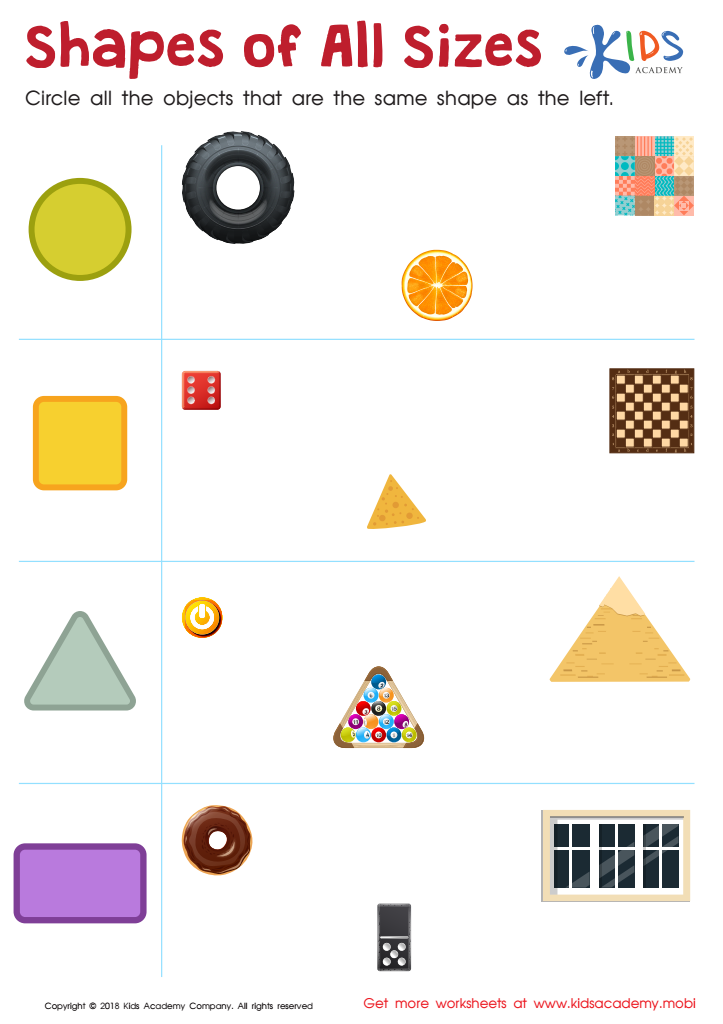
Shapes of All Sizes Worksheet
Students will have fun comparing basic shapes to familiar objects with this worksheet. It's an excellent way to help them recognize similarities in geometric shapes, building strong foundations for understanding congruence and similarity.
 Assign to My Students
Shapes of All Sizes Worksheet
Worksheet
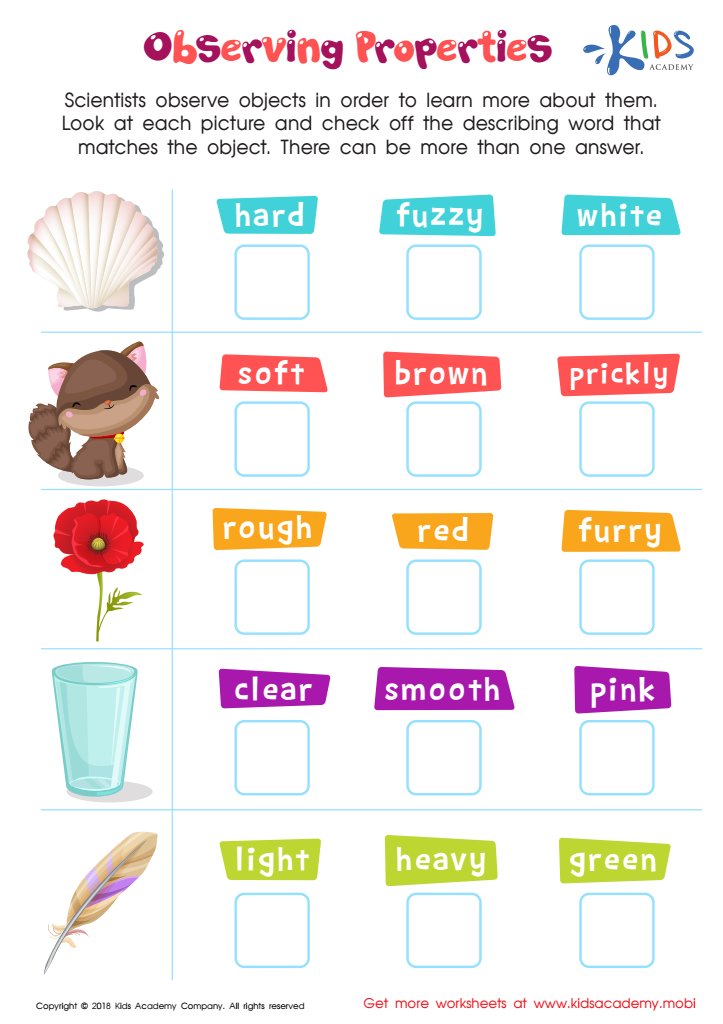
Observing Properties Worksheet
Encourage your kid's interest in science with this fun worksheet! Let them identify the five objects on the left, then choose the most accurate word from the options on the right. There might be more than one answer, so remind them to take their time observing the objects.
Observing Properties Worksheet
Worksheet
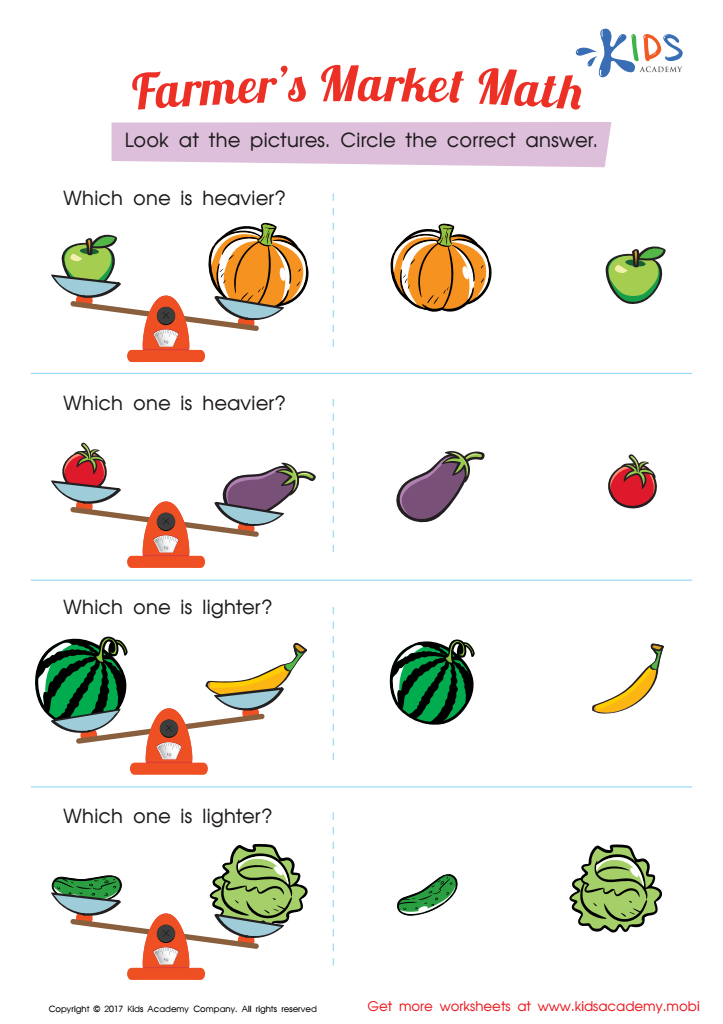
Which One Is Heavier Worksheet
Kindergartners can learn weight easily with this worksheet, featuring images of familiar fruits and veggies. Comparing which one is heavier helps them understand the concept better.
Which One Is Heavier Worksheet
Worksheet
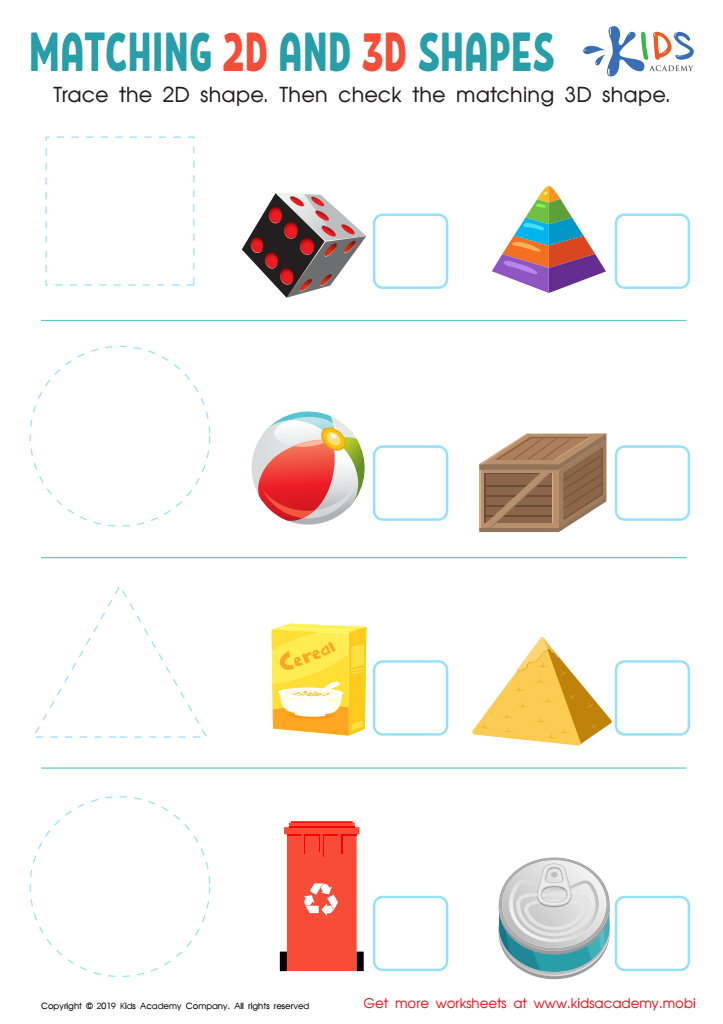
Matching 2D and 3D Shapes Worksheet
Before starting this worksheet, ask your kids what shapes they know and point out the 2D and 3D shapes on it. Help your kids trace the 2D shapes and then match them to the 3D versions. It'll be a fun new world for your kids to explore!
Matching 2D and 3D Shapes Worksheet
Worksheet
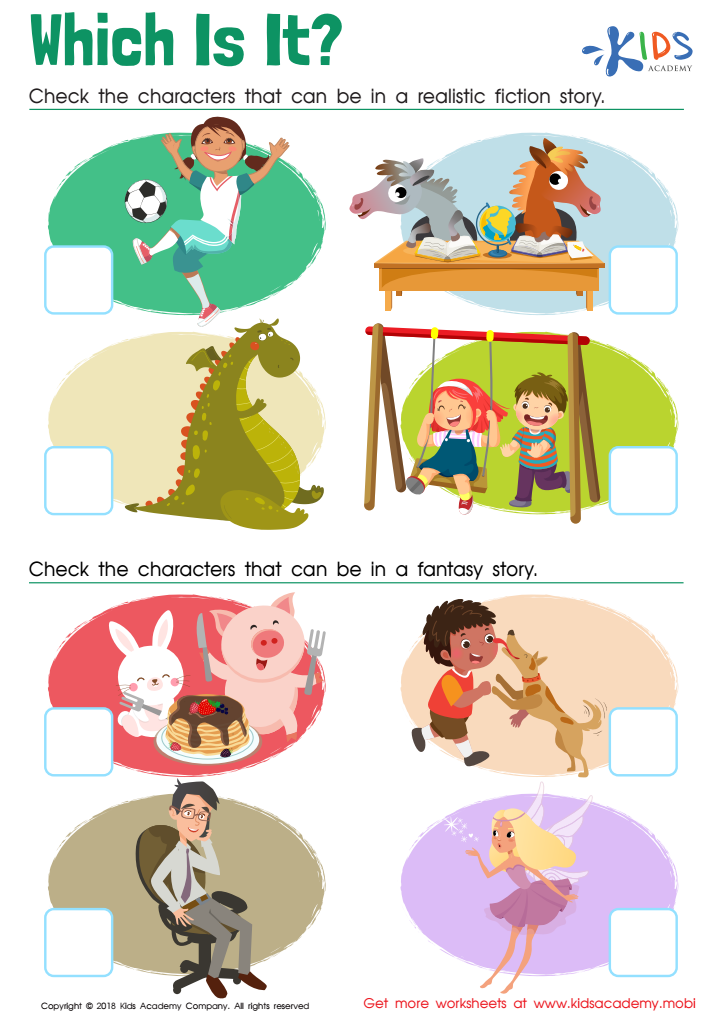
Which Is It? Worksheet
This colorful worksheet helps young readers identify elements of fact and fiction using fun picture clues. They can check off characters who exist in realistic fiction stories, which makes learning the difference between the two genres fun and engaging.
Which Is It? Worksheet
Worksheet
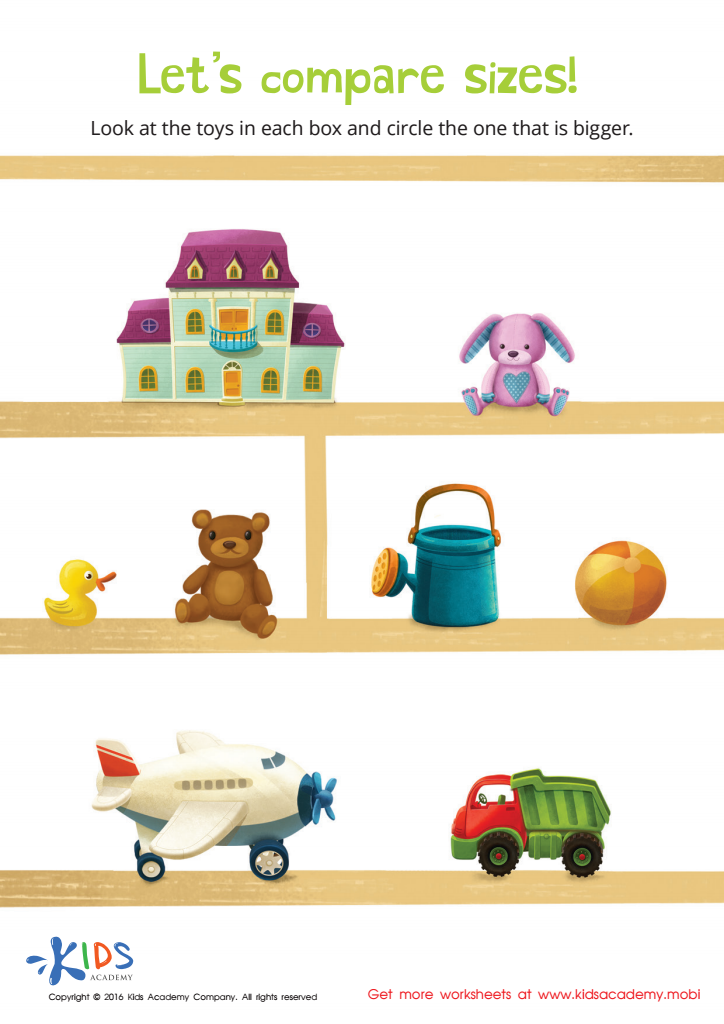
Classifying by Size Sorting Worksheet
Help your preschooler recognize differences in size using this fun worksheet! Your child will engage in important spatial recognition and problem-solving skills while talking with you about objects that can be small or large. Enjoy the vibrant pictures together!
Classifying by Size Sorting Worksheet
Worksheet
Join Kids Academy for Free
Who is primarily going to use this learning content?




.jpg)

Comparing objects is a vital skill for children aged 6-8 that lays the foundation for critical thinking, problem-solving, and early mathematical concepts. By engaging children in this activity, parents and teachers can enhance their understanding of key principles such as size, weight, shape, and quantity. For instance, comparing objects helps children grasp the concept of measurement, which is crucial for later math skills like addition, subtraction, and even basic geometry.
This process encourages observational skills, as children learn to notice differences and similarities. It promotes vocabulary development as they describe their observations using specific terms like "taller," "heavier," "rounder," etc. Moreover, these activities foster cognitive development and reasoning skills, helping children learn to articulate their thoughts effectively.
Furthermore, comparing objects can be made engaging and fun through hands-on activities, making learning enjoyable and memorable. Interactive comparisons can spark curiosity and encourage children to ask questions, explore more about the world around them, and promote collaborative learning when done in groups.
Ultimately, when parents and teachers prioritize comparing objects, they not only enhance the child’s educational journey but also support their overarching growth into analytical and inquisitive individuals.








