
Counting comprehension Worksheets for Ages 6-8
3 filtered results
Difficulty Level
Grade
Age
-
From - To
Subject
Activity
Standards
Enhance your child's math skills with our engaging Counting Comprehension Worksheets for ages 6-8, available at Kids Academy. These printable worksheets are expertly designed to build a strong numerical foundation through a variety of fun activities that not only improve counting but also enhance comprehension. Your child will enjoy colorful illustrations and interactive tasks that make learning enjoyable. Perfect for both classroom use and homeschooling, these resources support key learning skills like problem-solving, critical thinking, and attention to detail. Start your child on the path to math success with our meticulously crafted worksheets.
Favorites
With answer key
Interactive
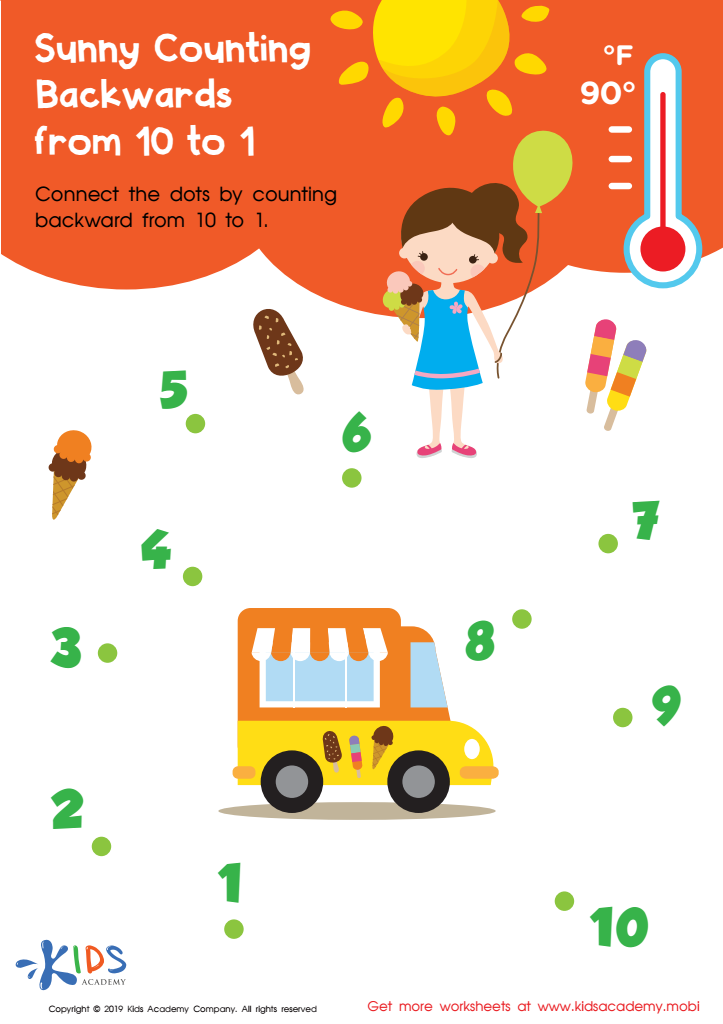
Sunny Counting Backwards from 10 to 1 Worksheet
Ask your kids what they like to do in summer heat. Look at the worksheet and ask them to identify the items in the picture. Count the numbers together then help them with connecting the dots from 10 to 1. It's a fun activity for the little girl, just like your kids.
 Assign to My Students
Sunny Counting Backwards from 10 to 1 Worksheet
Worksheet
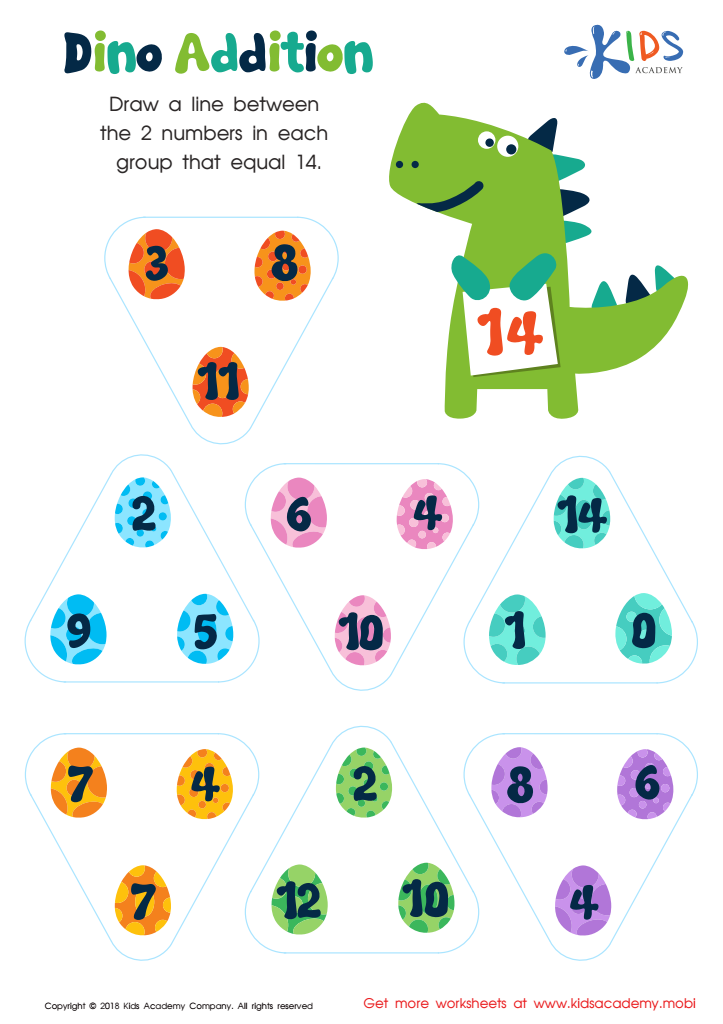
Dino Addition Worksheet
Kids can have fun with math with this cute PDF worksheet! Each triangle contains three eggs; by adding pairs of eggs together, kids can find the right combination that equals 14 and draw a line linking them. The goal is to help our playful dinosaur find the right eggs to make 14! It's a great way to practice addition and have a motivating purpose.
Dino Addition Worksheet
Worksheet
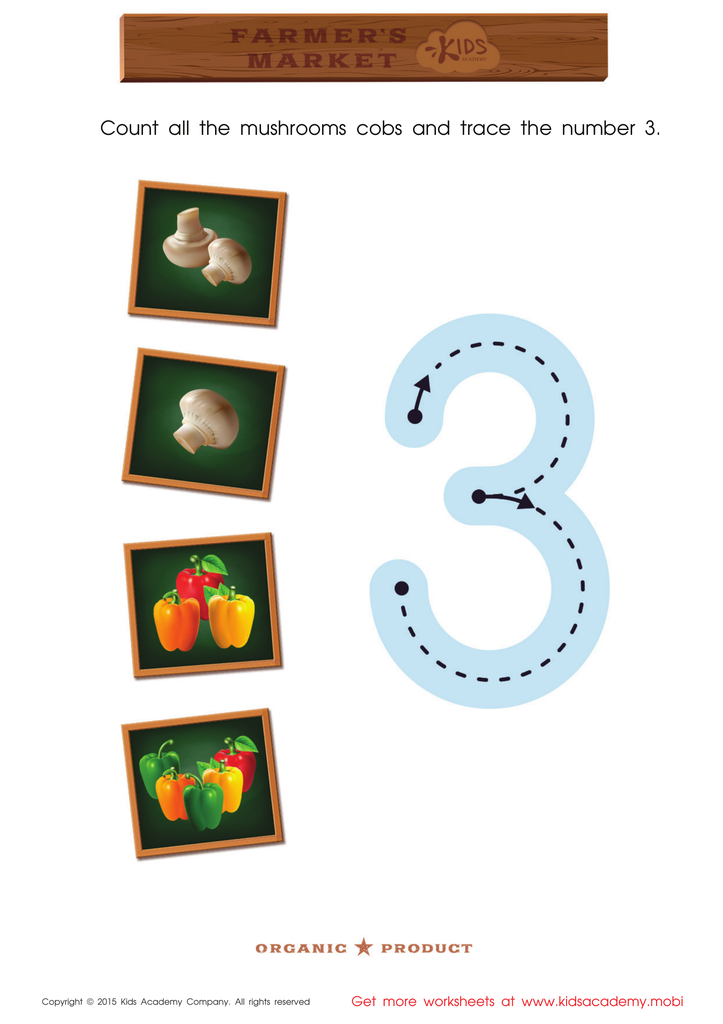
Count the Mushrooms and Trace the Number 3 Printable
Download and print this interactive math worksheet – your child will practice counting and addition, while exercising their fine motor muscles. Have them count and add mushrooms, and trace the number 3 – all from the comfort of home. Kids Academy offers more useful worksheets for preschool and kindergarten.
Count the Mushrooms and Trace the Number 3 Printable
Worksheet
Join Kids Academy for Free
Who is primarily going to use this learning content?







Counting comprehension is a critical foundational skill for children ages 6-8, as it forms the bedrock for more advanced mathematical concepts. At this age, children transition from rote counting to understanding principles like one-to-one correspondence, cardinality, and the stable order of numbers. These skills are fundamental, enabling kids to grasp how numbers work, interpret quantities, and apply these in day-to-day situations.
For parents and teachers, investing time in enhancing counting comprehension can spark a child's interest in math and ensure their academic success. Mastery of counting forms the basis for addition and subtraction, which are crucial for tackling more complex mathematical problems later. A strong number sense is also associated with better problem-solving abilities and logical thinking.
Moreover, developing counting skills can boost children’s confidence and teach them persistence as they advance from simple to more complicated math tasks. These early successes and positive attitudes toward math can help establish a lifelong appreciation and curiosity about the subject. Ignoring or underestimating the importance of counting skills could result in gaps that become harder to bridge as educational demands intensify. Therefore, fostering strong counting comprehension in these formative years sets a solid academic foundation and promotes future achievement in mathematics.








