Counting skills improvement Worksheets for Ages 6-8
4 filtered results
-
From - To
Enhance your child's numerical prowess with our Counting Skills Improvement Worksheets designed for ages 6-8. These engaging and educational resources, available on Kids Academy, combine fun activities with effective learning techniques to strengthen fundamental counting abilities. Tailored to stimulate young minds, our worksheets cover a variety of counting exercises, from basic number recognition to more complex sequences and patterns. Perfect for home or classroom use, these worksheets foster confidence in early math learners, ensuring they build a solid foundation for future mathematical success. Explore our diverse collection and watch your child’s counting skills flourish!
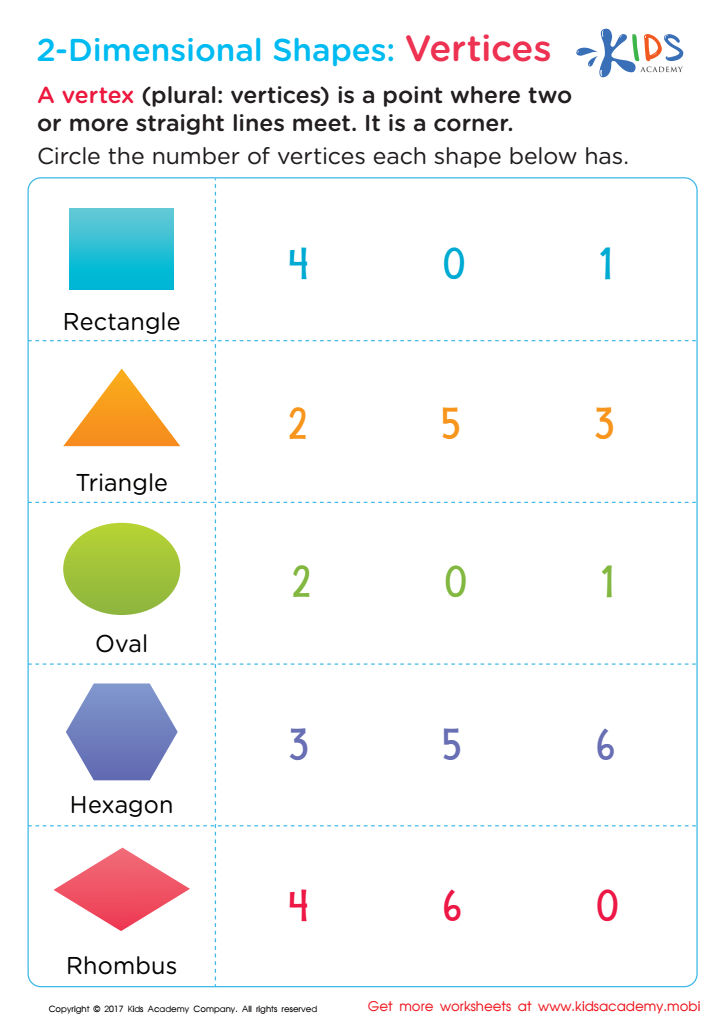
Two–Dimensional Shapes: Vertices Printable
 Assign to My Students
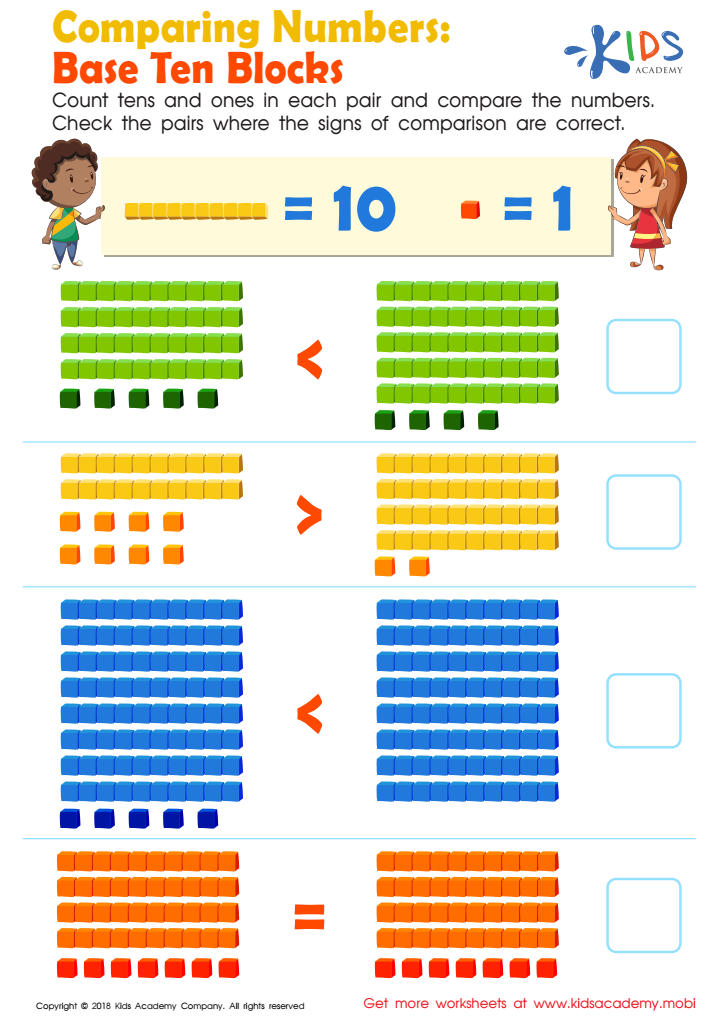
Comparing Numbers: Base Ten Blocks Worksheet
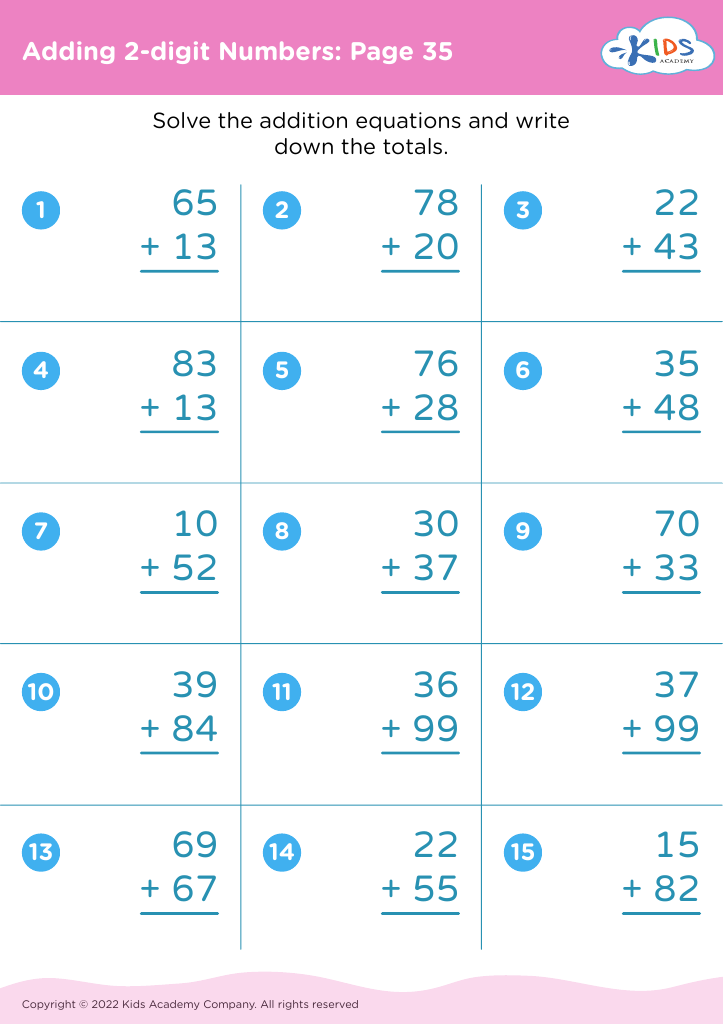
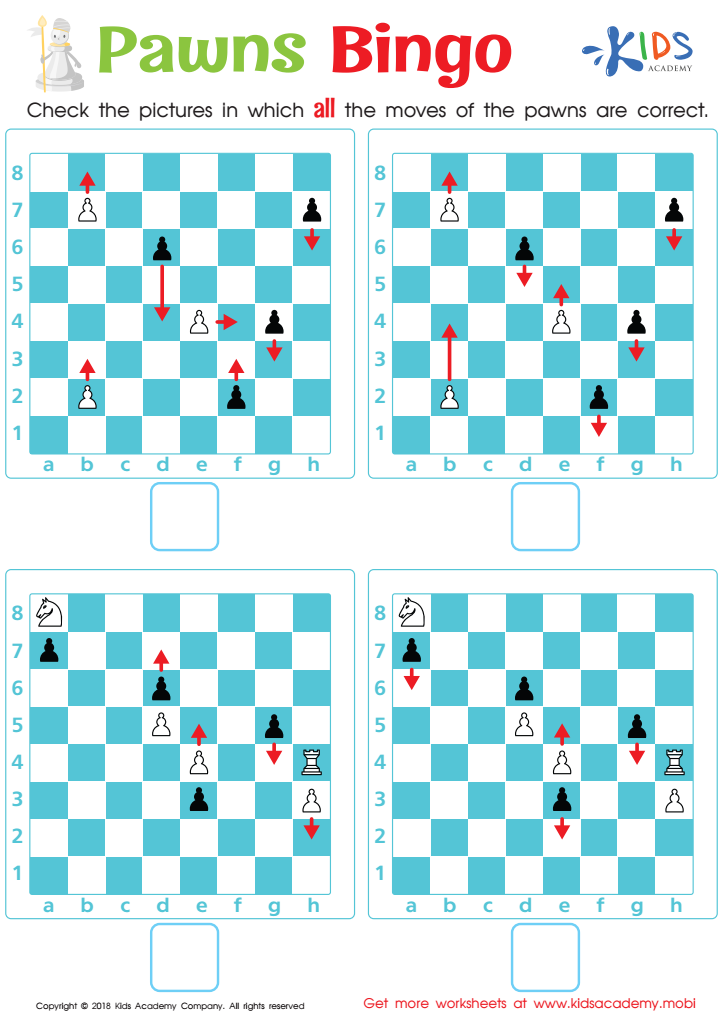
Pawns Bingo Worksheet




.jpg)


Counting skills lay the foundation for fundamental mathematical understanding, which is crucial in the cognitive development of children aged 6-8. At this stage, these skills evolve from simple recitation of numbers to recognizing quantities, understanding place value, and performing basic arithmetic operations. Mastery of counting is not just about numeric literacy; it promotes problem-solving abilities, pattern recognition, and logical thinking.
Parents and teachers should invest in enhancing counting skills because it cultivates a strong numerical sense, allowing children to relate numbers to real-life scenarios—whether it's sharing toys, understanding time, or managing allowances. These daily applications make concepts tangible, fostering both academic and practical life skills.
Early proficiency in counting also boosts confidence and reduces anxiety towards more complex mathematical challenges encountered in later grades. Engaging in playful and interactive counting activities helps solidify these concepts, making learning enjoyable and less intimidating. Encouraging a positive experience with math at a young age sets the stage for a lifelong appreciation of the subject.
In essence, by focusing on improving counting skills in young children, parents and teachers are laying a robust groundwork for future academic success, analytical thinking, and everyday problem-solving—a trifecta vital for personal and educational growth.








