Enhance your child's logical thinking with our engaging worksheets designed specifically for ages 6-8. Our carefully crafted activities promote critical thinking through puzzles, sequences, and pattern recognition exercises that stimulate young minds. These worksheets not only support core learning skills but also encourage creativity and problem-solving abilities. Ideal for classrooms or home use, they provide a fun way for kids to explore concepts and build confidence. Whether practiced independently or along with parents and teachers, these resources create opportunities for meaningful learning experiences. Dive into our collection today and pave the way for your child's success in logical reasoning!

Check out this FREE "Developing logical thinking" Trial Lesson for age 6-8!

Selecting the Right Measuring Tool

Favorites
With answer key
Interactive
  • 6-8
  • Developing logical thinking
Tricky Blocks Worksheet

Tricky Blocks Worksheet

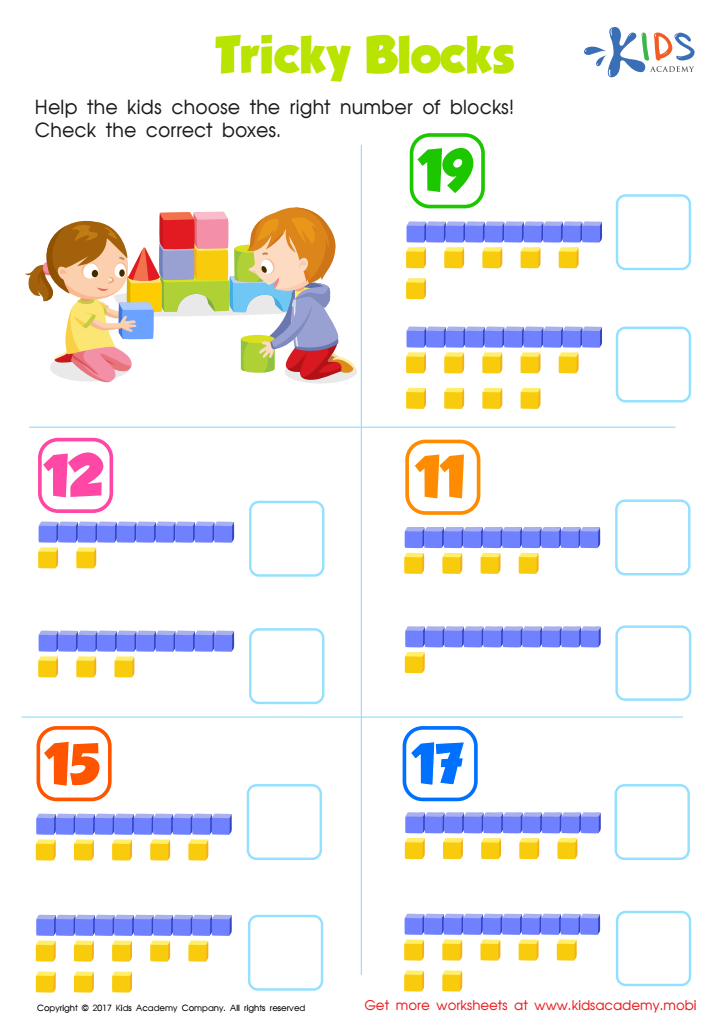
Help your child count with this printable worksheet. You'll be able to explain the technicalities of each answer as you work together to count the boxes and choose the correct number in the spaces provided. This will help your child better understand the concept and will go faster than if they do it alone.
Tricky Blocks Worksheet
Worksheet
Measuring Tools Mix–up Worksheet

Measuring Tools Mix–up Worksheet

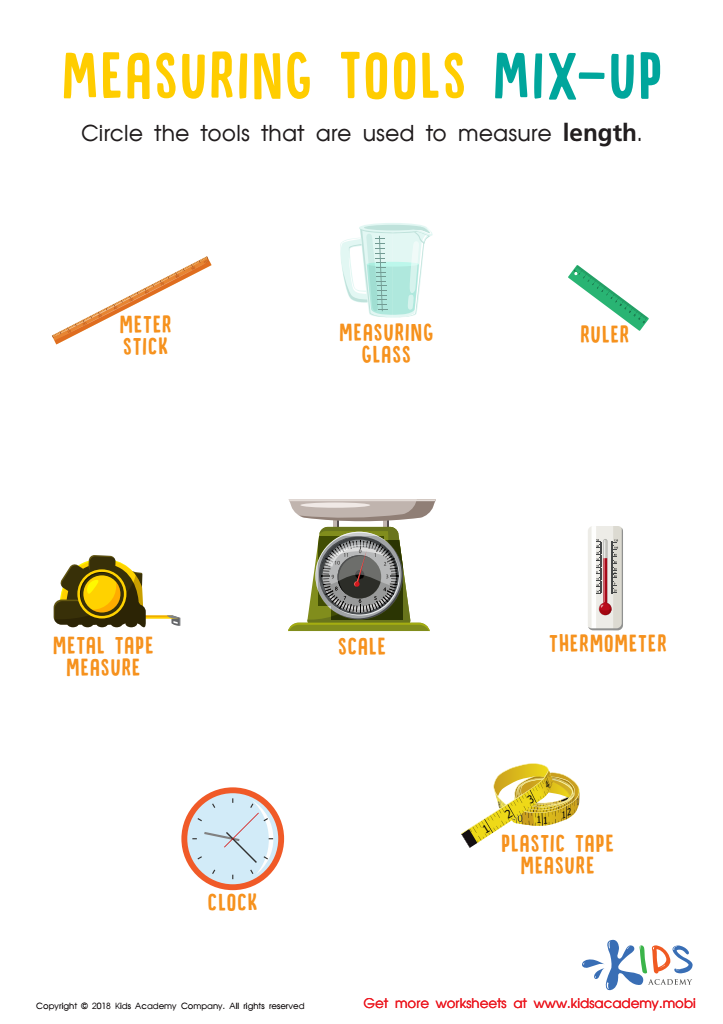
Test your child's knowledge of measuring instruments! In this worksheet, have them identify which items are used for measuring length. Talk through the items with them, then ask them to circle the right answer. Use this PDF to challenge your child and learn more about measuring tools.
Measuring Tools Mix–up Worksheet
Worksheet
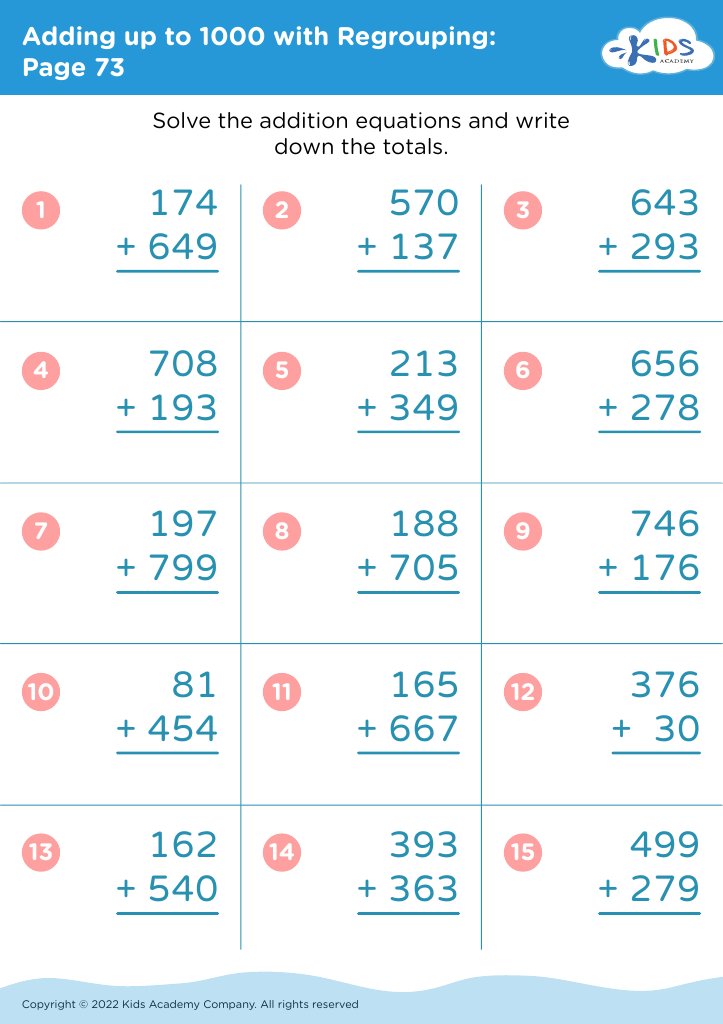
Adding up to 1000 with Regrouping: Page 73
Worksheet
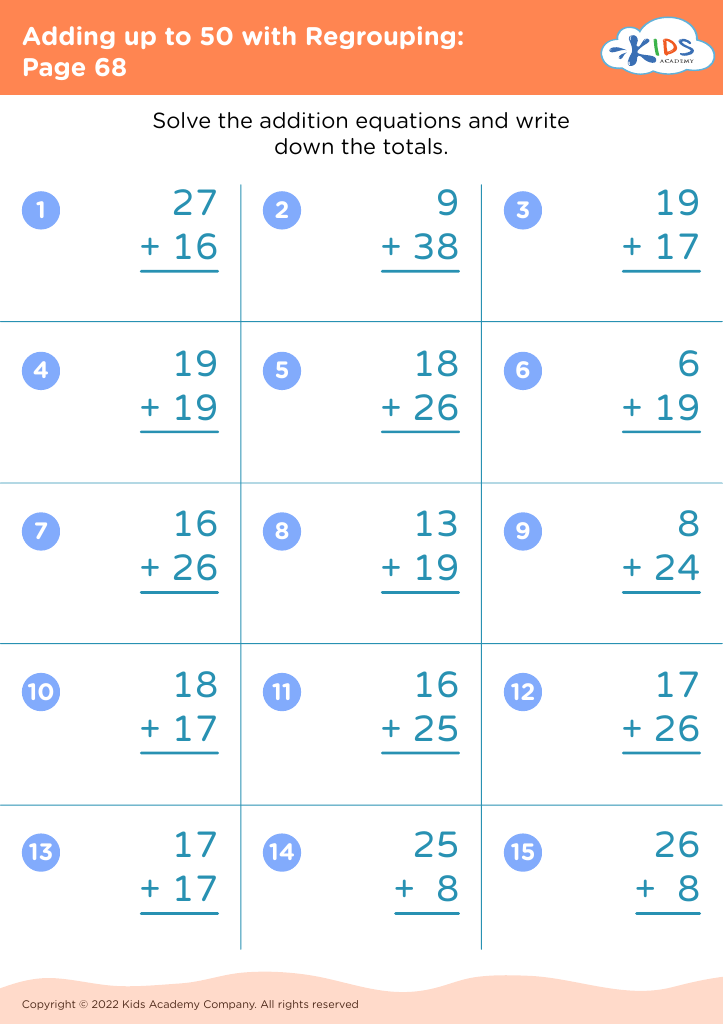
Adding up to 50 with Regrouping: Page 68
Worksheet
Quadrilateral Maze Worksheet
Quadrilateral Maze Worksheet

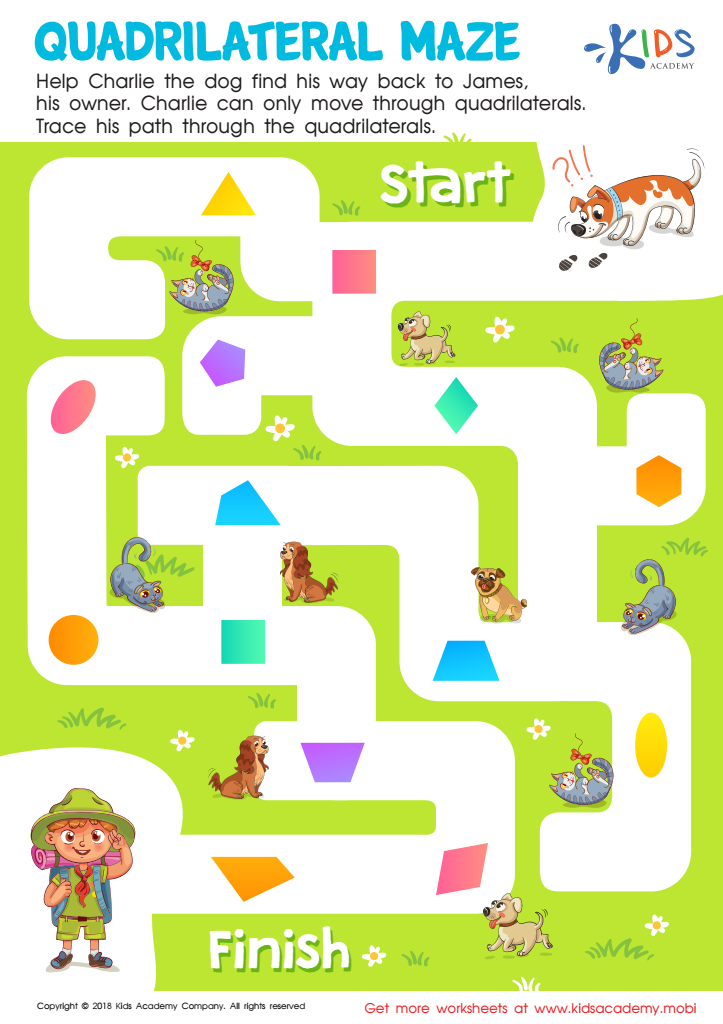
Does your kid love dogs? If so, this exercise is ideal for them! Help Charlie the pup find his way back to his owner, James, in the quadrilateral maze worksheet. Your child must trace Charlie's path only through squares and rhombuses in order to solve it. Careful planning is key!
Quadrilateral Maze Worksheet
Worksheet
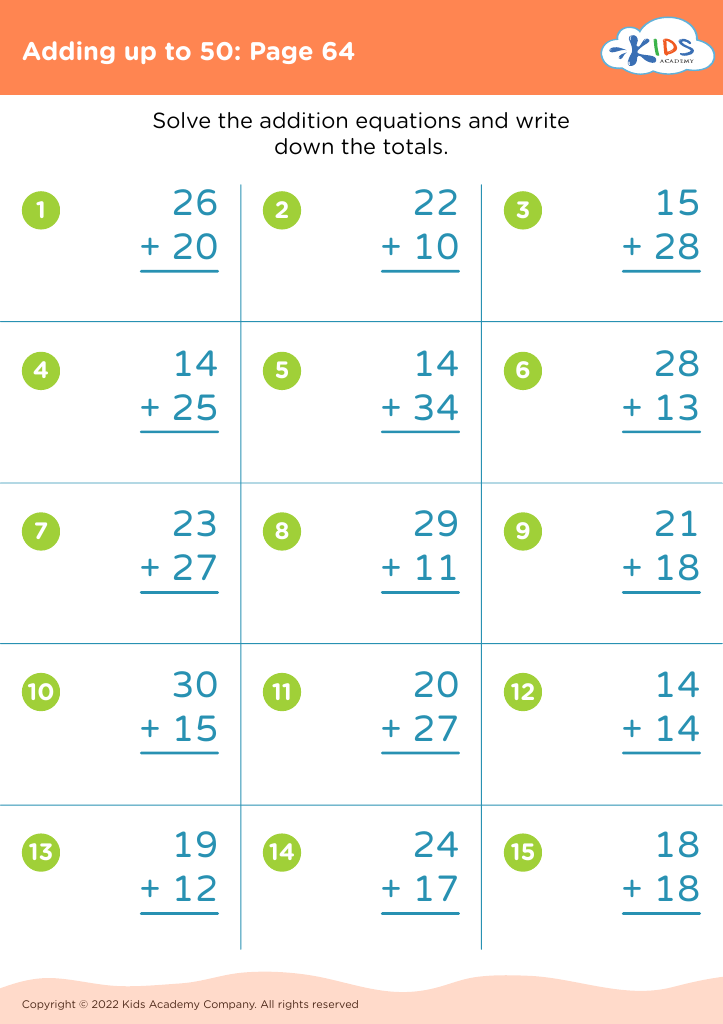
Adding up to 50: Page 64

Adding up to 50: Page 64

Adding up to 50: Page 64
Worksheet
Related addition and subtraction facts worksheets

Related Addition and Subtraction Facts Worksheet
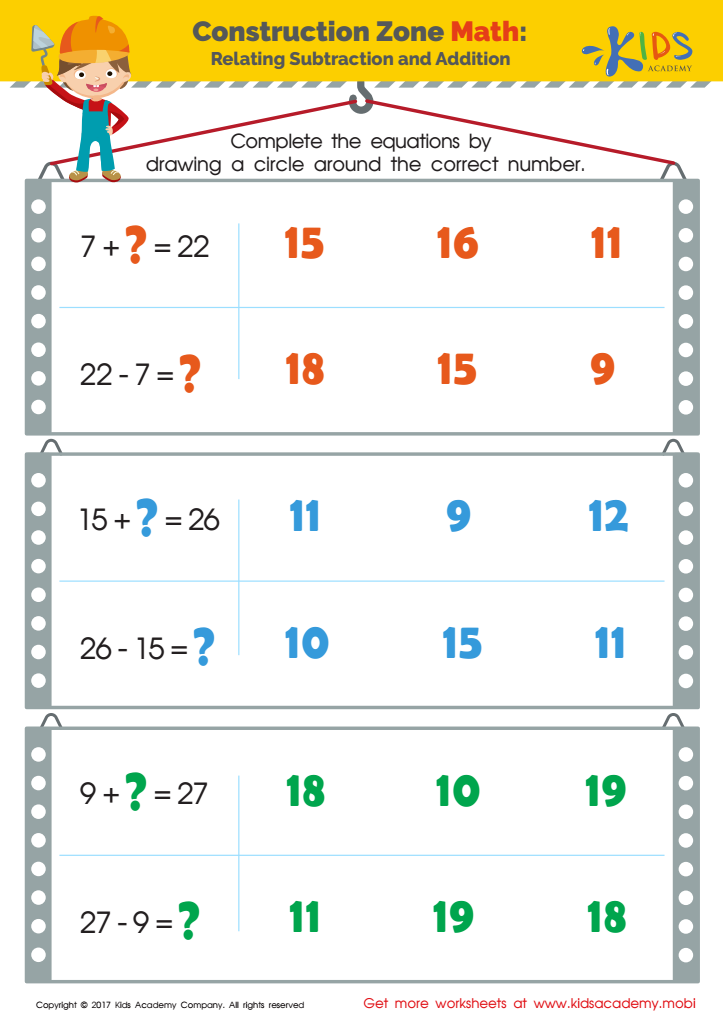
Help your child nurture their numeracy skills by introducing them to related addition and subtraction facts. Worksheets like this will give them a fun and easy way to learn how numbers work.
Related Addition and Subtraction Facts Worksheet
Worksheet
Notation of Check Worksheet

Notation of Check Worksheet

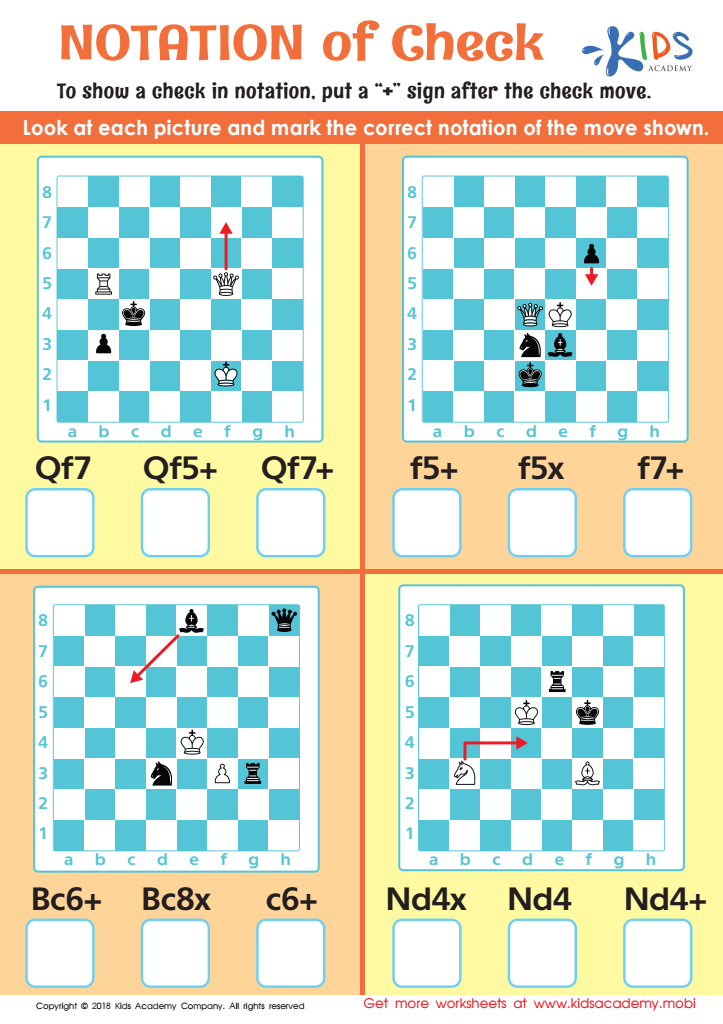
Chess is an addictive game! Once you know the basics of check and checkmate, you'll be hooked! Teach your little one to make check notation with this free PDF worksheet. They can use downloadable practice to look at each picture and mark the correct notation, strengthening their problem-solving skills while they learn to play - and win - this fun game!
Notation of Check Worksheet
Worksheet
Producers and Consumers: Sequencing Worksheet

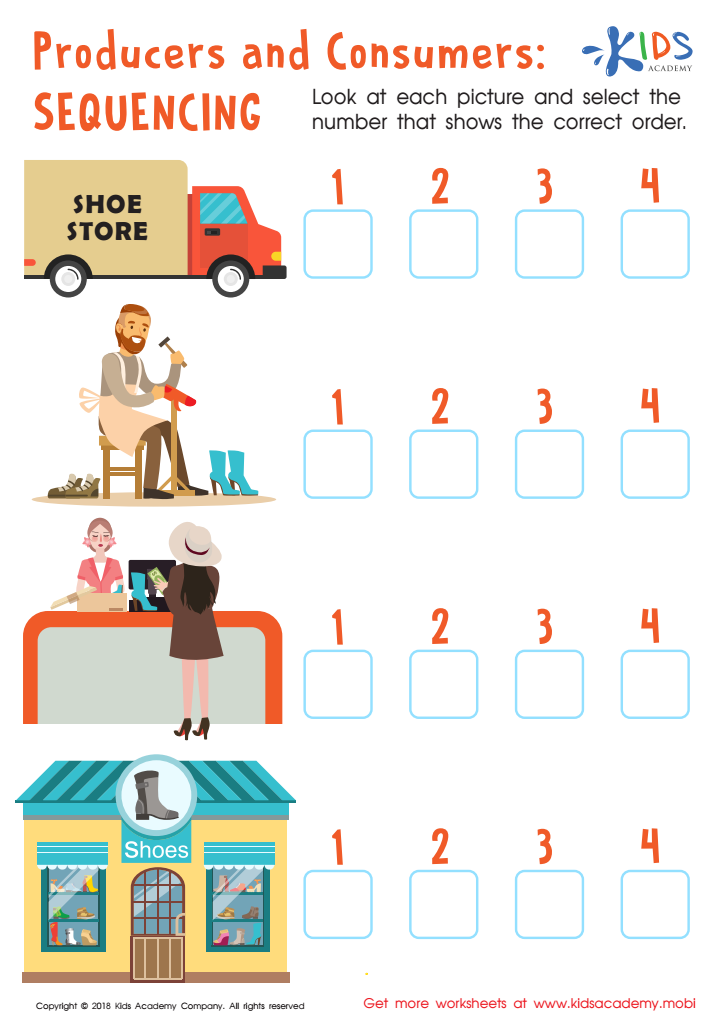
Producers and Consumers: Sequencing Worksheet

Ask your child: Who are producers? Can you give an example? Here's one: a shoe maker. What's happening in each picture? Can you arrange them in the right order? Select the number that shows the correct answer.
Producers and Consumers: Sequencing Worksheet

Worksheet
Kindergarten Sight Words: Well

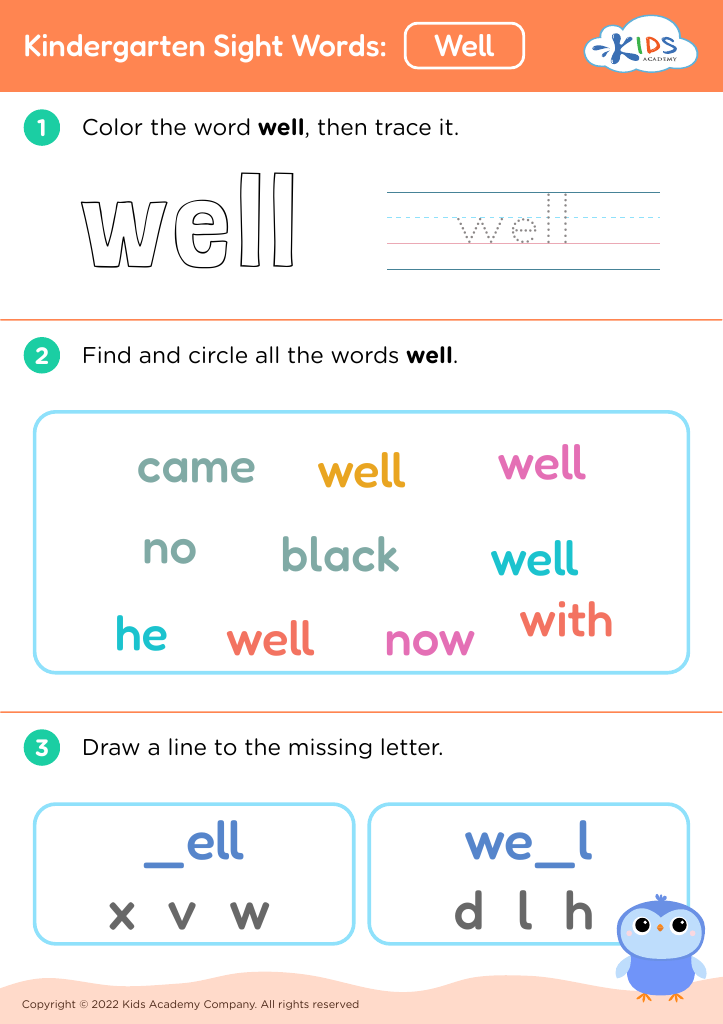
Kindergarten Sight Words: Well

Kindergarten Sight Words: Well
Worksheet


Developing logical thinking in children aged 6-8 is crucial for their overall cognitive development and future success. At this age, children are increasingly capable of abstract thought and problem-solving, laying the foundation for critical thinking skills. Logical thinking helps them understand cause and effect, sequence, and categorization, enabling them to make informed decisions in daily life.

Parents and teachers play a vital role in fostering these skills through engaging activities and constructive discussions. Logical thinking not only enhances academic performance, particularly in subjects like math and science, but also empowers children to navigate social interactions and challenges effectively. When children develop these skills early on, they become better equipped to approach complex problems and devise solutions independently.

Furthermore, promoting logical thinking supports emotional and social development by encouraging kids to consider multiple perspectives and outcomes. This ultimately nurtures their ability to collaborate, negotiate, and communicate effectively with others. In today’s fast-paced and increasingly complex world, fostering logical thinking in young children is essential, as it prepares them for lifelong learning and adaptability in various contexts. Thus, prioritizing logical thinking offers invaluable benefits for academic and personal growth, making it a critical focus for parents and educators alike.