Developing spatial awareness Worksheets for Ages 6-8
3 filtered results
-
From - To
Developing spatial awareness is a critical skill for children aged 6-8, helping them understand and navigate the world around them. Our engaging worksheets are designed to strengthen these abilities through fun, interactive activities. They cover essential concepts such as shapes, patterns, symmetry, and directions, enhancing kids' understanding and cognitive development. By practicing with these worksheets, children improve their problem-solving skills, attention to detail, and spatial reasoning. Perfect for homeschooling or supplemental classroom material, these worksheets support key learning milestones and make education enjoyable for young learners. Empower your child’s spatial awareness with our thoughtfully crafted resources.
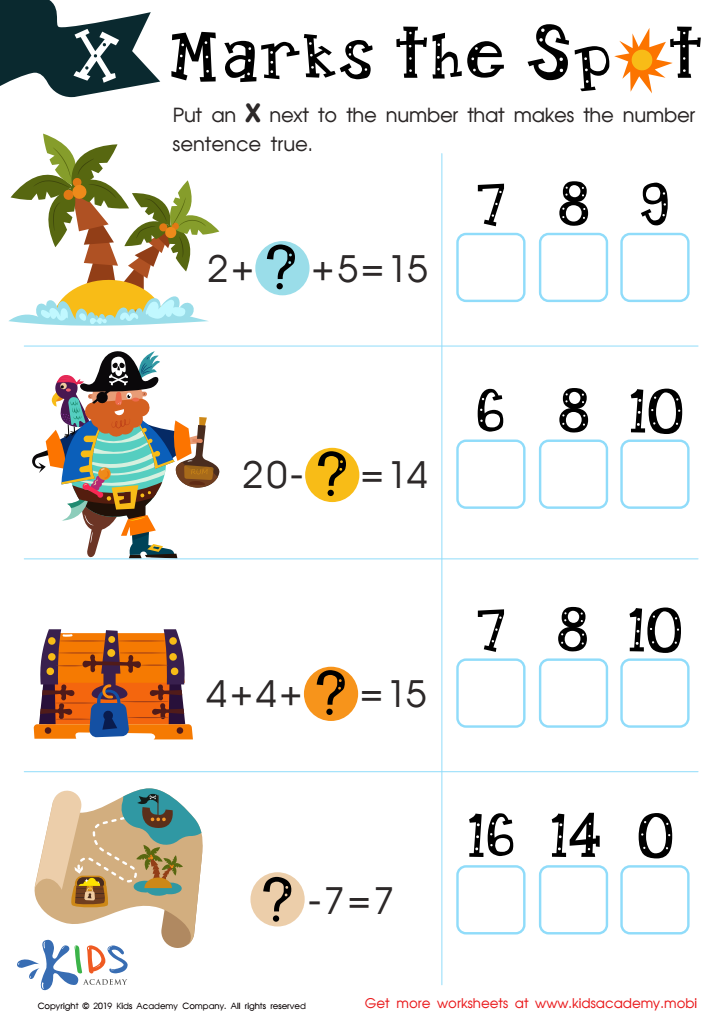
X Marks the Spot Worksheet
 Assign to My Students
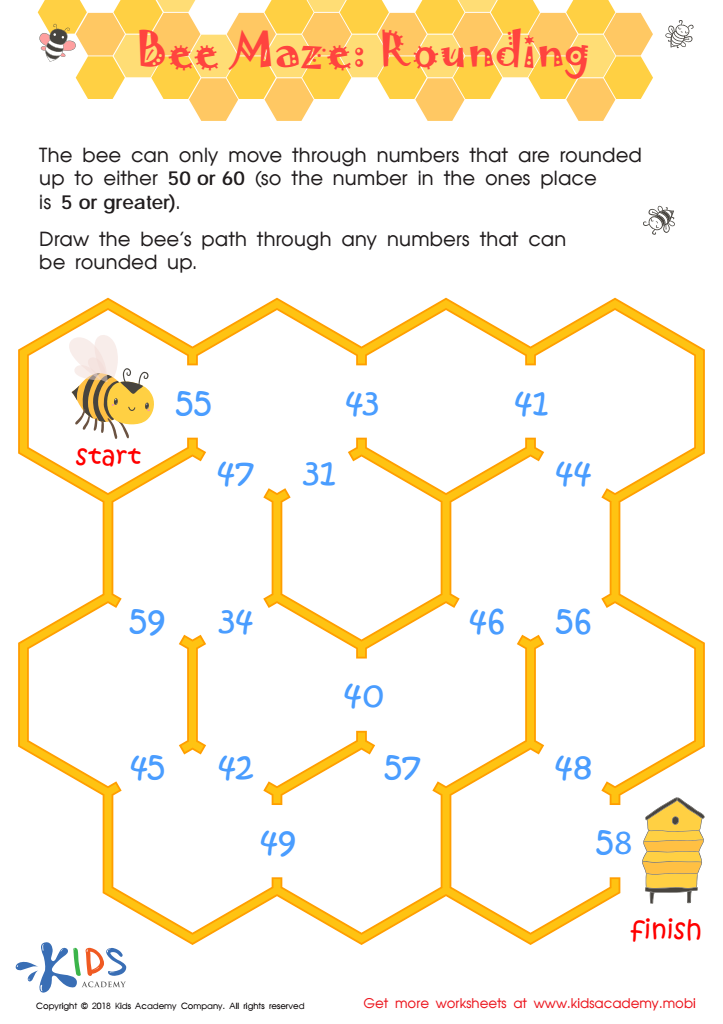
Bee Maze Rounding Worksheet
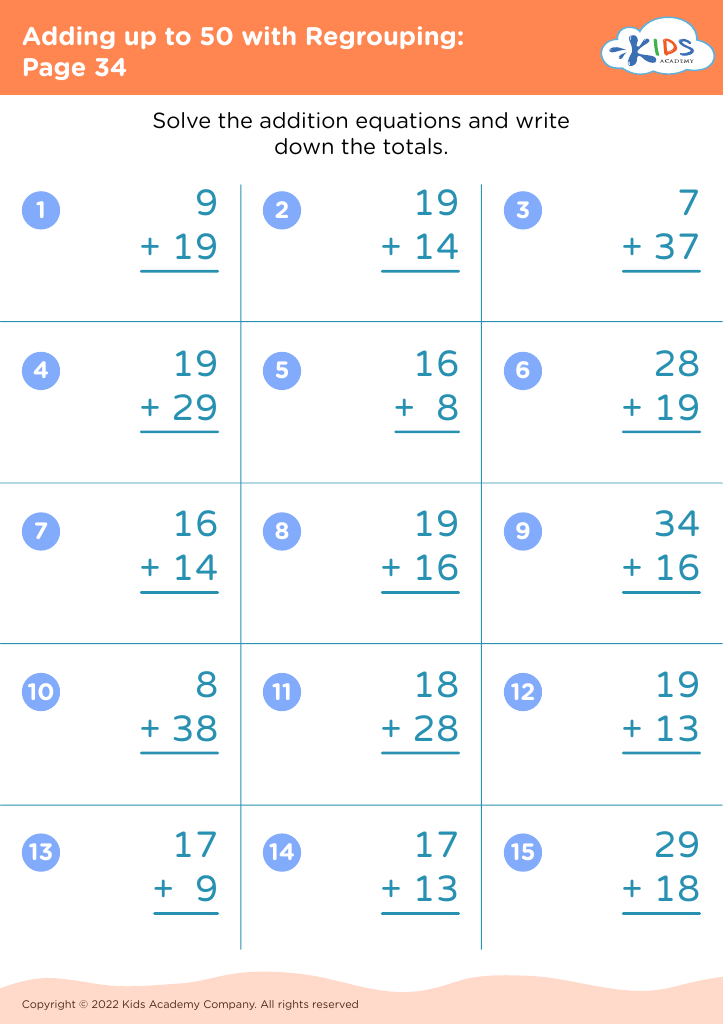








Parents and teachers should prioritize developing spatial awareness in children ages 6 to 8 because this skill is foundational for numerous aspects of learning and daily life. Spatial awareness is the ability to understand and interact with the environment around us, recognizing object locations, dimensions, distance, and their relationship to each other. For young children, enhancing spatial awareness can significantly impact their academic performance and physical coordination.
In academics, spatial awareness is crucial for subjects like mathematics and reading. For example, understanding shapes, patterns, and geometric properties requires the ability to visualize and manipulate objects mentally. Additionally, reading and writing necessitate recognizing the spatial orientation of letters and words, aiding in better comprehension and fluency.
Furthermore, spatial skills are vital for everyday tasks and physical activities. Developing these skills aids children in navigating their surrounding environment confidently and safely. This can enhance their ability to participate in sports, follow choreographed movements in dance, or even perform simple actions like pouring a drink without spilling.
Lastly, strong spatial awareness fosters problem-solving and critical thinking. By manipulating objects mentally, children can more easily solve puzzles, understand maps, and engage in activities that require planning and strategy. By nurturing these abilities early on, parents and teachers set children up for success both in school and in life.








