
Enhance problem-solving ability Worksheets for Ages 6-8
3 filtered results
Difficulty Level
Grade
Age
-
From - To
Subject
Activity
Standards
Boost your child’s critical thinking and analytical skills with our "Enhance Problem-Solving Ability Worksheets" designed for ages 6-8. These engaging activities encourage young minds to think creatively and approach problems from different angles. Each worksheet is crafted to develop essential cognitive skills through fun puzzles, logic games, and thought-provoking scenarios. Perfect for both classroom and at-home learning, our worksheets make problem-solving exciting and enjoyable. Visit Kids Academy and equip your child with the tools they need to thrive in everyday challenges. Start exploring today and watch their confidence soar!
Favorites
With answer key
Interactive
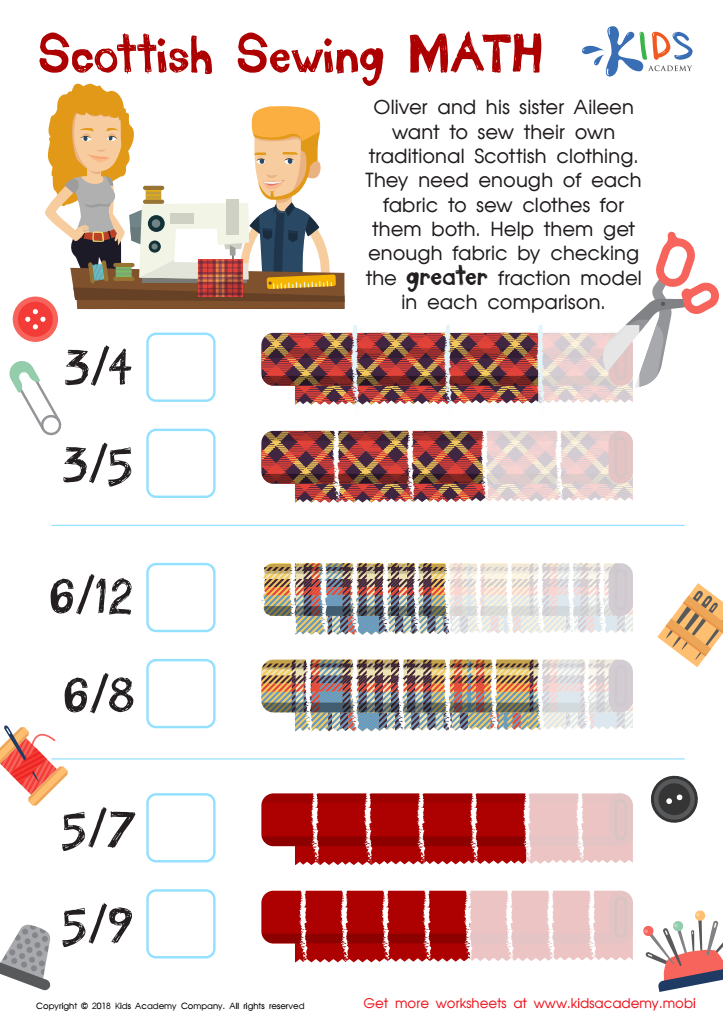
Scottish Sewing Math Worksheet
Ask your kindergartners to help Oliver and Alleen make traditional Scottish clothing by figuring out how much fabric to cut out. Help them learn a bit of geography by explaining Scotland is the home of the Scottish people and their unique traditions. Get the right amount by checking the fraction models. 80 words
 Assign to My Students
Scottish Sewing Math Worksheet
Worksheet
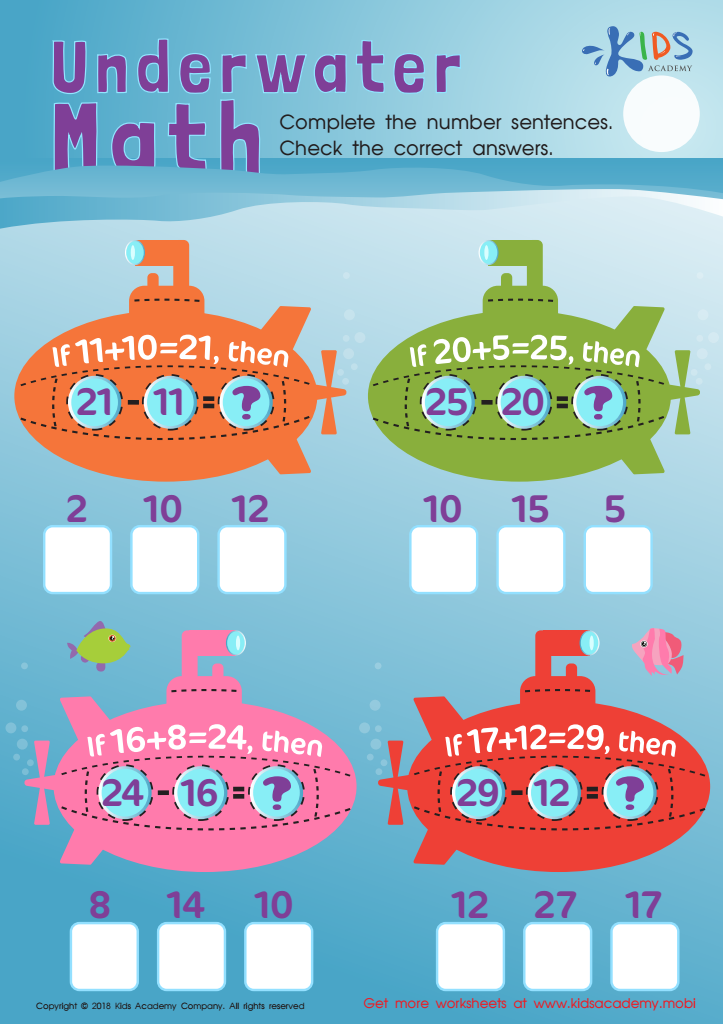
Addition and Subtraction: Underwater Math Worksheet
Take your little mathematicians on an undersea adventure as they work to solve number sentences. With fun worksheets, they'll analyze numbers, orders of operation and use if/then statements. They'll learn addition and subtraction are opposites, helping them solve more problems!
Addition and Subtraction: Underwater Math Worksheet
Worksheet
Join Kids Academy for Free
Who is primarily going to use this learning content?








Enhancing problem-solving ability in children aged 6-8 is crucial for multiple reasons, essential for parents and teachers to actively prioritize. Firstly, this skill lays a strong foundation for academic success. During early grades, a child encounters various subjects—math, reading, science—that require effective problem-solving. By honing this ability, children can better grasp complex concepts, think critically, and perform well academically.
Moreover, developing problem-solving skills at this age nurtures creativity and innovation. When faced with a challenge, children learn to think outside the box and devise unique solutions, fostering a mindset that values ingenuity. This creative thinking is invaluable, not only in academics but throughout their lives.
Socially, problem-solving ability equips children to handle interpersonal conflicts and make sound decisions. It teaches them to assess situations calmly, consider different viewpoints, and find amicable solutions. This not only improves their relationships with peers but also builds emotional intelligence, contributing to better mental health and resilience.
Finally, these early problem-solving experiences boost self-confidence and independence. When children solve problems on their own, they gain a sense of achievement and become more self-reliant. This growing confidence encourages them to tackle more difficult tasks, thereby continuously enhancing their skills and preparing them for future challenges.








