
Geographic knowledge Worksheets for Ages 6-8
5 filtered results
Difficulty Level
Grade
Age
-
From - To
Subject
Activity
Standards
Explore our engaging Geographic Knowledge Worksheets designed specifically for children aged 6-8. These interactive resources help young learners develop a foundational understanding of geography through fun activities and exercises. From identifying continents and oceans to understanding maps and locations, our worksheets stimulate curiosity and enhance critical thinking skills. With colorful illustrations and age-appropriate content, children will enjoy exploring the world around them while building essential geographic knowledge. Perfect for use at home or in the classroom, these worksheets are a valuable tool for early education. Foster your child's love for geography today with our thoughtfully crafted worksheets!
Favorites
With answer key
Interactive
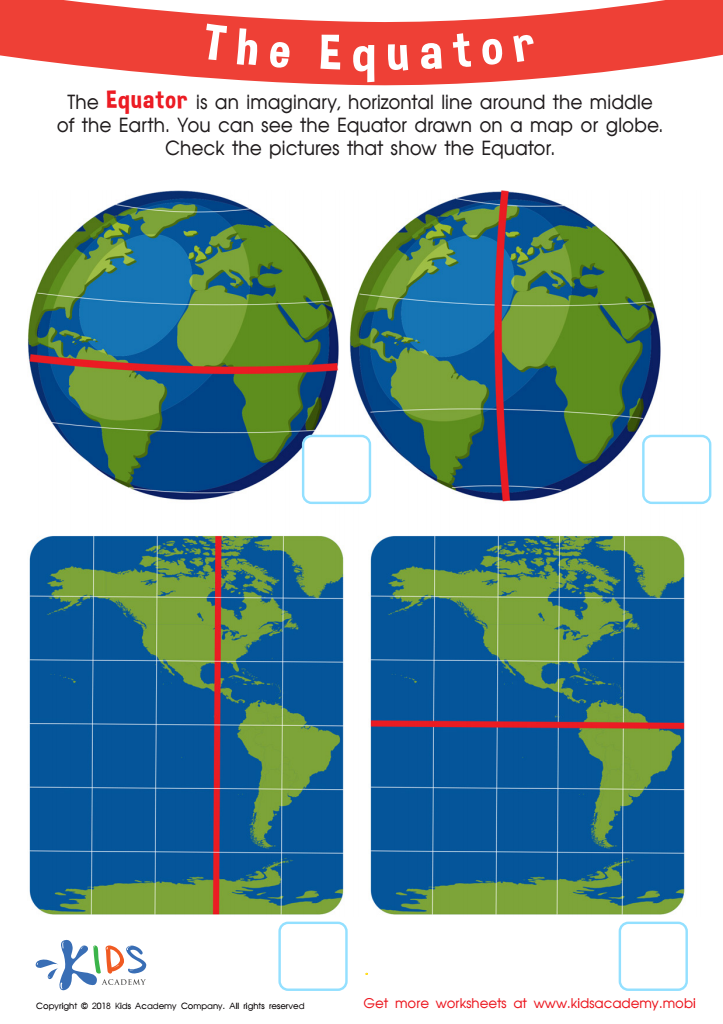
The Equator Worksheet
Young geographers can learn about the Equator with this free, colorful worksheet! They will understand the concept better with picture representation: what the Equator may look like if the Earth could be seen in its entirety, and then check off which one is accurate on a flat world map.
The Equator Worksheet
Worksheet
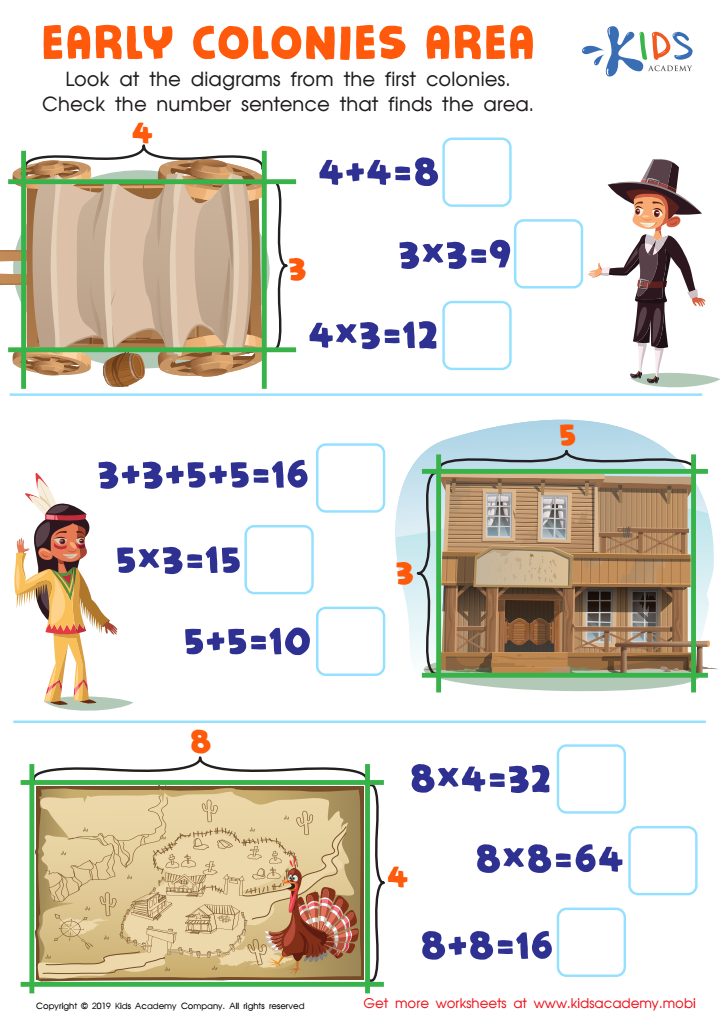
Early Colonies Area Worksheet
Before starting this worksheet, check if your kids know who the early colonizers were. Exercise their addition and subtraction skills by having them solve the equations, then look at the diagrams from the colonies. Guide them to check the number sentence to find the area.
Early Colonies Area Worksheet
Worksheet
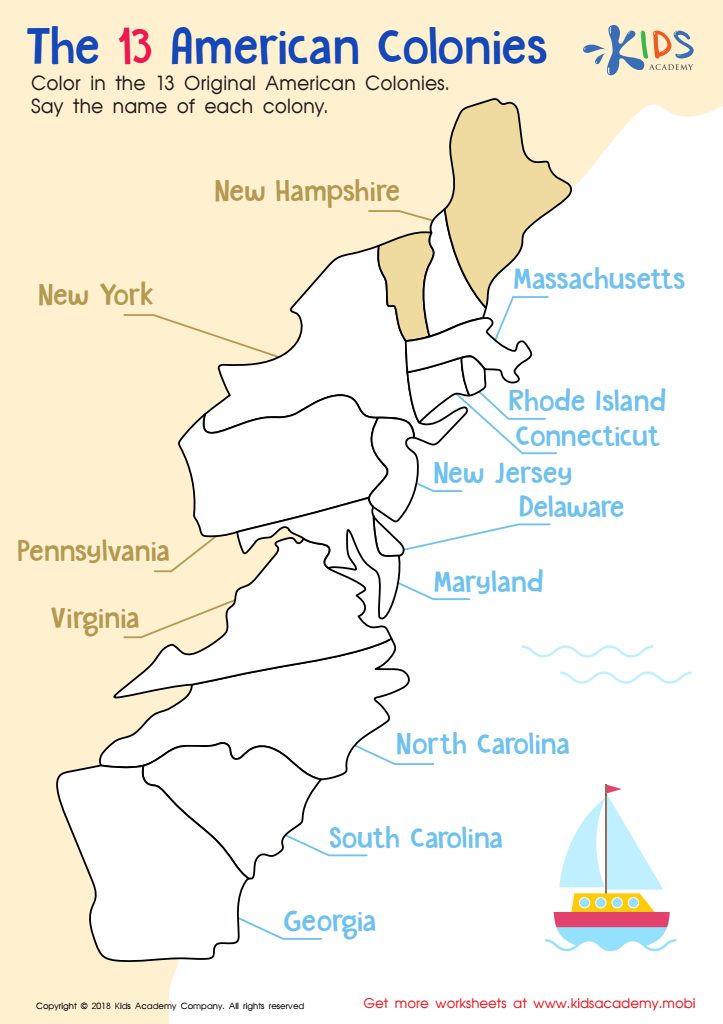
The 13 American Colonies Worksheet
Ensure kids are knowledgeable in maths, English, science, history, and geography. Test their American knowledge: Can they name the 13 Original American Colonies? Use the worksheet; have them color each colony and name it out loud.
Download (PDF)
 Assign to My Students
Assign to My Students
The 13 American Colonies Worksheet
Worksheet
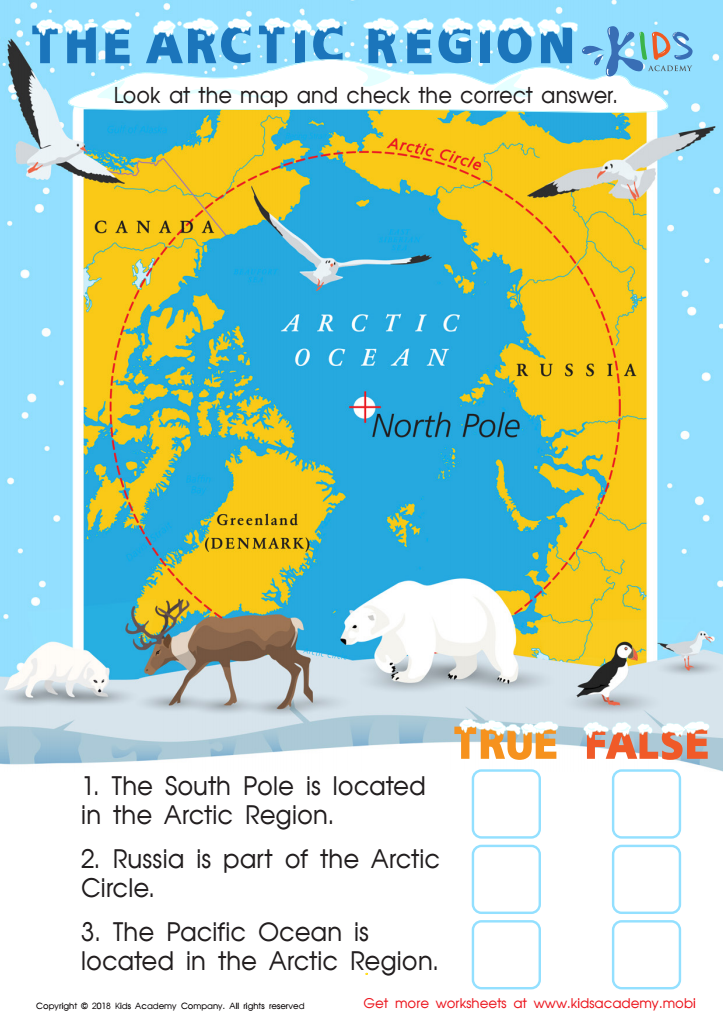
The Arctic Region Worksheet
Kids who love geography will enjoy this worksheet. On the printout there's a map. Show your child the landmarks and read them aloud. Have them take note of the locations. Then, ask them to answer the questions at the bottom using the map; check the answers.
The Arctic Region Worksheet
Worksheet
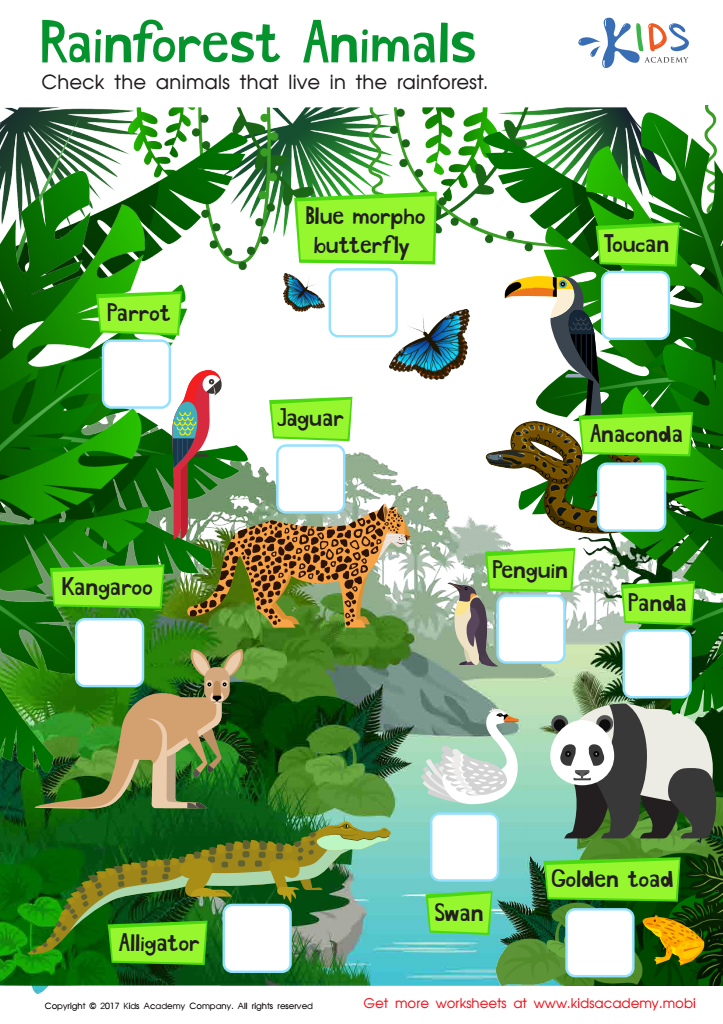
Rainforest Animals Worksheet
Kids love the bright, vivid pics of rainforest animals in this worksheet. It fuels their interest in life science and brings joy to their learning. It encourages them to study these animals in detail.
Rainforest Animals Worksheet
Worksheet
Join Kids Academy for Free
Who is primarily going to use this learning content?




.jpg)



Geographic knowledge is essential for children aged 6-8 as it fosters their understanding of the world, cultural appreciation, and critical thinking skills. At this stage, children are naturally curious about their environment. Teaching them about geography broadens their awareness of different places, cultures, and people, helping them appreciate diversity and fostering empathy. Understanding maps, the concept of location, and landmarks allows children to make sense of the world around them, enhancing their spatial awareness and navigation skills.
Geographic knowledge also establishes a foundation for more complex subjects like history and science. By knowing basic facts about countries, continents, and ecosystems, children can contextualize global events and environmental issues they may encounter in their studies. This awareness helps develop informed and responsible future citizens.
Furthermore, geography education encourages curiosity, promoting skills such as inquiry and analysis. When children learn to ask questions about their surroundings, they develop a love for learning and become motivated explorers. Ultimately, supporting children's geographic knowledge enhances their confidence, encourages respectful interactions with diverse communities, and prepares them for a future where global thinking is vital. Parents and teachers play a crucial role in guiding this learning journey, instilling a sense of wonder about the interconnected world they inhabit.








