Geometry basics Worksheets for Ages 6-8
3 filtered results
-
From - To
Explore our engaging Geometry Basics Worksheets designed specifically for children ages 6 to 8! These fun and interactive printables help young learners grasp essential geometric concepts, including shapes, measurements, and spatial understanding. Our worksheets feature vibrant illustrations and age-appropriate activities that encourage creativity and critical thinking. Perfect for classroom or homeschooling, these resources support foundational skills in geometry while making learning enjoyable. Facilitate your child’s mathematical journey with exercises tailored to promote exploration and problem-solving. Dive into the world of geometry today and watch your child develop confidence and enthusiasm for math through hands-on learning experiences!
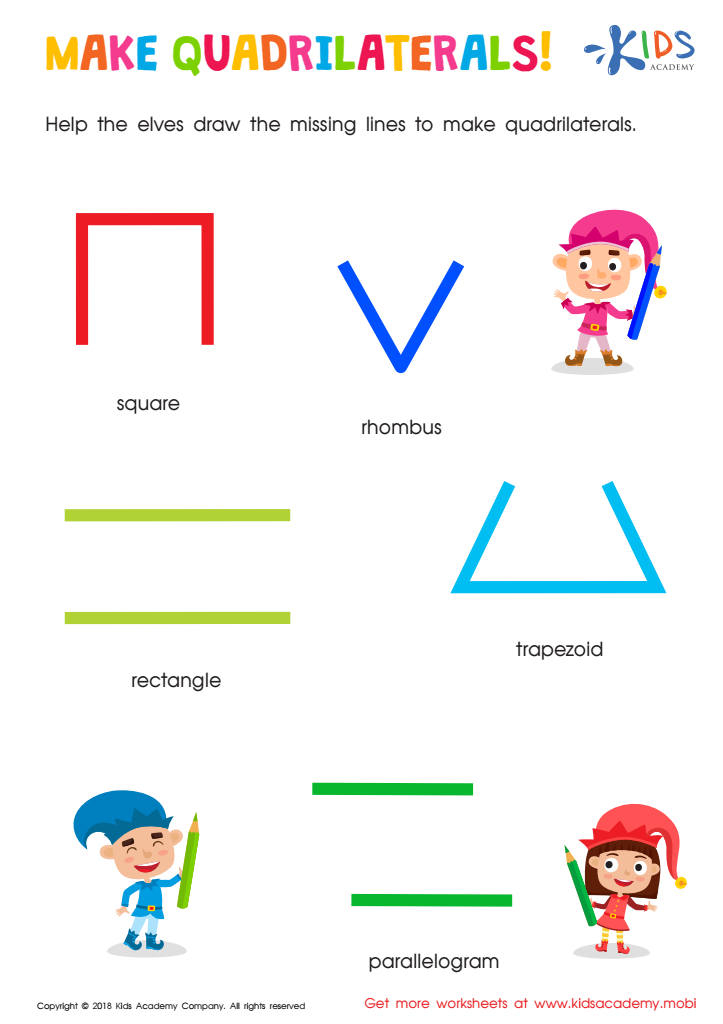
Make Quadrilaterals Worksheet
 Assign to My Students
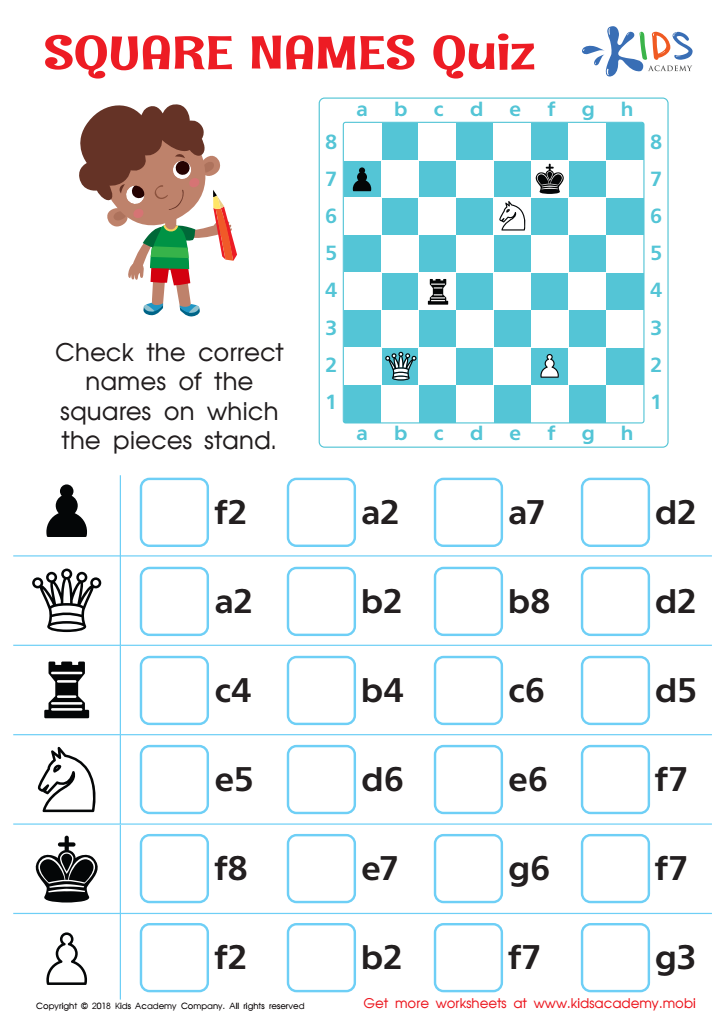
Square Names Quiz Worksheet
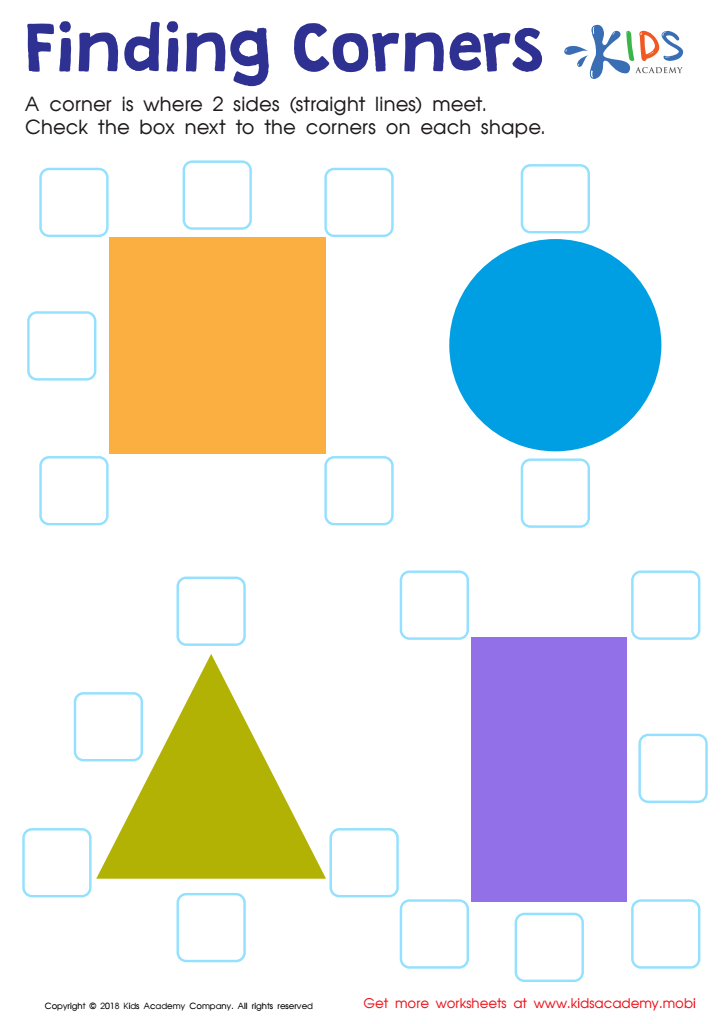
Finding Corners Worksheet




Parents and teachers should prioritize teaching geometry basics to children ages 6-8 for several compelling reasons. Firstly, geometry introduces young learners to critical spatial reasoning skills, helping them understand shapes, sizes, and the relationships between objects. These skills are foundational for later math and science learning, enabling children to tackle more complex concepts with confidence.
Moreover, geometry fosters observational skills and encourages children to become more aware of their surroundings. By exploring shapes and patterns in everyday life – such as identifying rectangular windows or circular clocks – children learn to make connections between math and the real world.
Engaging with geometry also promotes creativity and problem-solving. Young learners can explore and create geometric designs or puzzles, stimulating their imaginations while developing logical thinking.
Additionally, having a grasp of geometry basics boosts children’s overall academic performance. As they progress through school, those who are comfortable with geometric concepts often find it easier to learn other mathematical disciplines, such as measurement and even algebra.
Ultimately, by instilling a love for geometry and its applications at an early age, parents and teachers can most codeless motivational children to embrace learning and to recognize the beauty and utility of mathematics in their daily lives.








