
Grammar comprehension Worksheets for Ages 6-8
3 filtered results
Difficulty Level
Grade
Age
-
From - To
Subject
Activity
Standards
Enhance your child’s language skills with our Grammar Comprehension Worksheets designed specifically for ages 6-8. These engaging worksheets help young learners confidently grasp grammar fundamentals, from punctuation and sentence structure to parts of speech. Perfect for home or classroom use, our activities support budding readers in mastering essential grammar rules, fostering better reading and writing skills. Encourage your 6-8-year-olds to explore the fun side of learning with colorful, thoughtfully crafted exercises. Equip them with the tools they need to excel academically and communicate more effectively. Visit our page for a resourceful collection that makes grammar learning enjoyable!
Favorites
With answer key
Interactive
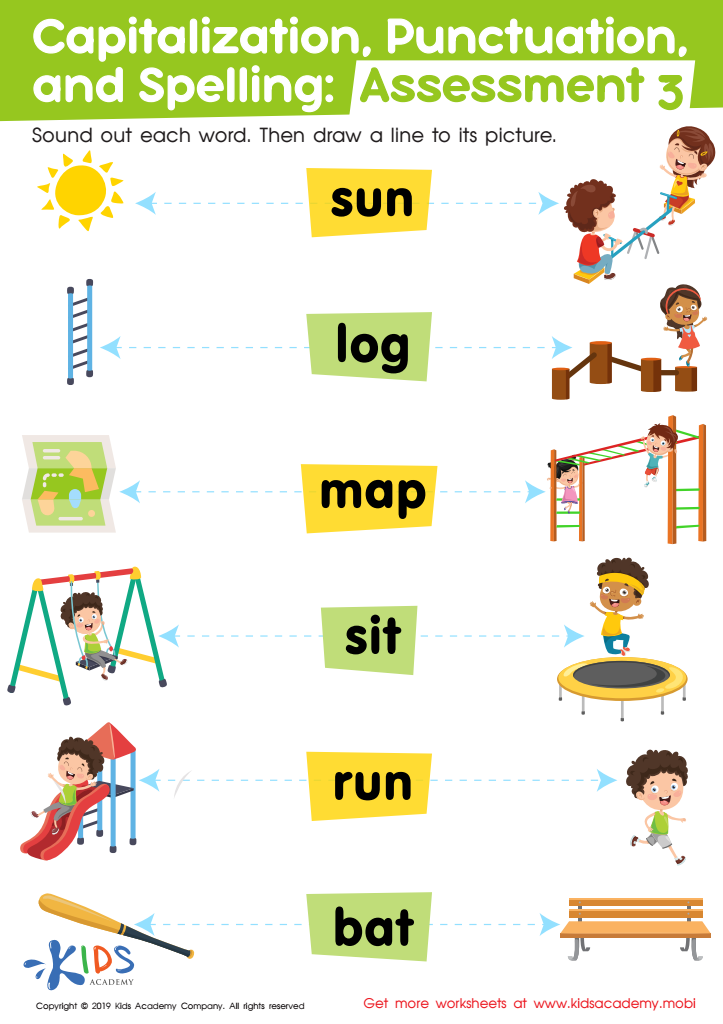
Capitalization. Punctuation. Spelling. Assessment 3 Worksheet
Before starting this worksheet, have your kids spell some simple words. Correct if wrong and show the right spellings. Then, ask them to link the pictures to the words you read out. Spelling is key for a good writer, and kids need to know how to spell to read texts easily.
 Assign to My Students
Capitalization. Punctuation. Spelling. Assessment 3 Worksheet
Worksheet
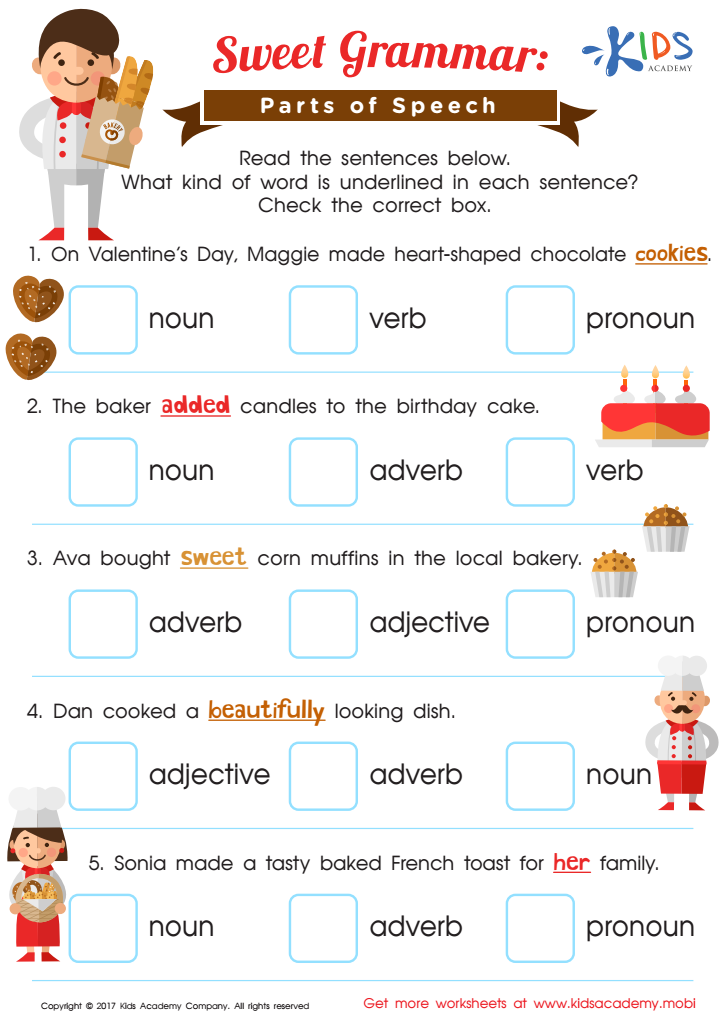
Parts of Speech Worksheet
It's hard to tell the difference between parts of speech! This parts of speech worksheet for 3rd graders makes it easier! With a fun theme, it encourages kids to master nouns, pronouns, adjectives and adverbs.
Parts of Speech Worksheet
Worksheet
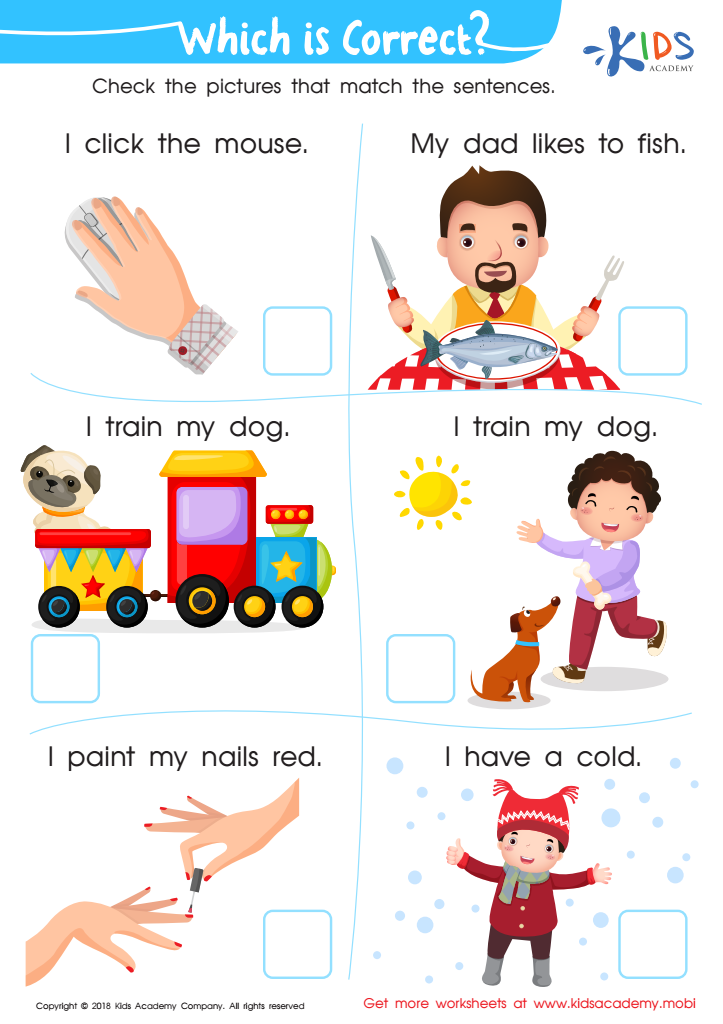
Which Is Correct? Worksheet
Go over the exercise with your students. Ask them to read the sentences and explain what they mean. Check the pictures that correspond to the sentences. For example, what does "My dad likes to fish" mean? Test their understanding with the worksheet.
Which Is Correct? Worksheet
Worksheet
Join Kids Academy for Free
Who is primarily going to use this learning content?





Caring about grammar comprehension for children ages 6-8 is crucial for several reasons. First, grammar forms the building blocks of effective communication. At this age, children are rapidly developing their language skills, and having a solid understanding of grammar allows them to express their ideas clearly and accurately. This foundational knowledge supports not only spoken language but also reading and writing skills.
Second, early grammar comprehension aids in cognitive development. Understanding sentence structure, parts of speech, and proper syntax enhances critical thinking and problem-solving abilities as children learn to organize their thoughts coherently.
Moreover, academic success is closely linked to strong language skills. Proficiency in grammar helps children perform better across various subjects, as most academic areas require reading, interpreting questions, and providing written answers. For instance, good grammar helps in comprehending math word problems or writing science reports.
Lastly, it boosts confidence and social integration. Children with strong grammar skills are better prepared for social interactions and are likely to participate more actively in classroom discussions. They feel more confident in their abilities, fostering a positive learning attitude. Parents and teachers play a key role in guiding and modeling proper grammar, thereby laying a strong linguistic foundation for lifelong learning.








