Identify shapes Worksheets for Ages 6-8
12 filtered results
-
From - To
Explore our "Identify Shapes Worksheets for Ages 6-8" designed to enhance your child's geometric skills! These engaging, printable activities help kids recognize and name various shapes, boosting their spatial awareness and critical thinking. Through fun puzzles and hands-on exercises, children learn to identify shapes like circles, squares, triangles, and more, building a strong foundation for future math concepts. Perfect for classroom use or at-home practice, each worksheet fosters confidence and curiosity. Start your child's journey into the world of geometry with our expertly crafted resources, ensuring learning is always enjoyable and effective.
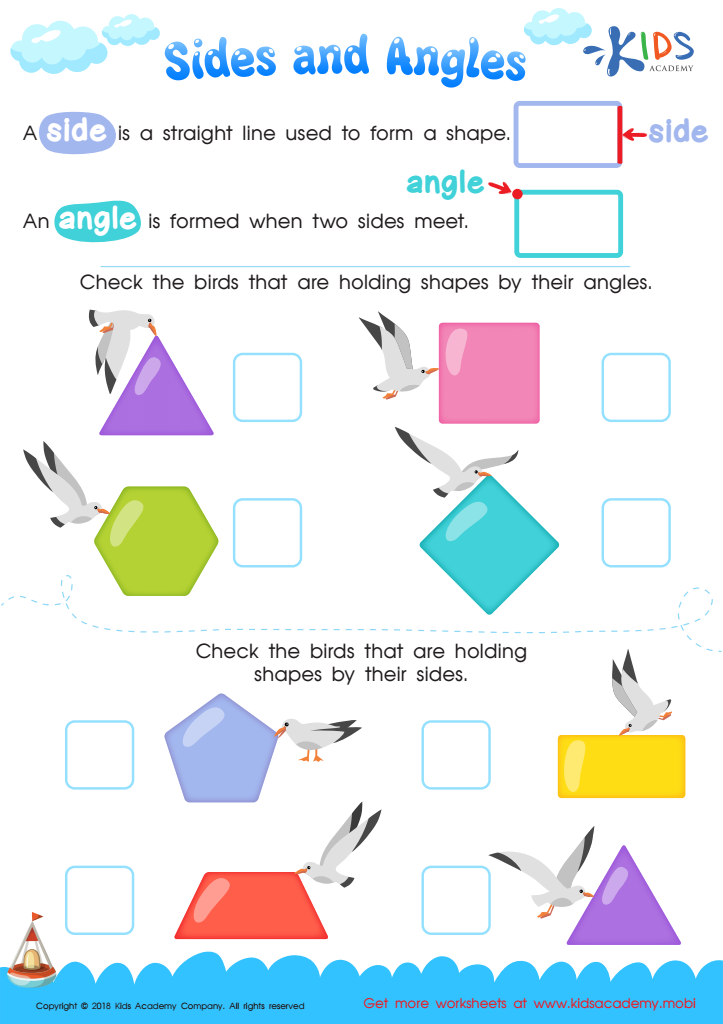
Sides and Angles Worksheet
 Assign to My Students
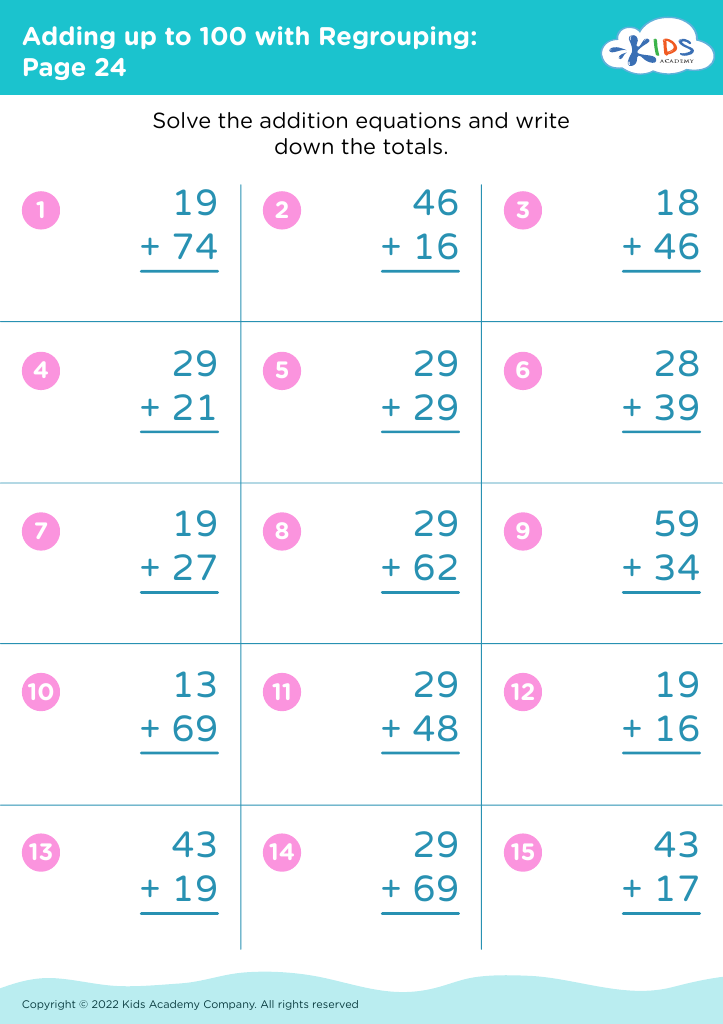
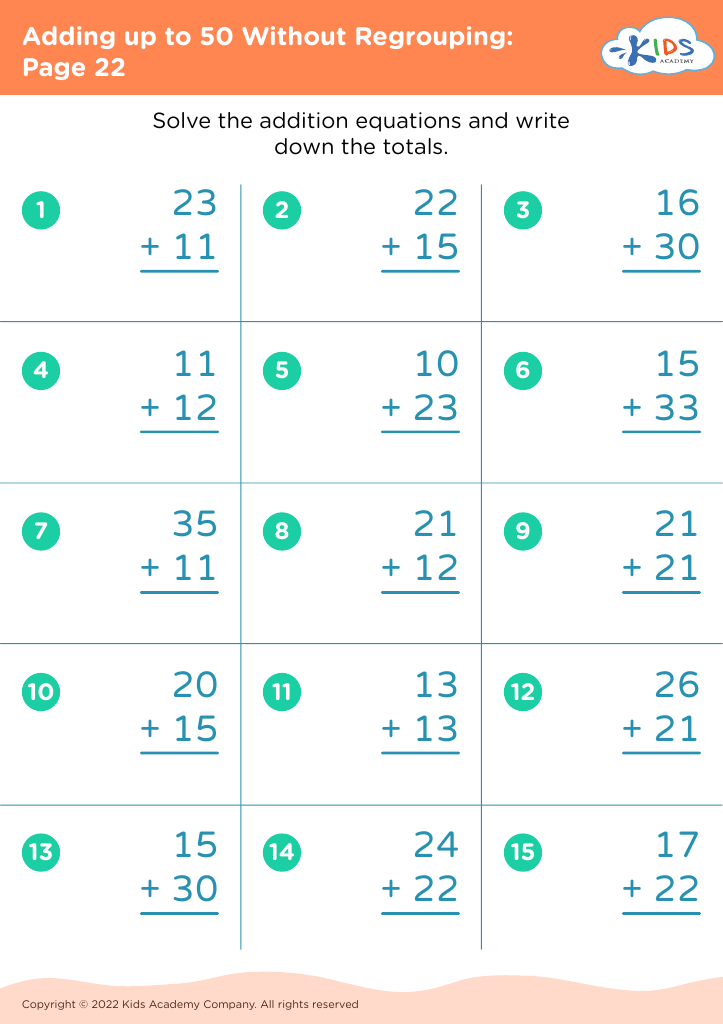
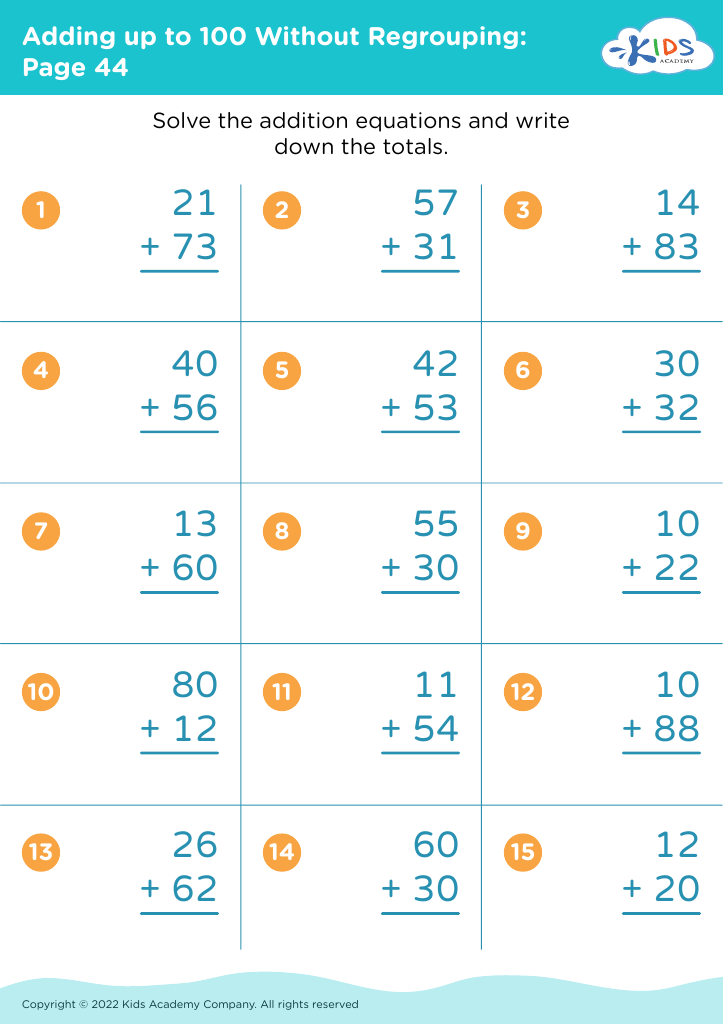





Introducing children to shapes at an early age, such as between the ages of 6 and 8, is fundamentally important for their cognitive and academic development. Understanding and identifying shapes helps to build a foundational skill that extends beyond simple geometric recognition. When children learn about shapes, they engage in pattern recognition, spatial understanding, and problem-solving, which are critical aspects of mathematics and science later in life.
Shapes also play a crucial role in developing visual literacy. When kids understand how shapes function, they can better interpret and organize visual information in their environment. This skill aids not only in reading but also in art, as recognizing the different components of a visual scene is key to creating and appreciating illustrations and designs.
Moreover, cognitive development is further supported as children enhance their descriptive vocabulary by learning specific shape names, properties, and comparisons, which fosters greater communication skills. Shape activities also promote fine motor skills as children often draw, cut, or manipulate shapes, improving hand-eye coordination and dexterity.
Finally, an early understanding of shapes nurtures a child's confidence in their ability to categorize, classify, and solve problems, preparing them for more advanced concepts in schooling. By prioritizing shape identification, parents and teachers provide children with an essential toolkit that benefits their overall educational journey.








