Check out this FREE "Improve counting skills" Trial Lesson for age 6-8!

Match Exactly the Same

Favorites
With answer key
Interactive
  • 6-8
  • Improve counting skills
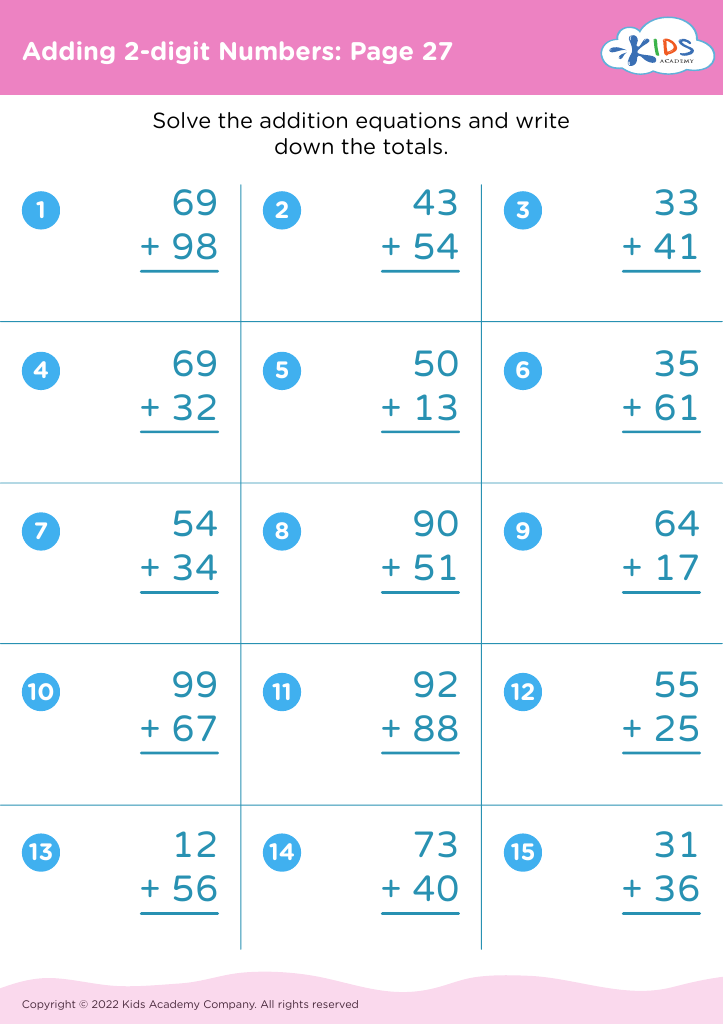
Adding 2-digit Numbers: Page 27

Adding 2-digit Numbers: Page 27

Adding 2-digit Numbers: Page 27
Worksheet
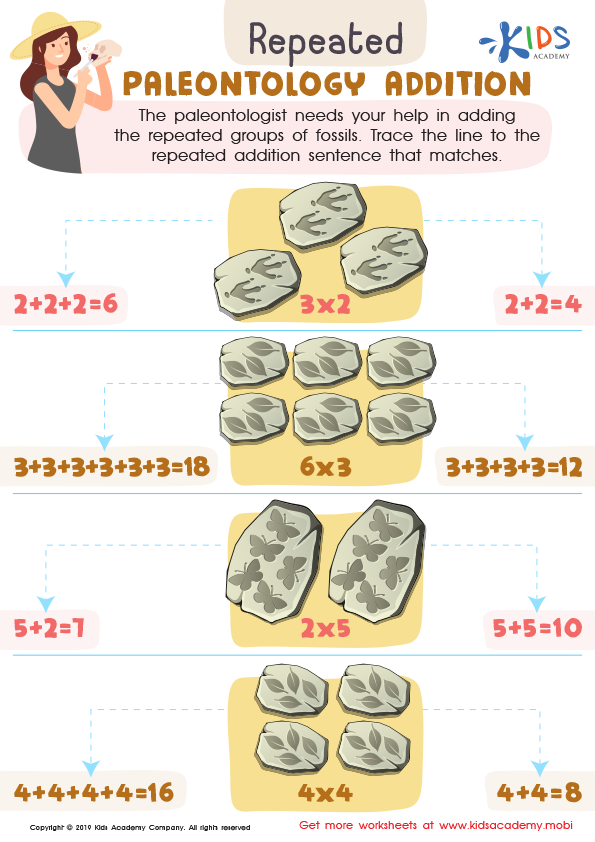
Repeated Archaeology Addition Worksheet

Repeated Archaeology Addition Worksheet

Does your child have dreams for the future? Help them explore the different professions available to them and what each entails. This traceable sheet, featuring an archaeologist completing their work, will show your kid how to find the repeated addition sentence that matches the line. Hold their hand as they complete the activity, inspiring them to pursue their big dreams!
Repeated Archaeology Addition Worksheet
Worksheet
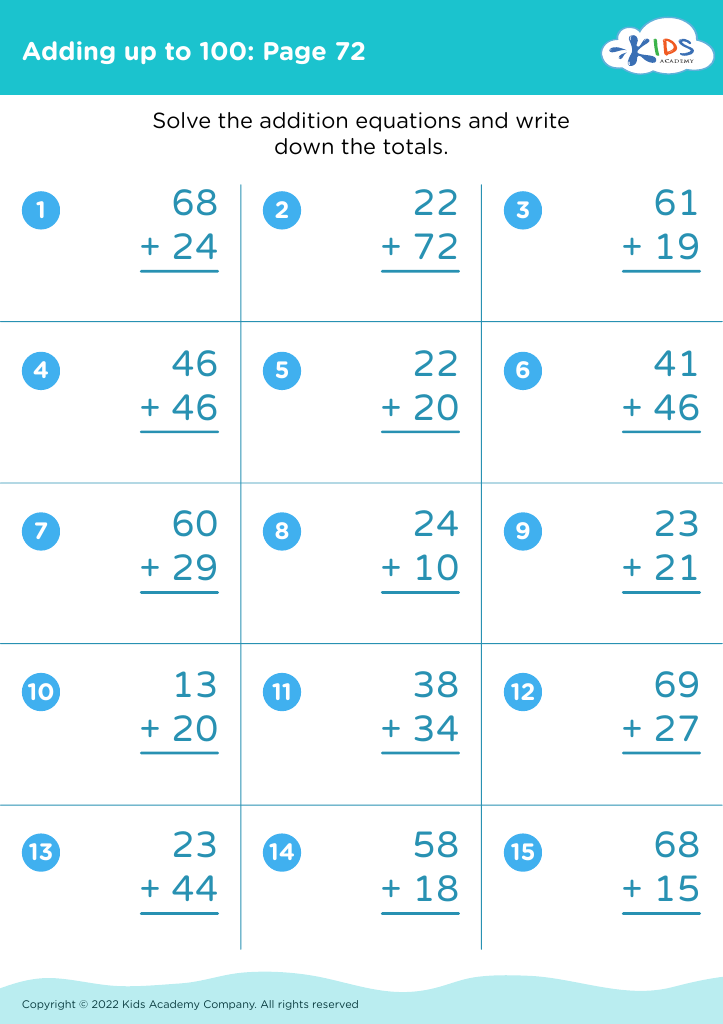
Adding up to 100: Page 72

Adding up to 100: Page 72

Adding up to 100: Page 72
Worksheet
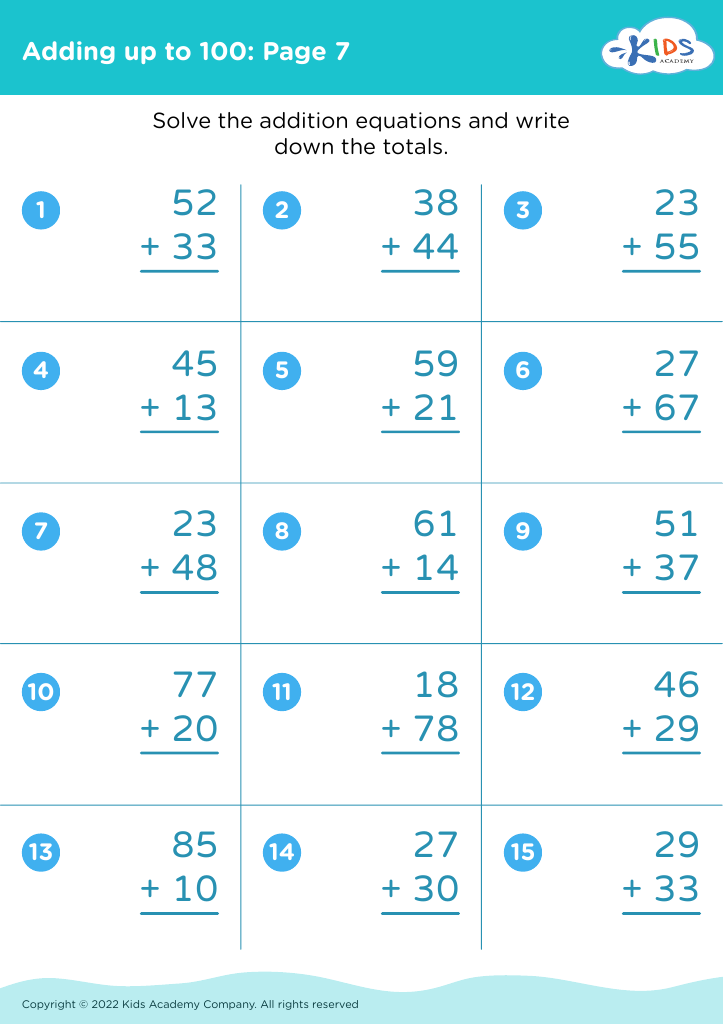
Adding up to 100: Page 7

Adding up to 100: Page 7

Adding up to 100: Page 7
Worksheet
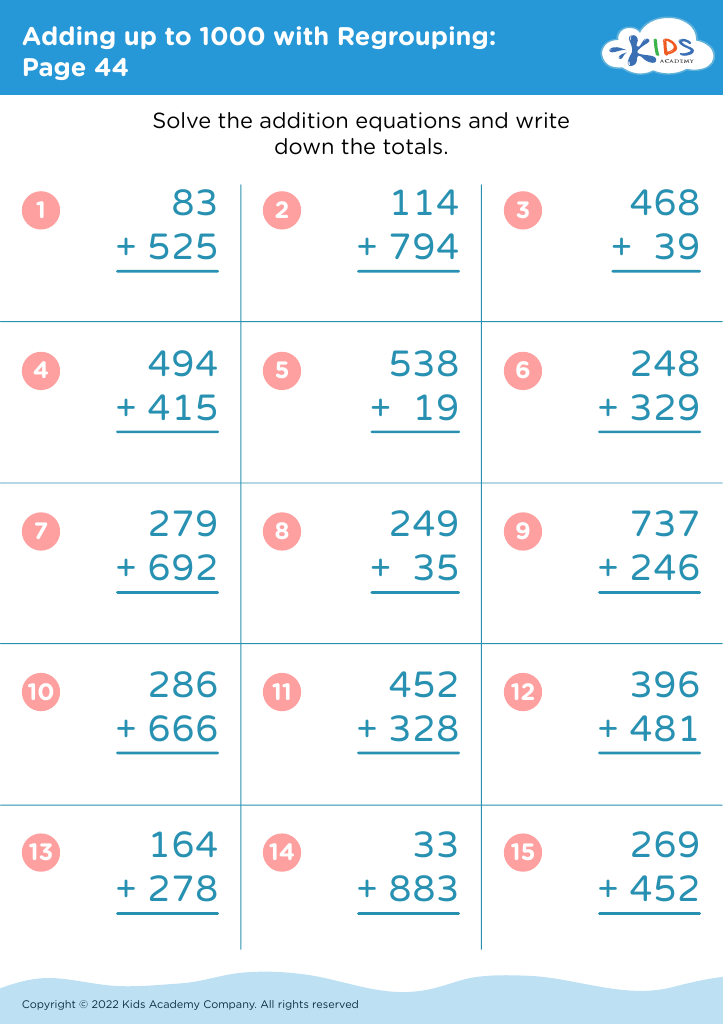
Adding up to 1000 with Regrouping: Page 44
Worksheet
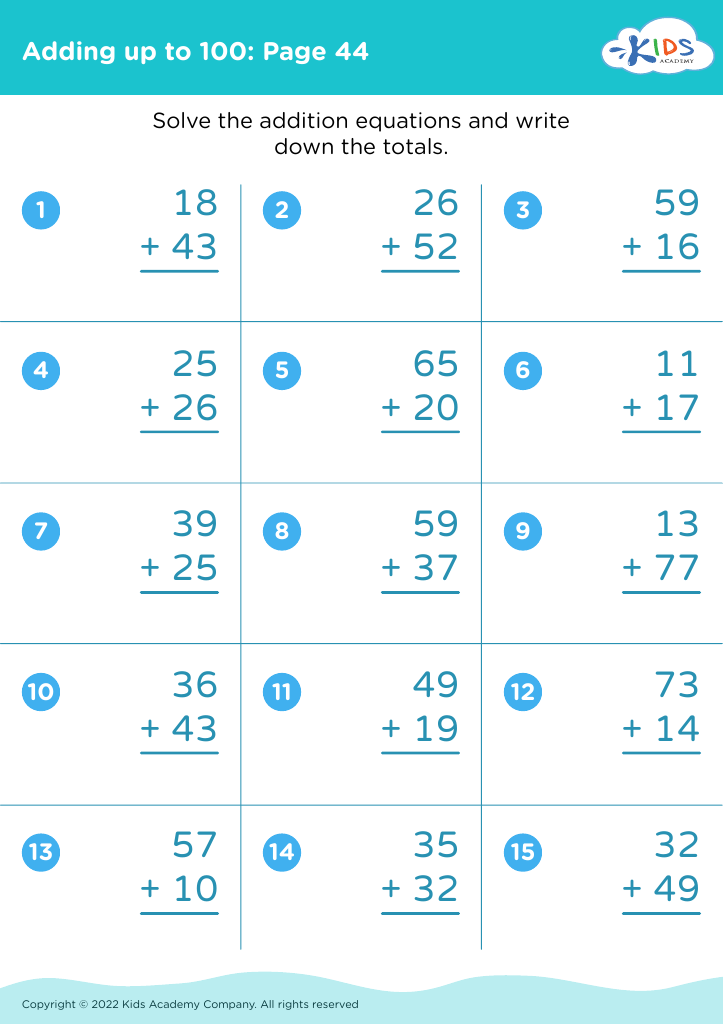
Adding up to 100: Page 44

Adding up to 100: Page 44

Adding up to 100: Page 44
Worksheet
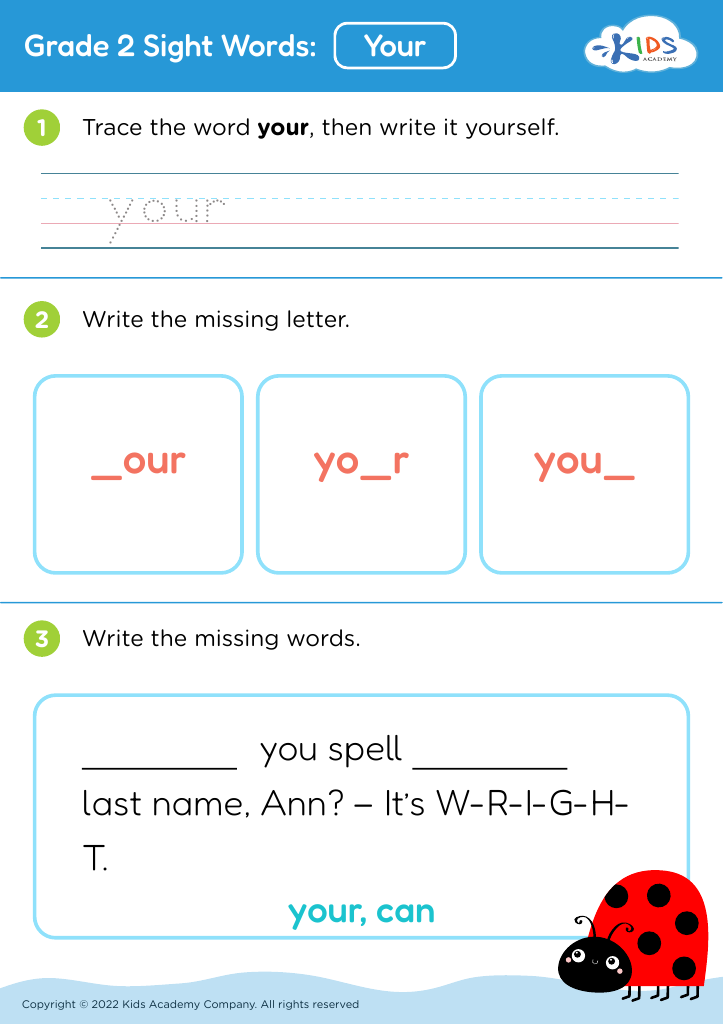
Grade 2 Sight Words: Your

Grade 2 Sight Words: Your

Grade 2 Sight Words: Your
Worksheet
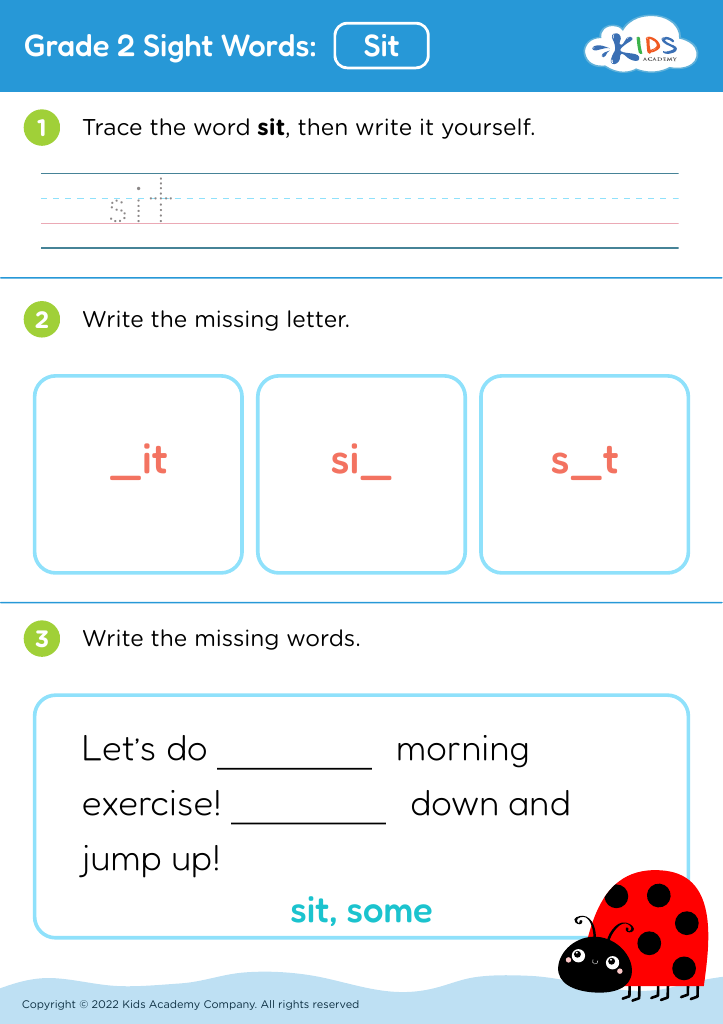
Grade 2 Sight Words: Sit

Grade 2 Sight Words: Sit

Grade 2 Sight Words: Sit
Worksheet
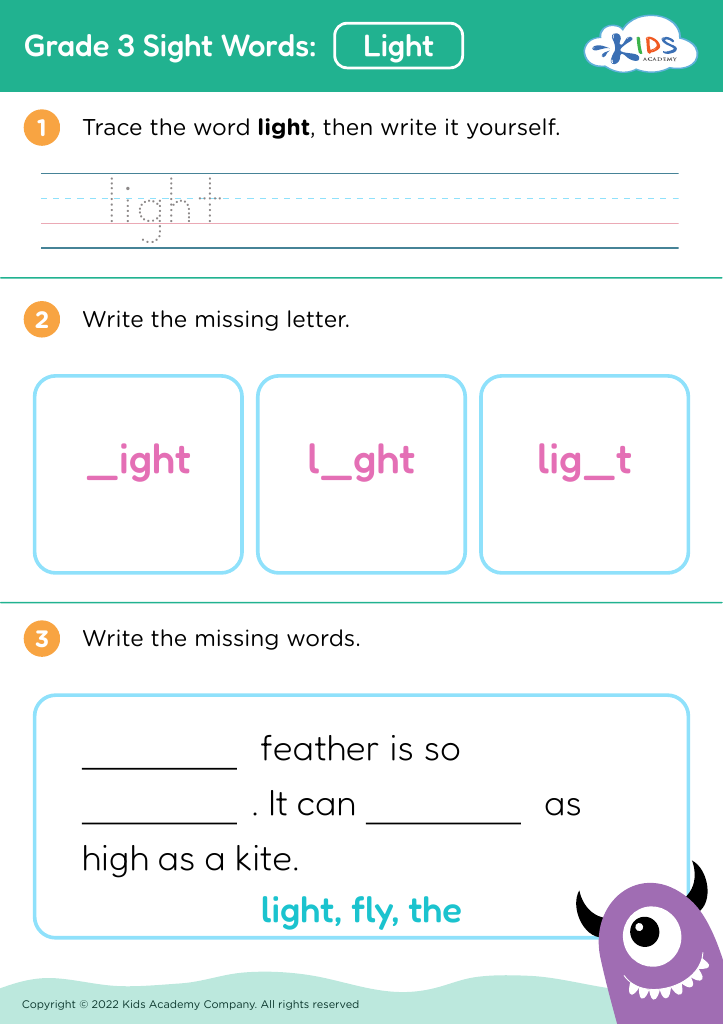
Grade 3 Sight Words: Light

Grade 3 Sight Words: Light

Grade 3 Sight Words: Light
Worksheet
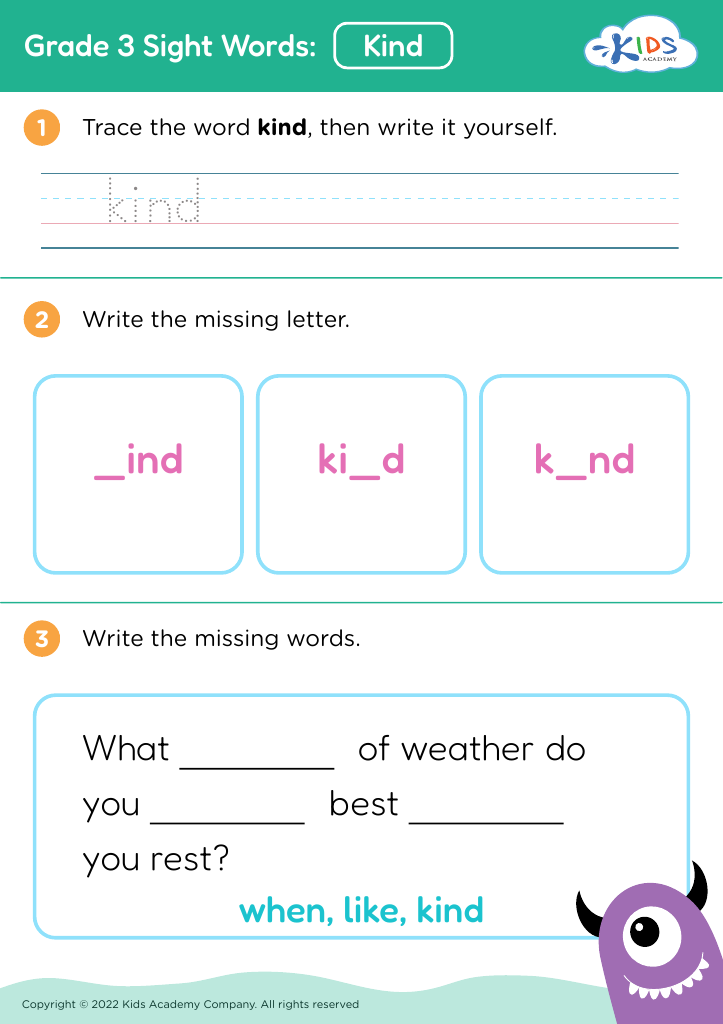
Grade 3 Sight Words: Kind

Grade 3 Sight Words: Kind

Grade 3 Sight Words: Kind
Worksheet


... 2 3

Counting skills are foundational for children aged 6-8 as these skills pave the way for broader mathematical understanding. At this stage, kids transition from basic counting to applying their knowledge in more complex ways, such as addition and subtraction. Developing counting skills nurtures cognitive development, enhancing number sense and problem-solving abilities. This is crucial for grasping mathematical concepts that they will encounter in later grades.

Moreover, strong counting skills help children gain confidence in their academic capabilities, which can lead to positive attitudes toward learning. When parents and educators prioritize counting skills, they create a solid framework for future learning and critical thinking. Counting also introduces patterns, sequences, and the relationship between numbers, all vital for later math proficiency.

Additionally, early counting engages children in fun, interactive activities which promote social skills and cooperation. Games and counting exercises can help foster parent-child or teacher-student relationships, creating a supportive learning environment. By fostering counting skills in young children, parents and educators empower them not only in math but in life, equipping them with the necessary tools to navigate a numerically driven world confidently.