Improves number recognition Worksheets for Ages 6-8
3 filtered results
-
From - To
Boost your child’s number recognition skills with our engaging worksheets designed for ages 6-8! Our carefully crafted exercises help young learners identify, count, and understand numbers in a fun and interactive way. Aimed at enhancing foundational math abilities, these worksheets incorporate colorful visuals and relatable themes to captivate students' attention. From tracing and matching numbers to completing patterns, children will develop confidence and proficiency in their counting skills. Perfect for both classroom settings and at-home practice, our number recognition worksheets are an essential resource for nurturing your child's early arithmetic understanding. Start cultivating their numerical skills today!
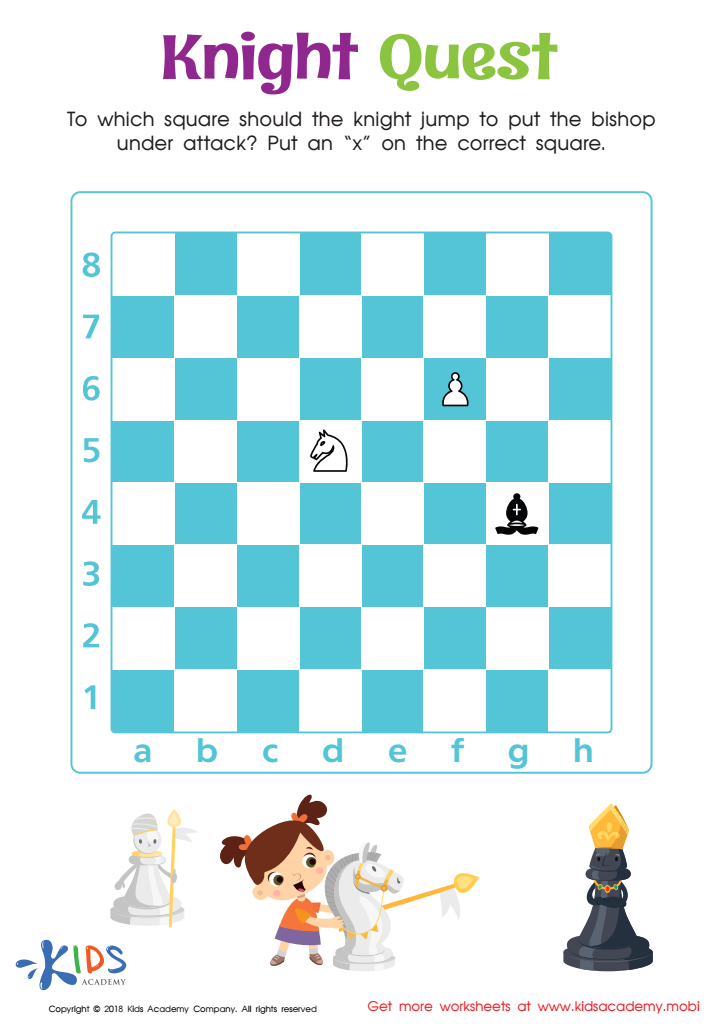
Knight Quest Worksheet
 Assign to My Students



.jpg)




Improving number recognition for children aged 6-8 is essential for several reasons. At this stage of development, children begin to build a strong mathematical foundation that is crucial for their academic success. Number recognition is not just about identifying digits; it also lays the groundwork for understanding numerical concepts, enabling children to engage effectively with addition, subtraction, and even basic problem-solving.
When children can recognize numbers fluently, they gain confidence in their mathematical abilities, which fosters a positive attitude toward learning in general. This stage of learning is often where attitudes towards math begin to form, making early intervention important. Parents and teachers can support this process through engaging activities such as counting games, flashcards, and interactive technology that make learning fun.
Furthermore, strong number recognition skills are linked to better academic outcomes as students progress in school. This foundational skill also enhances everyday understanding, such as managing time or handling finances later in life. For parents and teachers, cultivating number recognition not only supports immediate academic goals but also contributes to a child’s overall cognitive development, preparing them for a successful future in mathematics and beyond.








