Learn addition Worksheets for Ages 6-8
4 filtered results
-
From - To
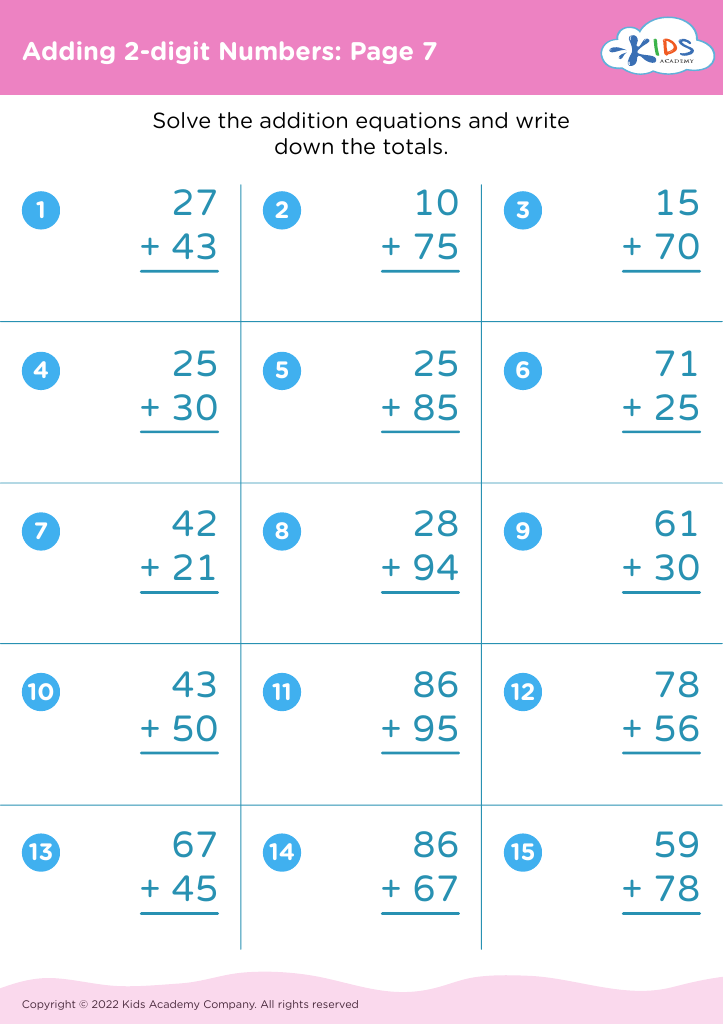
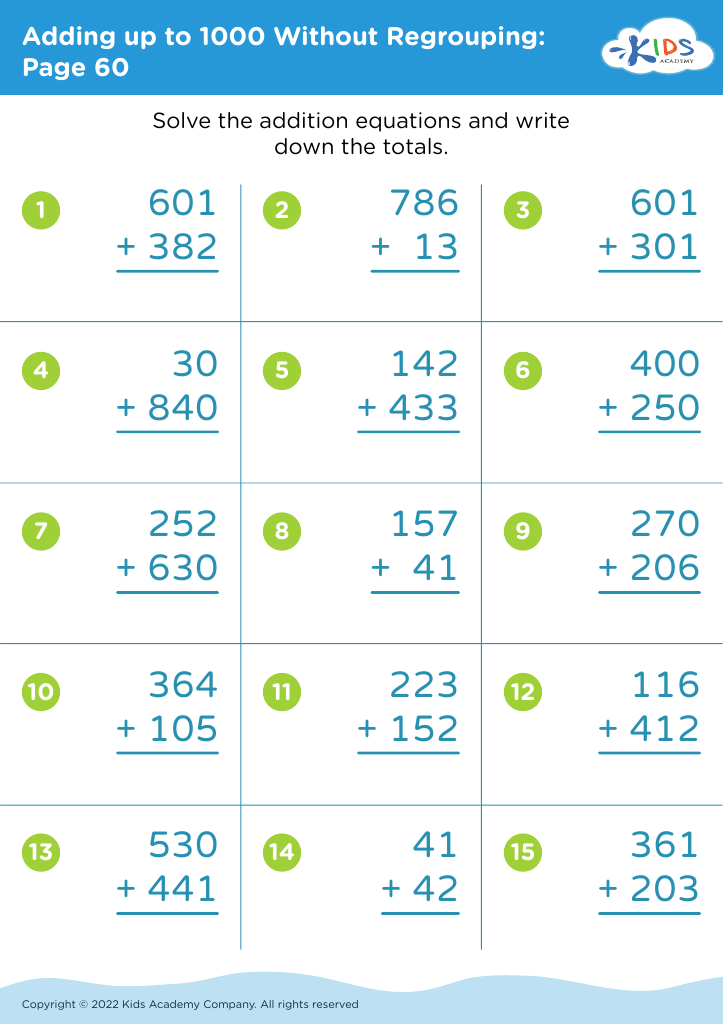
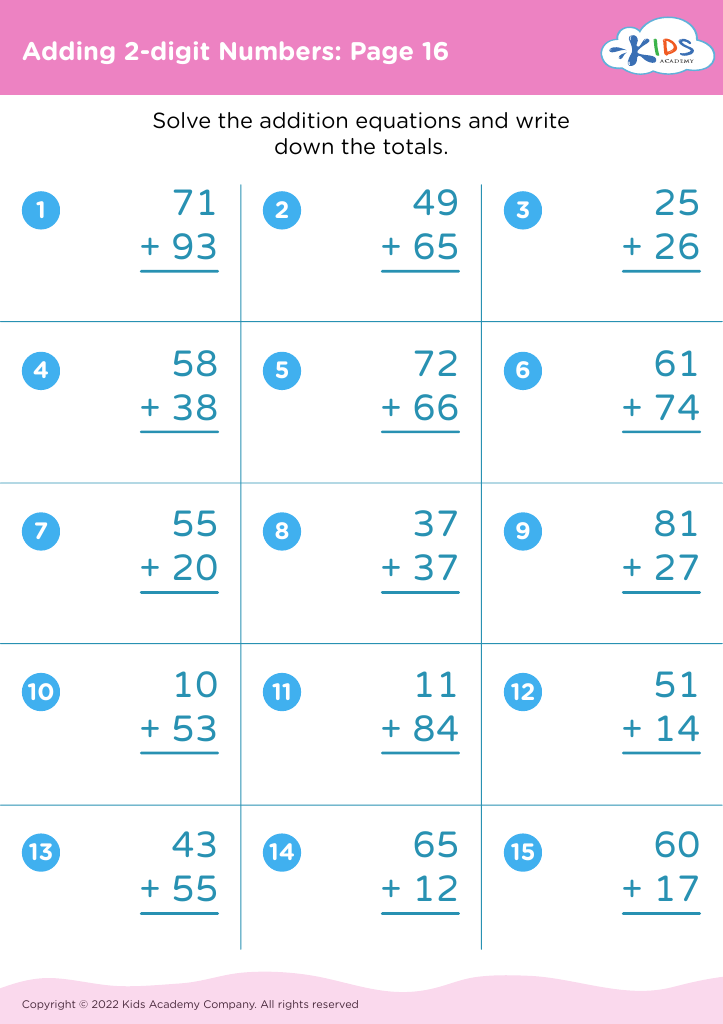
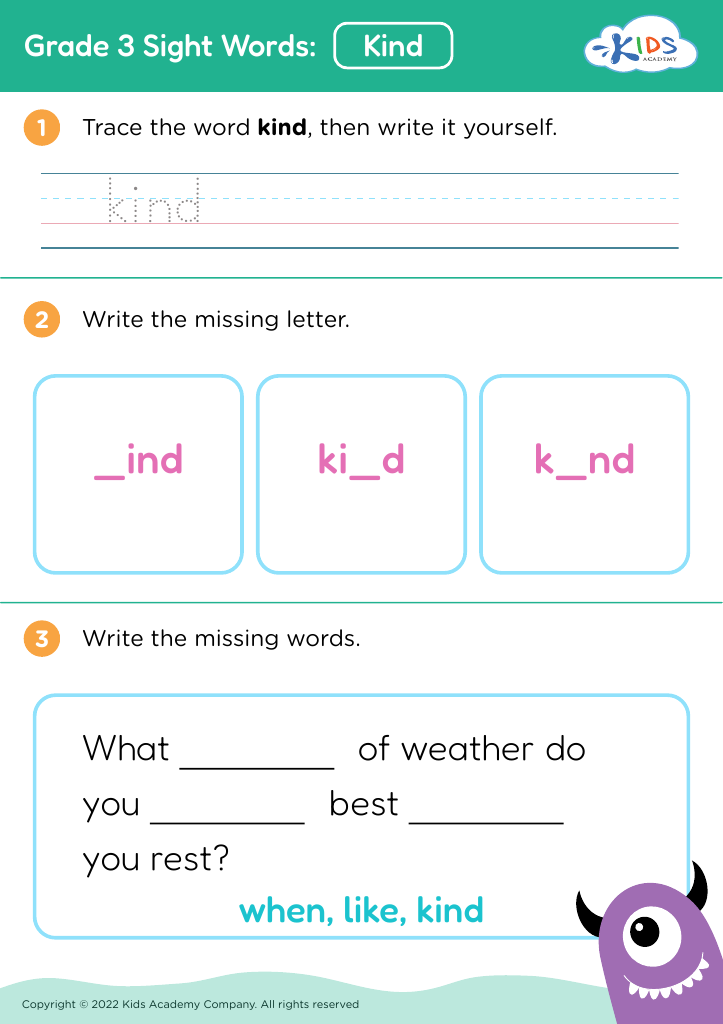
Discover our engaging "Learn Addition Worksheets for Ages 6-8," designed to make learning math fun and interactive for young learners! These age-appropriate worksheets focus on building foundational addition skills through colorful visuals and creative exercises. Each worksheet features various problems tailored to reinforce addition concepts while fostering critical thinking. Designed for flexibility, they can be used in the classroom or at home. Perfect for homeschooling or supplementing classroom activities, our worksheets encourage practice at every child’s pace. Help your K-2 students master addition and build confidence in their math abilities. Explore our extensive collection today and watch your child's skills grow!


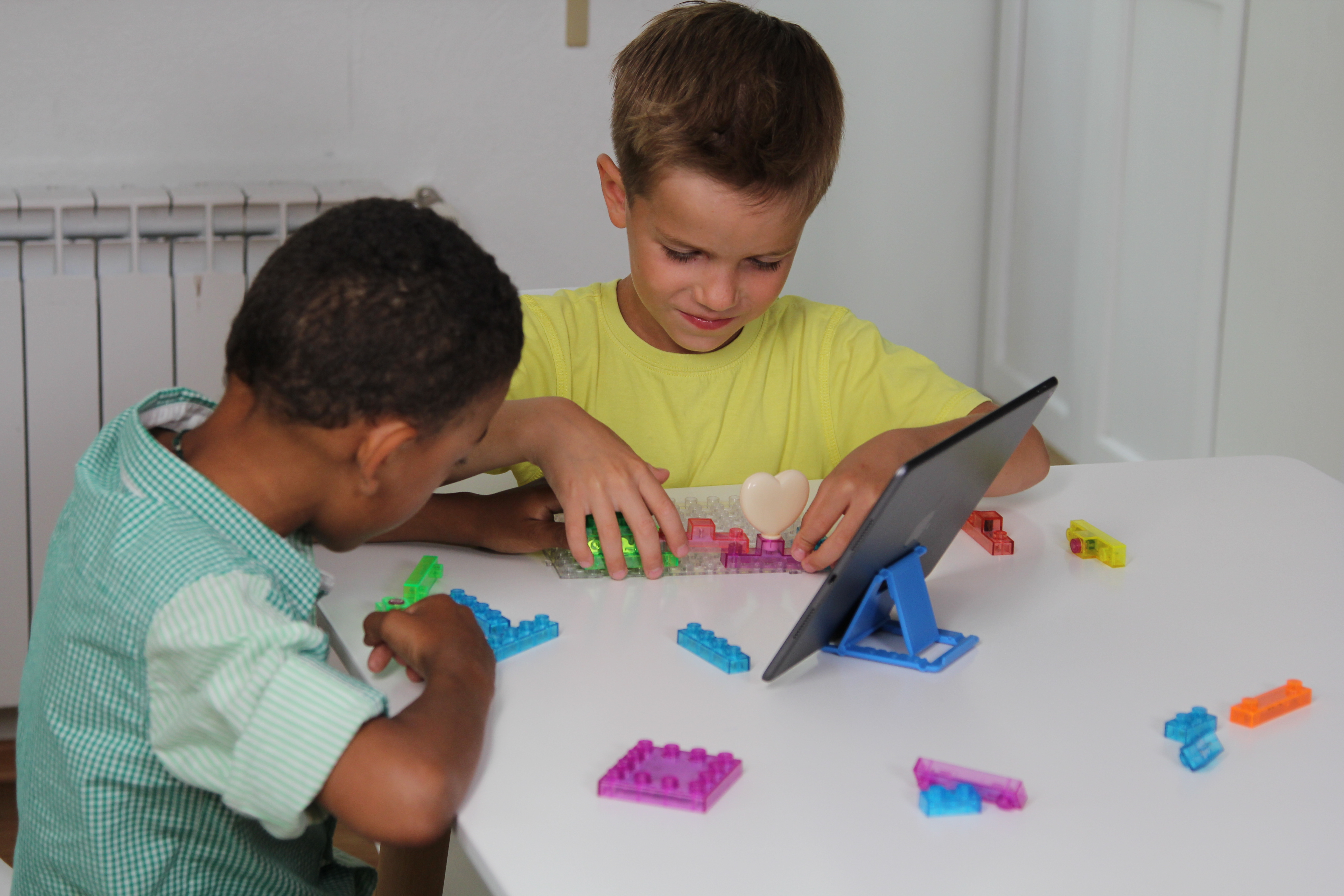

.jpg)



Parents and teachers should prioritize teaching addition to children aged 6-8 because it lays the foundational skills critical for future mathematical understanding and daily activities. This age group is a vital period for cognitive development, where children transition from concrete counting strategies to more abstract mathematical reasoning. Mastering addition enables children to build confidence and a sense of mastery over numbers, which can influence their overall attitude toward math.
Strong addition skills are essential not only for advanced math topics, such as subtraction, multiplication, and division, but also for practical applications in everyday life, such as budgeting, cooking, and problem-solving. Additionally, mastering this skill in early grades can help reduce math-related anxiety, fostering a positive learning experience.
Engaging children through games and interactive activities makes learning enjoyable, helping to maintain their enthusiasm and motivation. As they become proficient, they develop critical thinking skills that extend beyond mathematics. Ultimately, investing time and resources into teaching addition to young learners cultivates a solid academic foundation while nurturing a lifelong love for learning. For these reasons, fostering strong addition skills in children is an essential priority for both parents and educators.








