
Learning number patterns Worksheets for Ages 6-8
4 filtered results
Difficulty Level
Grade
Age
-
From - To
Subject
Activity
Standards
Explore our engaging "Learning Number Patterns Worksheets" tailored for ages 6-8! These worksheets are designed to help young learners recognize and understand numerical patterns through fun and interactive exercises. Each activity promotes critical thinking and problem-solving skills, making math enjoyable and accessible. With a variety of exercises, including filling in missing numbers and extending sequences, children will enhance their number sense while building a solid mathematical foundation. Perfect for homeschooling or classroom use, our worksheets cater to different learning styles, ensuring every child can thrive. Download our carefully crafted resources today and watch your child's confidence in math soar!
Favorites
With answer key
Interactive
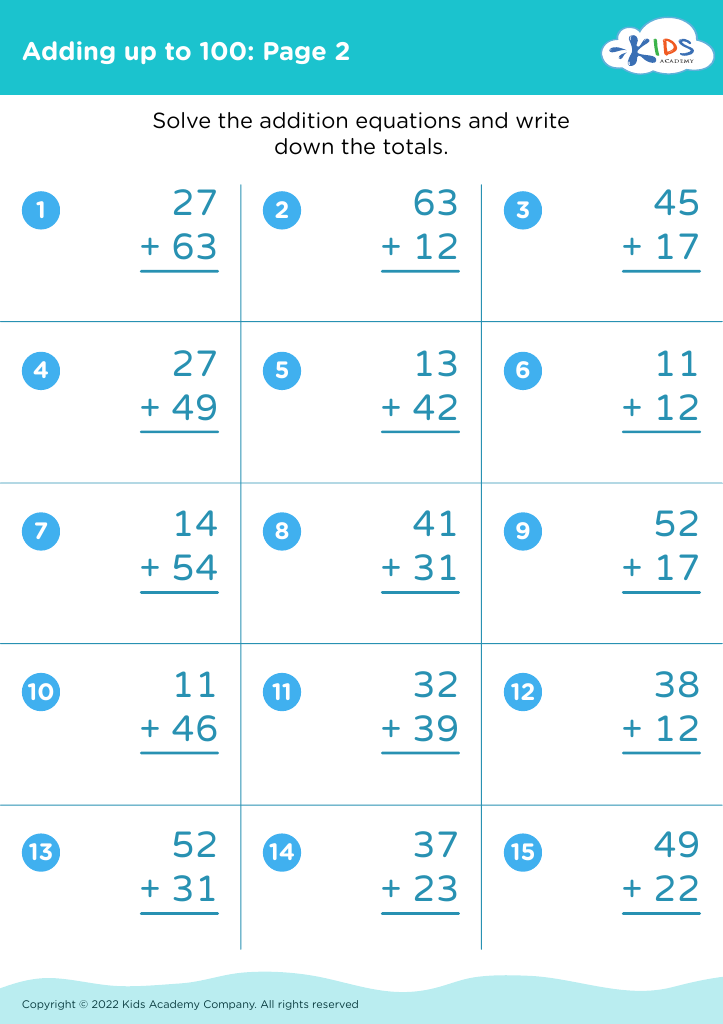
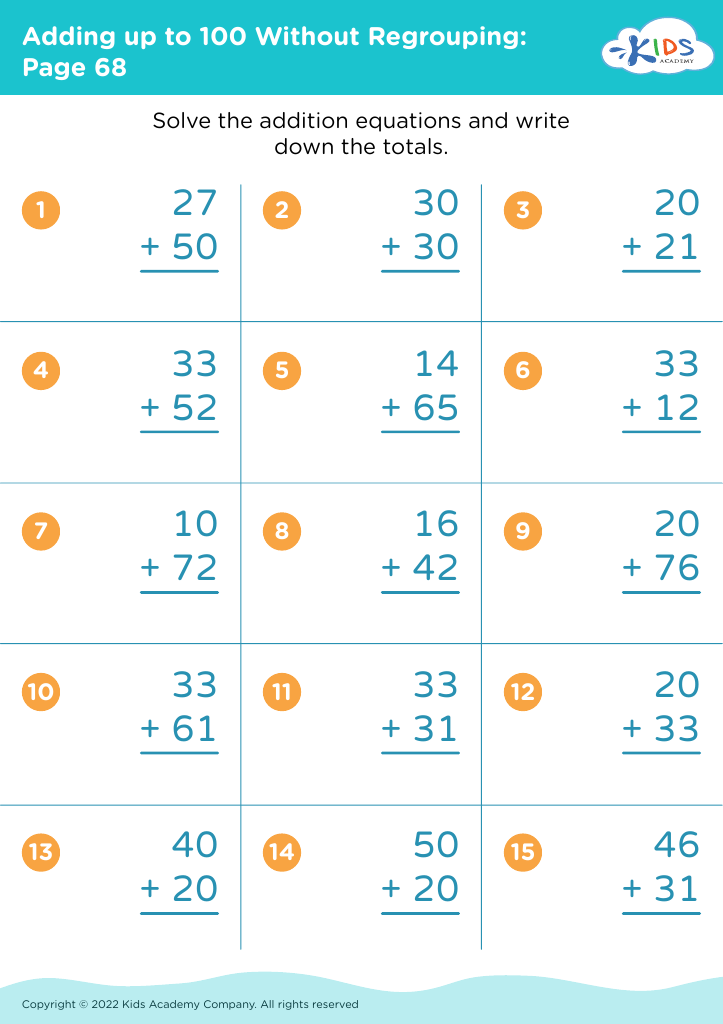
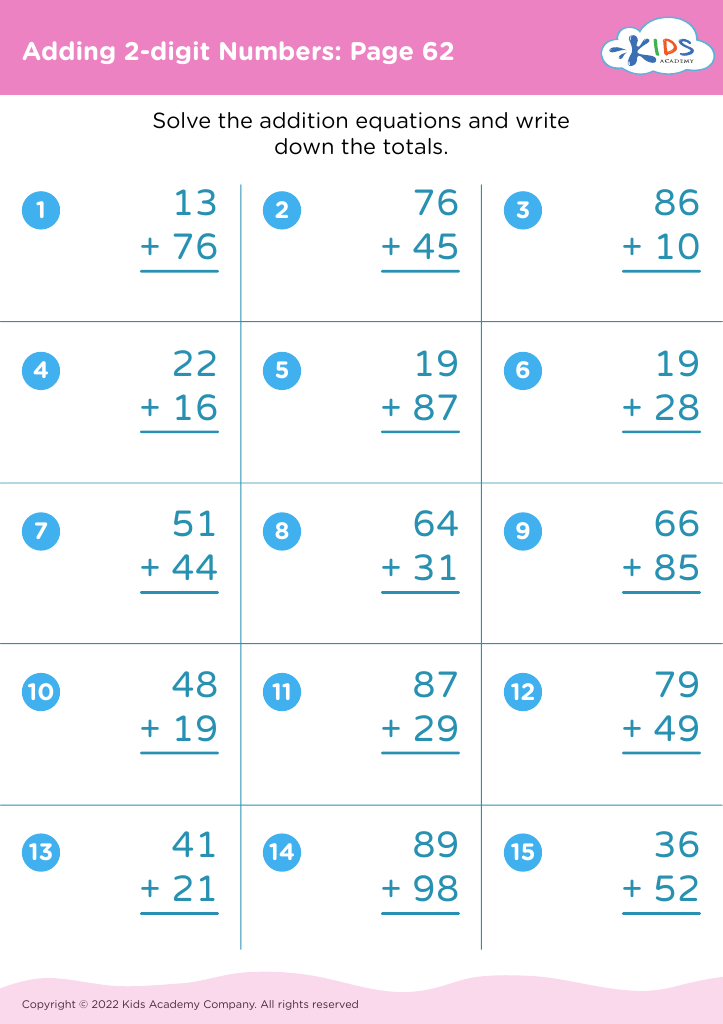
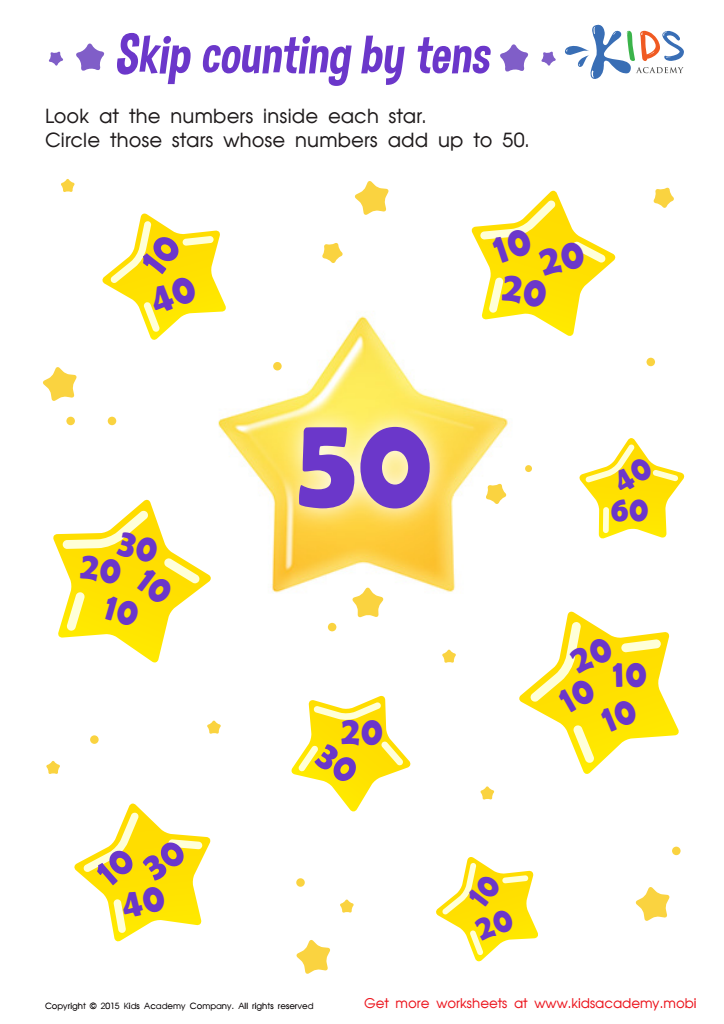
Learn Dozens: Skip Counting by Tens Printable
This skip counting by 10 worksheet helps kids strengthen fluency, practice addition & build number sense. They'll use problem-solving skills to find the correct answer, which is revealed by stars. This worksheet is a fun way to practice crucial foundational math skills.
 Assign to My Students
Learn Dozens: Skip Counting by Tens Printable
Worksheet
Join Kids Academy for Free
Who is primarily going to use this learning content?







Learning number patterns is vital for children aged 6-8, as it lays the foundation for critical mathematical skills. At this developmental stage, children are curious and ready to engage with concepts that bolster their understanding of numbers. Recognizing patterns not only enhances their ability to predict sequences but also fosters critical thinking and analytical skills.
Number patterns help cultivate a deeper understanding of mathematics, moving beyond rote memorization. When children identify and extend patterns, they develop skills essential for future topics, such as addition, subtraction, multiplication, and even fractions. These foundational concepts promote mathematical fluency, enabling them to solve problems more efficiently.
Moreover, engaging with patterns enhances problem-solving abilities and encourages persistence when faced with challenges. By recognizing that mathematics is structured and interconnected, children build confidence in their abilities.
For parents and teachers, supporting this learning avenue requires fostering an environment that celebrates exploration and inquiry. Fun activities, such as games that involve repeating sequences or visual aids, can enhance their interest and retention of these concepts. Ultimately, a strong grasp of number patterns empowers children, nurturing a positive attitude towards math that can carry throughout their educational journey.








