
Letter tracing skills Worksheets for Ages 6-8
7 filtered results
Difficulty Level
Grade
Age
-
From - To
Subject
Activity
Standards
Explore our engaging Letter Tracing Skills Worksheets designed specifically for children aged 6-8. These printable resources aim to enhance your child's fine motor skills, handwriting proficiency, and letter recognition. With a variety of fun and interactive exercises, kids can practice tracing upper and lower case letters while developing their confidence in writing. Our worksheets cater to different learning styles, ensuring that every child can enjoy the process. Perfect for home or classroom use, these activities create a supportive learning environment. Help your little ones master their letters today and pave the way for successful reading and writing in the future!
Favorites
With answer key
Interactive
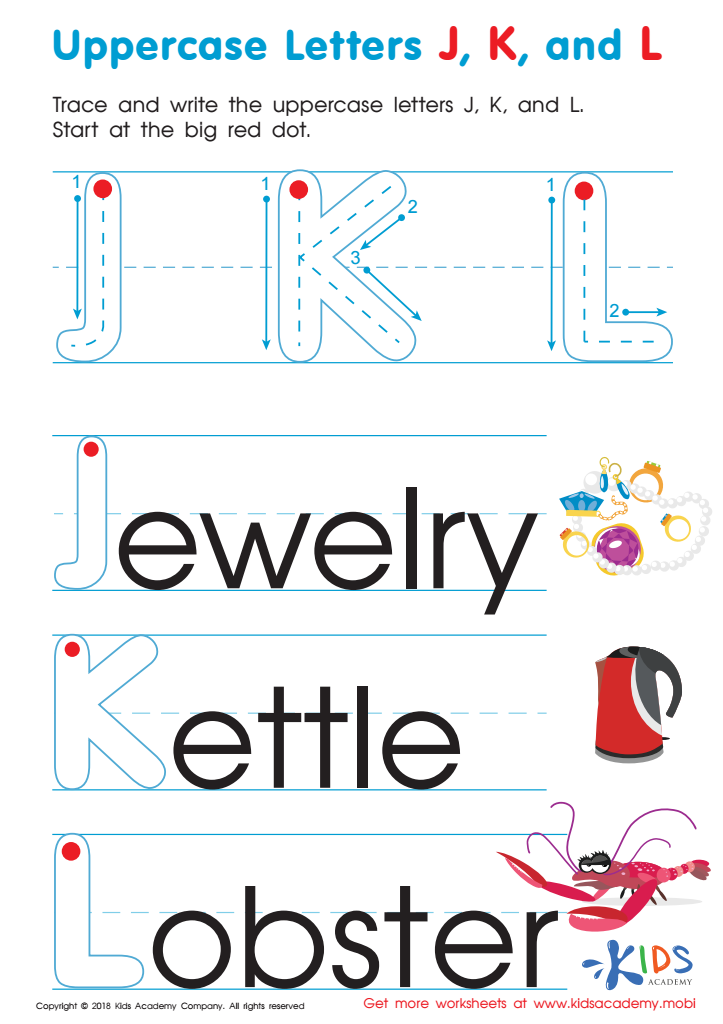
Uppercase Letters J, K, and L Worksheet
Jewelry, kettle and lobster share a common trait: their names start with J, K and L, 3 letter neighbors found in the middle of the alphabet. This traceable worksheet helps kids learn letter sounds and practice writing. Arrows and tracing lines make it easy to form neat pencil strokes. Red dot shows where kids should start. Perfect for preschoolers and kindergarteners!
Uppercase Letters J, K, and L Worksheet
Worksheet
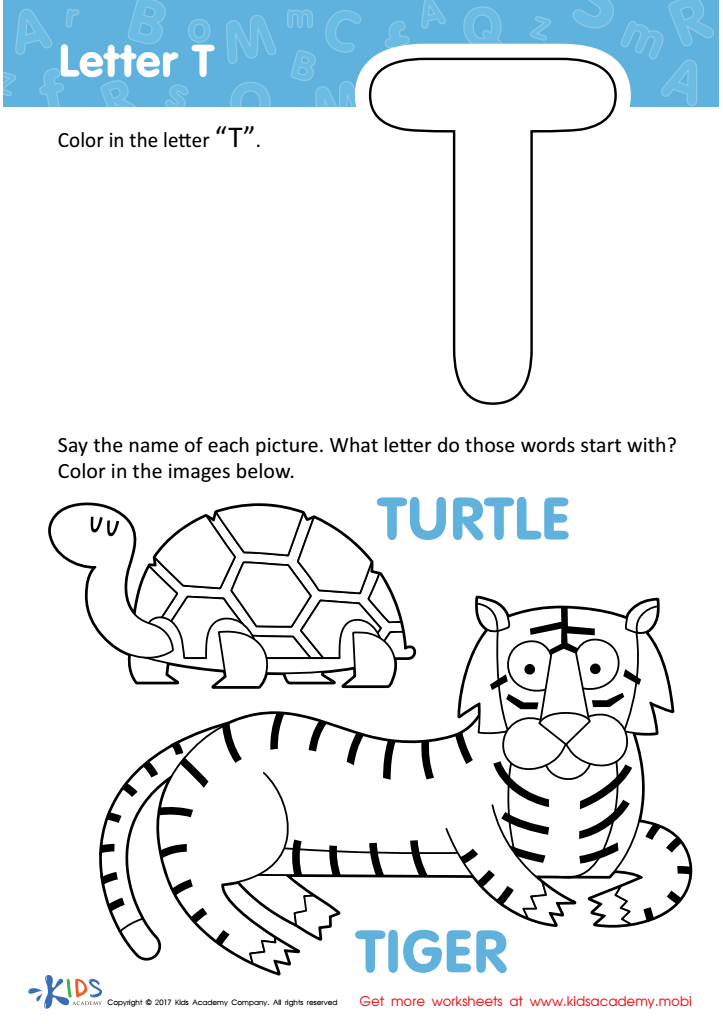
Letter T Coloring Sheet
Introduce your child to the letter "T" and its animals – turtles and tigers! With this coloring page, you can stimulate your child's imagination and creativity, while helping them recognize the letter "T". Have fun with your child and get coloring!
Download (PDF)
 Assign to My Students
Assign to My Students
Letter T Coloring Sheet
Worksheet
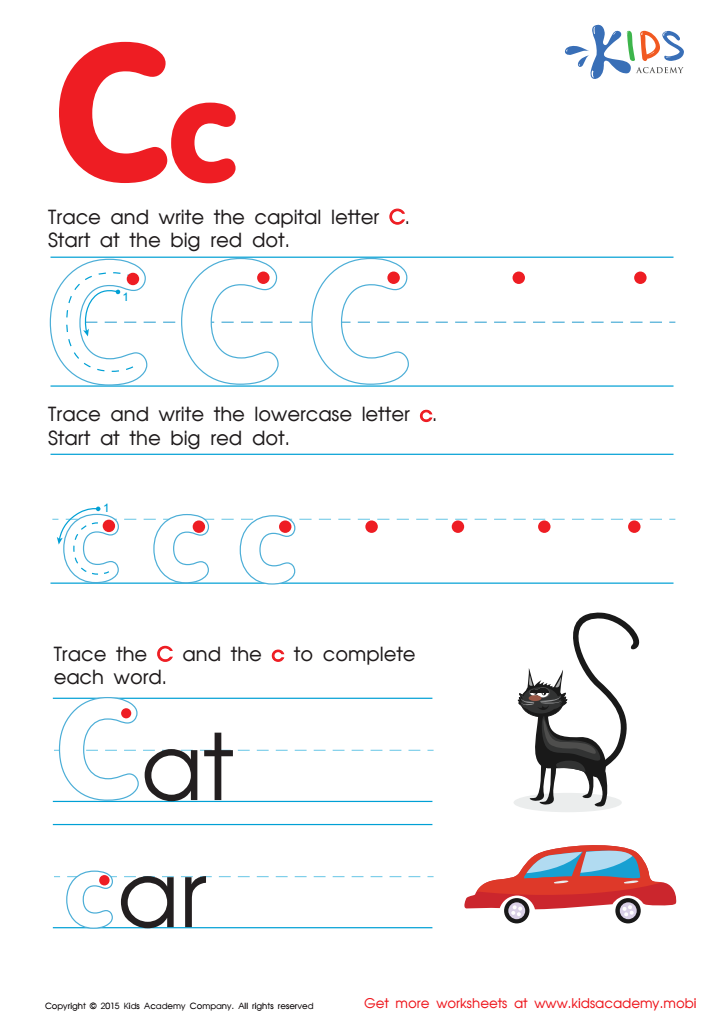
Letter C Tracing Page
Trace and write the letter 'C'! Put the pencil at the red dot then follow the lines – the capital letter first then the lowercase one. Cats love it and so will you! Get more free printables to practice tracing and writing.
Letter C Tracing Page
Worksheet
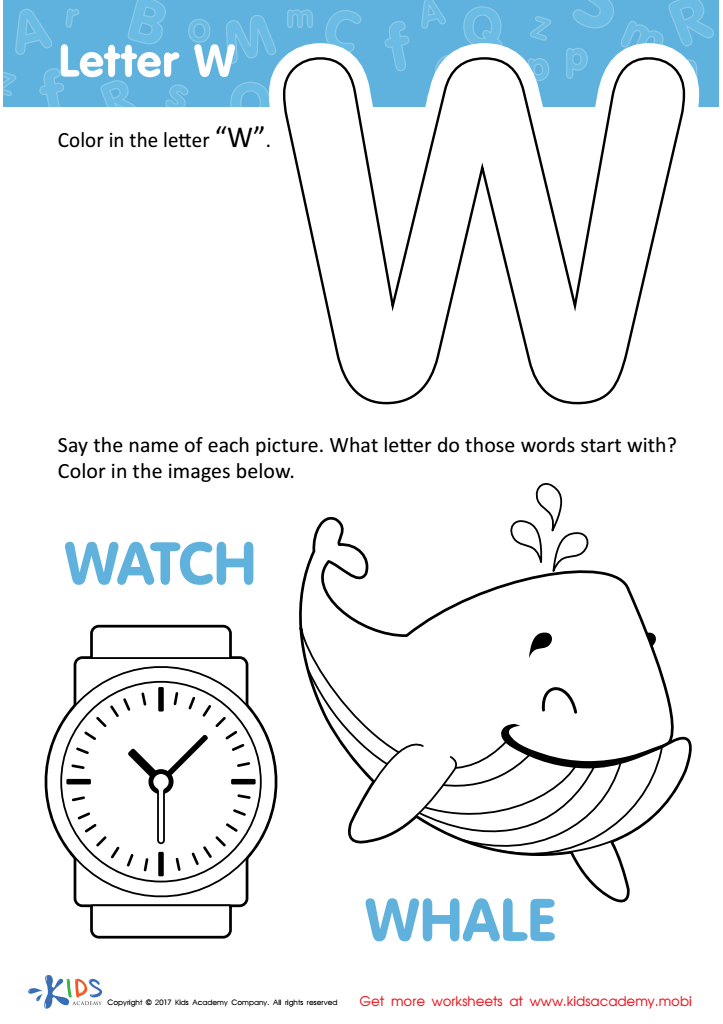
Letter W Coloring Sheet
Let your child have fun with this letter "W" coloring page! They can use their imagination to color the whale and discover the letter and its sound. Give them a helping hand to make it a whale of a time!
Download (PDF)
Assign to My Students
Assign to My Students
Letter W Coloring Sheet
Worksheet
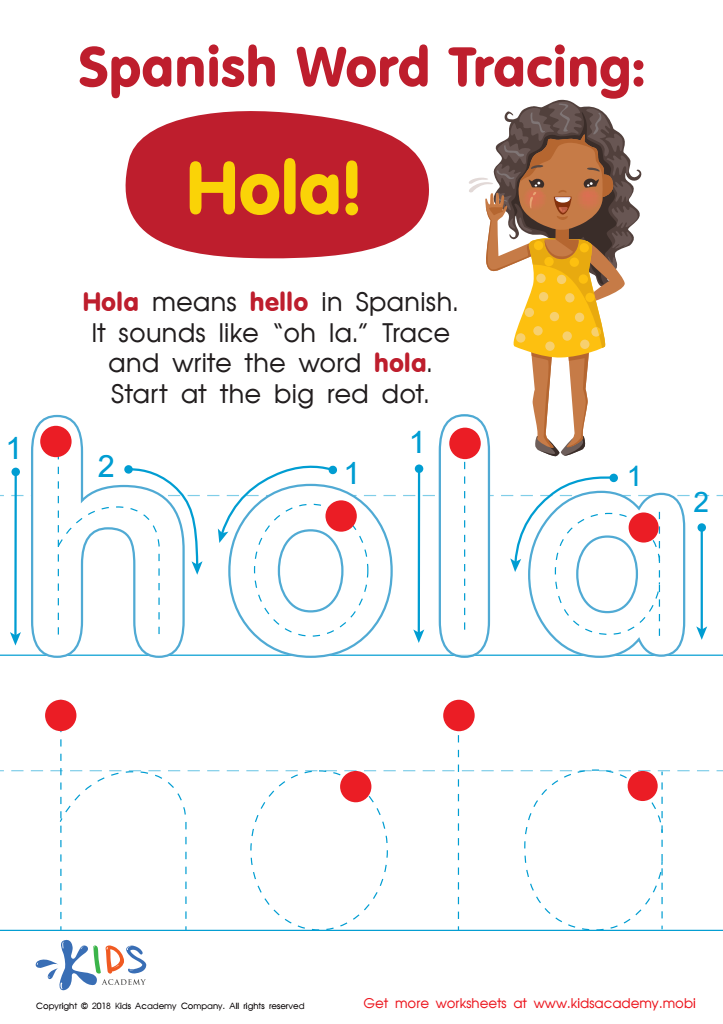
Spanish Word Tracing: Hola Worksheet
This PDF provides a fun way for students to learn "Hola" (Hello) in Spanish! Kids can practice fine motor and handwriting skills while they trace the letters. They'll get the hang of top-to-bottom, left-to-right patterning while they learn how to say and write in Spanish. With practice, they'll soon feel confident speaking and writing Spanish!
Spanish Word Tracing: Hola Worksheet
Worksheet
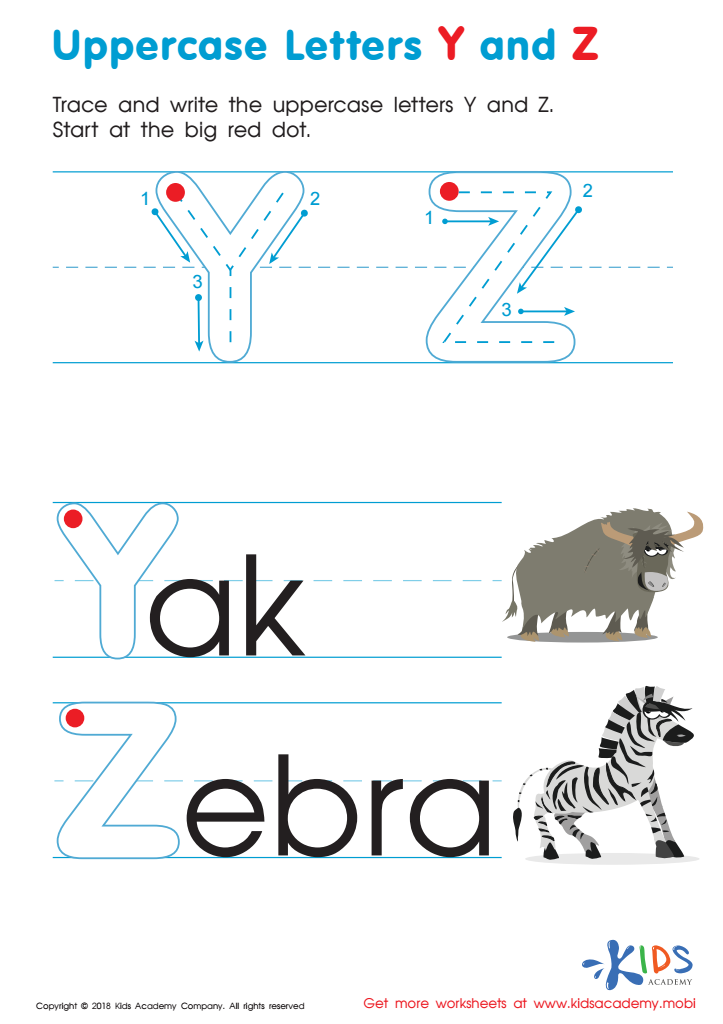
Uppercase Letters Y Z Worksheet
Help your child learn their ABCs with this fun tracing activity! They must trace and write Y and Z in uppercase form, starting from the red dot. Kids will love the fun images for extra engagement. Guiding their hand carefully will help them practice and perfect their writing skills.
Uppercase Letters Y Z Worksheet
Worksheet
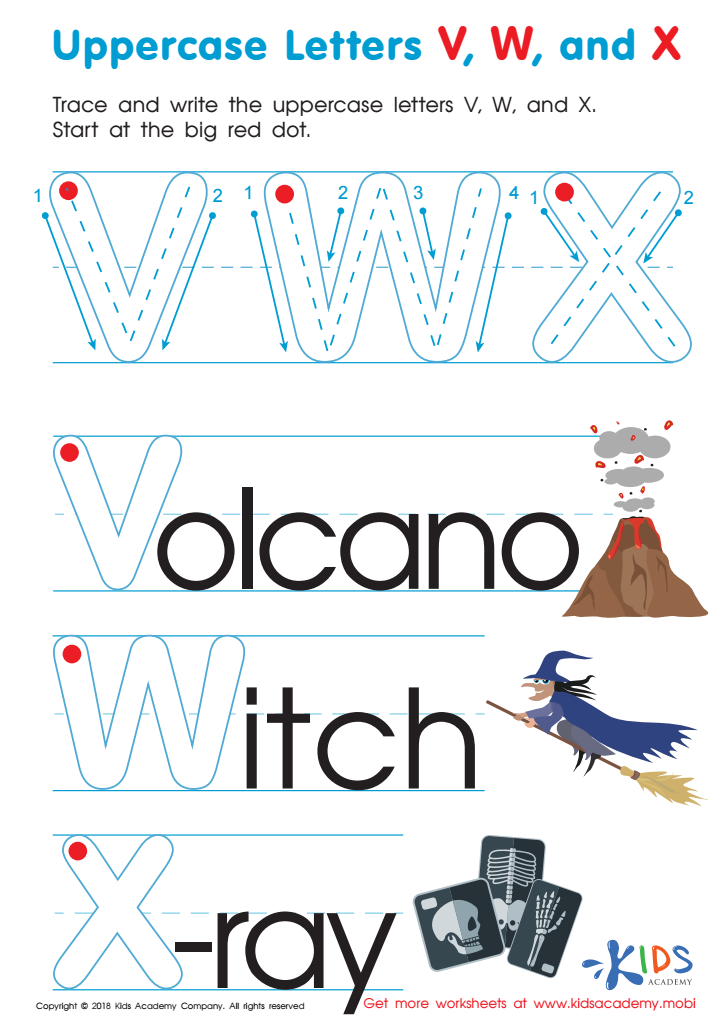
Uppercase Letters V, W, and X Worksheet
This worksheet is perfect for kids struggling to write uppercase letters V, W, and X. Warm up their brains first by having them name words starting with these letters. Then, help them trace and write each letter from the big red dot. With your assistance, they will quickly sharpen their writing skills.
Uppercase Letters V, W, and X Worksheet
Worksheet
Join Kids Academy for Free
Who is primarily going to use this learning content?







Letter tracing skills are critical for children aged 6-8 as they lay the foundation for effective handwriting and literacy development. During this developmental stage, children are refining their fine motor skills, and tracing letters helps them practice the correct formation, size, and spacing of letters. This practice promotes muscle memory, which is essential for writing fluently as they progress to more complex writing tasks.
Moreover, strong letter formation contributes directly to reading readiness. Children who can write letters clearly and accurately are typically better at recognizing them, thereby enhancing their phonetic awareness and vocabulary skills. Tracing letters also supports cognitive development by engaging children in visual and tactile learning experiences, thereby improving their focus and hand-eye coordination.
Additionally, letter tracing activities can foster creativity when combined with art and sensory play, making learning both fun and effective. For parents and teachers, incorporating tracing exercises into daily routines not only aids in academic growth but also builds confidence in children’s writing abilities. Overall, encouraging letter tracing is a simple yet powerful strategy to support young learners in becoming proficient readers and writers, setting a solid path for their future educational successes.








