Unlock your child's mathematical potential with our engaging Mathematical Problem-Solving Worksheets designed specifically for ages 6-8! These printable resources provide a fun and interactive way for young learners to practice key math skills, like addition, subtraction, and simple word problems. Tailored to meet developmental needs, our worksheets encourage critical thinking and help children develop confidence in their problem-solving abilities. Each worksheet is visually appealing and includes a variety of challenges to stimulate curiosity and promote a love for math. Perfect for homeschooling, extra practice, or classroom use, these worksheets are essential tools for nurturing young mathematicians!

Check out this FREE "Mathematical problem-solving" Trial Lesson for age 6-8!

Unknown Number Word Problems

Favorites
With answer key
Interactive
  • 6-8
  • Mathematical problem-solving
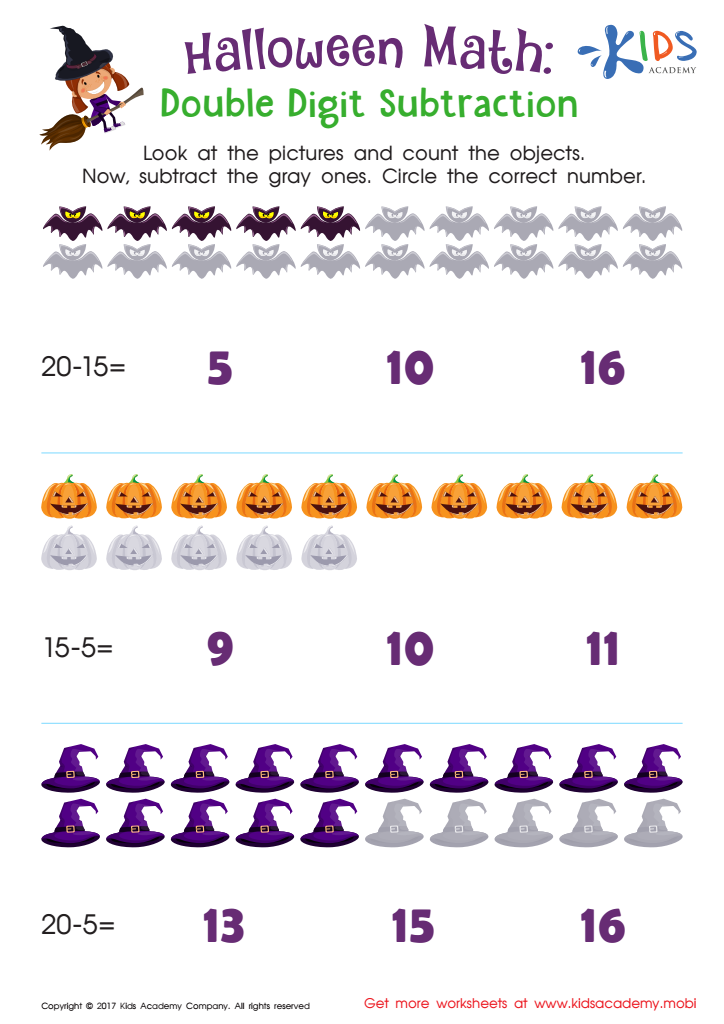
Subtraction printable worksheet: halloween math

Halloween Math Subtraction Worksheet

Kids can easily understand subtraction by using the visuals provided in this worksheet. Get ready for some fun math! This Halloween math worksheet uses spooky images to help kids understand subtraction. With it, they can count and solve double digit problems more easily. Get ready for some fun and engaging math practice!
Halloween Math Subtraction Worksheet
Worksheet
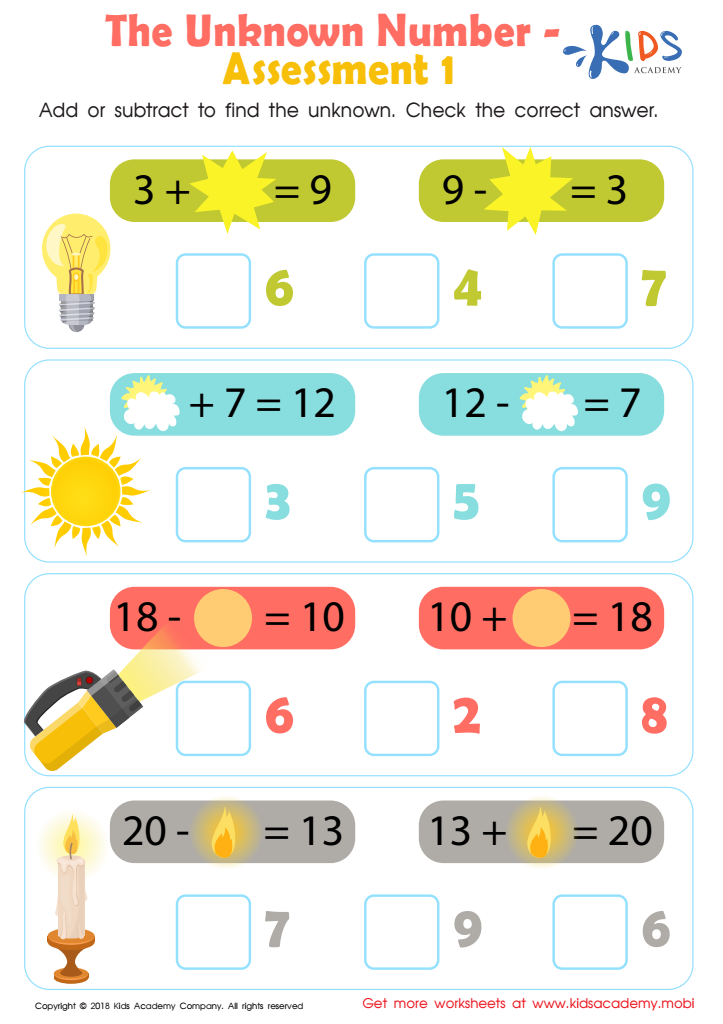
The Unknown Number: Assessment 1 Worksheet

The Unknown Number: Assessment 1 Worksheet

Engage your child's mind with this simple worksheet. Help them overcome math stress and practice their skills! Add or subtract to find the unknown and help them circle the correct answer. Make learning fun and help your kids excel in math - all with this one printout.
The Unknown Number: Assessment 1 Worksheet
Worksheet
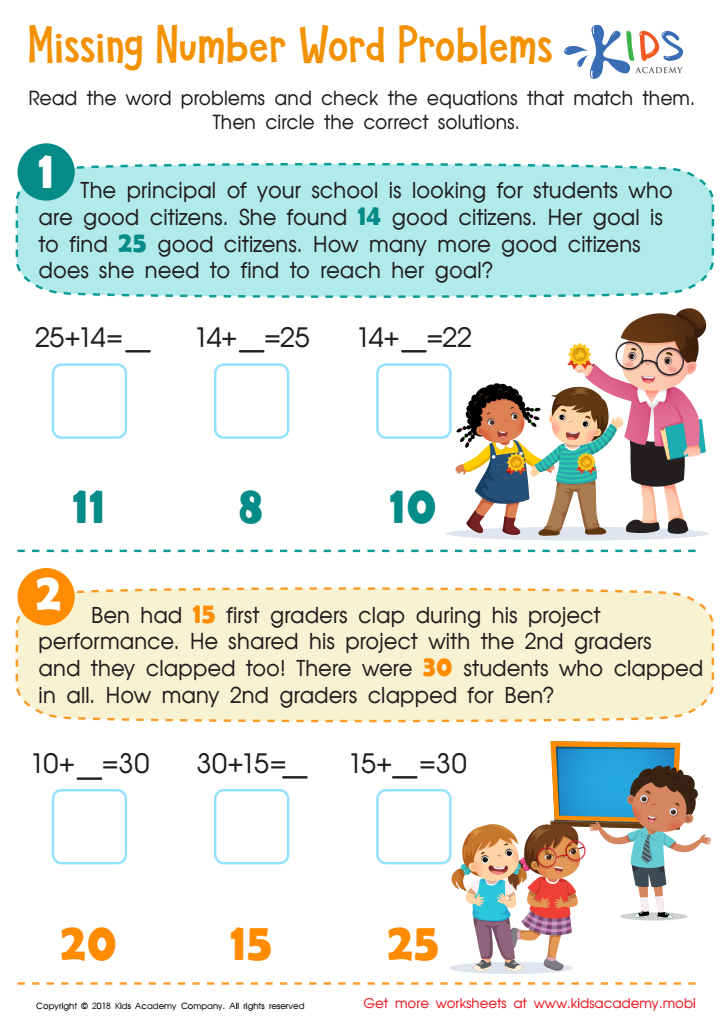
Missing Number Word Problems Worksheet

Missing Number Word Problems Worksheet

Read the word problems in this worksheet to your students. Help them understand the meaning, then translate the text into equations. Check the equations for accuracy, circle the correct solutions, and support your child as they learn to solve word problems.
Missing Number Word Problems Worksheet
Worksheet
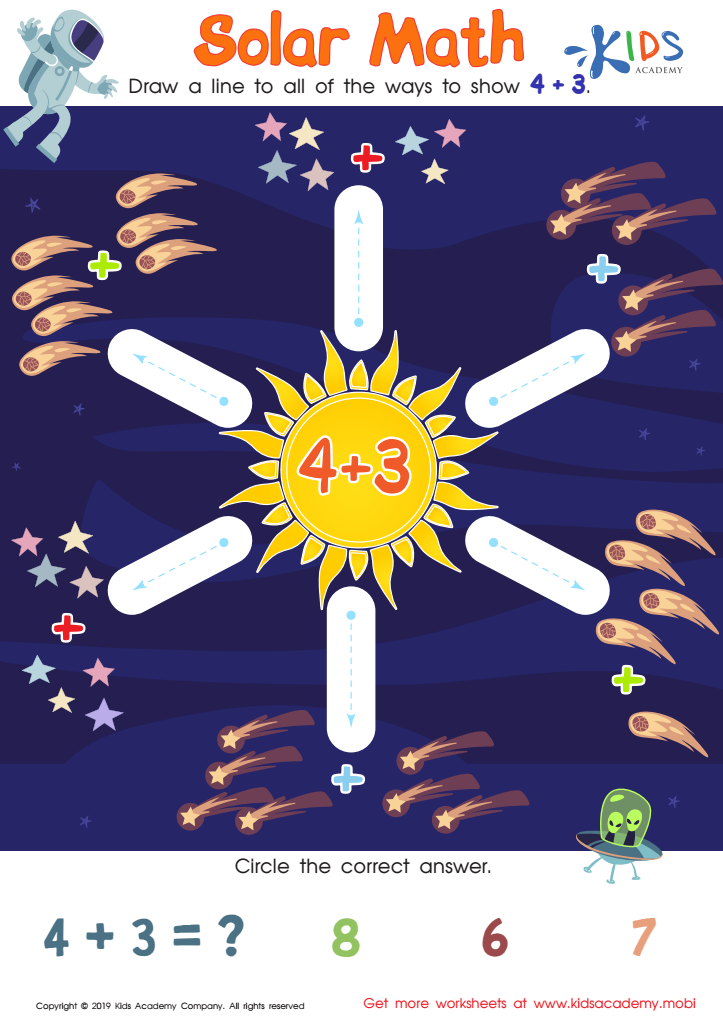
Solar Math Worksheet

Solar Math Worksheet

Do your students need a lesson on the solar system? Use this colorful worksheet to make learning fun. Math is a must-know for kindergartners; make it enjoyable with this printout. Ask them to draw a line to all the ways to show 4+3.
Solar Math Worksheet
Worksheet
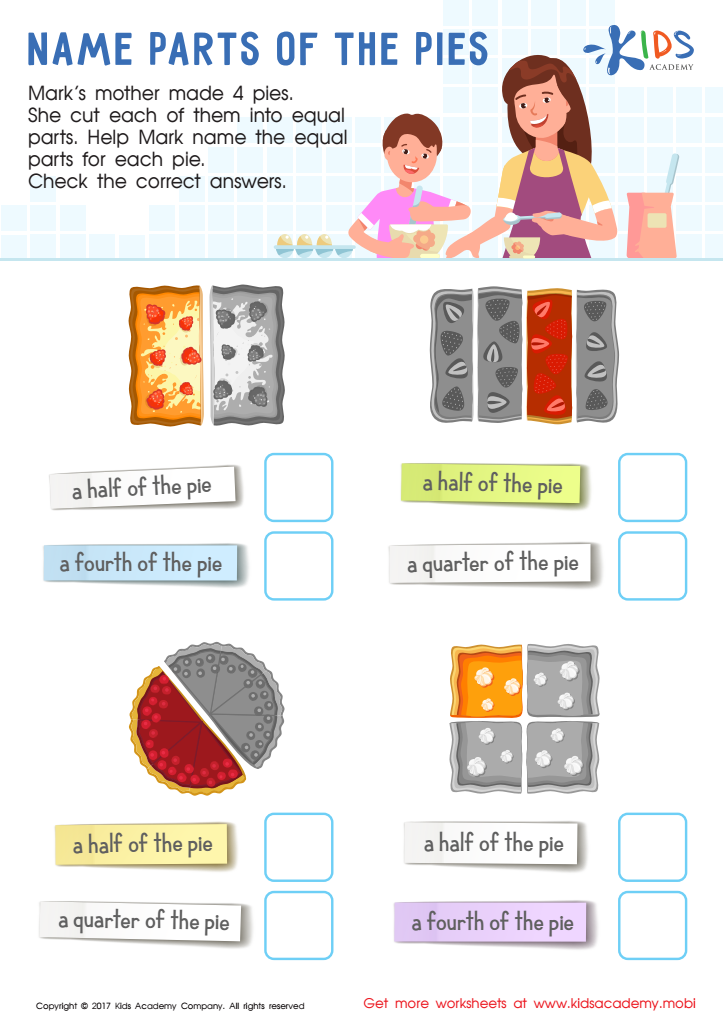
Name Parts of the Pies Worksheet

Name Parts of the Pies Worksheet

Mark and his mom are making pies. He's dividing them into equal parts and needs help to name them. Let your students aid him by checking the correct answer for each picture. Have them think of their own roles in the kitchen when they're done. How do they help their moms?
Name Parts of the Pies Worksheet
Worksheet
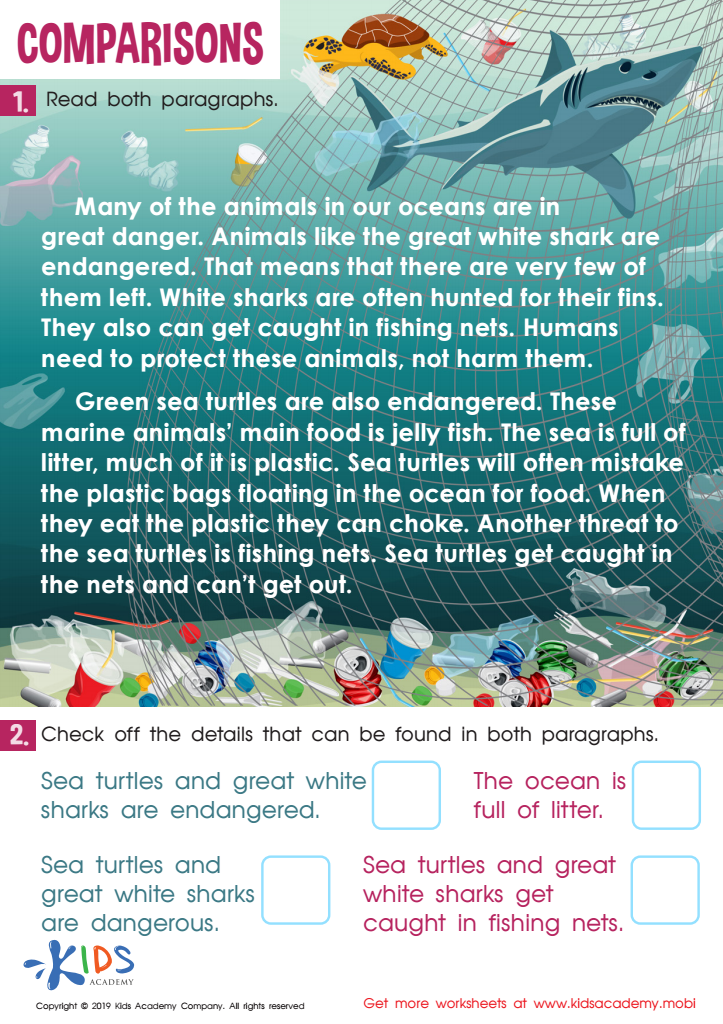
Comparisons Worksheet

Comparisons Worksheet

Compare two things easily: place them side by side and note the differences. Use this passage to help kids practice reading and comprehension, and teach them about the ocean and sea creatures. Read both paragraphs, then check off details found in both. (80 words)
Comparisons Worksheet
Worksheet
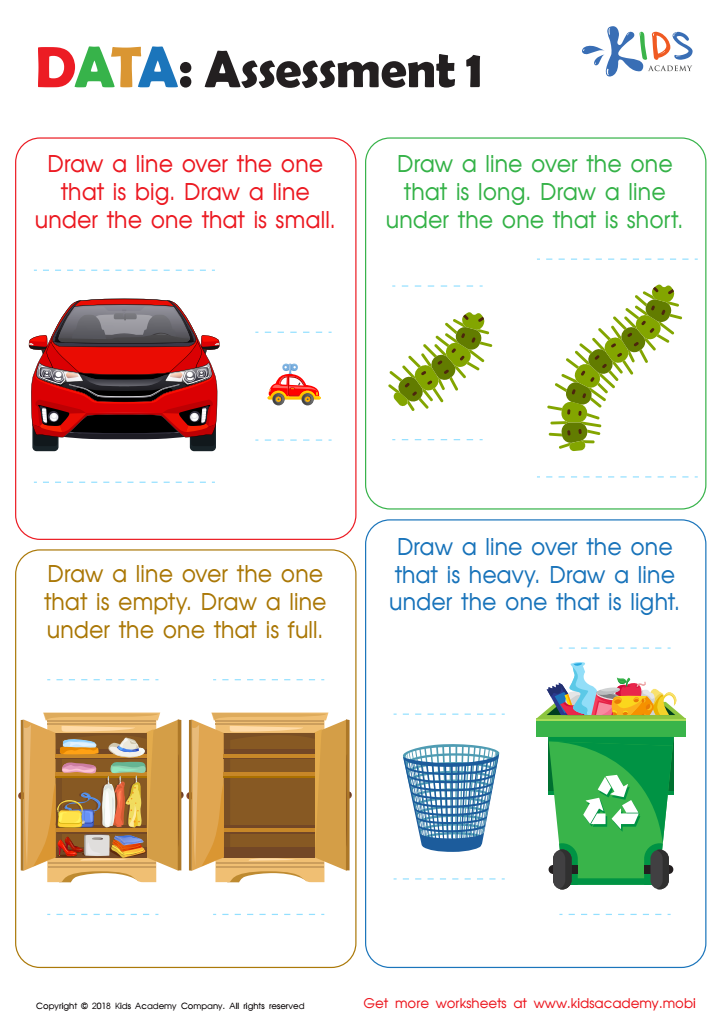
Data: Assessment 1 Worksheet

Data: Assessment 1 Worksheet

Assess your students' knowledge of measurement words with this worksheet. Have them compare and describe objects/quantities using words like "big", "small", "long", "short", "empty", "full", "heavy" and "light". Encourage further learning by asking students to provide examples of each word meaning.
Data: Assessment 1 Worksheet
Worksheet
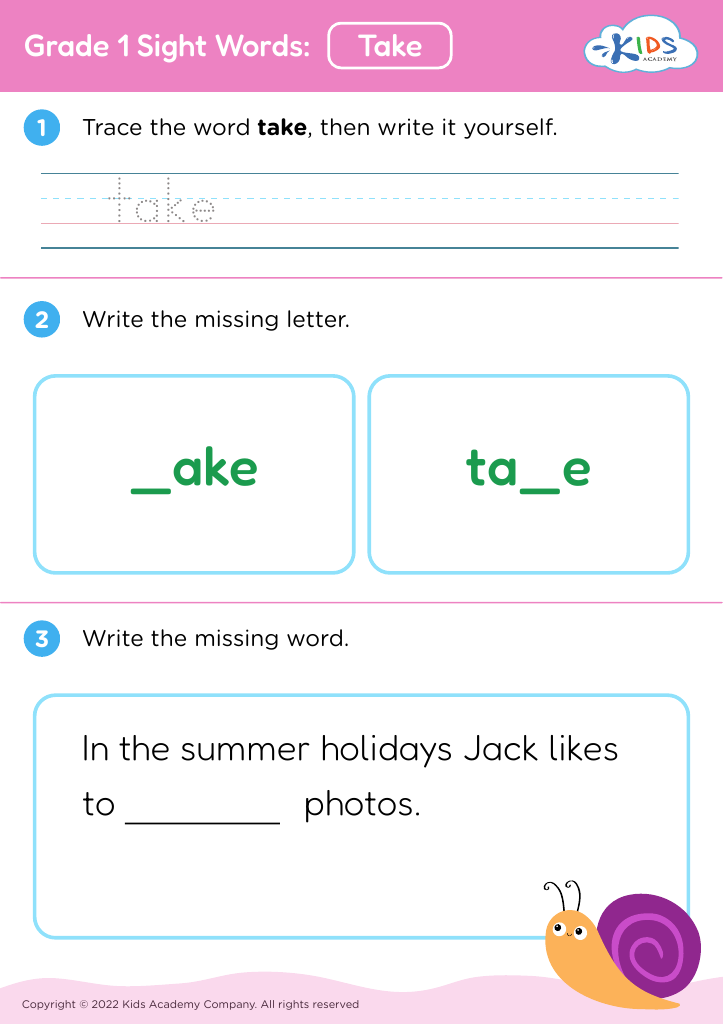
Grade 1 Sight Words: Take

Grade 1 Sight Words: Take

Grade 1 Sight Words: Take
Worksheet


Mathematical problem-solving is a crucial skill for children aged 6-8, and both parents and teachers play a vital role in nurturing it. During these formative years, children develop foundational cognitive abilities, and engaging them in problem-solving fosters critical thinking and analytical skills. When children tackle problems, they learn to approach challenges strategically, enhancing their creativity and resilience.

Moreover, problem-solving in math encourages collaboration and communication. Students often discuss various approaches and solutions, promoting social interaction and teamwork skills. This is important not only for math but for overall academic success.

From a broader perspective, early math skills are linked to future achievements. Proficiency in math lays the groundwork for higher-level math and science understanding, which can open doors to numerous career opportunities.

Additionally, problem-solving helps build a positive attitude towards math. Early exposure to engaging math challenges can mitigate anxiety around the subject and promote a growth mindset, where children see mistakes as opportunities for learning rather than failures.

Ultimately, fostering mathematical problem-solving skills in young children equips them with essential tools for lifelong learning and adaptability, making it a priority for both parents and educators.