
Number ordering Worksheets for Ages 6-8
3 filtered results
Difficulty Level
Grade
Age
-
From - To
Subject
Activity
Standards
Explore our engaging Number Ordering Worksheets designed specifically for children aged 6-8! These worksheets help young learners develop essential math skills by practicing the sequence of numbers in a fun and interactive way. By using vibrant visuals and age-appropriate activities, kids will enhance their understanding of number order, recognize patterns, and improve their counting abilities. Perfect for both classroom and home use, our worksheets cater to varying skill levels to ensure every child can learn at their own pace. Download our printable resources today and watch your child's confidence in math grow as they master number ordering!
Favorites
With answer key
Interactive
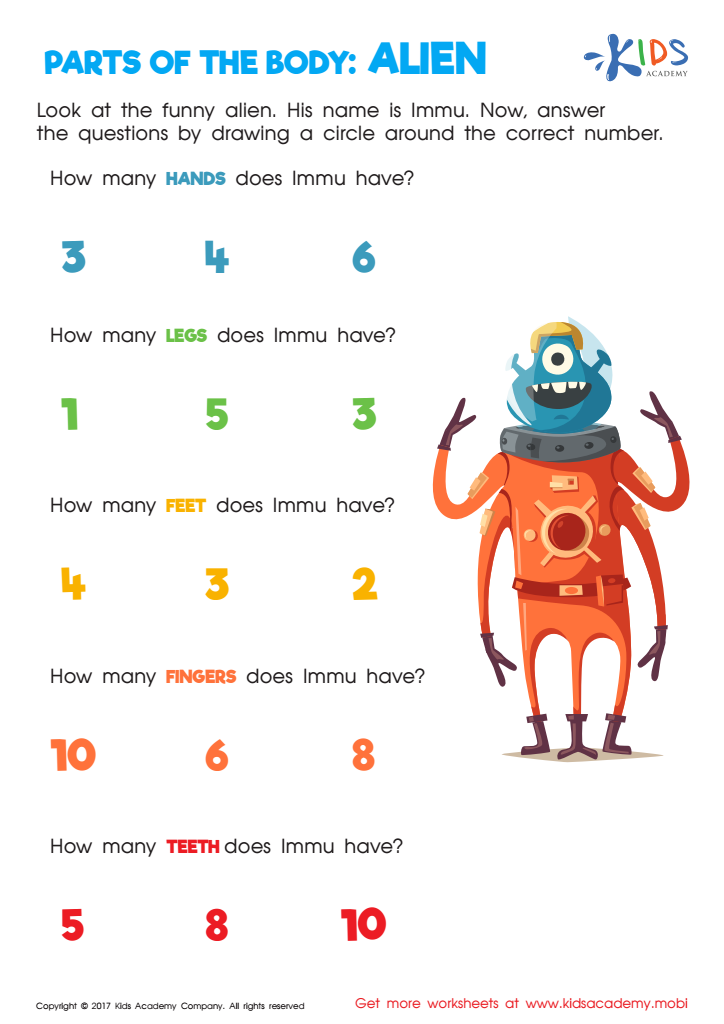
Alien Worksheet
Take your child on an out-of-this-world learning adventure with Immu, our friendly alien! This worksheet helps your child practice counting, recognize body parts and sharpen problem solving skills. Get started with this fun, educational activity today and watch as they learn and grow. Print it now and blast off to outer space!
 Assign to My Students
Alien Worksheet
Worksheet
Join Kids Academy for Free
Who is primarily going to use this learning content?







Number ordering is a fundamental mathematical skill crucial for children aged 6-8 as it lays the groundwork for their understanding of more complex concepts later on. During these formative years, children become proficient in recognizing, comparing, and arranging numbers, which fosters logical thinking and problem-solving abilities.
Parents and teachers should care about number ordering because it helps children develop a strong foundation in numeracy that is essential for everyday life, influencing skills like time management, budgeting, and measurement. Mastery of number ordering benefits mathematical fluency; for instance, understanding the sequence of numbers leads to better addition and subtraction skills, which form the basis for more complex operations like multiplication and division.
Moreover, number ordering enhances cognitive development as it encourages children to organize information, fostering better memory and critical thinking. As they learn to categorize and sequence numbers, children build a sense of responsibility and confidence in their work.
Ultimately, focusing on number ordering helps create a structured learning environment where children can explore and engage with mathematics joyfully, preparing them for future academic challenges and promoting overall educational achievement. A solid command of these skills can positively impact their lifelong relationship with math.








