
Pattern identification Worksheets for Ages 6-8
8 filtered results
Difficulty Level
Grade
Age
-
From - To
Subject
Activity
Standards
Explore our engaging Pattern Identification Worksheets, specially designed for children aged 6-8! These worksheets are perfect for helping young learners develop critical thinking and reasoning skills through exciting pattern recognition activities. With a variety of fun exercises, students can practice identifying and completing patterns using colors, shapes, and numbers. Our user-friendly format ensures that kids enjoy exploring and mastering essential math skills while honing their attention to detail. Ideal for both classroom settings and home study, these worksheets support cognitive development and encourage creativity. Start nurturing your child's pattern identification skills today with our carefully crafted resources!
Favorites
With answer key
Interactive
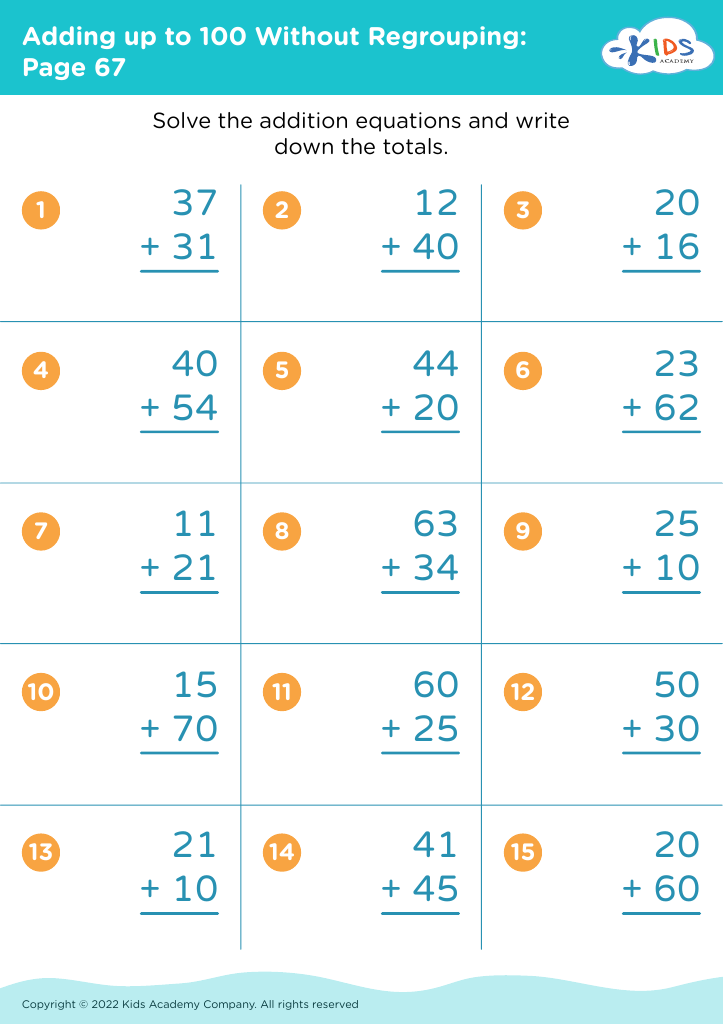
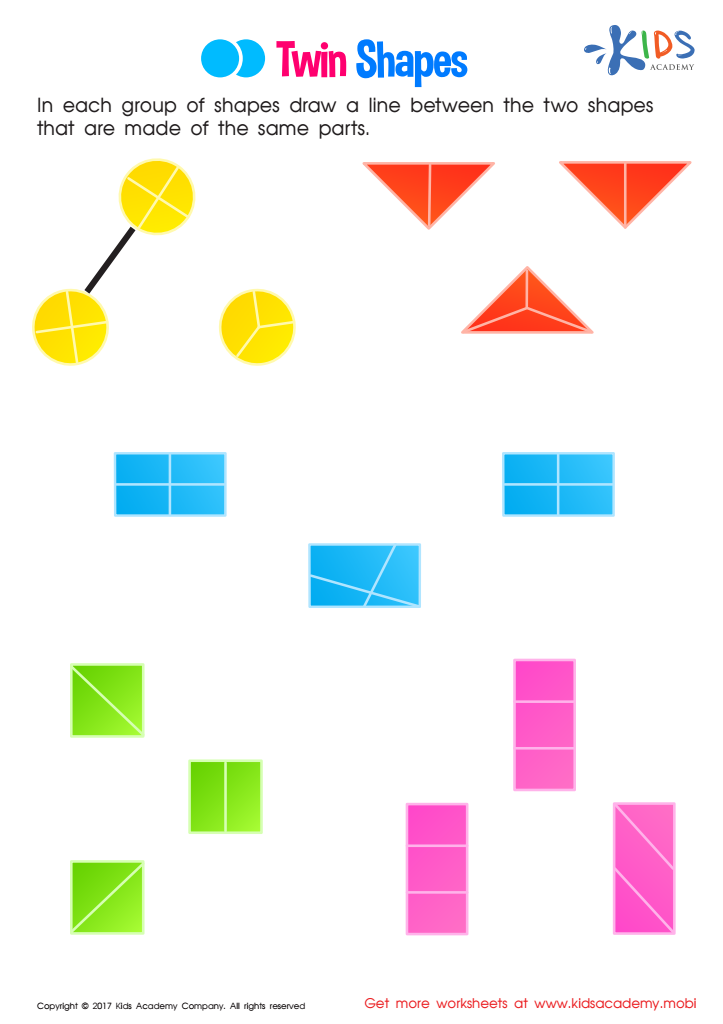
Twin Shapes Worksheet
Your students' goal in this worksheet is to find the twin shapes: drawing a line between two shapes made of the same parts. Likely, the first shapes encountered were circles, triangles, rectangles and squares - examples of which are seen frequently in everyday life. Encourage them to apply what they know and work out which is the twin shape!
 Assign to My Students
Twin Shapes Worksheet
Worksheet
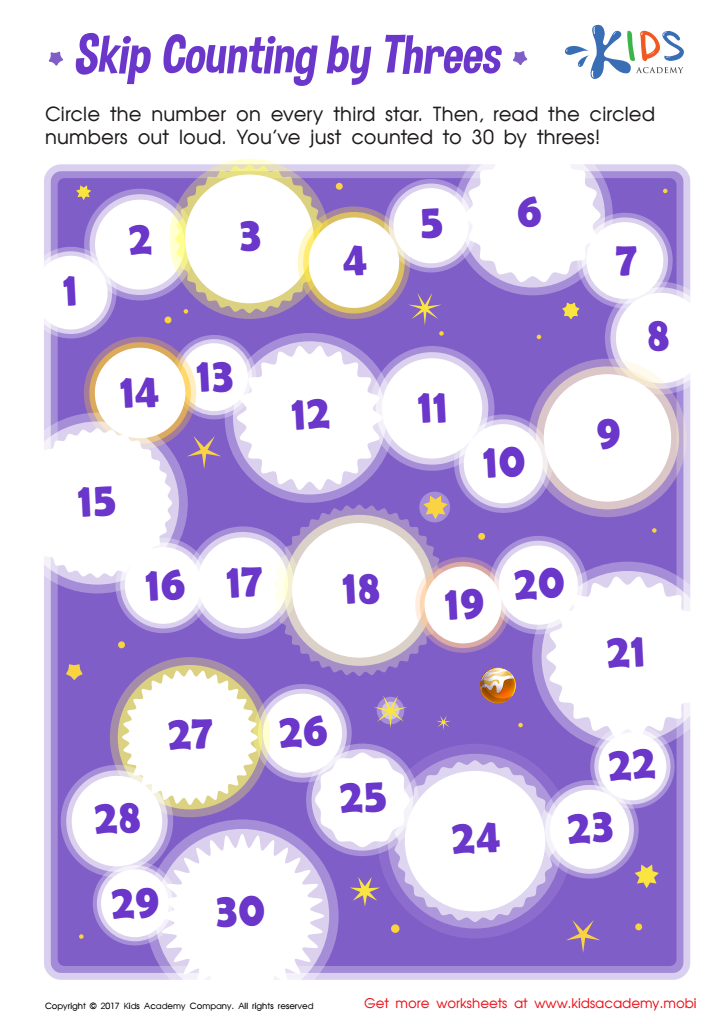
Skip Counting By Three Printable
Inspire your child with this star-themed skip counting worksheet! It offers a fun way to learn while providing a foundation for more advanced math skills, like adding, subtracting, and multiplication. It will help your child gain a sense of numeracy, practice problem solving, and stay ahead in math.
Skip Counting By Three Printable
Worksheet
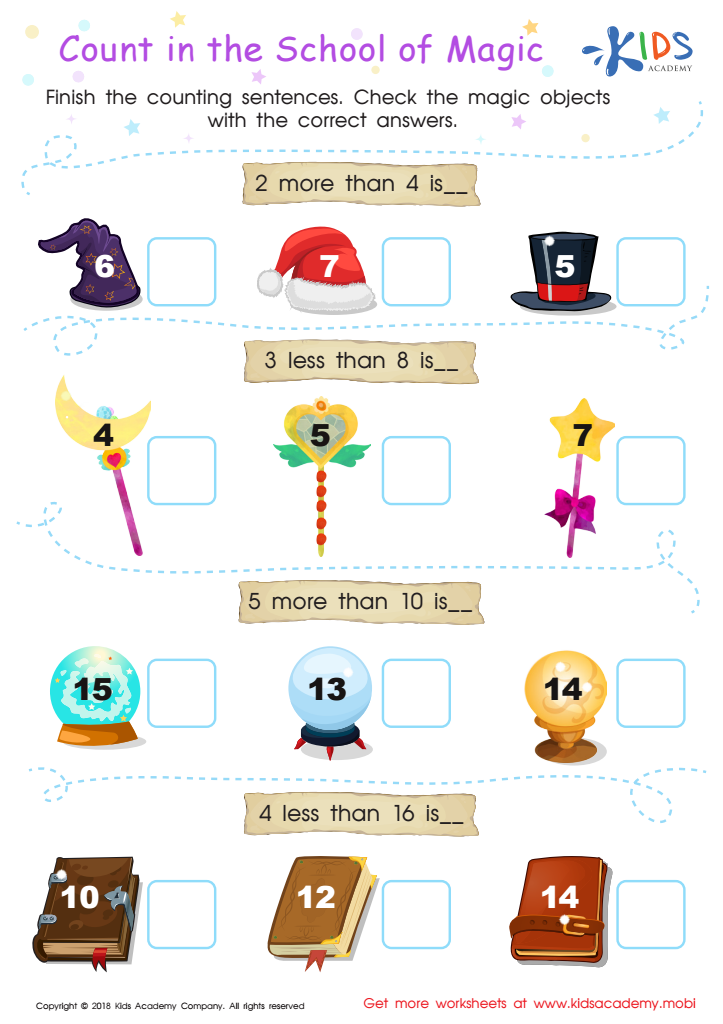
Count in the School of Magic Worksheet
Your math learners can explore the School of Magic with this worksheet. They'll read equations with addition and subtraction numbers under 20, count back and forth to find the answer, then complete the counting sentences. Fun pictures and easy accuracy make it an enjoyable and successful learning experience.
Count in the School of Magic Worksheet
Worksheet
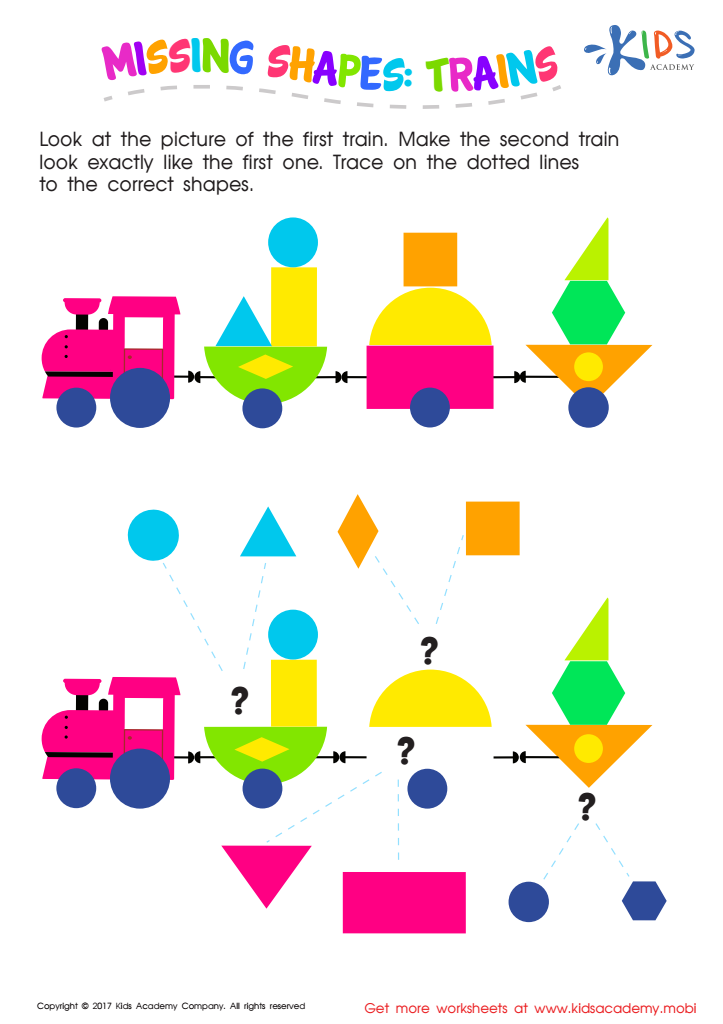
Missing Shapes: Trains Worksheet
Before beginning, ask your child what the object in the picture is, the sound it makes and where it can be found. If they know, confidently move on. Help them make the second train look like the first by tracing dotted lines. Hold their hand for guidance.
Missing Shapes: Trains Worksheet
Worksheet
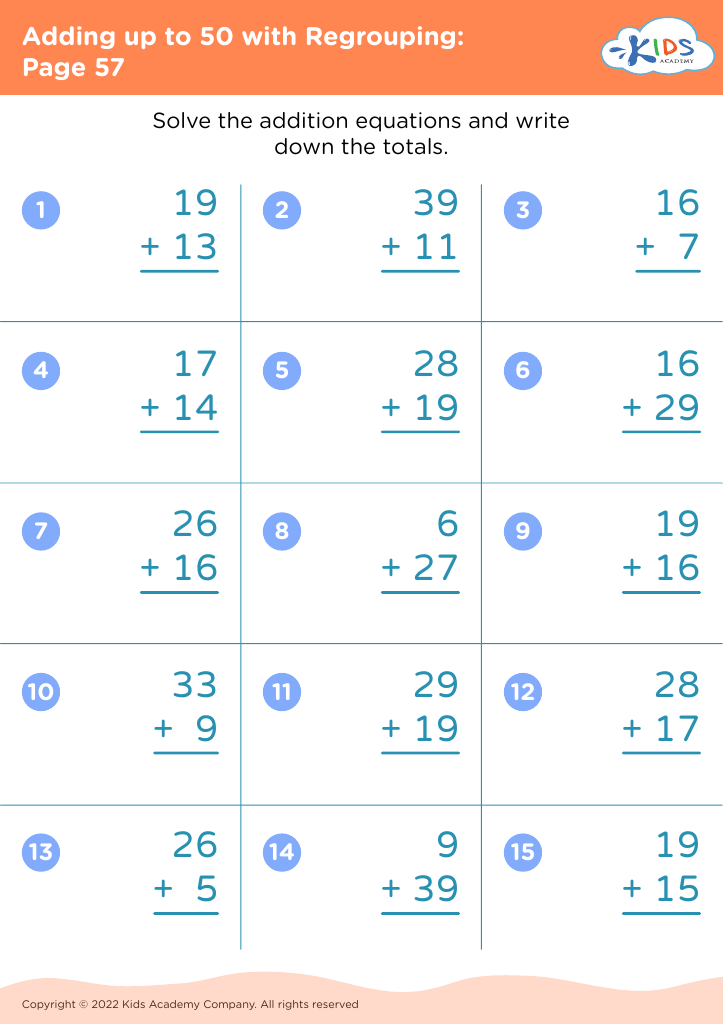
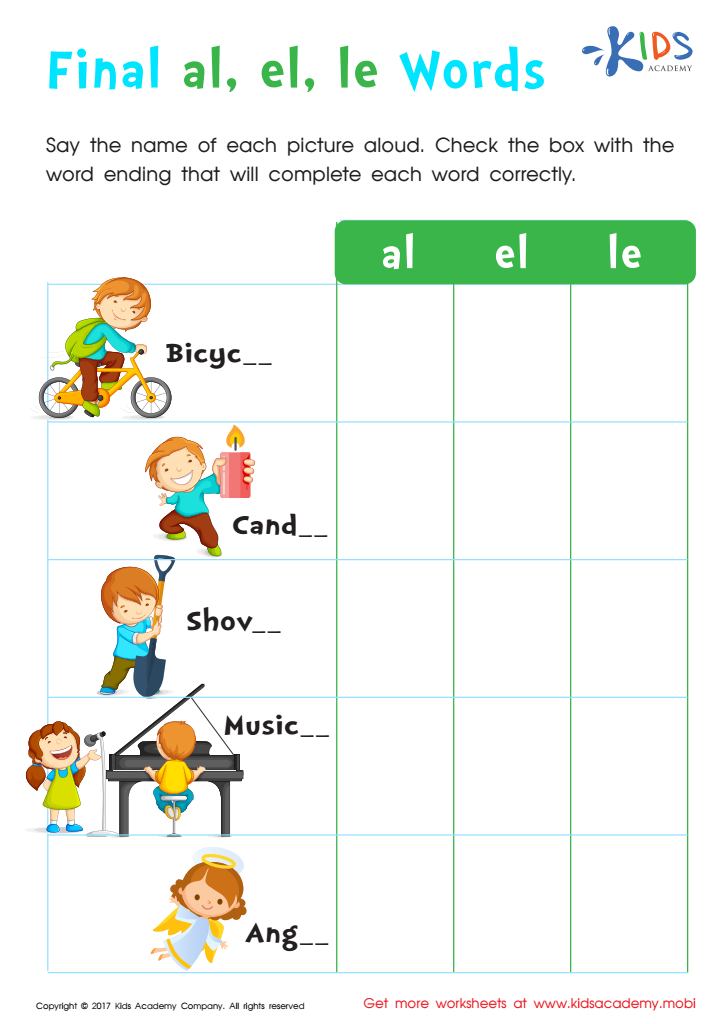
Spelling Words Ending with –le, –el and –al Worksheet
Spelling tricky words with the same ending sounds can be fun with this worksheet! Kids learn to spell -le, -el, and -al words while enjoying colorful pictures. It's a great way to refine their usage of tricky word endings.
Spelling Words Ending with –le, –el and –al Worksheet
Worksheet
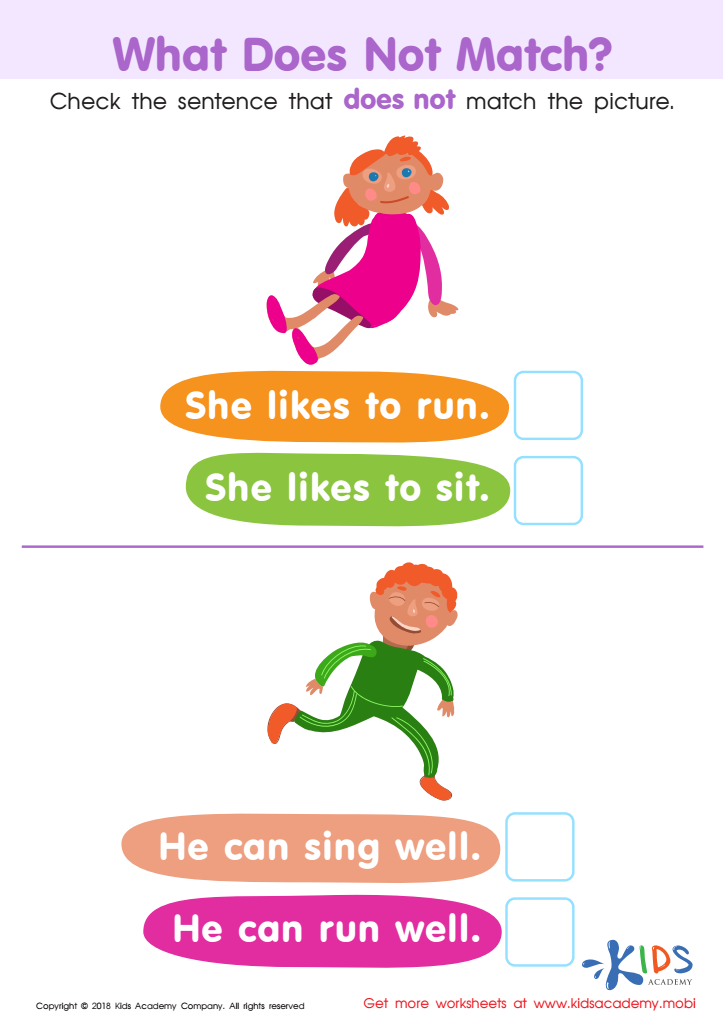
What Does Not Match? Worksheet
Emerging readers need to practice using visual cues and repetitive text. This colorful PDF provides them with an opportunity to look at pictures, use discrimination and discern which phrase does not match. It also enables them to gain familiarity with high-frequency words to aid decoding longer sentences.
What Does Not Match? Worksheet
Worksheet
Join Kids Academy for Free
Who is primarily going to use this learning content?








Pattern identification is a crucial skill for children aged 6 to 8, and parents and teachers should prioritize it for several reasons. First, recognizing patterns helps children develop critical thinking and problem-solving abilities. By identifying sequences and relationships, kids learn to predict outcomes and make connections, which is foundational for later math skills, including addition, subtraction, and even more complex concepts like algebra.
Second, pattern recognition enhances cognitive development. It encourages logical reasoning and analytical thinking, skills essential not just in academics but in everyday decision-making. As children learn to see and analyze patterns in their environment, they become more observant and engaged students.
Moreover, patterns are prevalent in language, art, and science, making this skill multidisciplinary. Engaging with patterns can deepen a child's understanding of their world, from recognizing rhythms in music to identifying recurring themes in stories. Lastly, developing pattern identification skills can foster confidence and a love for learning. It empowers children to tackle new challenges with a sense of curiosity and resilience.
In conclusion, nurturing pattern identification abilities equips children with essential skills for their academic journey and life beyond the classroom. Parents and teachers play a vital role in facilitating this developmental milestone.








