Phonetic awareness Worksheets for Ages 6-8
4 filtered results
-
From - To
Discover our engaging phonetic awareness worksheets designed for children aged 6-8! These resources help young learners develop essential reading skills by focusing on sound recognition, pronunciation, and word formation. With a variety of fun and interactive activities, your child will strengthen their phonetic awareness through exercises that promote letter-sound correspondence, rhyming, and syllable breakdown. Perfect for parents and educators alike, our worksheets are easy to download and can be tailored to fit any learning plan. Foster a love for reading and ensure your child builds a strong foundation for literacy with our comprehensive phonetic awareness materials. Start their learning journey today!
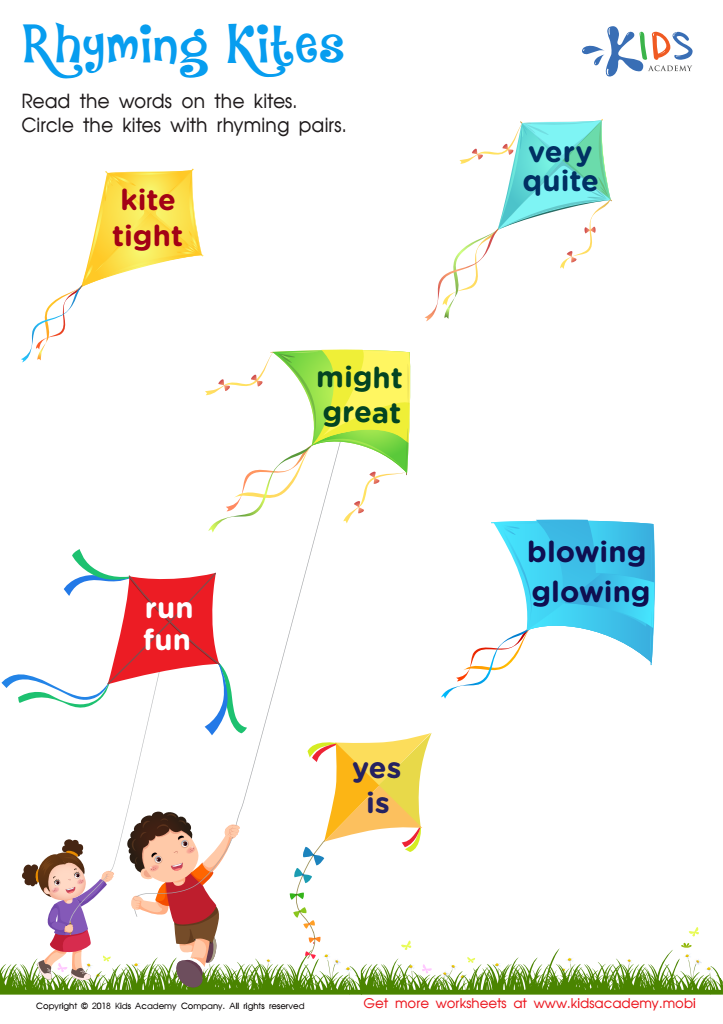
Rhyming Kites Worksheet
 Assign to My Students
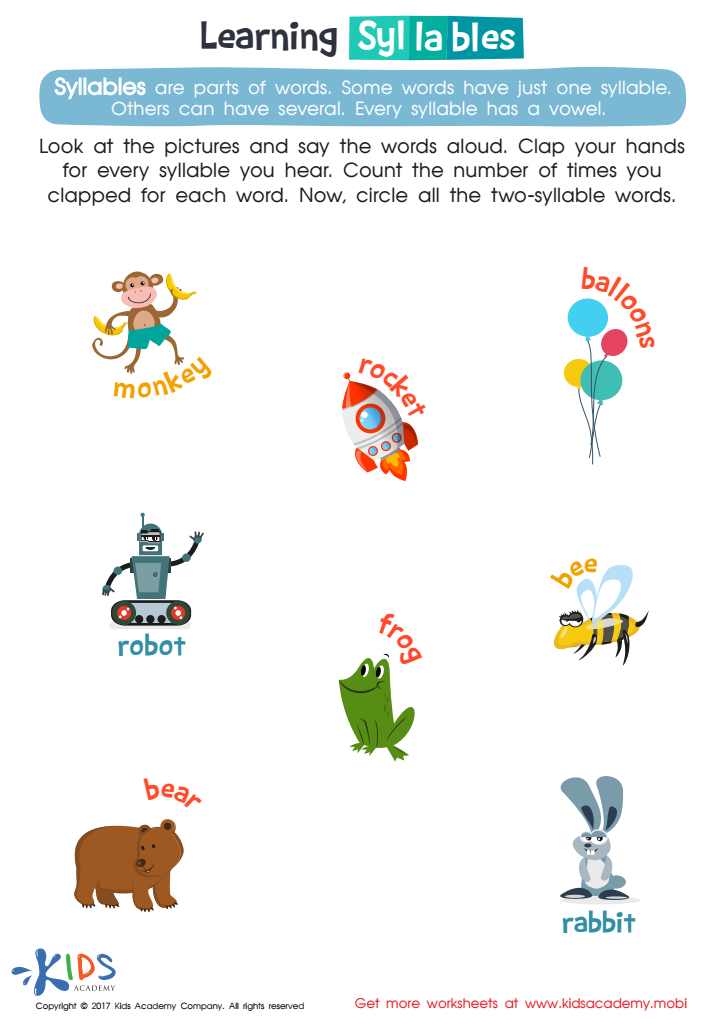
Learning Syllables Word Structure Worksheet
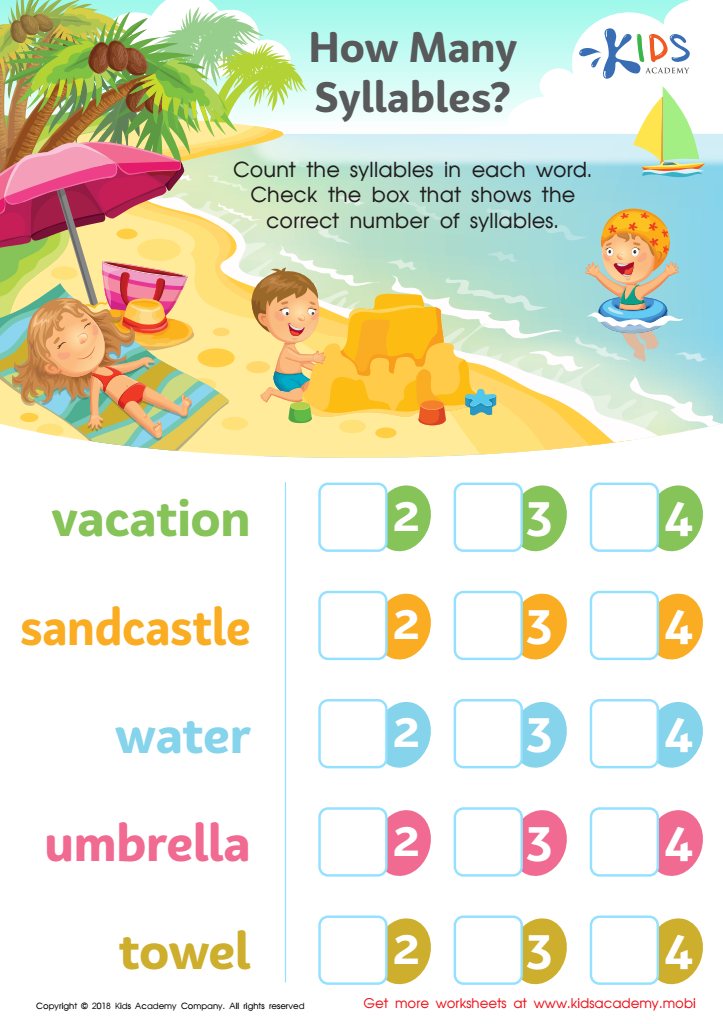
How Many Syllables Worksheet
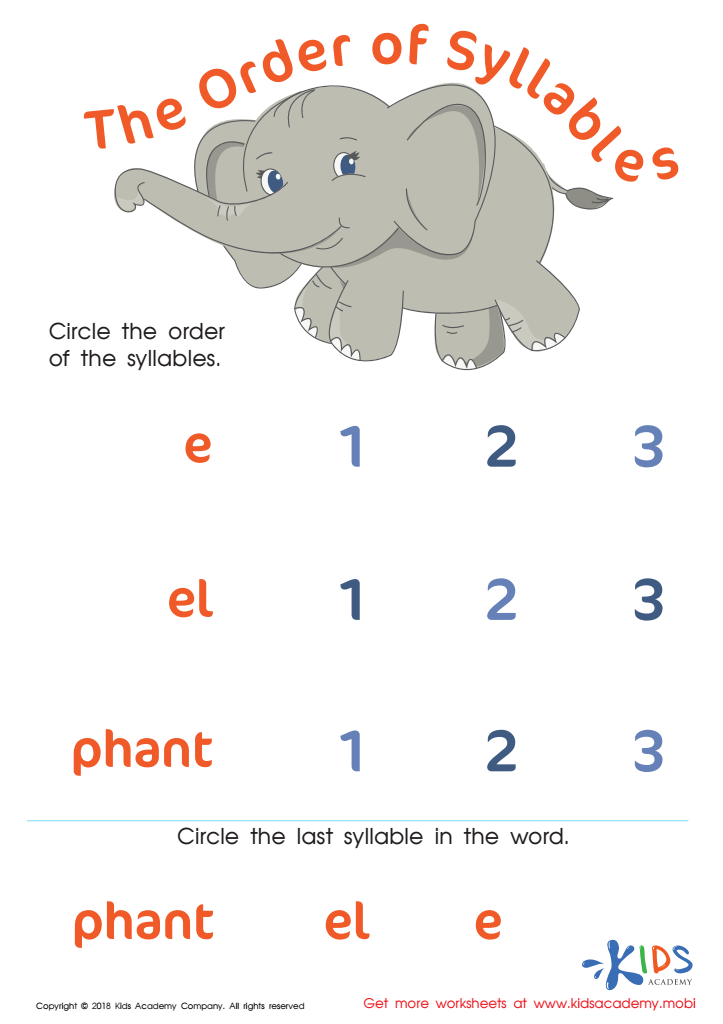
The Order of Syllables Worksheet







Phonetic awareness is a critical skill for children aged 6-8 as it lays the foundation for reading and writing, which are vital for their overall academic success. It involves recognizing and manipulating sound structures in words, enabling children to understand how letters correspond to sounds. This knowledge is essential when learning to decode words, leading to improved literacy skills.
Parents and teachers should care about phonetic awareness because it directly impacts a child's ability to read fluently. A strong grasp of phonemes—the smallest units of sound—enables children to sound out unfamiliar words, fostering confidence and independence in their reading journey. Engaging children in phonetic activities, such as rhyming games or sound matching, makes learning enjoyable and helps reinforce these skills naturally.
Moreover, phonetic awareness is linked to vocabulary development and comprehension skills. Children who are proficient in deciphering sounds are better equipped to understand and engage with texts, which enhances their ability to communicate effectively. Supporting phonetic awareness in young learners ultimately equips them with the tools they need for long-term educational success, setting a trajectory toward lifelong learning and literacy. Parents and teachers play a crucial role in nurturing these skills through targeted interactions and activities.








