
Practice problem-solving Worksheets for Ages 6-8
5 filtered results
Difficulty Level
Grade
Age
-
From - To
Subject
Activity
Standards
Explore our engaging "Practice Problem-Solving Worksheets" designed for children ages 6-8! These worksheets are perfect for enhancing critical thinking skills through fun and age-appropriate challenges. Covering various scenarios, they encourage young learners to develop their reasoning abilities and improve their math skills while tackling real-life situations. From sorting games to simple word problems, each worksheet fosters creativity and logical reasoning. Ideal for classroom settings or at-home practice, these resources will help children build confidence in their problem-solving abilities. Make learning enjoyable and effective as your child navigates through these interactive worksheets. Unlock your child’s potential today!
Favorites
With answer key
Interactive
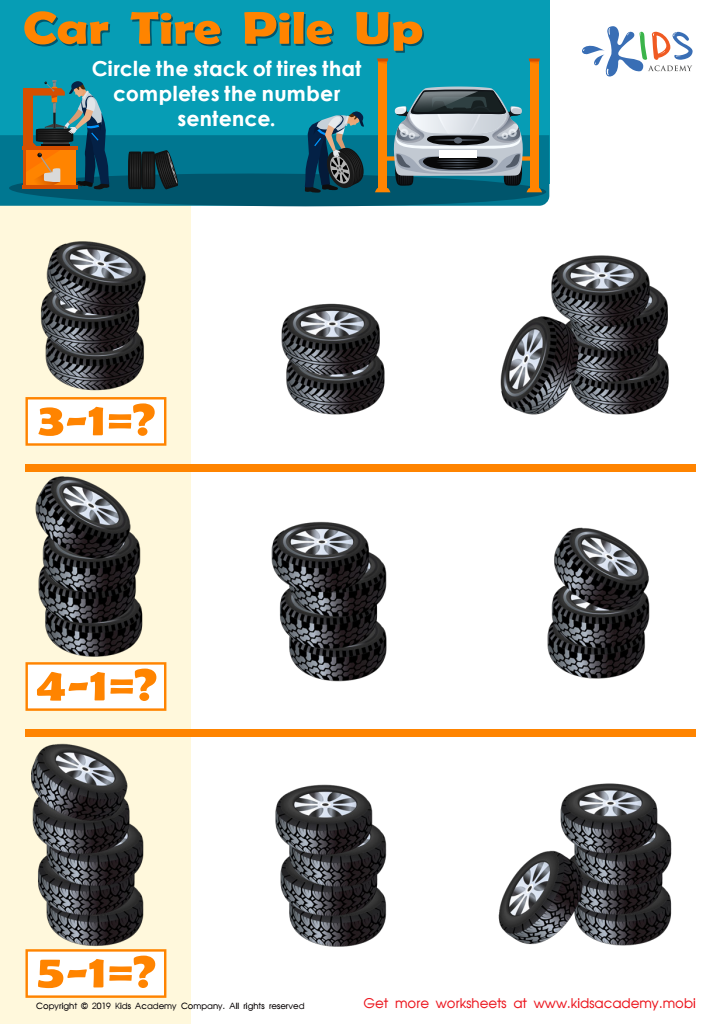
Car Tire Pile Up Worksheet
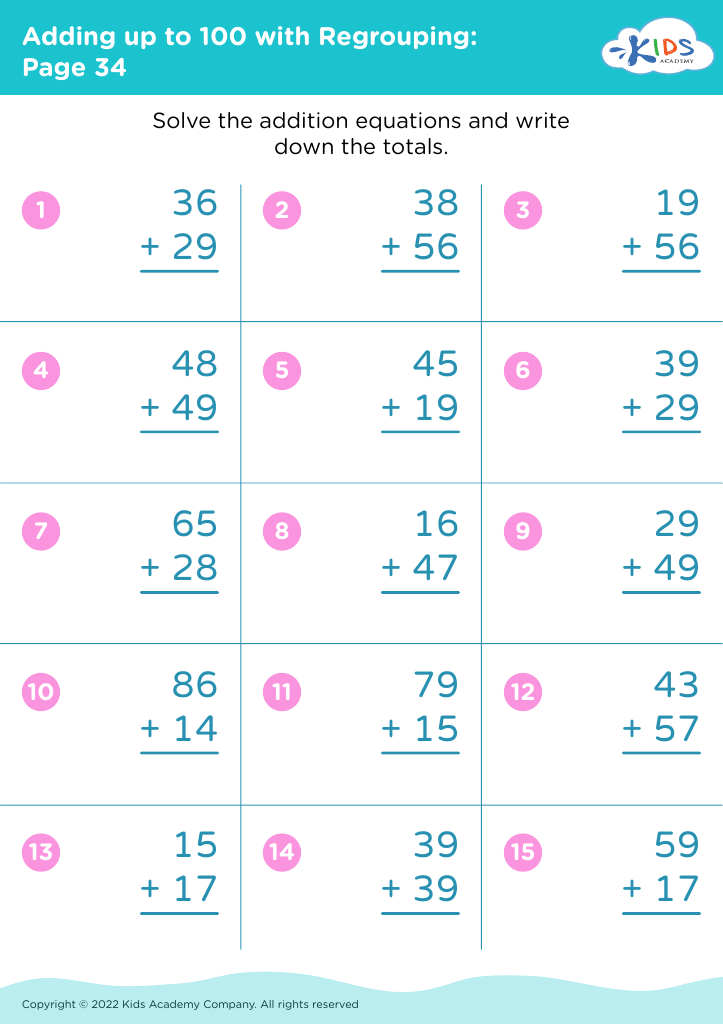
Examine the pic with your kids. Can they recognize the items piled up? The tires are organized in different quantities. Equations are on the left. Have your children work out the equations, counting the tire stacks to identify the correct answer.
 Assign to My Students
Car Tire Pile Up Worksheet
Worksheet
Join Kids Academy for Free
Who is primarily going to use this learning content?







Practicing problem-solving skills during the ages of 6 to 8 is crucial for children's cognitive and emotional development. This stage is pivotal, as children's brains are rapidly developing and they are increasingly able to think critically and independently. Engaging them in problem-solving activities helps cultivate essential skills such as analytical thinking, creativity, and resilience.
Parents and teachers should care because these skills lay the foundation for academic success and effective decision-making in later life. Children learn to approach challenges with a positive mindset and an understanding that mistakes are valuable learning opportunities. It promotes perseverance—they learn not to give up easily when faced with obstacles.
Moreover, problem-solving fosters collaboration, as children often need to work together to find solutions. This builds social skills and encourages teamwork, essential in both school and future careers. Lastly, cultivating a problem-solving ethos contributes to emotional intelligence, helping children manage frustrations and stress that come with challenges.
By investing time in developing these skills through engaging activities and supportive environments, parents and teachers are not only preparing children academically but also equipping them for real-world situations, laying groundwork for confident and capable individuals.








