Pronunciation practice Worksheets for Ages 6-8
3 filtered results
-
From - To
Enhance your child's speaking skills with our engaging Pronunciation Practice Worksheets, specifically designed for ages 6-8. These fun and interactive worksheets help young learners sharpen their pronunciation through various activities, including rhyming words, tongue twisters, and repetitive phrases. Each exercise not only boosts pronunciation but also builds confidence in speaking and listening skills. Our meticulously crafted materials blend playful designs with effective learning strategies, ensuring that kids remain motivated and excited as they practice. Perfect for home or classroom use, these worksheets provide an enjoyable way for children to improve their language abilities while having fun. Explore our collection today!
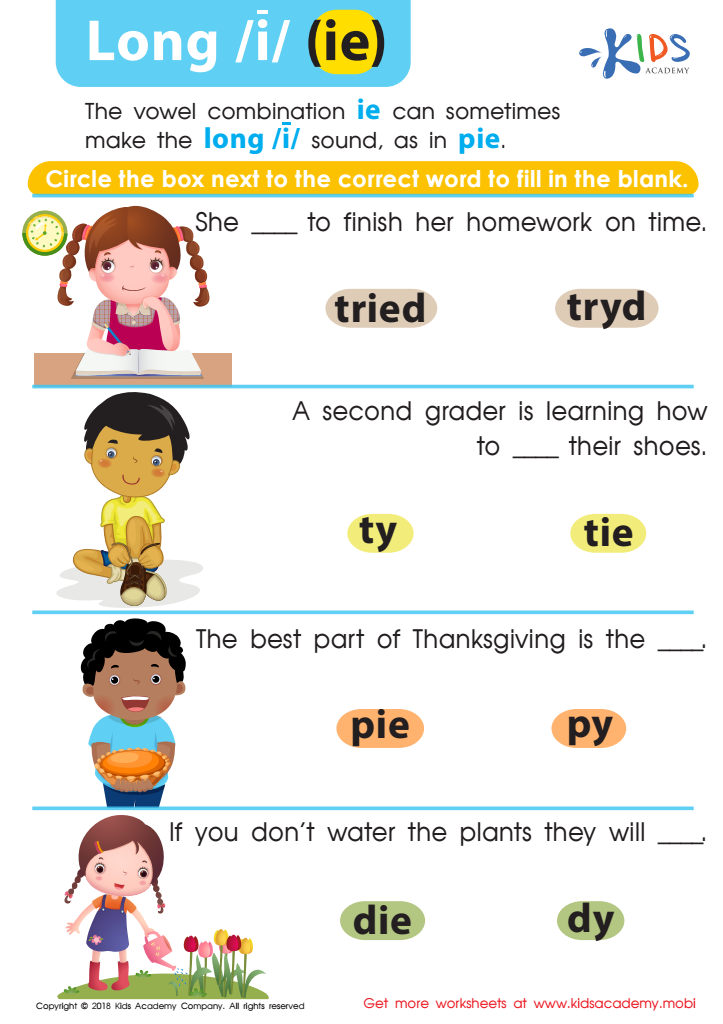
Reading: Long I and IE Worksheet
 Assign to My Students
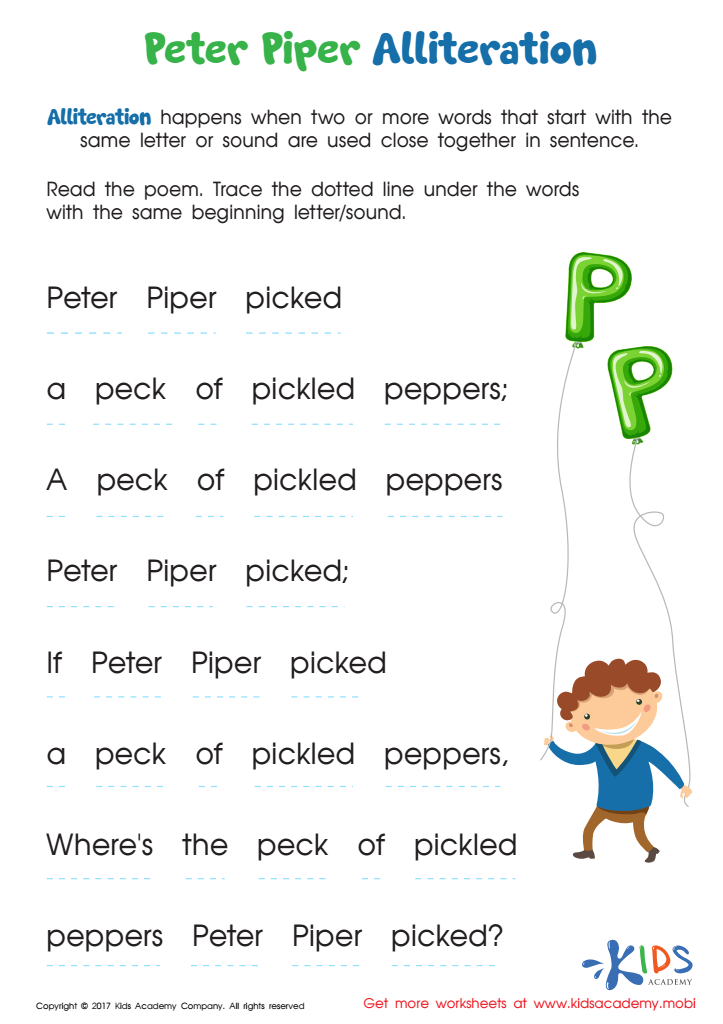
Peter Piper Alliteration Worksheet








Pronunciation practice is crucial for children ages 6-8, as this developmental stage is key for language acquisition and communication skills. At this age, children are honing their speaking abilities and their understanding of sounds, which lays the foundation for literacy. Mispronouncing words can lead to misunderstandings and hinder their ability to express themselves clearly, impacting their academic performance and social interactions.
Moreover, effective pronunciation contributes to children’s confidence. When they articulate words correctly, they are more likely to participate in conversations, engage in classroom discussions, and build relationships with peers. This confidence can diminish feelings of anxiety when speaking and enhance their overall learning experience.
Teachers and parents play vital roles in supporting pronunciation practice. By modeling correct pronunciation and providing timely feedback, they help children develop their speech clarity and listening skills. Interactive activities, such as reading aloud and engaging in phonics games, encourage practice in a fun, engaging way.
Additionally, clear pronunciation aids in fostering literacy skills, including reading and writing. As children progress in their educational journey, strong pronunciation will equip them to tackle more complex language tasks, resulting in long-term academic success. Investing time in pronunciation practice thus significantly enhances a child's overall language development.








