Rhyming skills development Worksheets for Ages 6-8
4 filtered results
-
From - To
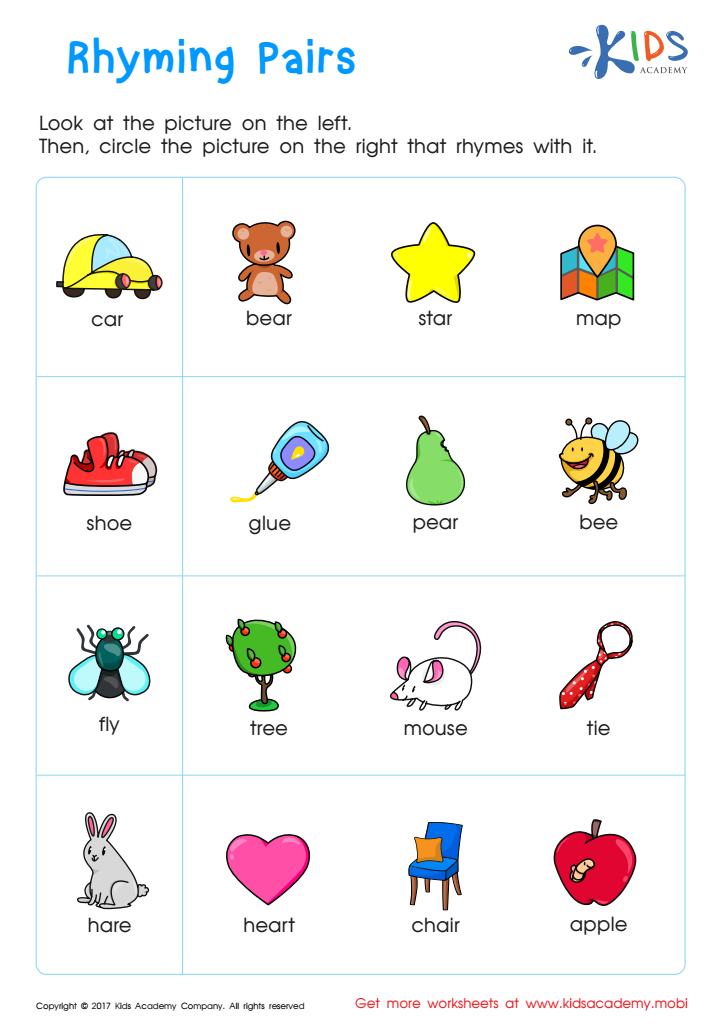
Our Rhyming Skills Development Worksheets for Ages 6-8 are expertly designed to help young learners discover and enjoy the playful nature of rhyme. These engaging activities reinforce phonemic awareness, boost vocabulary, and enhance pattern recognition essential for reading fluency. Attractive visuals and fun exercises keep kids motivated while they identify, match, and create rhyming pairs. Ideal for classroom or home use, our worksheets support different learning styles and make building language skills an enjoyable experience. Give your child a head start in literacy with our comprehensive collection of rhyming worksheets.
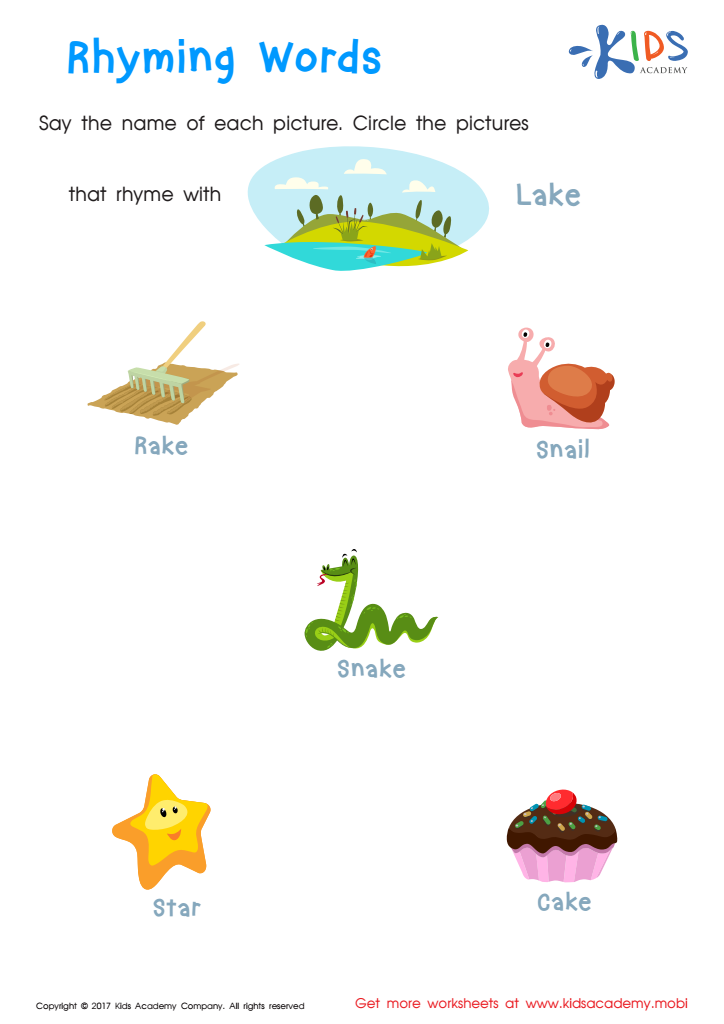
Rhyming Words Rhyming Worksheet
 Assign to My Students
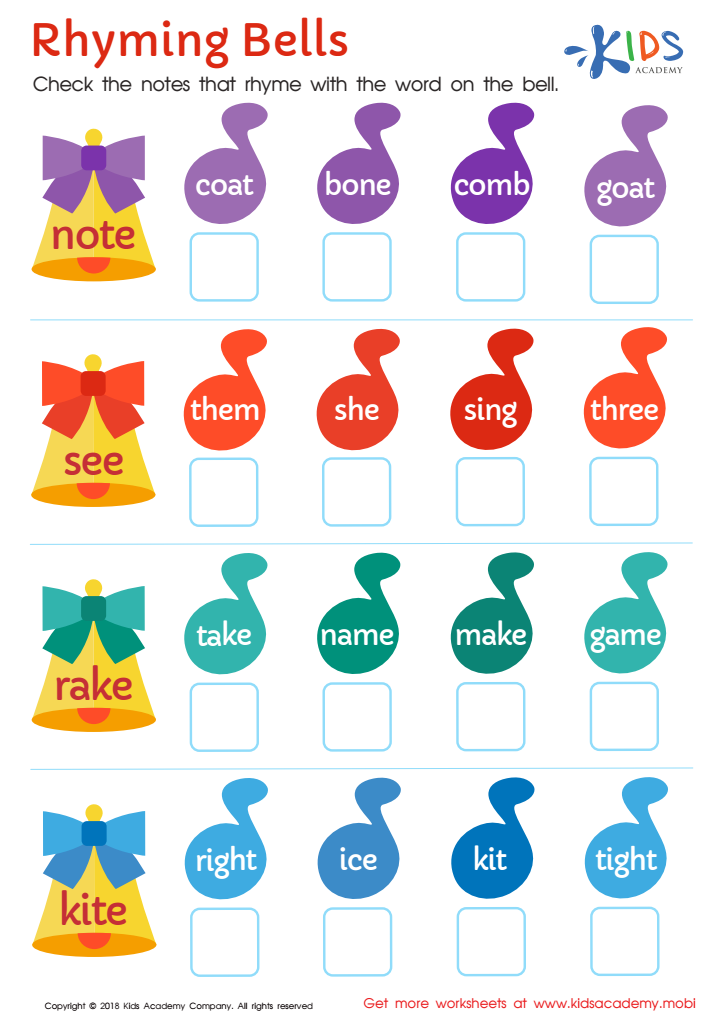
Rhyming Bells Worksheet
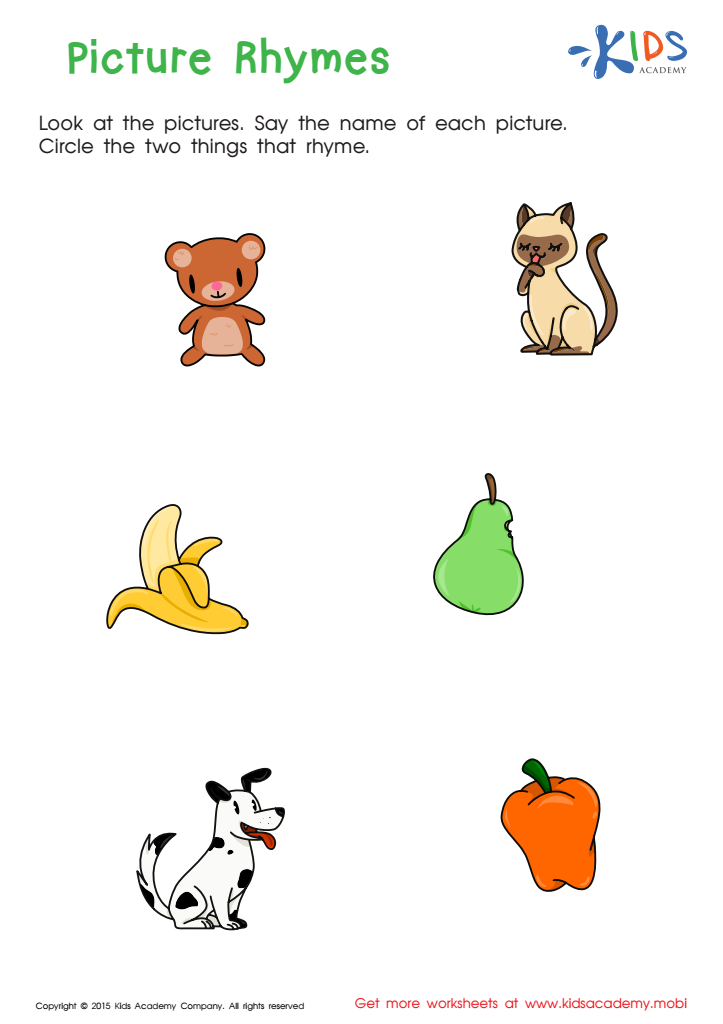
First Words: Picture Rhymes Worksheet








Parents and teachers should emphasize the development of rhyming skills in children aged 6-8 because it builds a crucial foundation for their literacy and language development. Rhyming activities enhance phonemic awareness, which is the ability to hear, identify, and manipulate individual sounds in words. This skill is essential for decoding words when learning to read, as children must understand how sounds come together to form words.
Furthermore, recognizing and producing rhymes aids in vocabulary development. As children play with words that rhyme, they are exposed to new words and their meanings. This engagement fosters a greater interest in language, encouraging a love of books and storytelling.
Rhyming also stimulates memory and cognitive development. It exercises brain function, improving pattern recognition and auditory discrimination. When children remember rhymes or create their own, they practice sequencing and predicting, both critical thinking skills.
Additionally, rhyming enhances social and emotional development. Cooperative rhyming games and activities can cultivate a supportive learning environment and improve children's confidence in expressing themselves.
In conclusion, rhyming is much more than just fun—it's a multifaceted educational tool that supports reading, cognitive, and social development, cultivating lifelong skills that benefit children throughout their academic careers and beyond.








