Science vocabulary expansion Worksheets for Ages 6-8
3 filtered results
-
From - To
Unlock young learners' potential with our "Science Vocabulary Expansion Worksheets for Ages 6-8." These engaging, expertly designed worksheets help expand your child’s understanding of essential science terms and concepts. Foster curiosity as kids explore topics like ecosystems, weather patterns, and plant life through fun-filled activities. Perfect for both parents and teachers, these resources support learning standards and promote a strong scientific foundation. By integrating pictures, matching games, and simple definitions, our worksheets provide an exciting way for children to learn new words and solidify their understanding, paving the way for future scientific discovery.
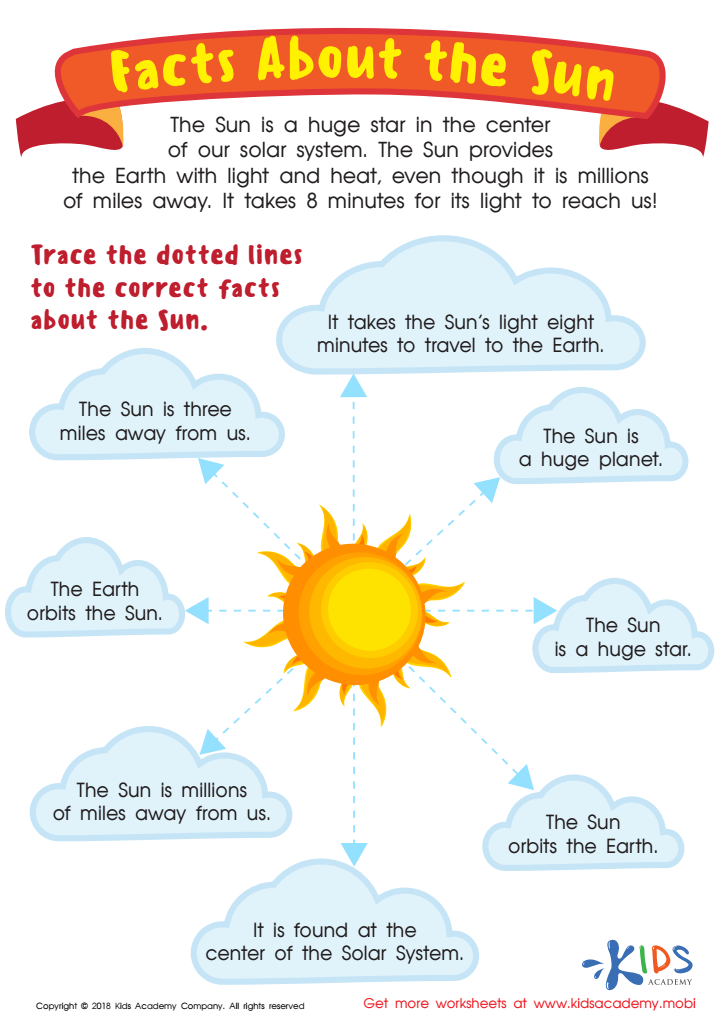
Facts About the Sun Worksheet
 Assign to My Students
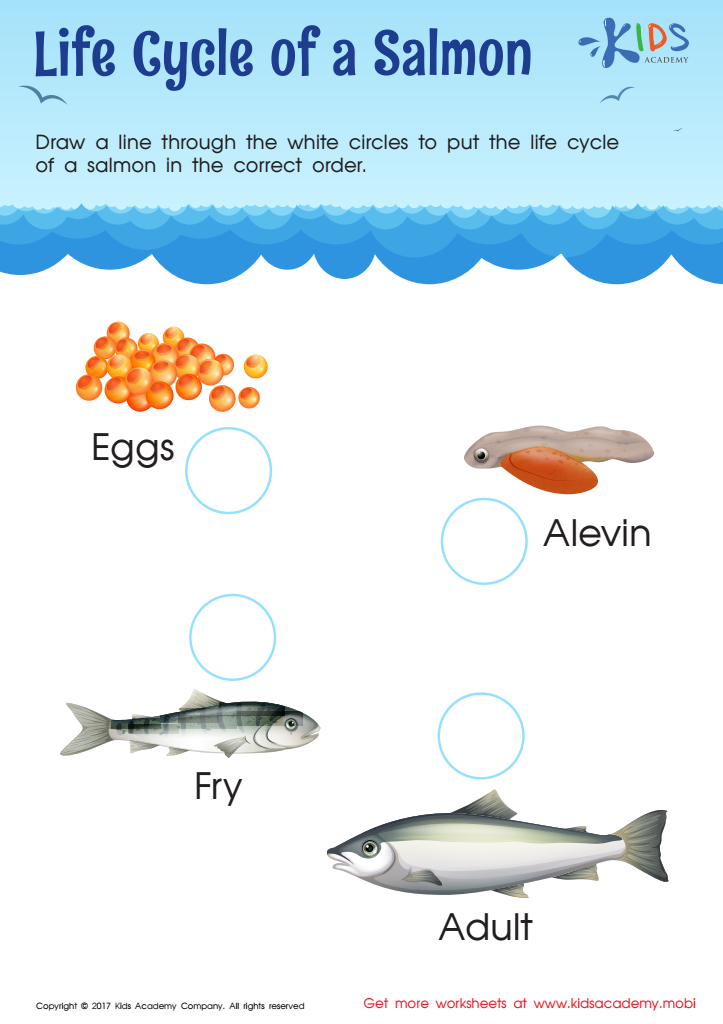
Cycle Of Salmon Worksheet
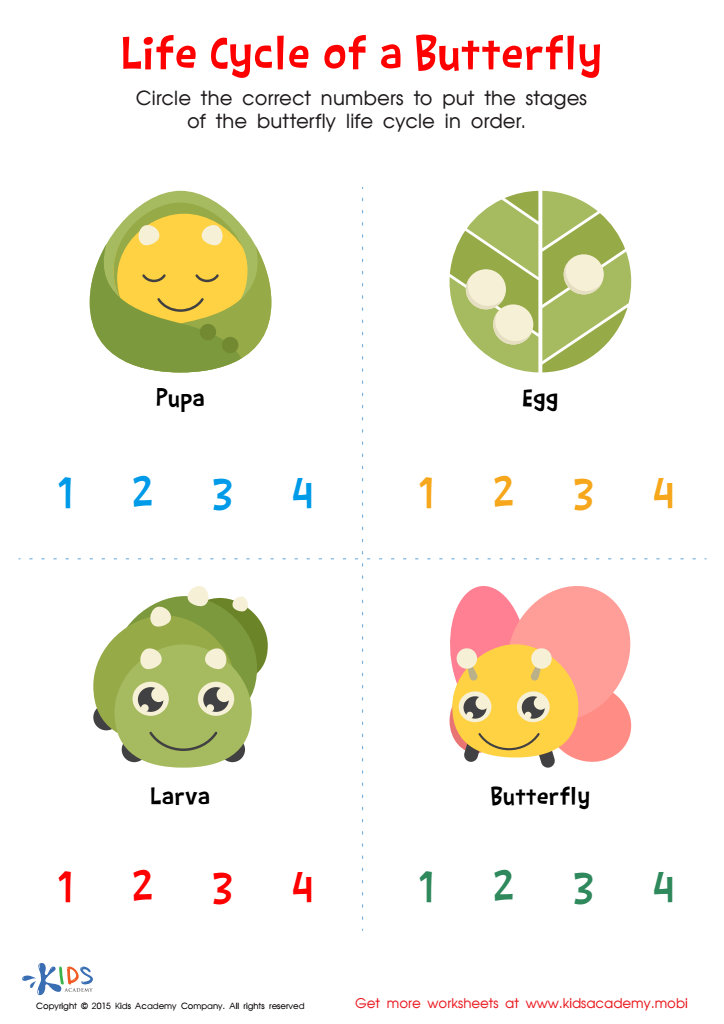
Life Cycle of Butterfly Printable








Expanding science vocabulary for children ages 6-8 is crucial for several reasons. First, it lays the foundation for future learning. Young children are at a critical period for language development, and incorporating scientific terms enhances their overall communication abilities. When children learn words like "observe," "classify," and "hypothesize," they gain more than just vocabulary—they develop a way of thinking that involves inquiry and problem-solving.
Second, introducing scientific vocabulary at an early age promotes curiosity and fosters a love of learning about the world. It empowers children to ask questions and seek answers, thereby nurturing a lifelong passion for discovery. When kids understand the terminology, they are more likely to engage deeply with scientific concepts and experiments.
Third, a strong science vocabulary aids in reading comprehension and academic success. When children encounter these terms in reading material or conversations, they can better comprehend the content, leading to improved performance across subjects. Moreover, a confident grasp of scientific language can boost self-esteem, allowing children to participate actively in discussions and classroom activities.
Finally, in a rapidly advancing world driven by science and technology, early exposure to scientific vocabulary prepares children for future educational and career opportunities. It's an essential step in cultivating informed, capable individuals who can navigate and contribute to the scientific community, where precise communication is vital.








