Sequencing numbers Worksheets for Ages 6-8
3 filtered results
-
From - To
Our "Sequencing Numbers Worksheets for Ages 6-8" offer an engaging way for young learners to master numerical order. Designed to enhance cognitive skills, these worksheets provide a variety of activities focused on arranging numbers, identifying patterns, and understanding sequences. With colorful illustrations and age-appropriate exercises, children will develop their counting abilities while honing problem-solving skills. This resource is perfect for classroom use or at-home practice, making learning fun and interactive. Help your child build a strong foundation in mathematics and prepare for future academic success with our comprehensive worksheets tailored specifically for kids aged 6 to 8.
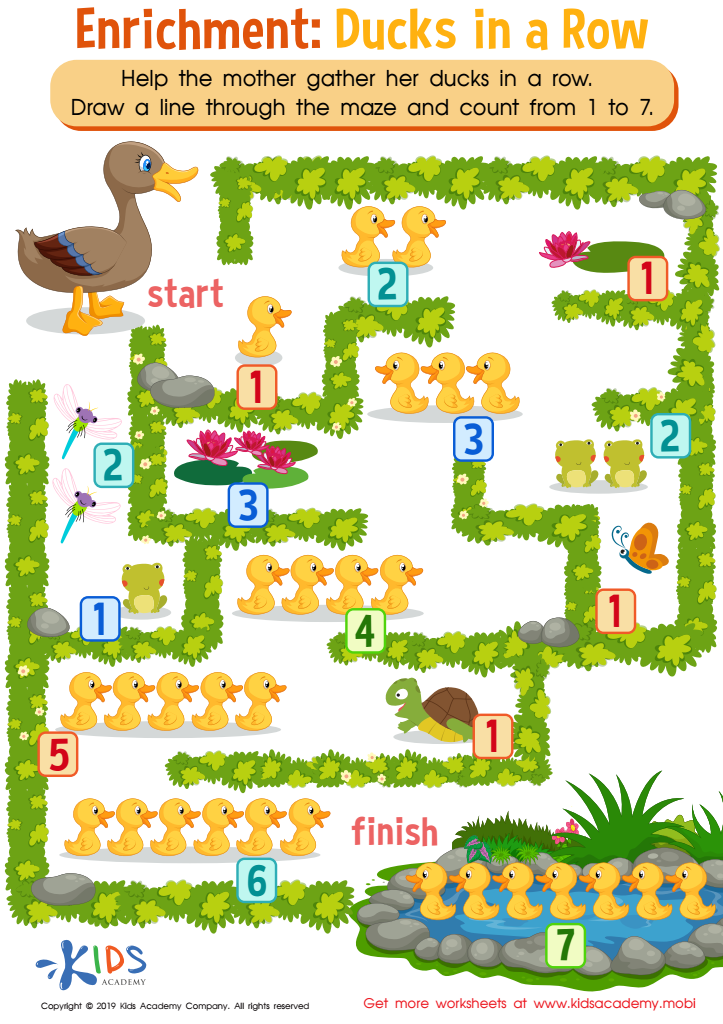
Ducks in a Row Worksheet
 Assign to My Students
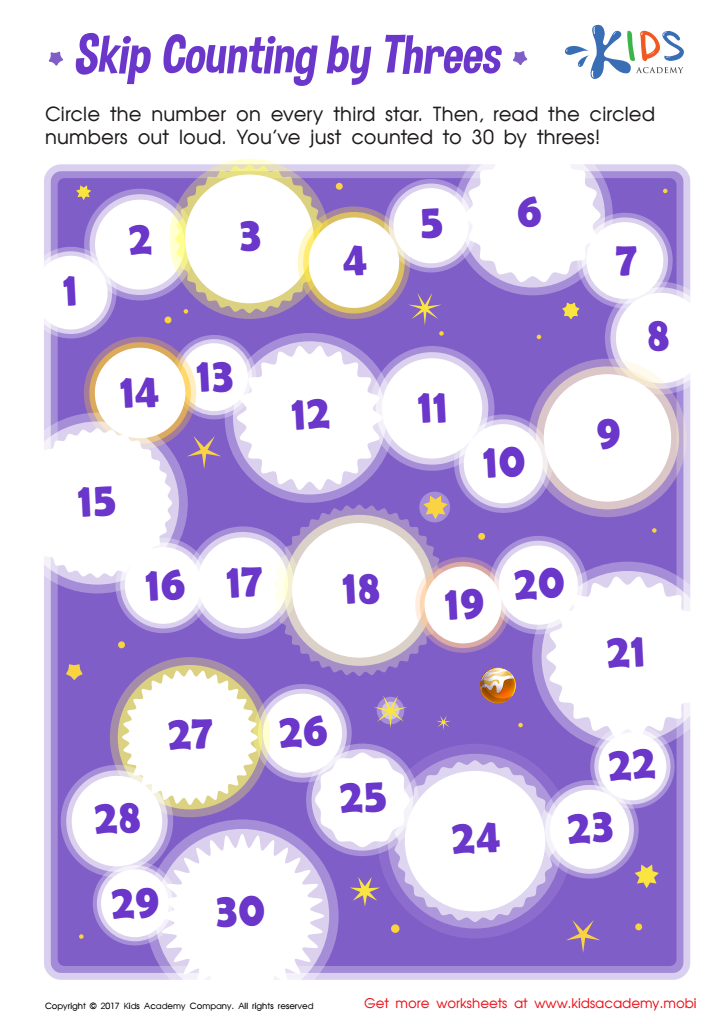
Skip Counting By Three Printable
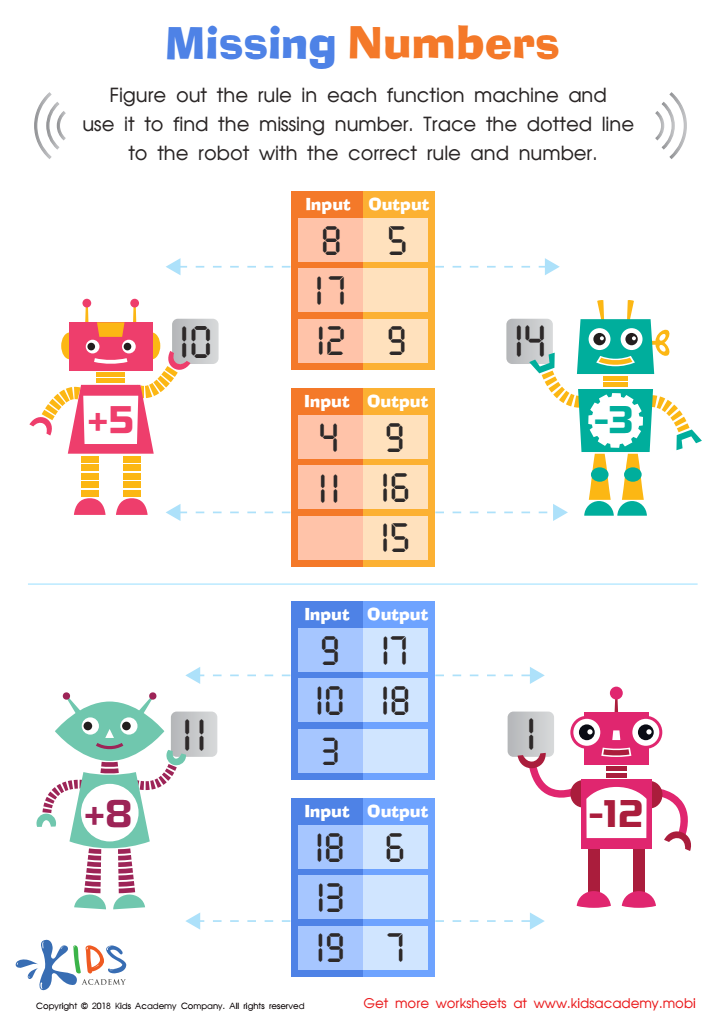
Missing Numbers Worksheet








Understanding sequencing numbers is crucial for children aged 6-8 as it lays the foundation for their mathematical skills and overall cognitive development. At this age, children start to grasp basic number concepts, and sequencing helps them recognize patterns and relationships among numbers. This skill enhances their ability to perform essential operations such as addition, subtraction, and later, multiplication and division.
Sequencing also fosters critical thinking and problem-solving abilities. When children can arrange numbers in a specific order—whether increasing or decreasing—they learn to follow logical processes and develop analytical skills. This cognitive advancement extends beyond math; it aids in reading comprehension, as pattern recognition is vital for understanding sequences in language and story structures.
Moreover, sequencing numbers plays a significant role in everyday life, such as telling time, arranging events chronologically, and understanding charts and graphs. Parents and teachers should encourage these skills through various engaging activities, ensuring children are well-prepared for more complex mathematics in the coming years. Ultimately, mastering number sequencing contributes to a child's confidence and proficiency in mathematics, setting a strong academic foundation for their future learning journey.








