Time calculation skills Worksheets for Ages 6-8
3 filtered results
-
From - To
Boost your child's understanding of time with our engaging Time Calculation Skills Worksheets for Ages 6-8! Designed to reinforce essential time concepts, these worksheets help young learners master reading clocks, telling time, and distinguishing between a.m. and p.m. Through fun exercises, children will develop their ability to solve time-related problems while enhancing their critical thinking skills. Our colorful and interactive worksheets make learning enjoyable, turning practice into play. Suitable for home or classroom use, these resources are perfect for parents and teachers looking to support early math education. Help your child become time-savvy with our expertly crafted worksheets today!
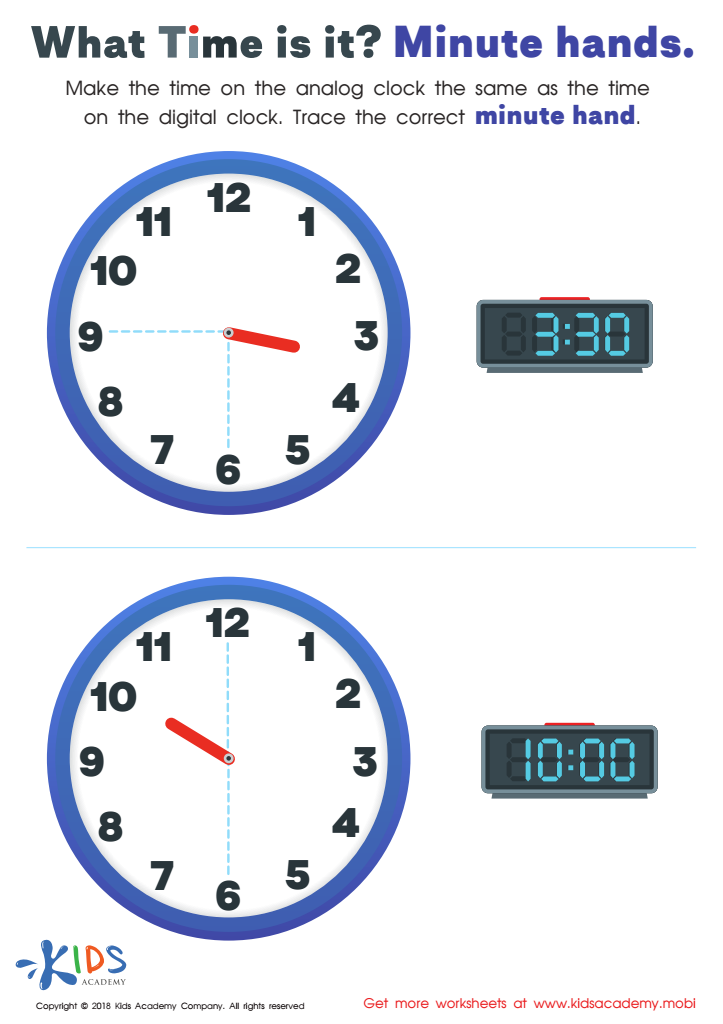
What Time Is it? Minute Hands Worksheet
 Assign to My Students
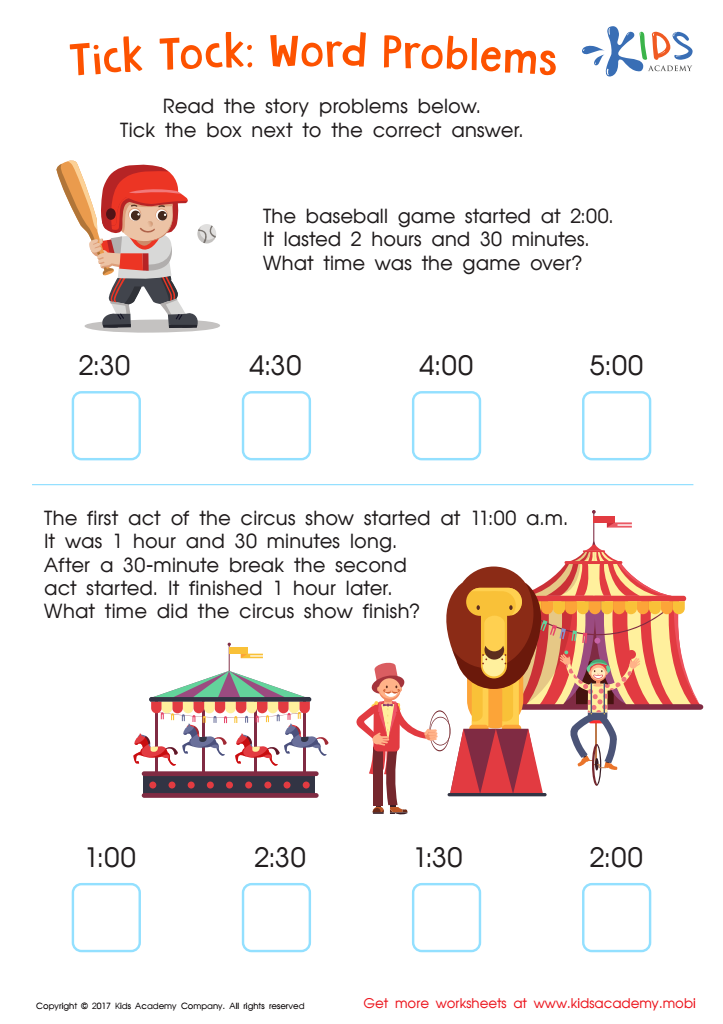
Tick Tock Word Problems Time Worksheet




Parents and teachers should prioritize time calculation skills for children ages 6-8 because these foundational abilities are crucial for lifelong learning and everyday functioning. At this age, children are beginning to explore concepts of time more deeply, and mastering these skills enhances their ability to organize their daily activities, understand routines, and manage responsibilities more effectively.
Time calculation skills develop critical thinking and problem-solving abilities as children learn to estimate durations, read clocks, and plan their schedules. These skills contribute to greater independence, enabling kids to navigate their environments with confidence. Furthermore, mastering time concepts lays the groundwork for more complex mathematical ideas in the future, reinforcing their overall numeracy.
Beyond academics, understanding time helps children cultivate self-control and patience, as they learn to wait for events and manage expectations. Teachers and parents can foster these skills through interactive activities like timed games and storytelling that emphasizes sequences and timeframes. Engaging in these discussions can strengthen the child-parent and teacher-student bond, creating a supportive learning atmosphere. Ultimately, prioritizing time calculation skills empowers children to navigate their world effectively and builds a strong foundation for their educational journey.








