Understand number sequencing Worksheets for Ages 6-8
3 filtered results
-
From - To
Discover our engaging number sequencing worksheets designed specifically for children aged 6-8! These resources help young learners master essential counting and sequencing skills in a fun and interactive way. Our worksheets feature colorful visuals and age-appropriate activities that promote problem-solving and critical thinking. Kids will practice identifying patterns, filling in missing numbers, and completing sequences, all while building confidence in their math abilities. By enhancing their understanding of number sequences, children will develop a strong foundation for future mathematical concepts. Explore our extensive collection of worksheets to ignite a passion for learning and strengthen their numerical skills today!
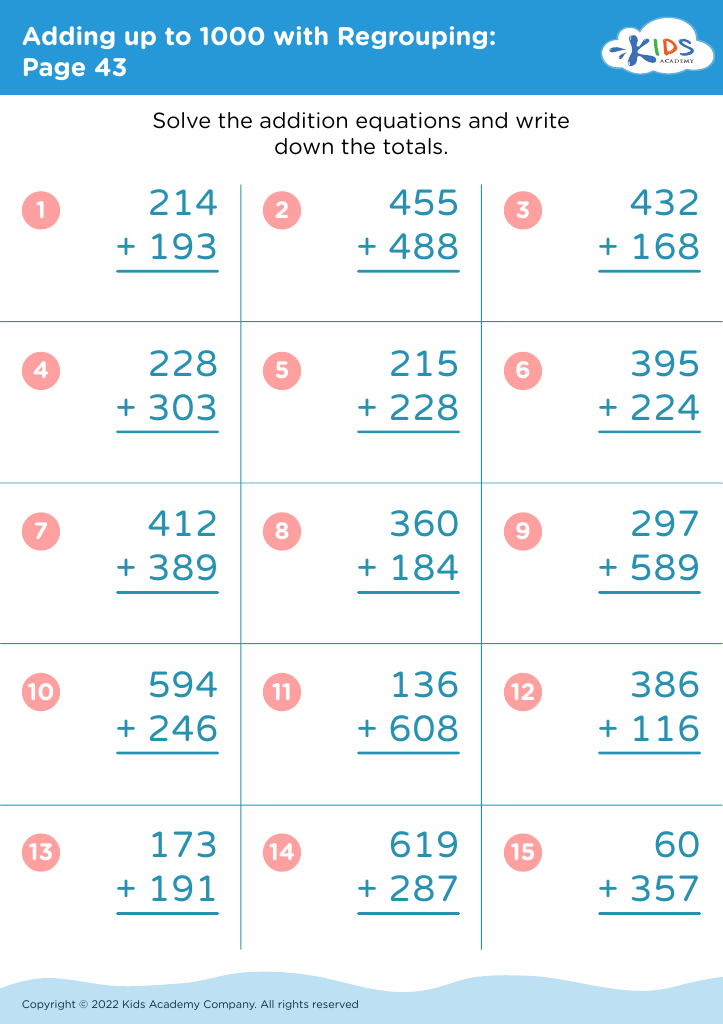
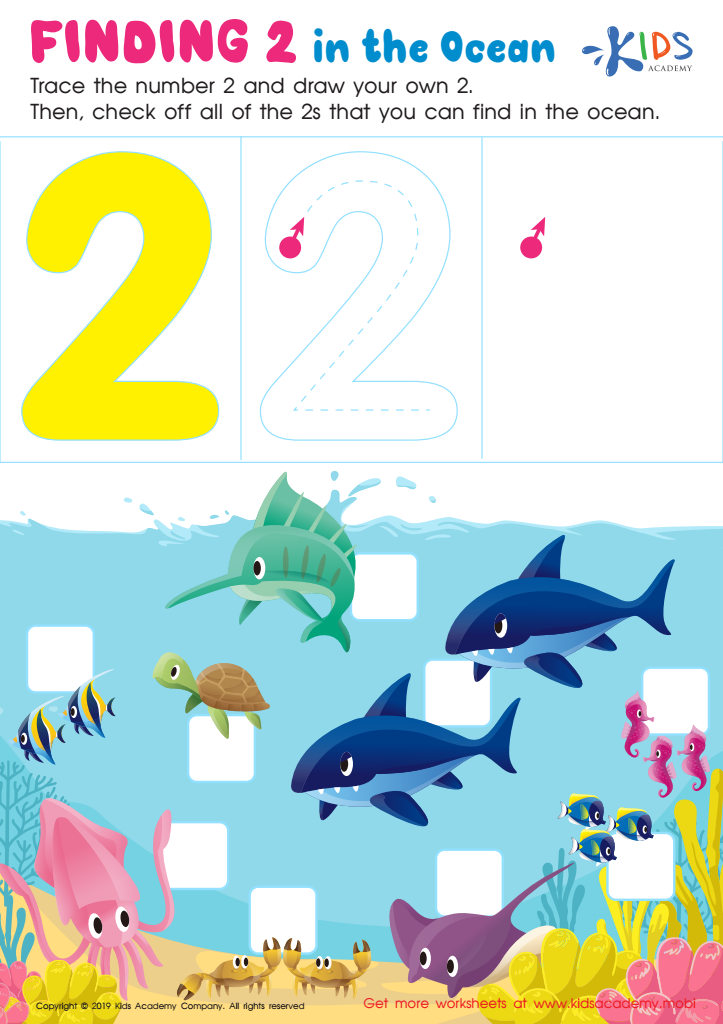
Finding 2: In the Ocean Worksheet
 Assign to My Students








Understanding number sequencing is vital for children aged 6-8 as it lays the foundation for their mathematical skills and cognitive development. During this stage, children start to grasp the concepts of ordering and relationships between numbers, which are essential for more advanced math operations such as addition, subtraction, and even problem-solving.
Parents and teachers should care because number sequencing fosters critical thinking and logical reasoning. Comprehending sequences helps children identify patterns and make predictions, skills that are applicable beyond math in everyday life and future educational pursuits. This understanding aids in developing their sense of time (days of the week, months) and even enhances reading skills through recognizing sequences in stories or events.
Moreover, number sequencing can boost a child's confidence and engagement in learning. When children feel comfortable with numbers, they are more likely to participate in class discussions and take on more challenging tasks. Overall, focusing on sequencing contributes not only to academic success but also nurtures a child's overall cognitive and social development. By investing in this foundational skill, parents and teachers empower children to become successful learners.








