Understanding bar graphs Worksheets for Ages 6-8
7 filtered results
-
From - To
Introduce young learners to the world of data interpretation with our "Understanding Bar Graphs Worksheets" designed for ages 6-8. These engaging printable worksheets help children grasp essential skills in reading and creating bar graphs. Through fun and interactive exercises, kids will learn how to collect, organize, and visually represent data. Perfect for classroom or at-home learning, these worksheets make understanding bar graphs an enjoyable and rewarding experience. Develop your child's ability to interpret information, enhance their critical thinking skills, and support their mathematical growth. Make data fun and accessible with our expertly designed worksheets.
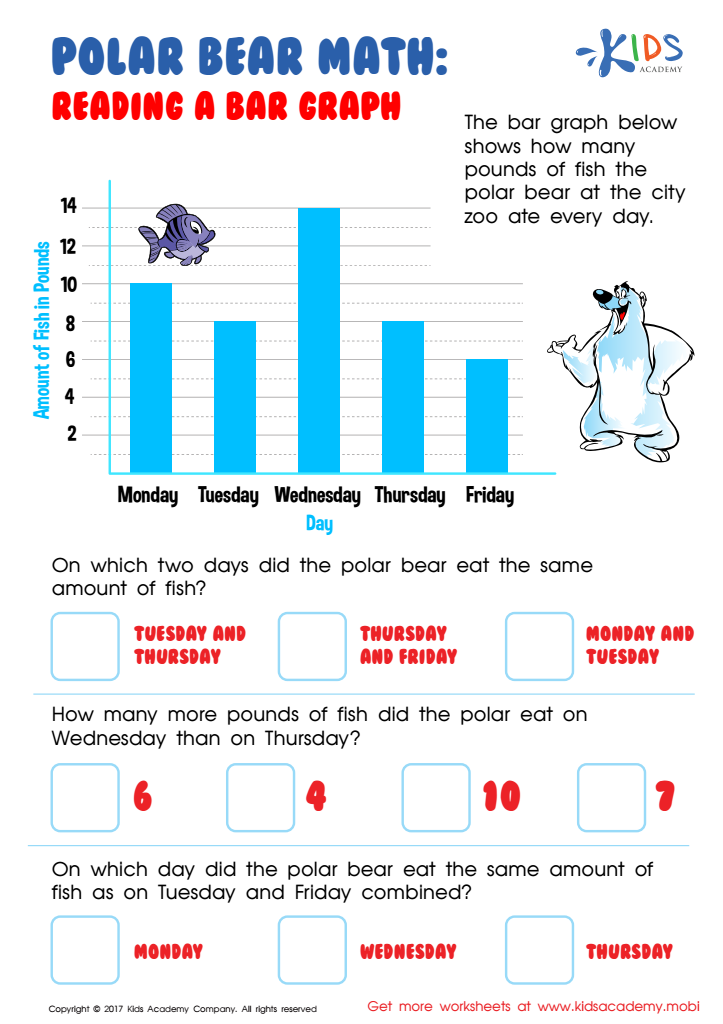
Reading Bar Graph Worksheet
 Assign to My Students
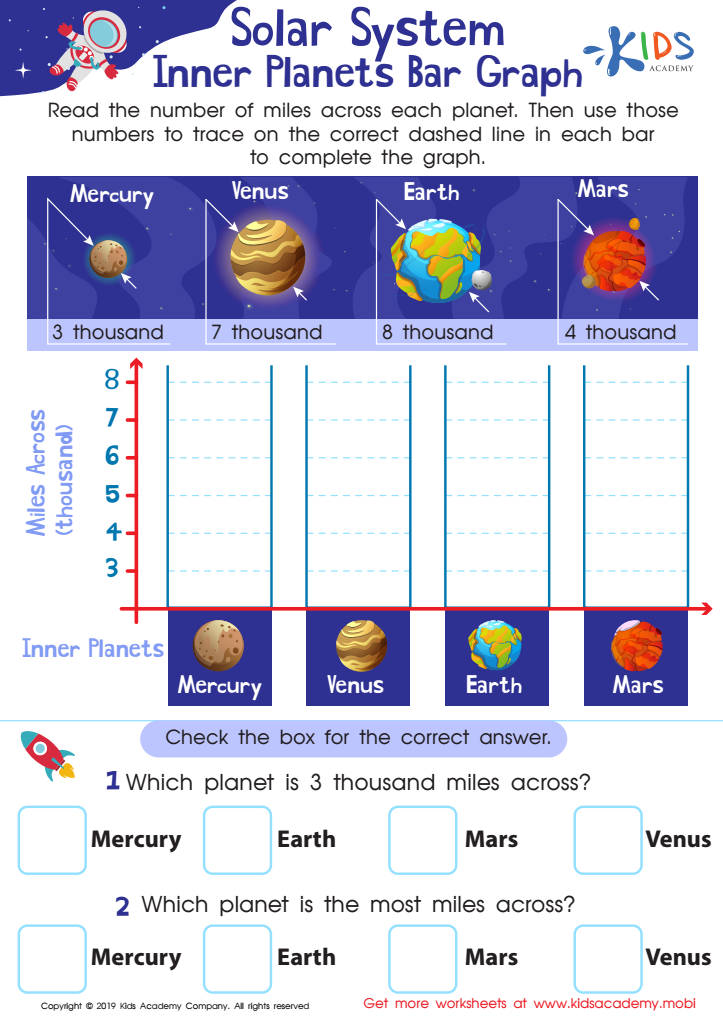
Planets Bar Graph Worksheet
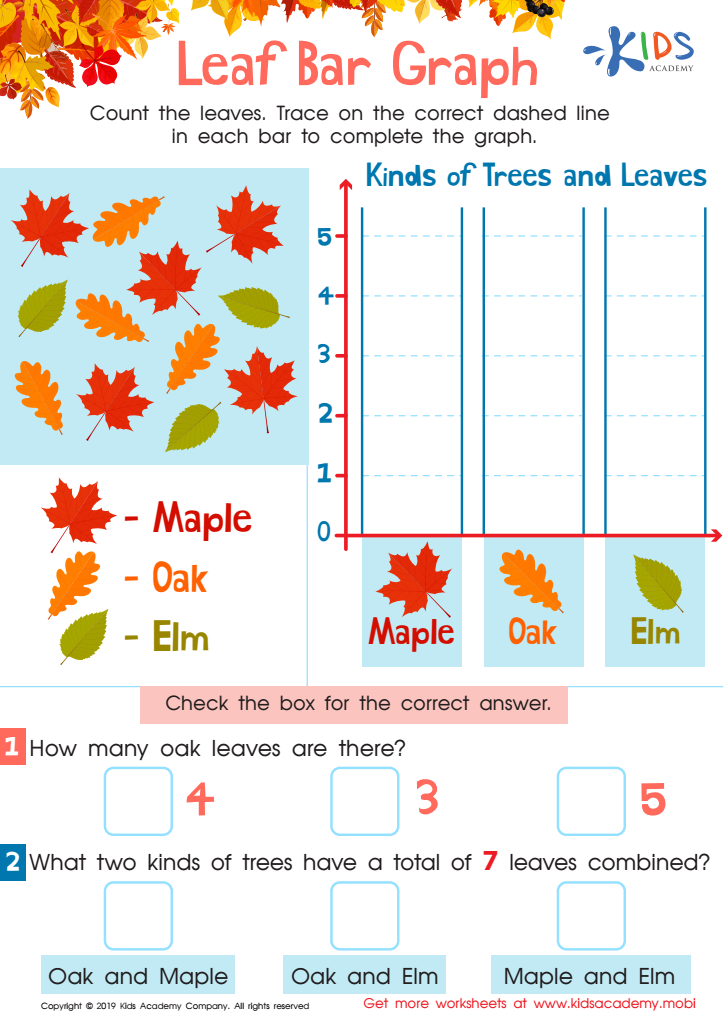
Leaf Bar Graph Worksheet
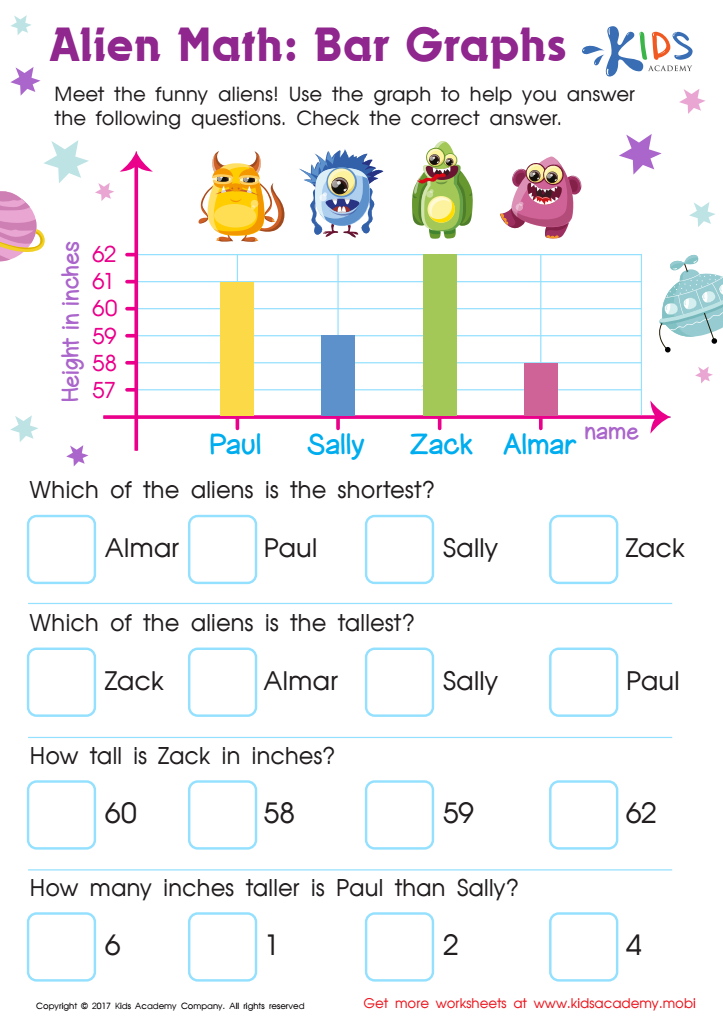
Bar Graphs Worksheet
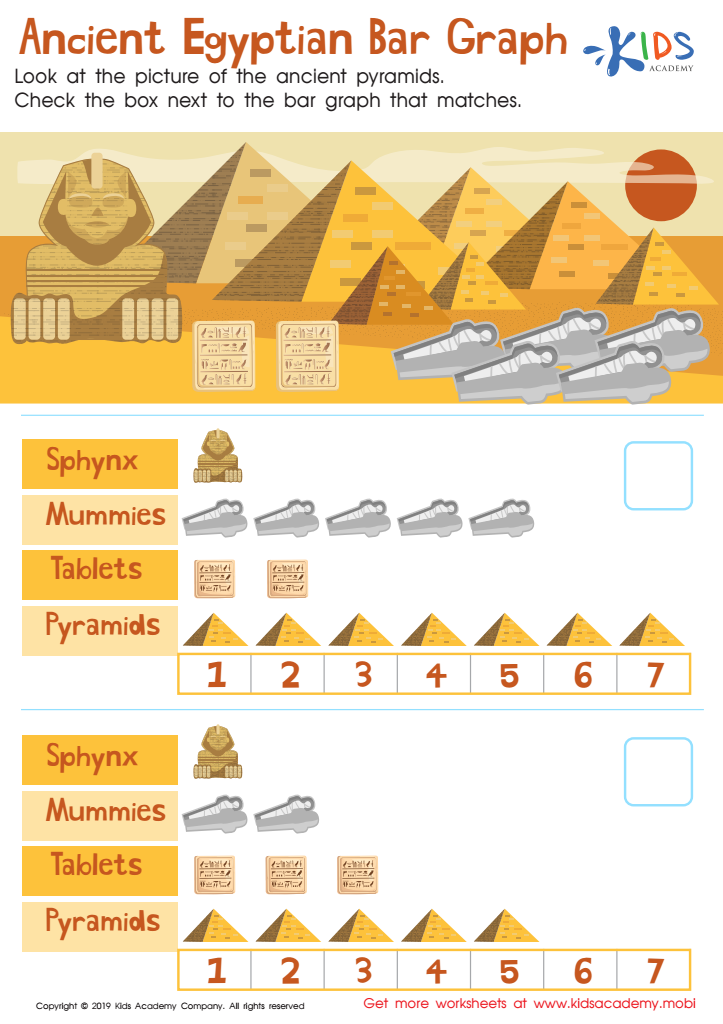
Egyptian Bar Graph Worksheet


.jpg)




Understanding bar graphs is an essential skill for children aged 6-8, providing foundational knowledge for future academic success and everyday life. Firstly, bar graphs teach children how to comprehend and visualize data, crucial for subjects like math and science. Interpreting and creating bar graphs enhance their ability to recognize patterns, compare quantities, and make data-driven decisions. This early analytical skill-building fosters critical thinking and problem-solving abilities, valuable traits across all disciplines.
Moreover, bar graphs make abstract numbers tangible and relatable for young learners. They transform numerical data into colorful and approachable visuals, enabling children to grasp complex concepts more easily. When kids can visually see data, they are more likely to remember and understand it.
In addition, engaging with bar graphs can spark curiosity and interest in the world around them. Through activities involving everyday contexts—like showing favorite fruits, weather patterns, or class survey results—children learn to collect and represent data meaningfully. This real-world application encourages active learning and helps them appreciate the ubiquity of data in daily life.
Parents and teachers play a critical role in this learning journey by integrating bar graph activities into routines, fostering both academic growth and practical life skills in young learners.








