Understanding comparisons Worksheets for Ages 6-8
5 filtered results
-
From - To
Unlock the power of understanding comparisons with our expertly designed worksheets for ages 6-8 at Kids Academy! These engaging activities help young learners grasp the concepts of comparing objects, sizes, quantities, and measurements. From fun exercises, kids will develop critical thinking and observational skills essential for math and everyday life. With colorful illustrations and age-appropriate challenges, our worksheets transform learning into an enjoyable experience. Perfect for use at home or in the classroom, they pave the way for confident, skilled learners. Discover the joy of learning and enhance your child’s educational journey with our comprehensive Understanding Comparisons worksheets!
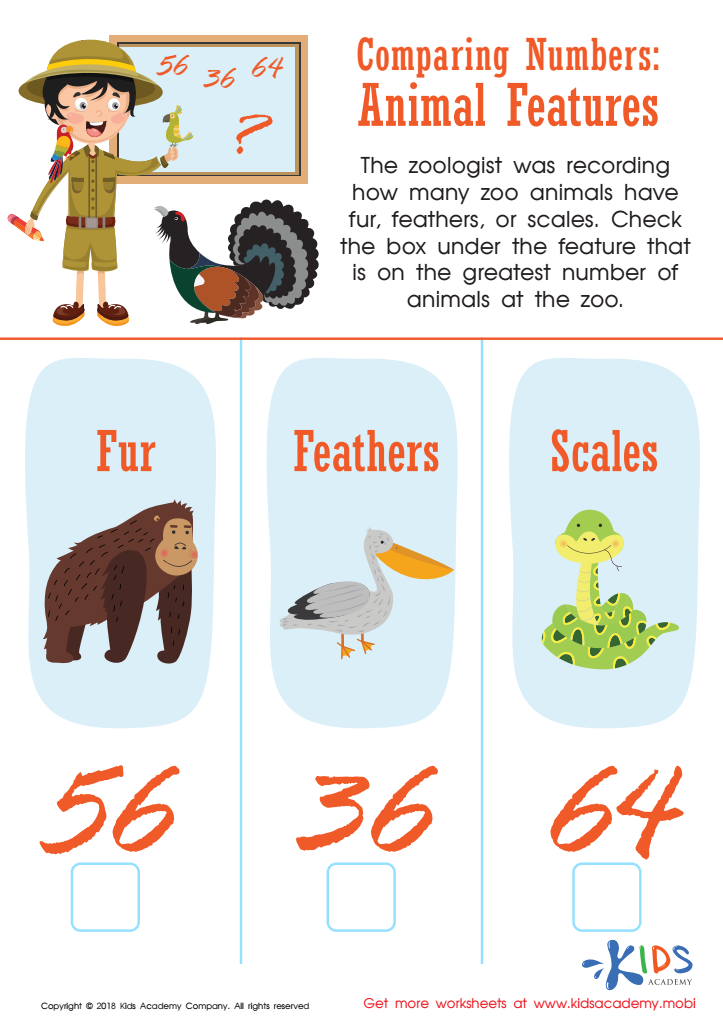
Animal Features Worksheet
 Assign to My Students
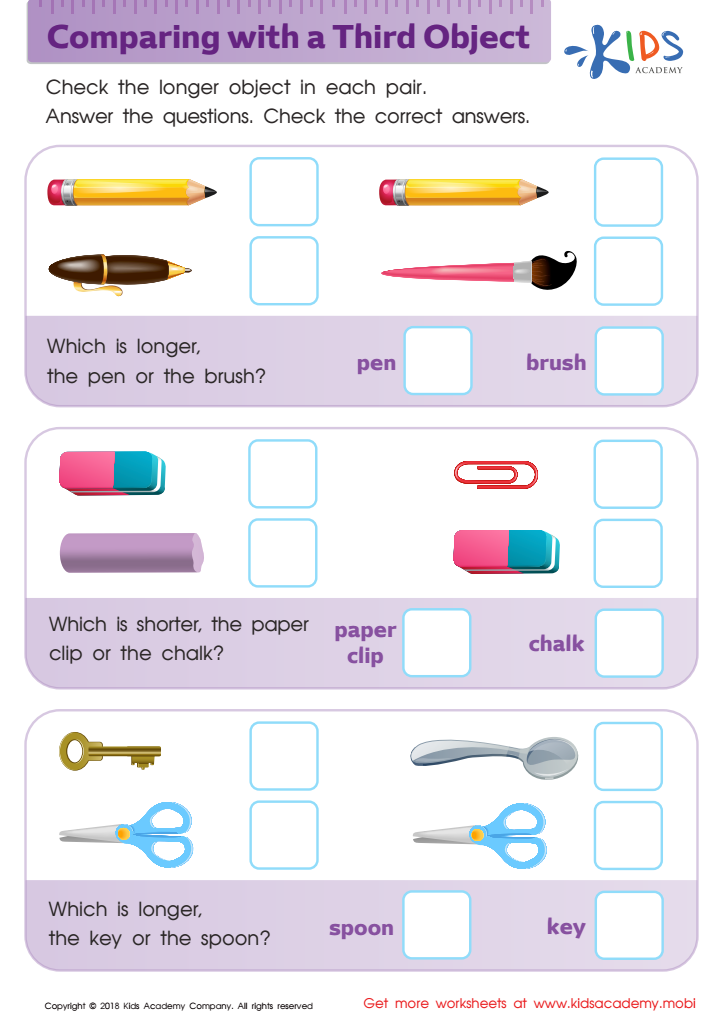
Comparing with a Third Object Worksheet
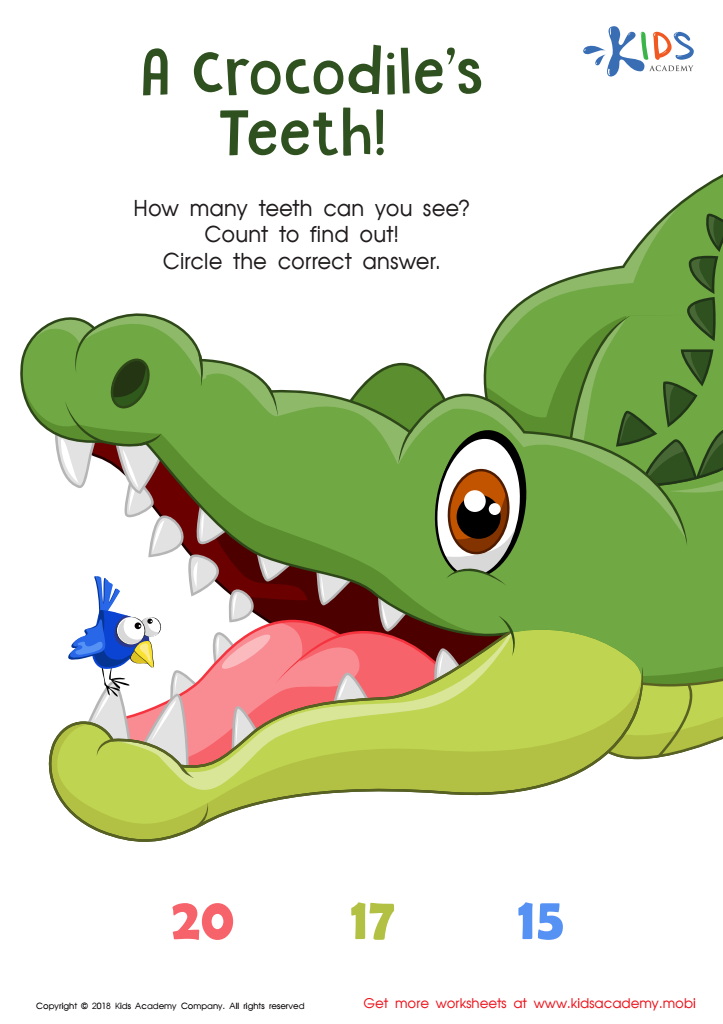
A Crocodile's Teeth Worksheet
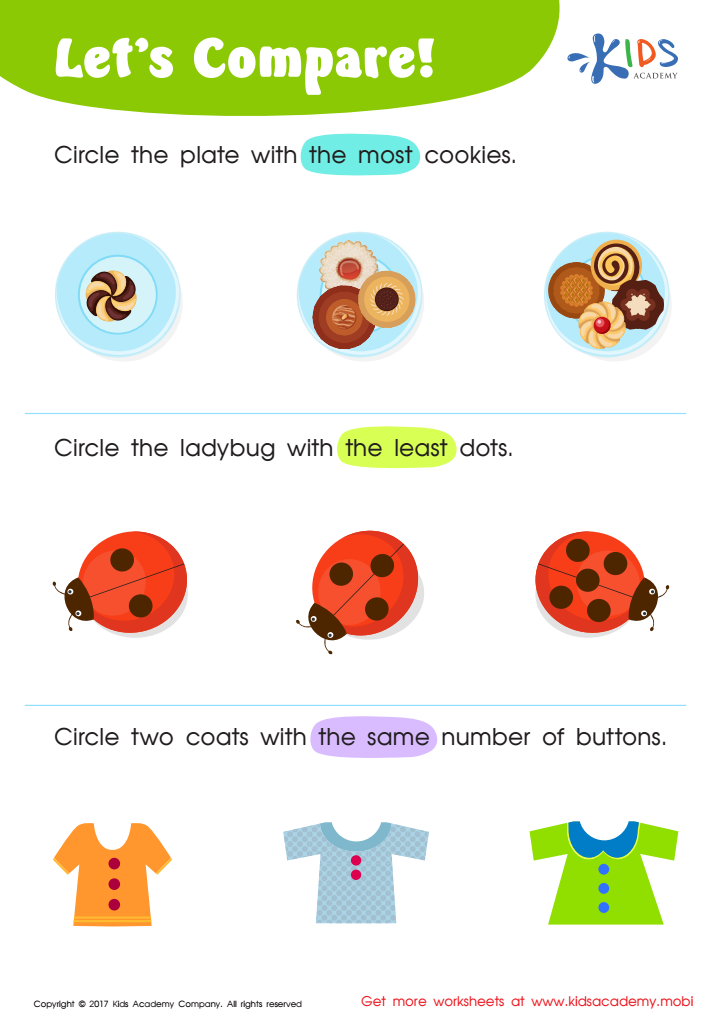
Matching: Classifying Toys by Size Worksheet
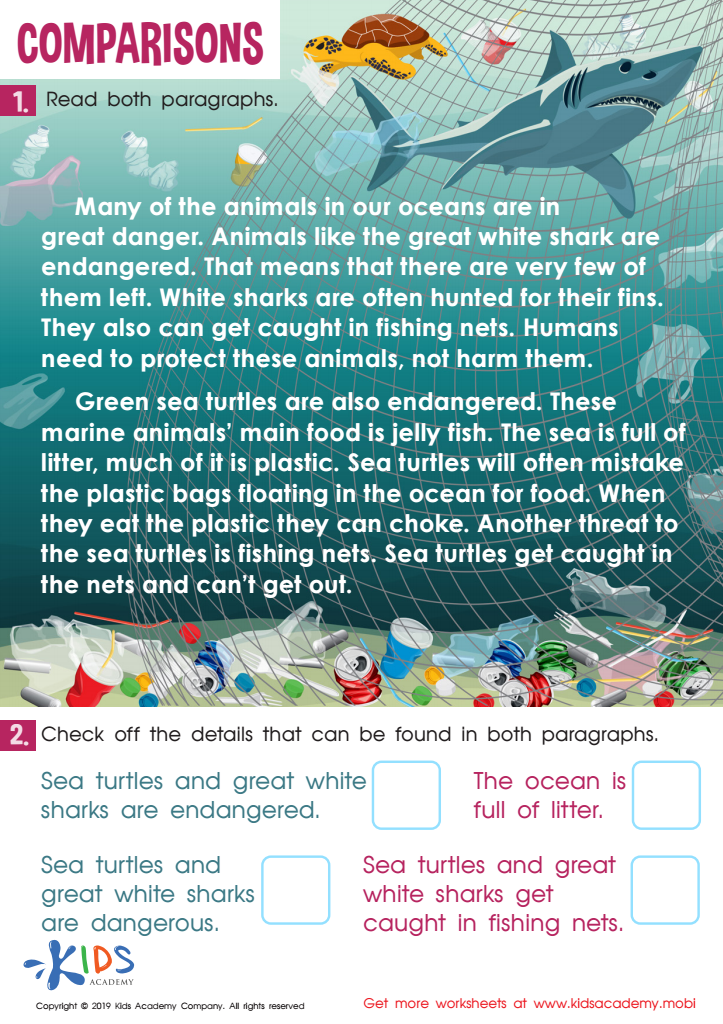
Comparisons Worksheet







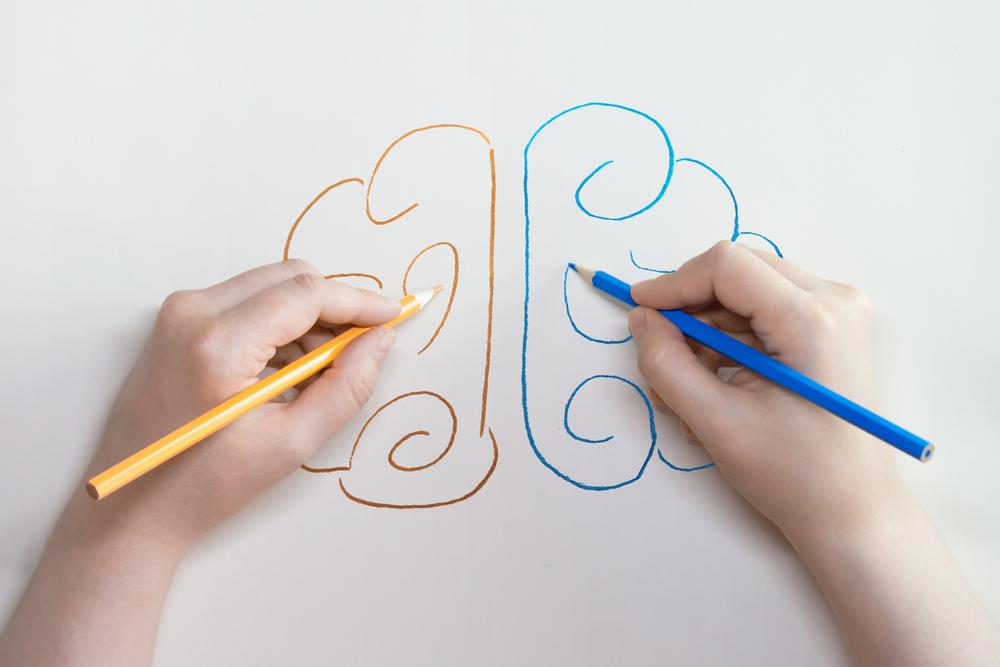
Understanding comparisons is fundamental for children aged 6-8 as it forms the basis for critical cognitive and mathematical skills. When children grasp the concept of comparisons, they develop the ability to analyze differences and similarities, which is essential for problem solving and logical thinking. For instance, comparing numbers aids in understanding greater than, less than, and equal to, which are foundational for arithmetic operations and number sense.
Additionally, grasping comparisons enhances vocabulary and language development. Using comparative terms such as longer, shorter, heavier, or lighter helps children articulate observations about the world around them, enhancing both their descriptive abilities and comprehension skills. This language proficiency is crucial for effective communication and academic success.
Socially and emotionally, understanding comparisons helps children navigate their environments more confidently. When they can compare and make judgments about their surroundings, they feel more in control and capable, fostering self-confidence. It also aids in developing empathy as they learn to understand perspectives and situations different from their own.
Parents and teachers should prioritize teaching comparisons, embedding them in daily activities and play, to ensure children have a robust framework for both academic and personal development. Encouraging curiosity through asking comparative questions reinforces these critical thinking and analytical skills.








