
Understanding compound words Worksheets for Ages 6-8
3 filtered results
Difficulty Level
Grade
Age
-
From - To
Subject
Activity
Standards
Unlock the fun of language learning with our "Understanding Compound Words Worksheets for Ages 6-8". Designed to engage young minds, these printable worksheets help children grasp the concept of compound words by combining two simple terms to form a new word. Our activities, filled with colorful images and interactive exercises, support early literacy skills, encourage critical thinking, and enhance vocabulary. Perfect for classroom and home use, these resources make mastering compound words both enjoyable and educational. Nurture your child's love for language and watch their reading confidence soar with our expert-curated compound word worksheets.
Favorites
With answer key
Interactive
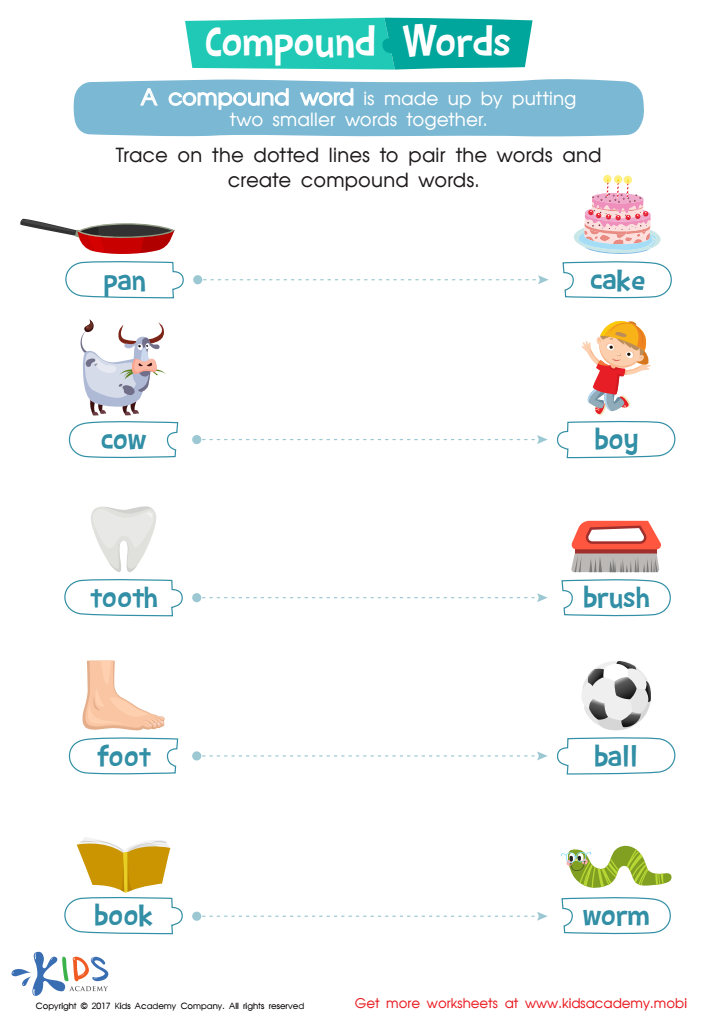
Compound Words Word Structure Worksheet
Studying compound words is a great way to improve reading and writing skills! Try this fun worksheet: Compound Words – trace the lines to make new words! It's an easy and enjoyable way to get better at English.
 Assign to My Students
Compound Words Word Structure Worksheet
Worksheet
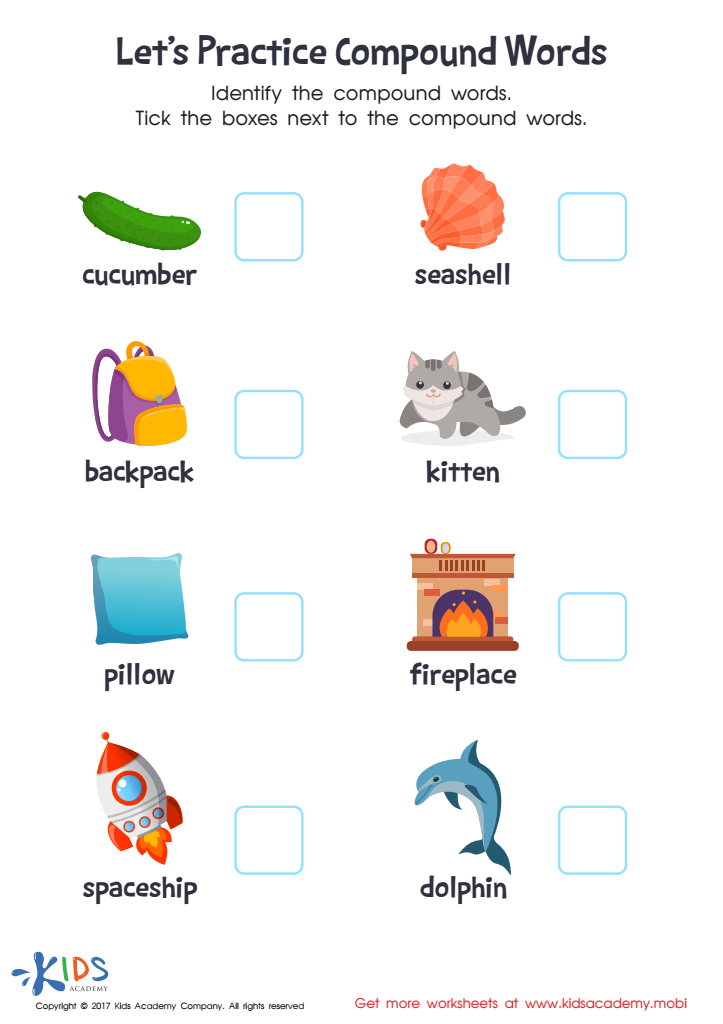
Let's Practice Compound Words Word Structure Worksheet
Test their knowledge of compound words with this fun worksheet and help them build their vocabulary. Have them say the words out loud as they work!
Let's Practice Compound Words Word Structure Worksheet
Worksheet
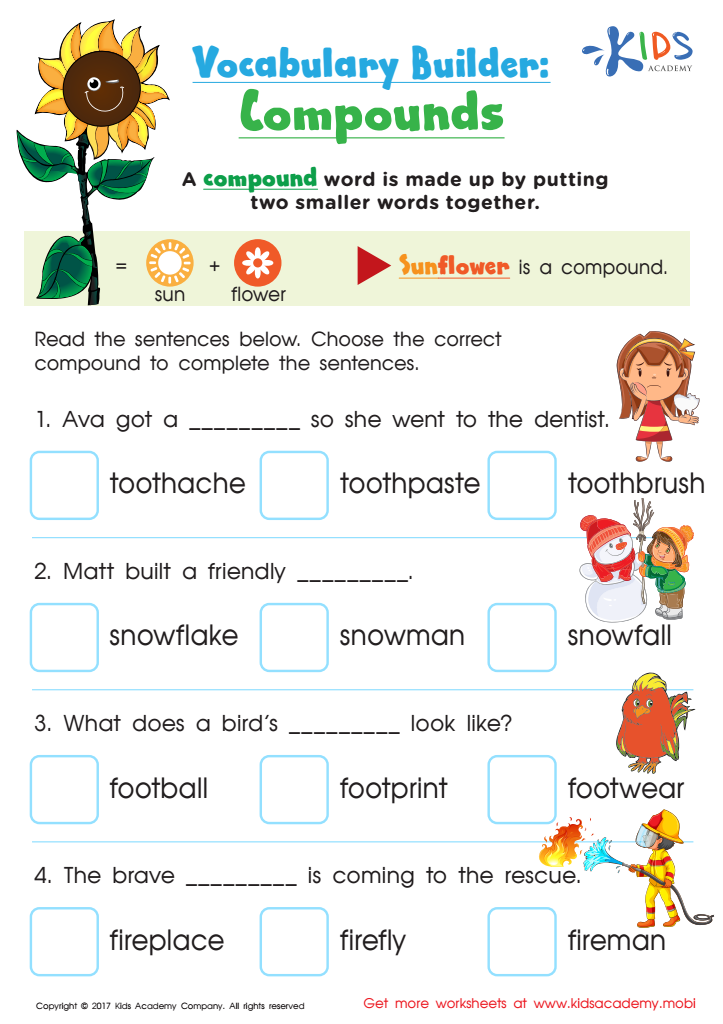
Compound Words Worksheet
Help your child get to grips with compound words! From sunflowers to snowflakes, firemen to fireflies, some words are made up of two. Introduce them to the world of compound words with this grade 2 PDF worksheet, packed with fun activities!
Compound Words Worksheet
Worksheet
Join Kids Academy for Free
Who is primarily going to use this learning content?






.jpg)

Understanding compound words is crucial for young learners aged 6-8 as it significantly enhances their reading, vocabulary, and comprehension skills. Compound words, which are formed by combining two smaller words to create a new word with a unique meaning (like "sunflower" or "notebook"), offer a bridge for children between familiar words and the development of more complex language structures.
Firstly, mastering compound words helps children expand their vocabulary. By recognizing that smaller words can combine to create new meanings, they grasp how language can be flexible and expansive. This deepens their word knowledge and increases their ability to understand and use new terms promptly.
Secondly, comprehension improves. When children know compound words, texts become more accessible to them. They can break down unfamiliar words into parts they understand, aiding in deducing meanings without constant adult assistance. This nurtures independent reading.
Lastly, understanding compound words cultivates better spelling and writing skills. As children learn these words through memorization and usage, they become more proficient in reading fluency and writing coherence.
In summary, focusing on compound words during these formative years sets a strong foundation for future linguistic skills, fostering confident, independent, and proficient readers and writers.








