Understanding food chains Worksheets for Ages 6-8
3 filtered results
-
From - To
Encourage young minds to explore nature’s fascinating food chains with our engaging worksheets tailored for ages 6-8. At Kids Academy, we provide fun and educational materials that help children grasp the basics of food chains, including understanding the roles of producers, consumers, and decomposers. These printable worksheets are designed to enhance problem-solving skills while sparking curiosity about the natural world. Whether at home or in the classroom, these resources support early science learners in developing foundational knowledge in a captivating and interactive way. Discover our comprehensive collection and watch your child's learning thrive with us!
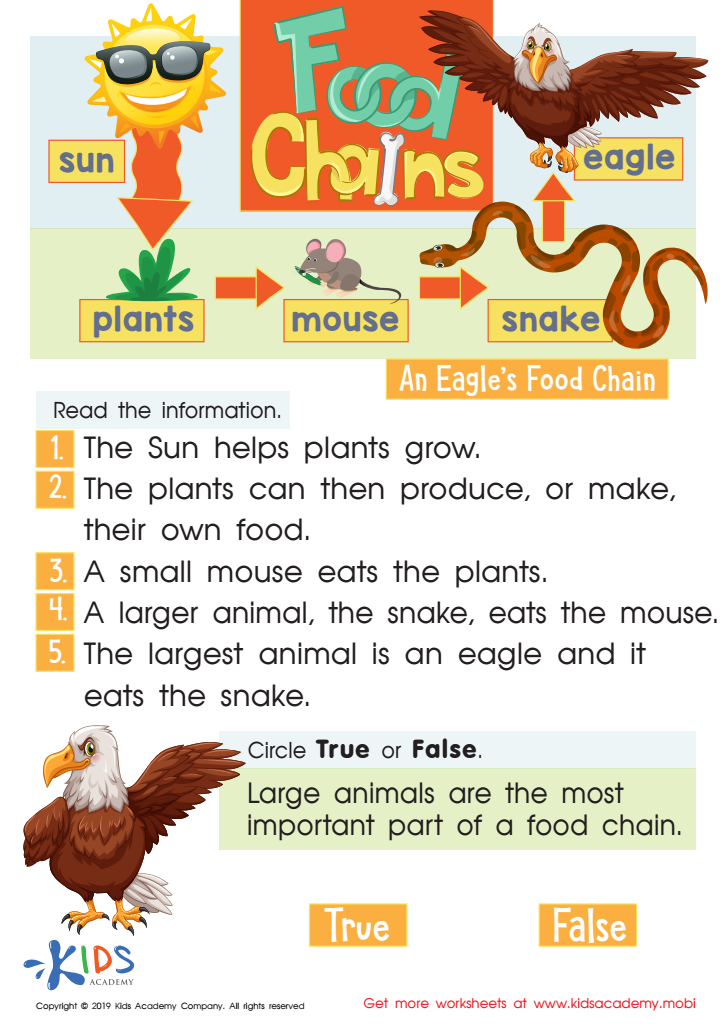
Food Chains Worksheet
 Assign to My Students
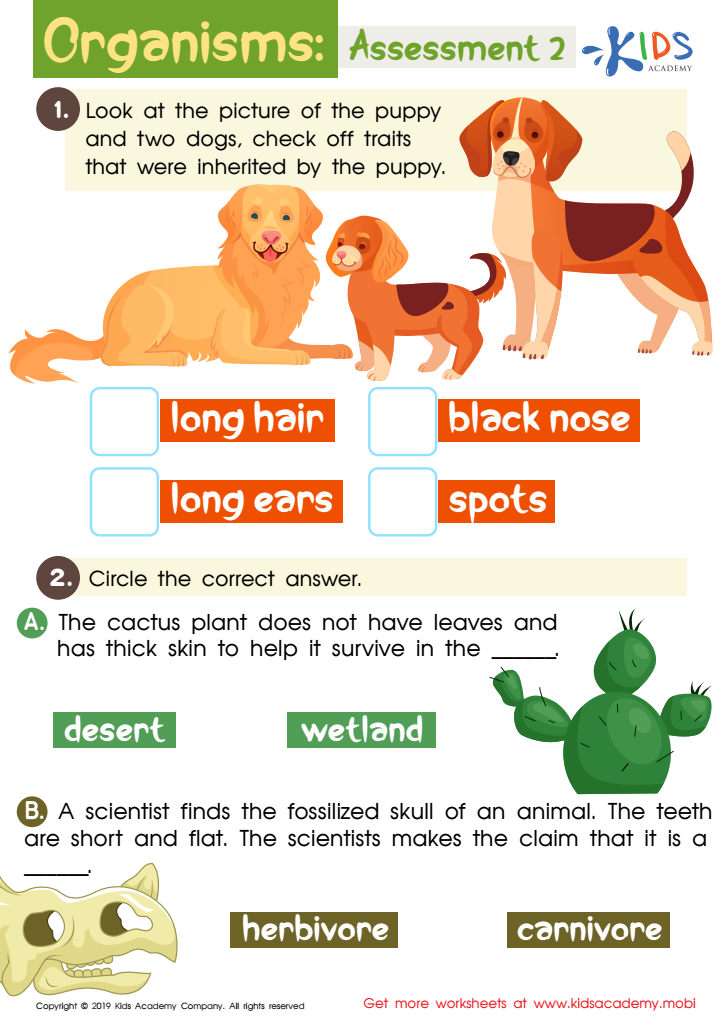
Organisms: Assessment 2 Worksheet
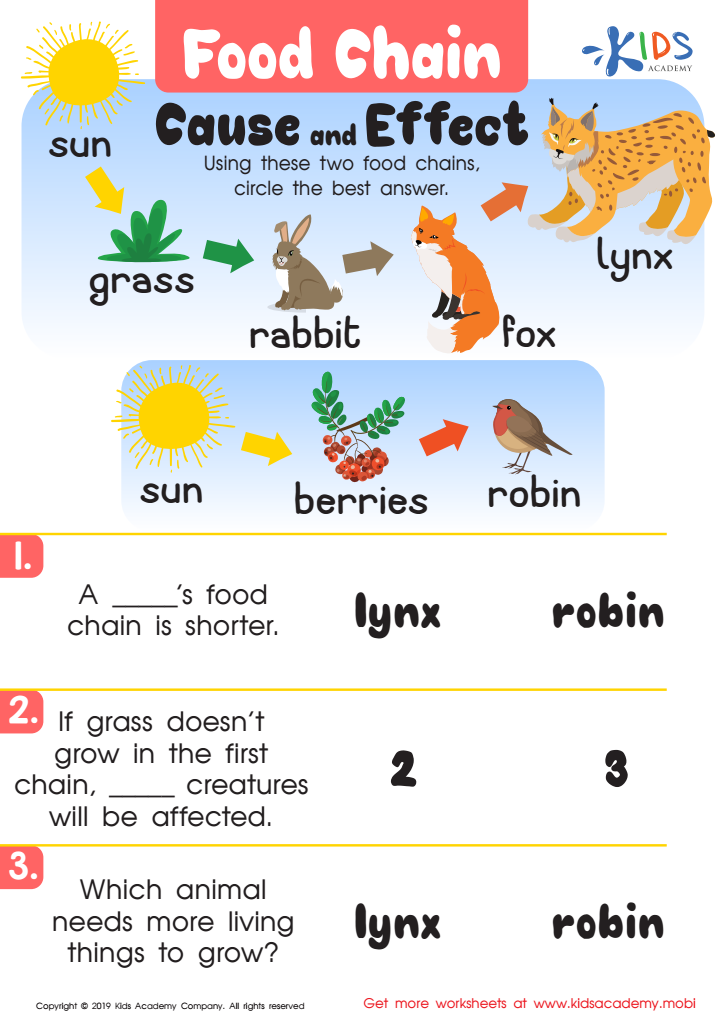
Food Chain Cause Worksheet




Understanding food chains is crucial for children aged 6-8 because it lays the foundation for scientific literacy and environmental awareness. At this formative stage, kids are naturally curious about the world around them. Teaching them about food chains helps them grasp basic ecological concepts such as energy flow, interdependence, and balance in nature. This knowledge can spark an early interest in science, fostering critical thinking and problem-solving skills.
From a practical standpoint, knowing about food chains also promotes respect for living organisms and an understanding of biodiversity. Kids learn how plants, animals, and humans are interconnected, which can lead to healthier attitudes toward nature and inspire environmentally responsible behavior. For example, recognizing how pollution or deforestation can disrupt food chains informs their understanding of sustainability and conservation efforts.
Engaging children in discussions about food chains can also improve their empathy and social development. They start to see how their actions impact other living beings, encouraging kindness and responsibility. This foundational knowledge not only contributes to their academic growth but also forms the basis for responsible citizenship, fostering future generations that are more attuned to the challenges and requirements of maintaining a healthy planet.








