Understanding mass Worksheets for Ages 6-8
3 filtered results
-
From - To
Dive into the world of mass with our engaging worksheets designed for children aged 6-8! These resources provide an exciting way for young learners to grasp the concept of mass, introducing essential vocabulary and measurement skills. Our thoughtfully crafted activities cater to various learning styles, allowing kids to explore mass through hands-on experiences and visual aids. By utilizing real-life examples and interactive tasks, children will develop a solid foundation in understanding weight and measurement. Ideal for classroom use or at-home learning, these worksheets promote critical thinking and problem-solving, making learning both fun and educational. Unlock your child's potential today!
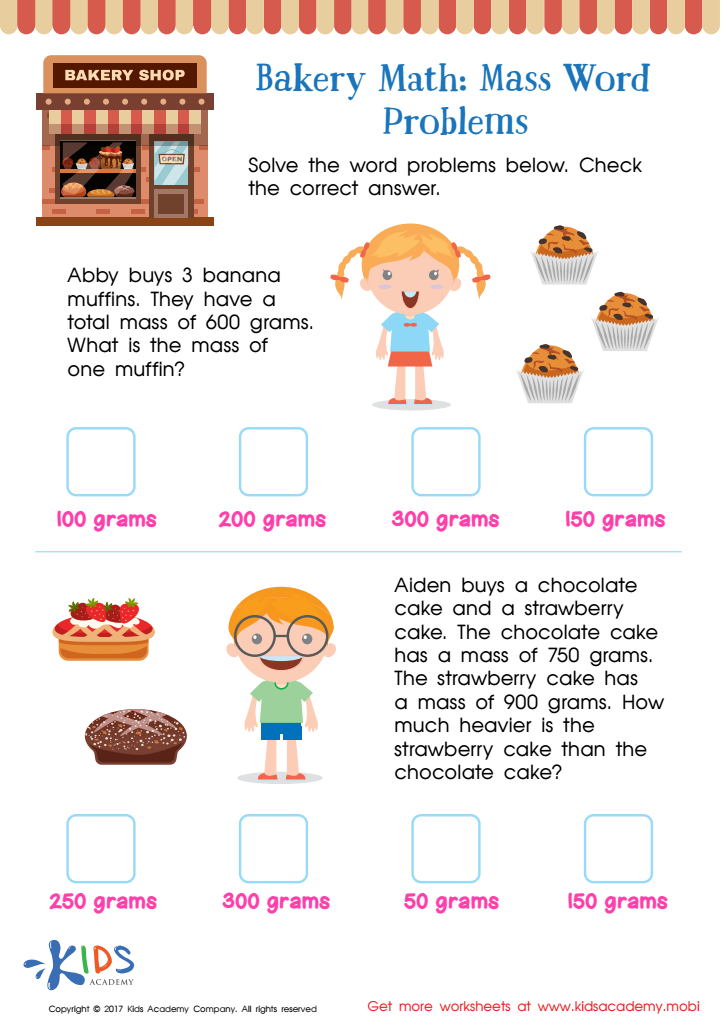
Mass Word Problems Worksheet
 Assign to My Students
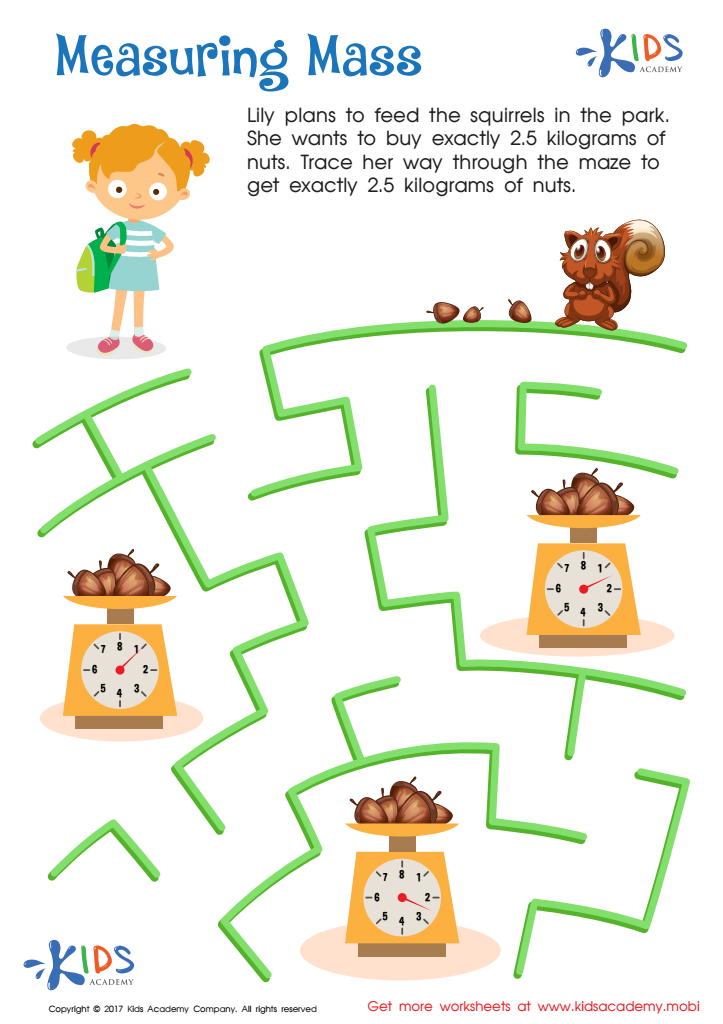
Measuring Mass Worksheet
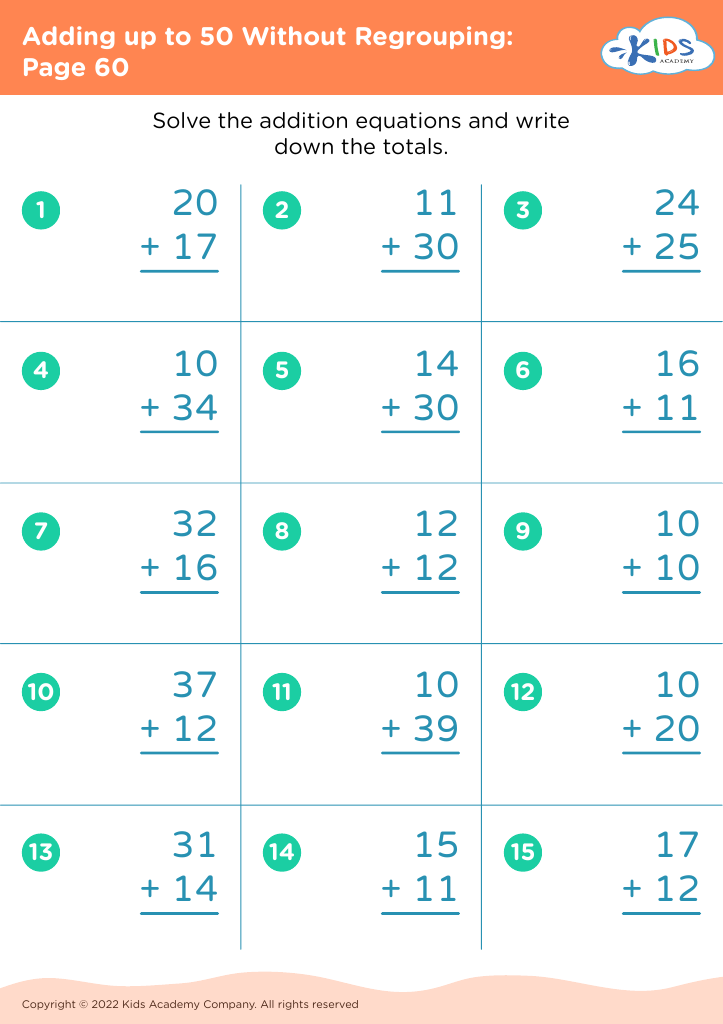








Understanding mass is essential for children ages 6-8 as it forms a foundation for their scientific literacy and everyday decision-making. At this age, children are naturally curious and eager to explore the world around them. Teaching them about mass helps cultivate that curiosity by connecting abstract concepts to tangible experiences. For example, when children weigh objects, they directly engage with the idea of mass through hands-on activities, making learning more meaningful.
Additionally, grasping concepts related to mass enhances critical thinking and problem-solving skills. It encourages children to compare weights, make predictions, and understand units of measurement, promoting mathematical reasoning in a practical context. Awareness of mass aids in real-life applications, such as deciding how much food to prepare, understanding packaging, or comprehending the importance of balance in everyday activities.
Furthermore, early exposure to mass in a supportive environment fosters a strong STEM foundation that can lead to future academic success. Parents and teachers play a vital role in guiding this learning process and should prioritize mass comprehension in their teachings to stimulate inquiry, promote hygiene, and foster a love for science that encourages lifelong learning. Overall, understanding mass is crucial not only for academics but for essential life skills.








