Understanding number relationships Worksheets for Ages 6-8
6 filtered results
-
From - To
Discover our engaging Understanding Number Relationships worksheets designed for children aged 6-8! These interactive resources help young learners grasp the essential concepts of number relationships, enhancing their mathematical foundation. Each worksheet is crafted to reinforce skills such as addition, subtraction, and number patterns through fun, age-appropriate activities. Our vibrant exercises encourage critical thinking and boost confidence in math. Ideal for use at home or in the classroom, these worksheets promote independent learning while making maths enjoyable. Visit us now to explore our collection and empower your child’s understanding of numbers today! Perfect for building a strong mathematical foundation!
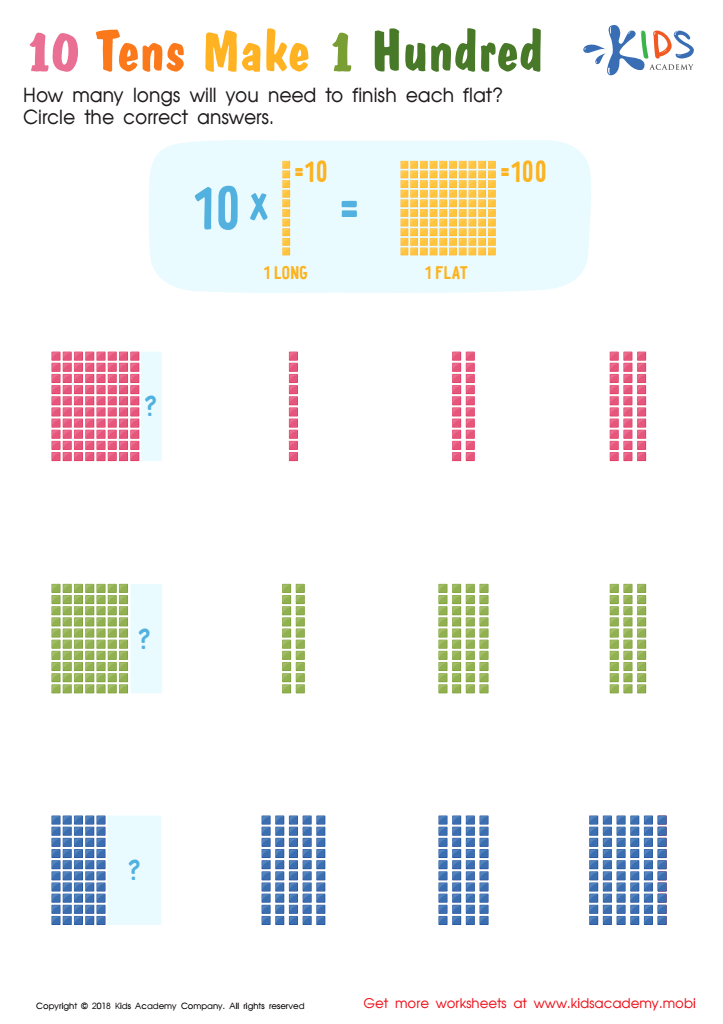
10 Tens Make 1 Hundred Worksheet
 Assign to My Students
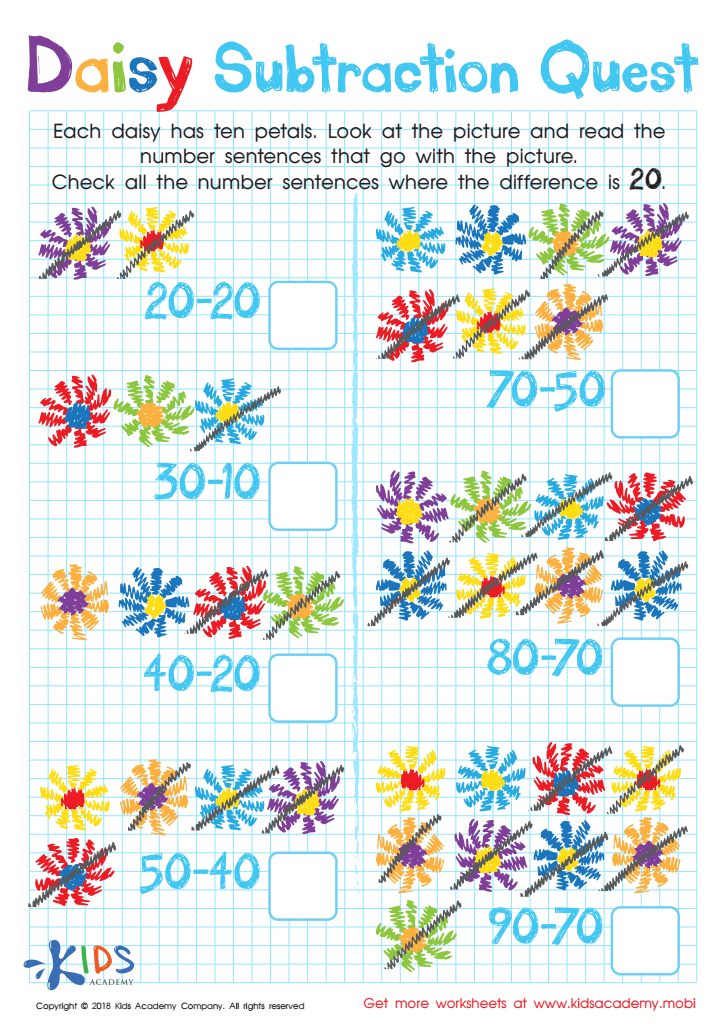
Daisy Subtraction Quest Worksheet
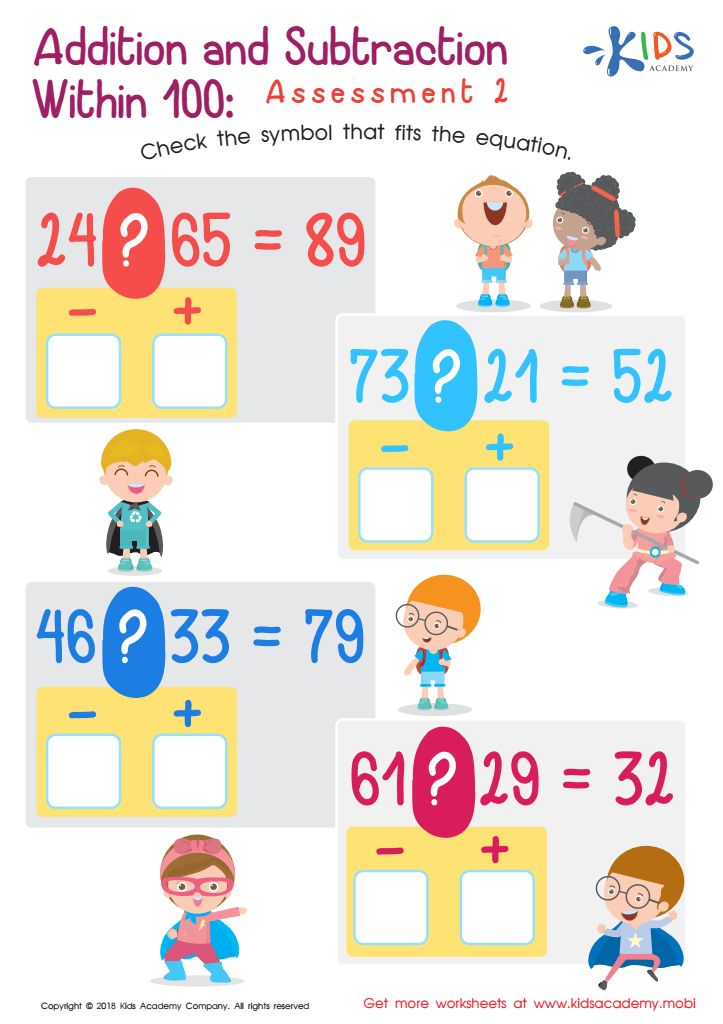
Addition and Subtraction Within 1: Assessment 2 Worksheet
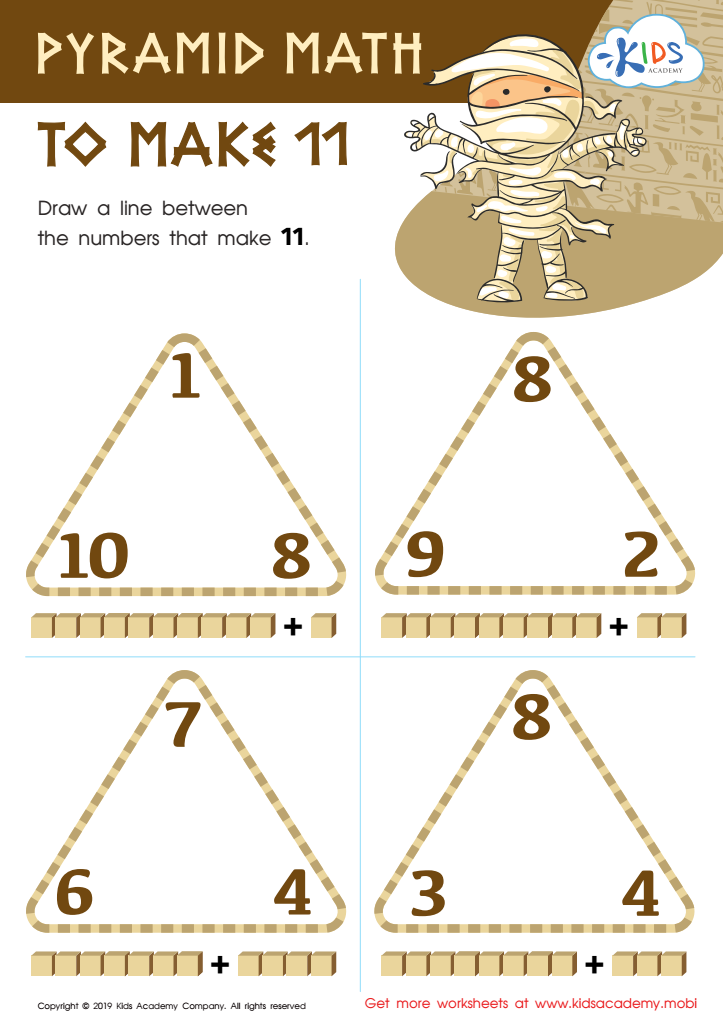
Pyramid Math to Make 11 Worksheet
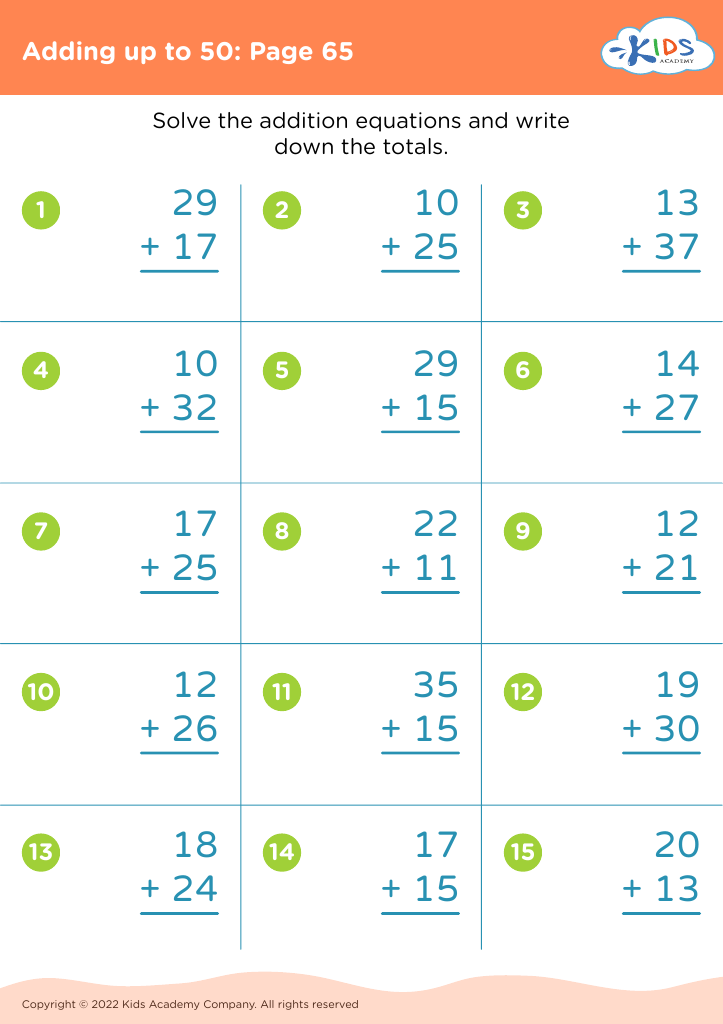








Understanding number relationships is crucial for children ages 6-8 as it lays the foundation for their mathematical development. During these formative years, students begin to explore basic concepts of addition, subtraction, multiplication, and division, all centered around an understanding of how numbers interact. Recognizing patterns, such as number bonds, helps children develop mental math skills and perform calculations with confidence.
Parents and teachers who emphasize these relationships enable children to approach problem-solving with greater flexibility, using various strategies rather than relying solely on rote memorization. This foundational knowledge directly impacts their ability to tackle more complex math concepts in the future, such as fractions, place value, and even algebra. Furthermore, strong number sense correlates with improved performance in mathematics overall, which is critical for academic success.
Additionally, understanding number relationships cultivates critical thinking and reasoning skills, which are essential in everyday scenarios beyond the classroom. By fostering this understanding, parents and teachers contribute to a child's confidence, ensuring that they not only grasp mathematics but also develop an appreciation for it, enhancing their overall learning experience. Thus, supporting number relationship comprehension in young learners is an investment in their future success in mathematics and problem-solving.








