Understanding plurals Worksheets for Ages 6-8
7 filtered results
-
From - To
Discover our engaging and educational "Understanding Plurals Worksheets for Ages 6-8." Perfect for young learners, these worksheets are designed to bolster language development by helping children master the concept of plurals. Our fun, interactive activities make learning enjoyable, enhancing both comprehension and retention. Through a mix of games, puzzles, and illustrated content, kids can practice forming and recognizing plural nouns. Tailored to fit various learning styles, these resources serve as an invaluable tool for boosting vocabulary and grammatical skills in an age-appropriate manner. Transform your child's language skills with our comprehensive and kid-friendly worksheets.
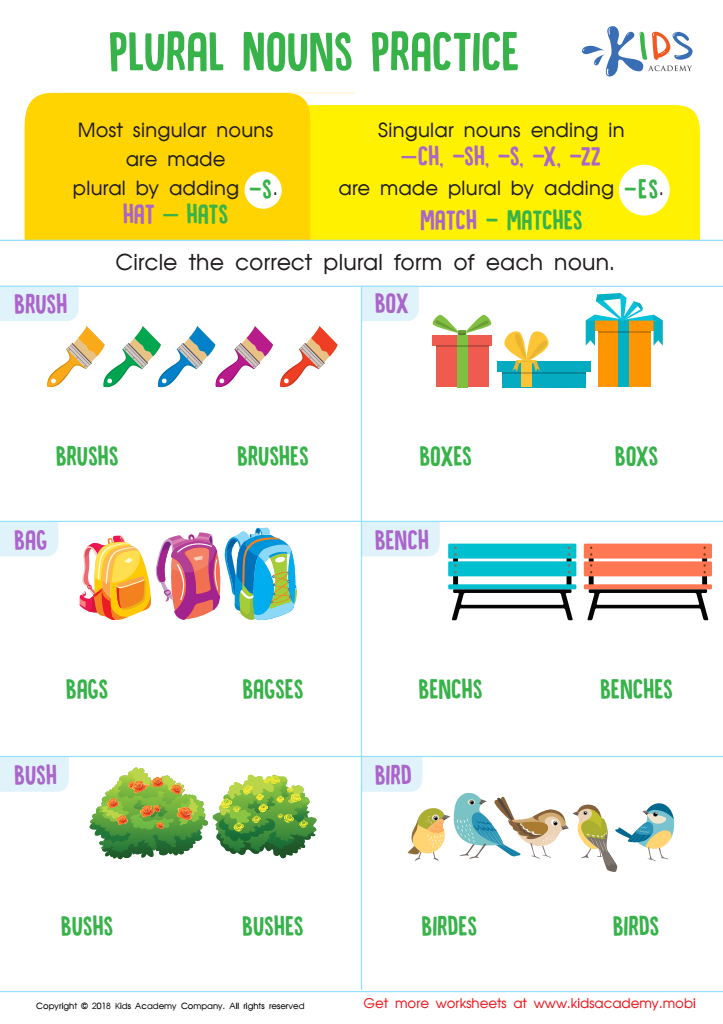
Plural Nouns Practice Worksheet
 Assign to My Students
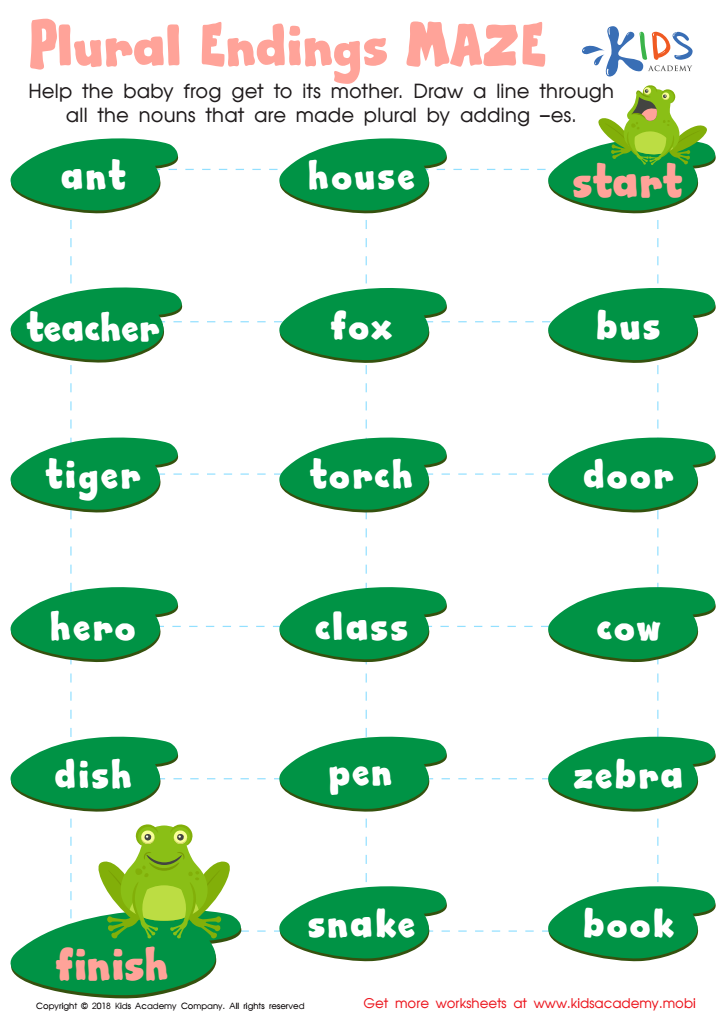
Plural Endings Maze Worksheet
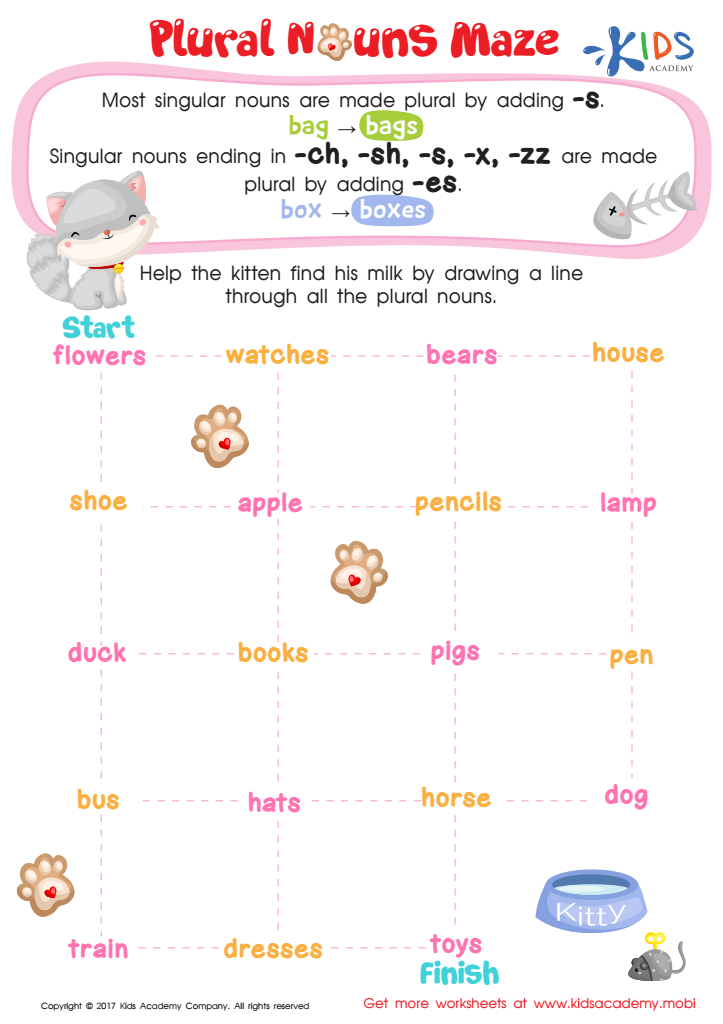
Plural Nouns Maze Worksheet
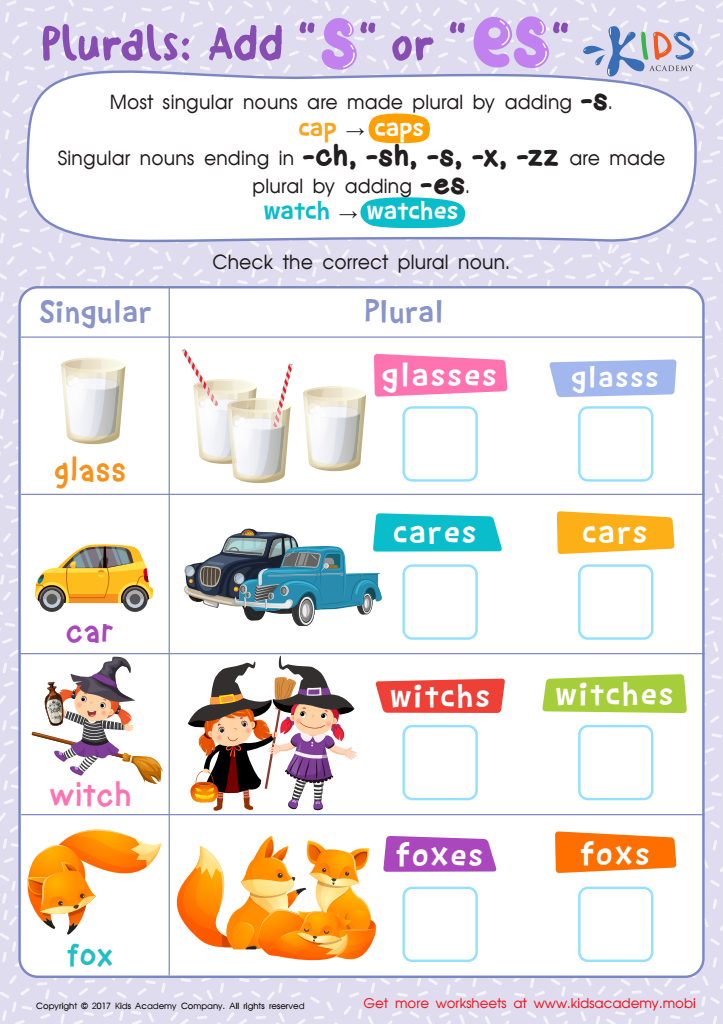
Plurals: "–es" or "–es"? Worksheet
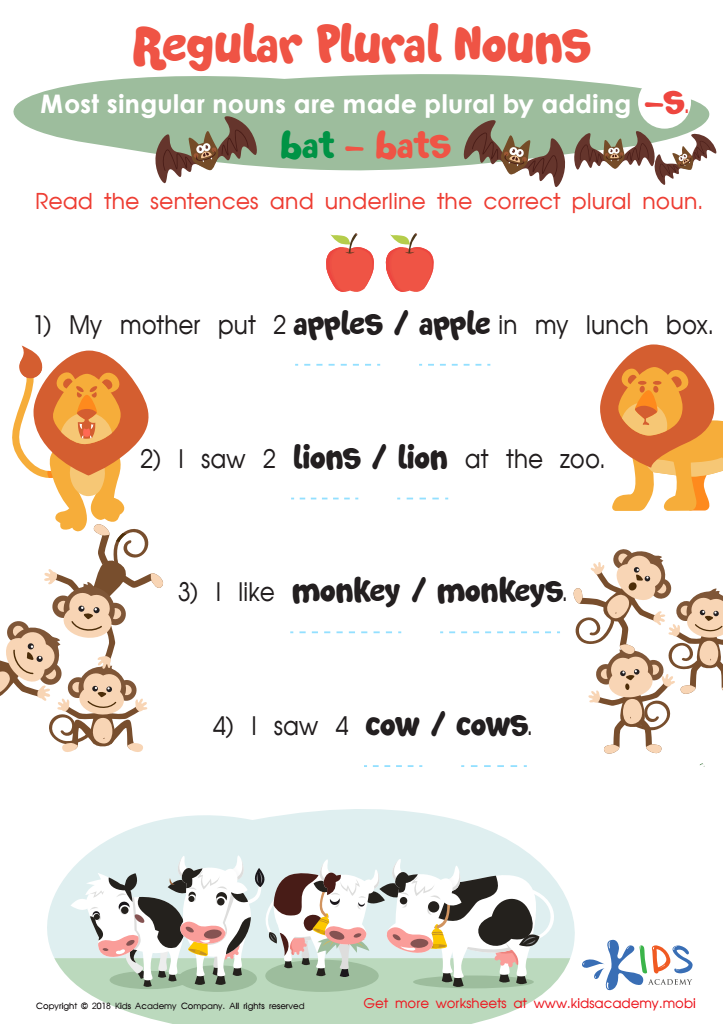
Regular Plural Nouns Worksheet
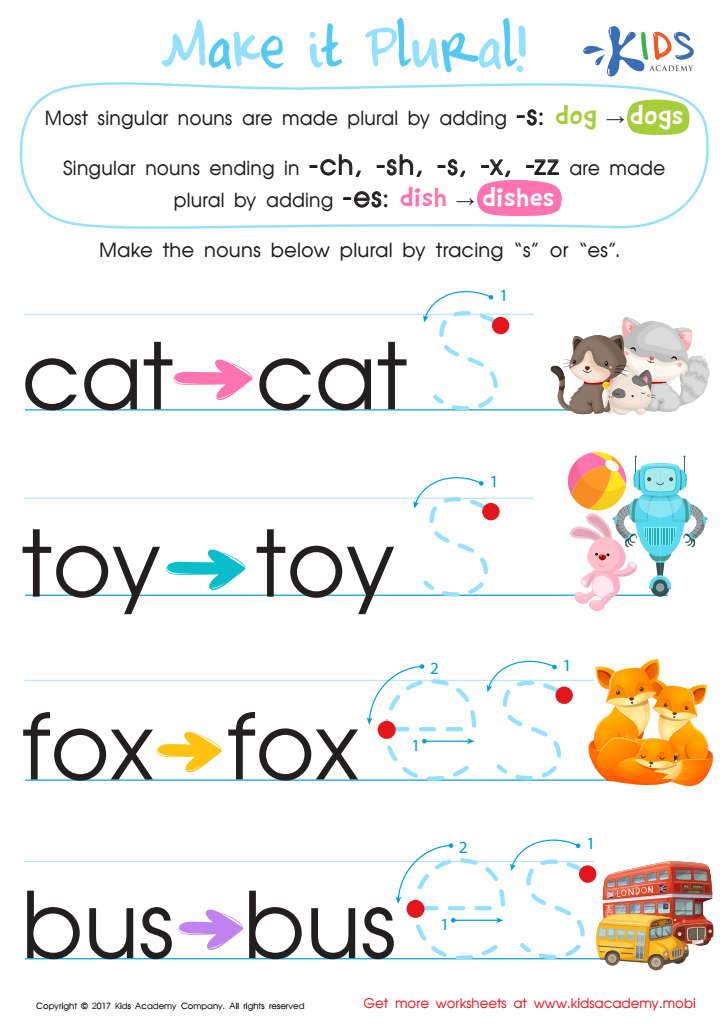
Make it Plural Worksheet






.jpg)
Understanding plurals is an essential skill for children ages 6 to 8, as it directly impacts their language development and literacy. At this age, children's cognitive and language abilities are expanding rapidly. Grasping the concept of plurals helps them enhance their vocabulary, improve their reading comprehension, and communicate more effectively.
When children understand how to form and use plurals, they can describe the world around them more accurately, distinguishing between singular and multiple items. This clarity in communication is crucial for successful interaction with peers, teachers, and parents. It boosts their confidence in speaking and writing.
Furthermore, mastering plurals lays the foundation for understanding more complex grammatical rules and linguistic patterns. As children progress in their education, they will encounter more sophisticated texts and concepts that require a solid grasp of basic grammar. Without this foundational knowledge, they may struggle with more advanced linguistic and academic challenges.
Teachers and parents play a pivotal role in supporting this aspect of language development by providing opportunities for practice and reinforcement through reading, writing, and engaging in conversations that highlight the use of plurals. Investing time and effort in nurturing this skill ensures that children are well-prepared for their continued educational journey.








