Understanding prepositions Worksheets for Ages 6-8
7 filtered results
-
From - To
Unlock a world of understanding for young learners with our expertly crafted "Understanding Prepositions Worksheets for Ages 6-8." These engaging printables are designed to help children grasp the basics of prepositions through fun and interactive activities. Each worksheet features colorful images and relatable examples that simplify complex concepts, making learning enjoyable. Aimed at developing essential language skills, these worksheets enhance children’s ability to describe spatial relationships and improve their overall comprehension. Ideal for both classroom and at-home learning, our resources equip kids with the tools they need to confidently navigate the landscape of language.
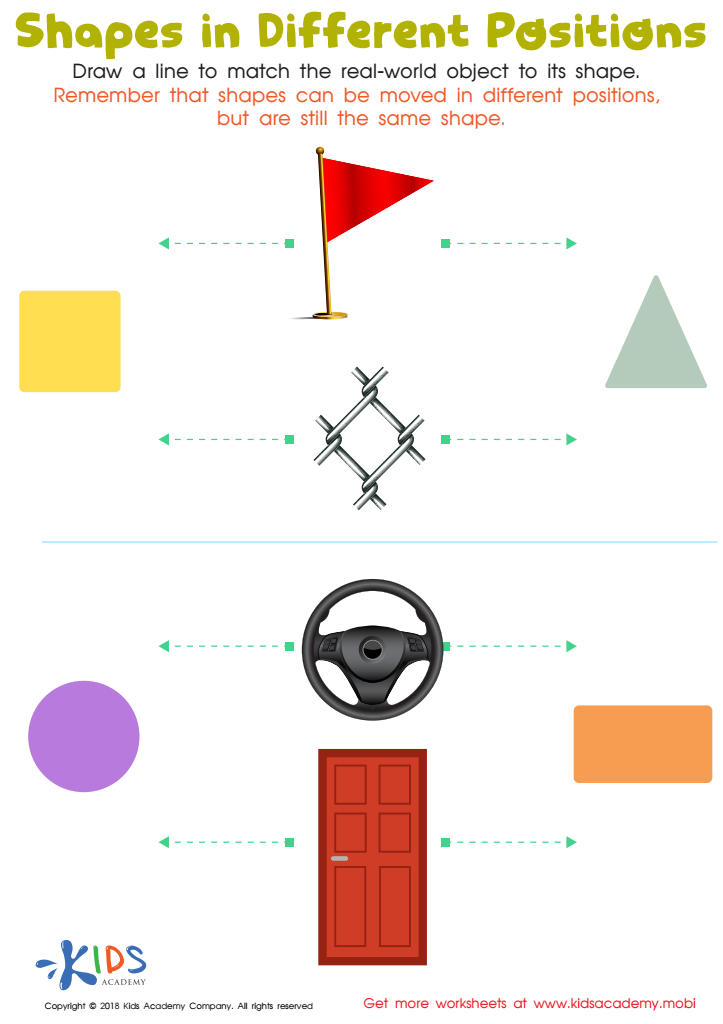
Shapes in Different Positions Worksheet
 Assign to My Students
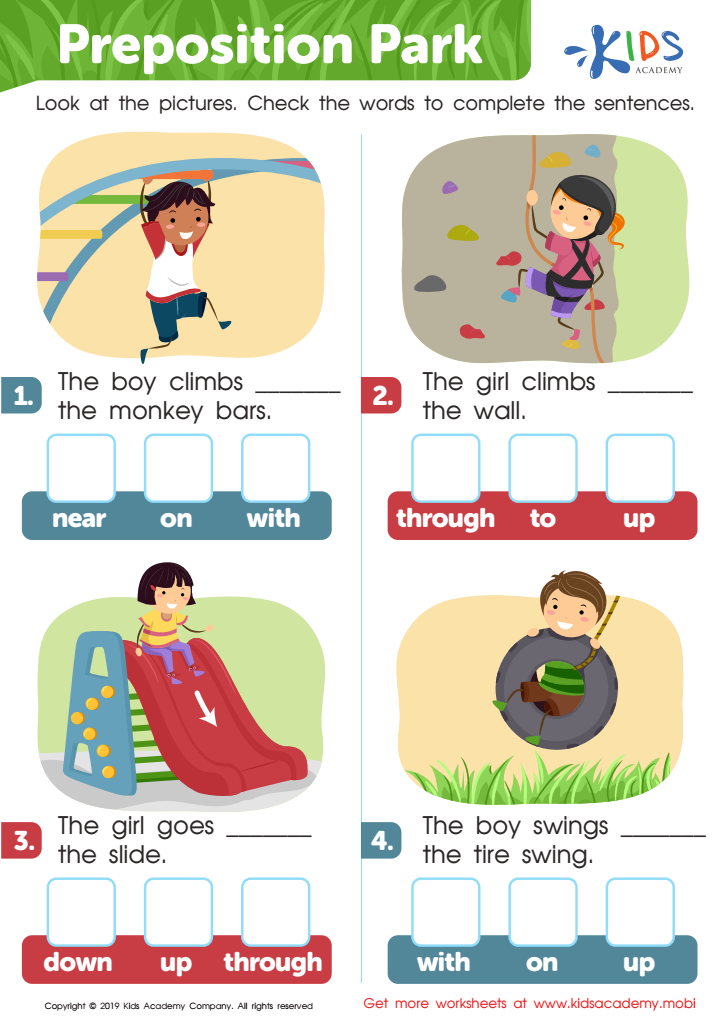
Preposition Park Worksheet
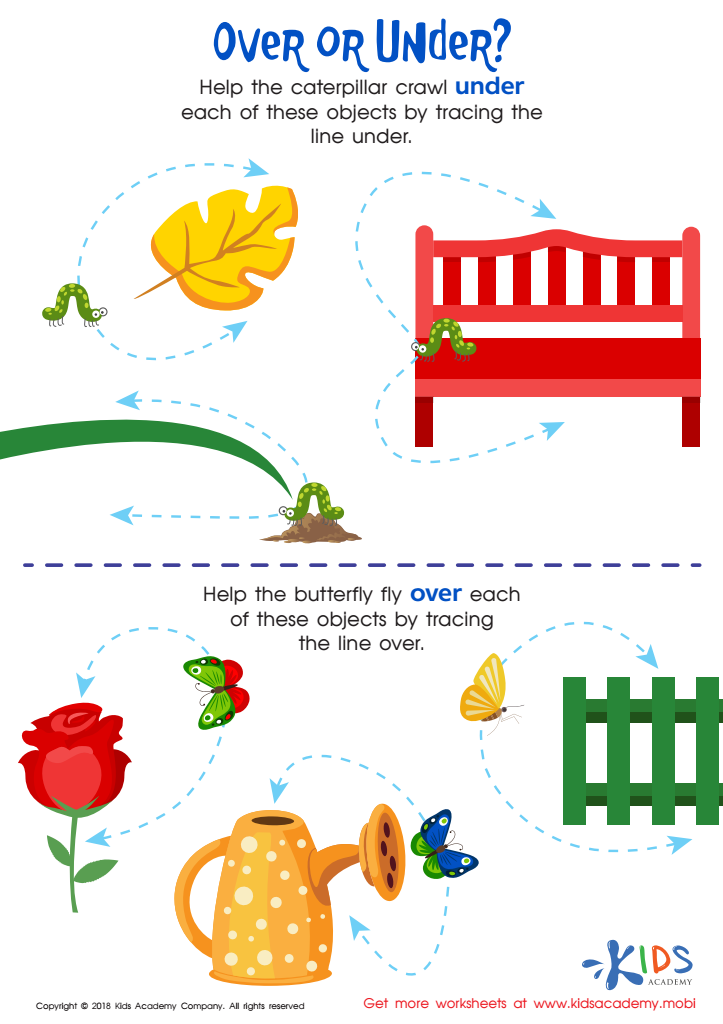
Over or Under? Worksheet
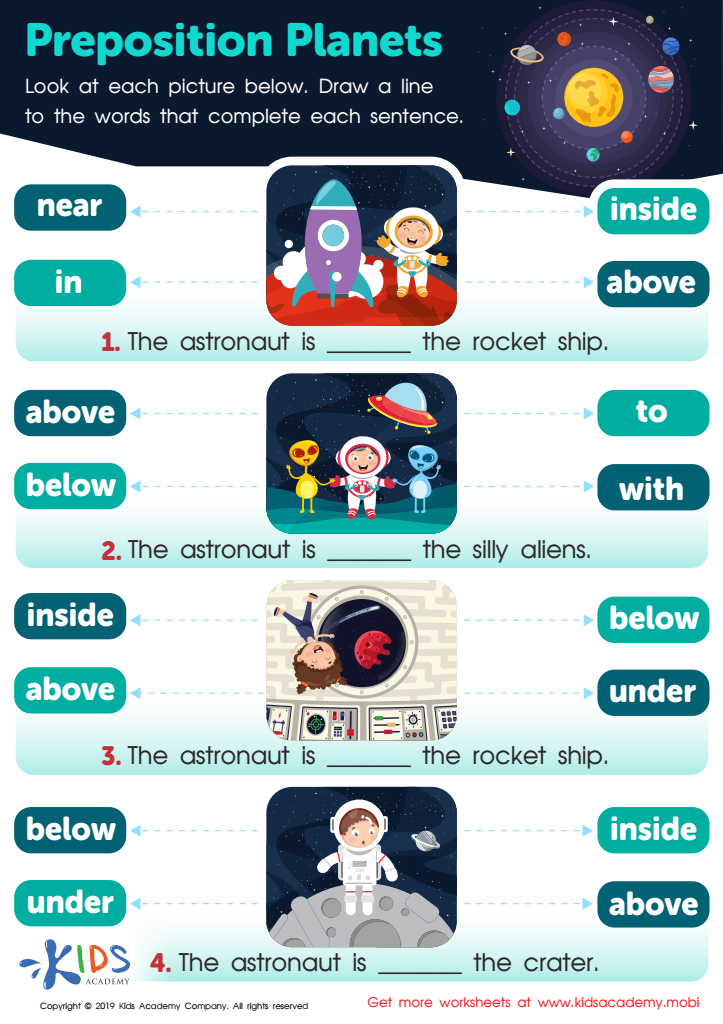
Preposition Planets Worksheet
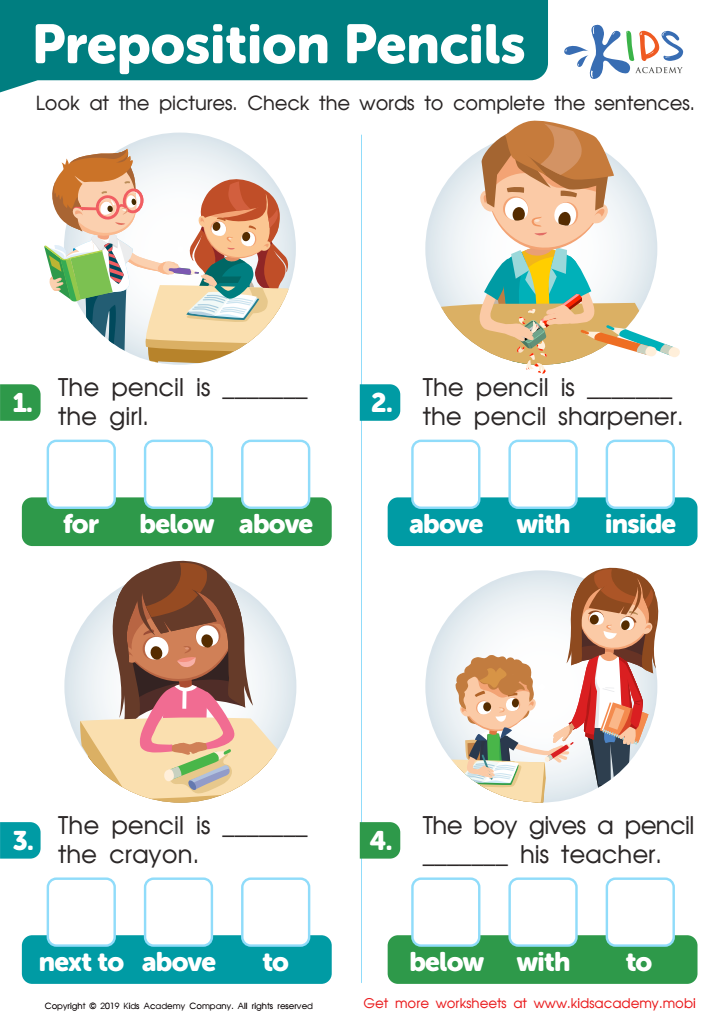
Preposition Pencils Worksheet
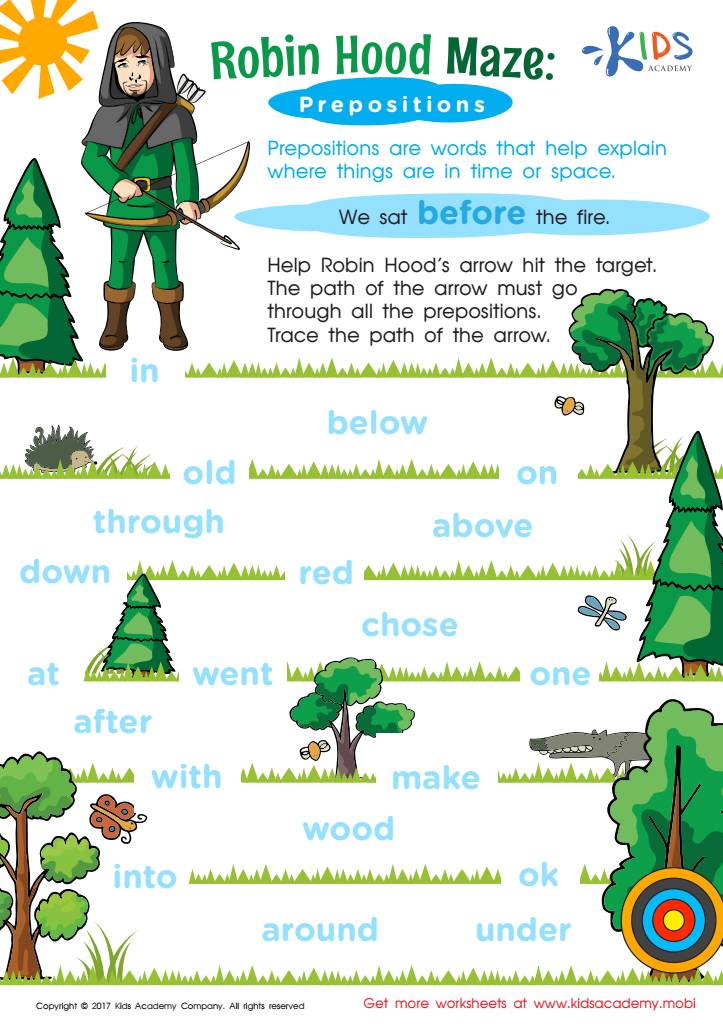
Prepositions Worksheet
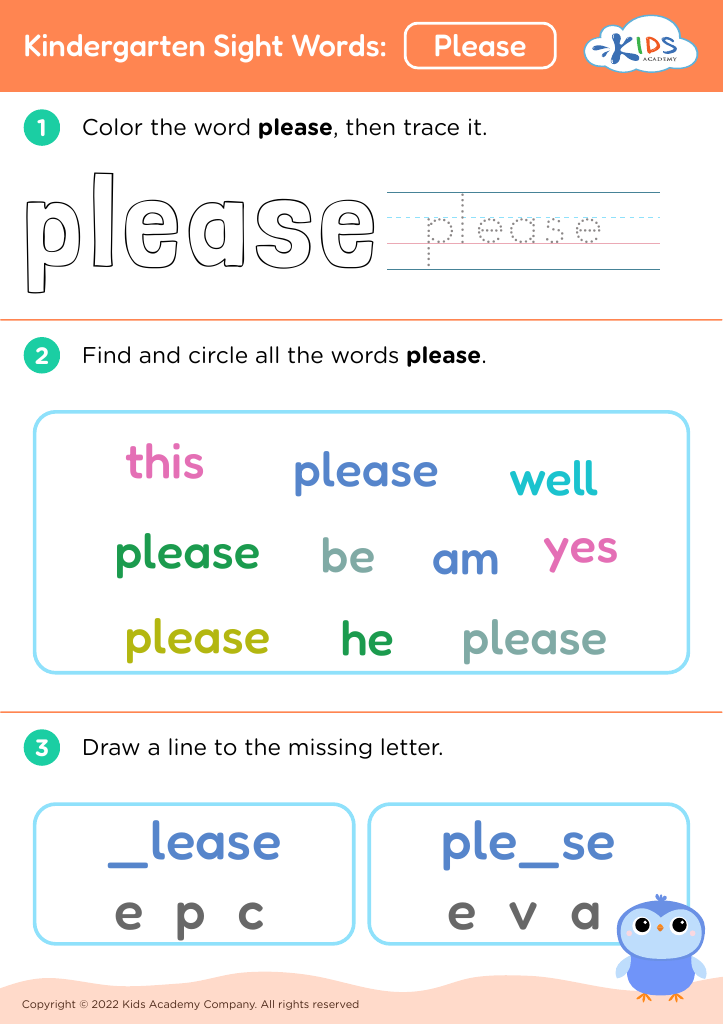




Understanding prepositions is crucial for children ages 6-8 because it forms the foundation for effective communication and comprehension skills. At this pivotal age, children's brains are rapidly developing, and so mastering prepositions helps in constructing meaningful and grammatically correct sentences. This age group is typically in kindergarten through second grade, where language acquisition is a vital component of the curriculum.
Firstly, prepositions provide context and detail, allowing young learners to describe relationships between different objects, people, and places more precisely. For example, knowing whether a book is "on" a table or "under" a table changes the entire meaning of a sentence.
Moreover, mastering prepositions enhances reading comprehension. When children understand the relationships expressed by prepositions, they can more accurately interpret texts. This aids in building a strong vocabulary and fostering a love for reading.
For writing, using prepositions correctly allows children to give instructions, narrate stories, and describe scenes with clarity. This descriptive ability is not only necessary for their academic success but also enhances their ability to interact socially.
Encouraging mastery of prepositions aligns with meeting educational benchmarks and supports a child’s cognitive development, thereby equipping them with the essential tools for lifelong learning and effective communication. Parents and teachers should thus emphasize teaching prepositions to enrich children's linguistic and cognitive growth.








