Understanding shapes Worksheets for Ages 6-8
6 filtered results
-
From - To
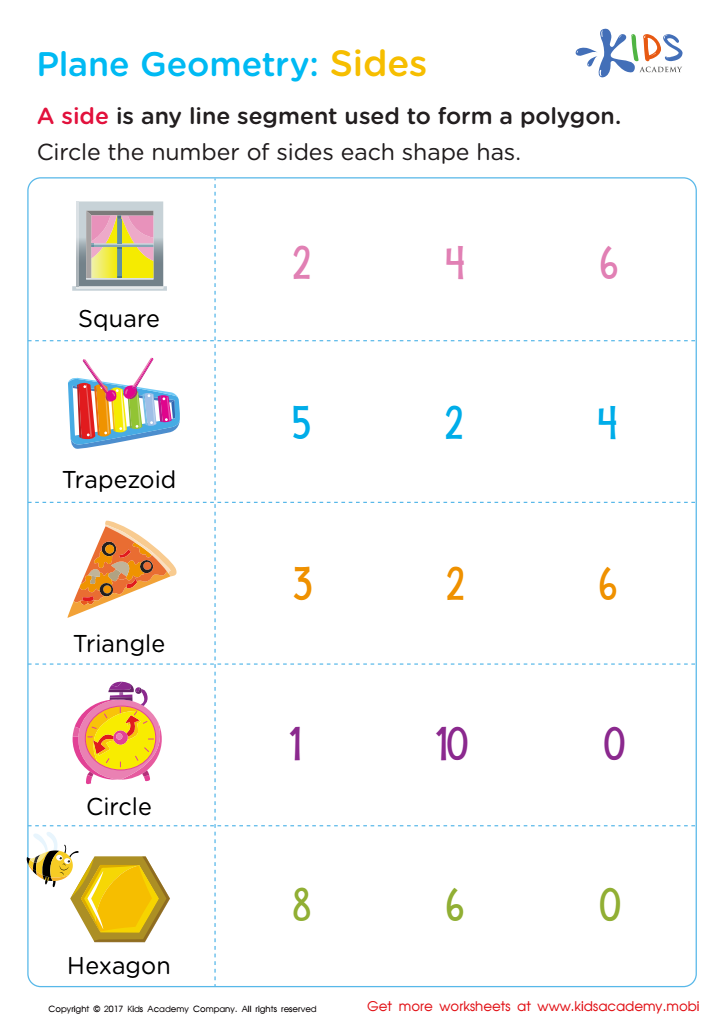
Unlock your child’s potential in mathematics with our "Understanding Shapes Worksheets for Ages 6-8." Designed to cater to young learners, these engaging worksheets provide a fun and interactive way to explore geometric shapes. Kids will learn to identify, draw, and compare various shapes, fostering a solid foundation in spatial awareness and critical thinking. Our worksheets feature colorful illustrations and easy-to-follow instructions, ideal for both classroom and at-home learning. Perfect for ages 6 to 8, this resource transforms learning into an adventure, making the abstract world of geometry accessible and enjoyable for young minds.
 Assign to My Students
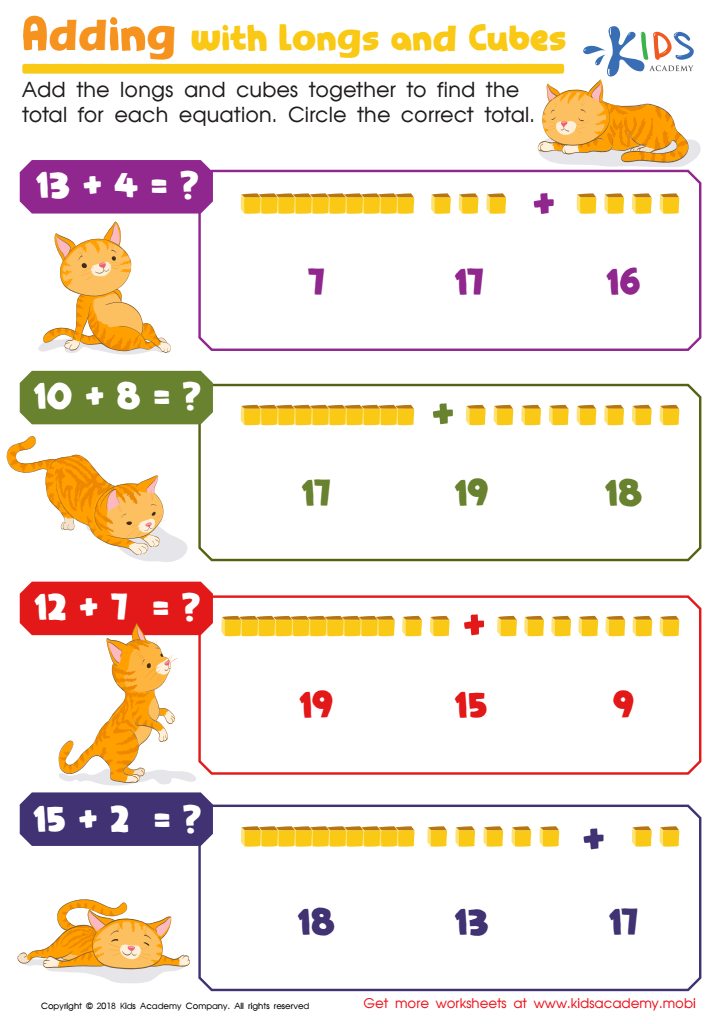
Adding With Longs and Cubes Worksheet
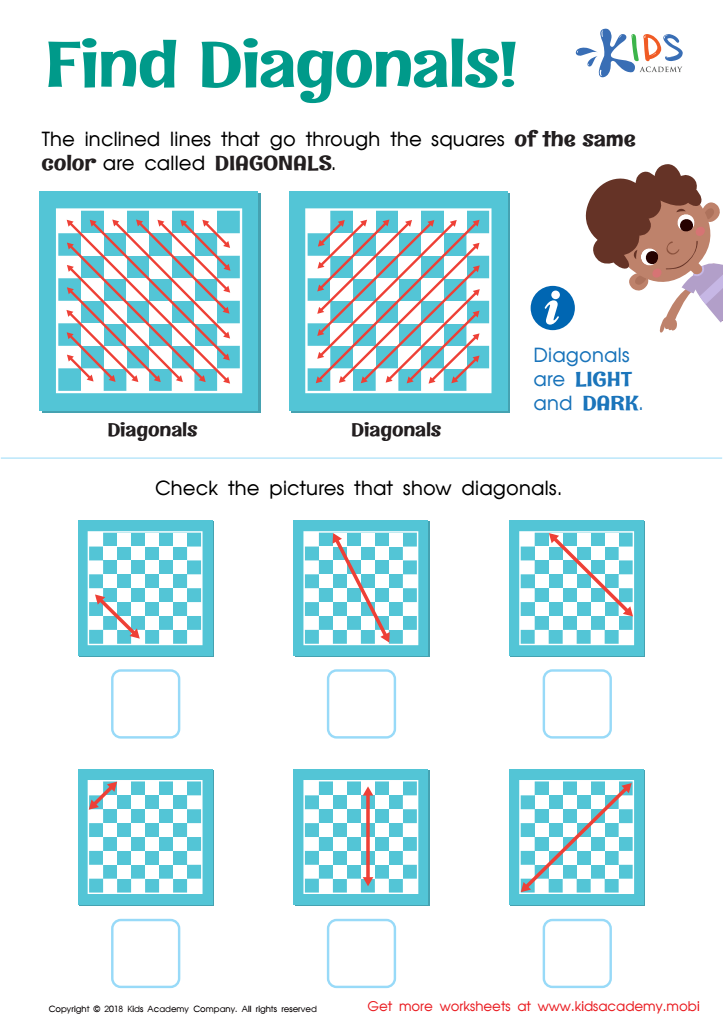
Find Diagonals Worksheet
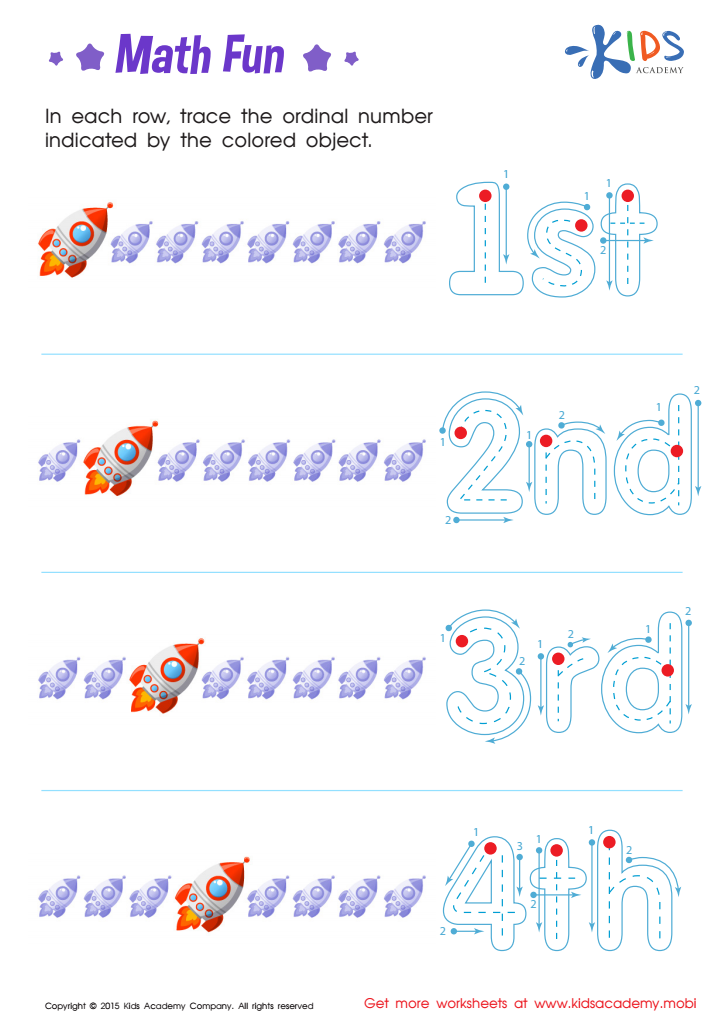
Ordinal Numbers: Math Fun Worksheet
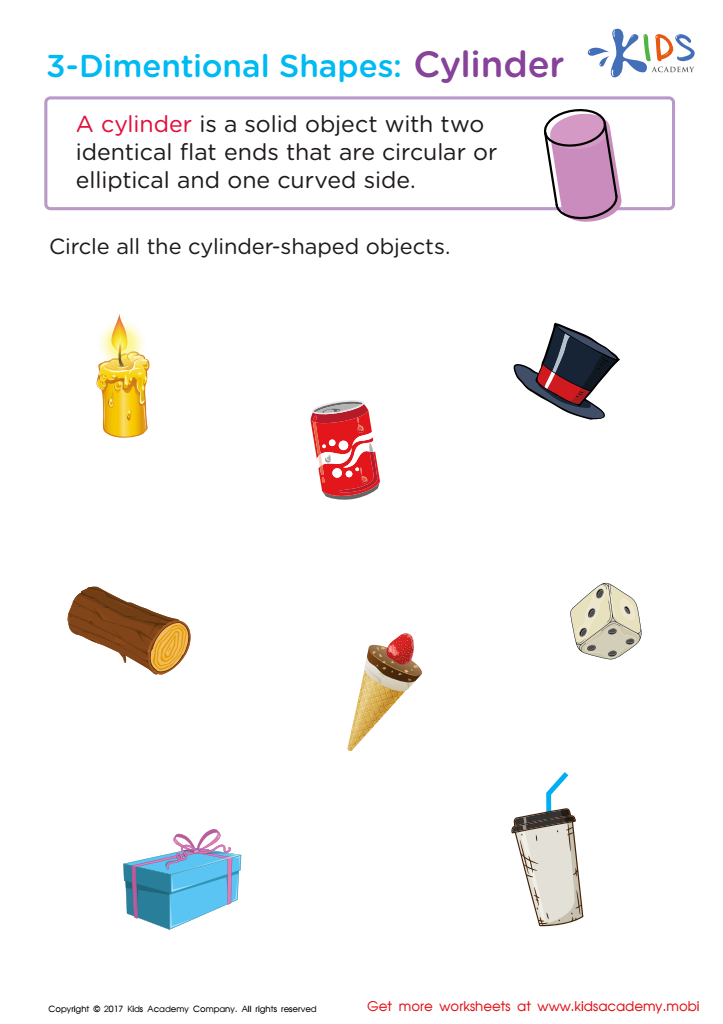
Three–Dimensional Shapes: Cylinder Worksheet






Understanding shapes is fundamental for children aged 6-8 as it lays the groundwork for more advanced mathematical concepts and everyday problem-solving skills. Shapes are one of the first elements of geometry that children encounter, and recognizing different shapes enhances their spatial awareness, which is crucial for navigating their surroundings and understanding the physical world.
At this age, children are developing critical thinking and reasoning skills. Sorting and categorizing shapes boost their ability to analyze similarities and differences, laying the foundation for logical reasoning necessary in both mathematics and science. Revealing the properties of shapes, like the number of sides and symmetry, also introduces children to key vocabulary and concepts that are the building blocks of geometry.
Moreover, understanding shapes can have far-reaching benefits beyond pure academics. It aids in improving fine motor skills through activities like drawing shapes and cutting them out, which in turn enhances hand-eye coordination. Recognizing and manipulating shapes also play a role in activities such as packing a bag or fitting pieces together in a puzzle, everyday tasks that strengthen problem-solving abilities.
Additionally, early exposure to shapes fosters creativity and artistic skills, allowing children to see and create patterns and designs, which can be essential for careers in art, engineering, and architecture. By caring about shape understanding, parents and teachers support holistic cognitive and motor development, setting children up for future learning success.








