Vowel Recognition Worksheets for Ages 6-8 - Page 2
25 filtered results
-
From - To
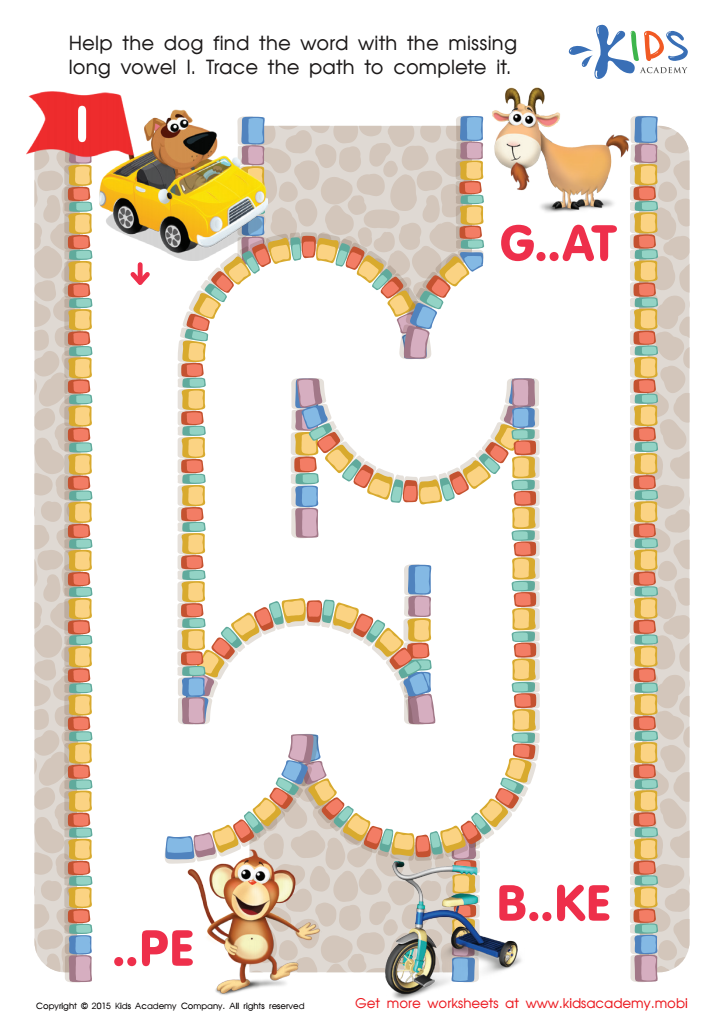
Long Vowel Sound I Worksheet
 Assign to My Students




.jpg)



Vowel recognition is a cornerstone in early literacy development for children aged 6-8, and parents and teachers should give it due attention. This skill is crucial because vowels form the heart of syllables, which in turn construct words—understanding vowel sounds enables children to decode unfamiliar words and read independently. Mastery in vowel recognition facilitates phonemic awareness, where children learn to hear, identify, and manipulate individual sounds in words. This foundational skill is critical for success in reading fluency and comprehension.
When children can accurately recognize vowels, they can spell and write more effectively, translating to better communication skills. Moreover, early struggles in reading can lead to frustrations, lowered self-esteem, and an aversion to learning. By ensuring strong vowel recognition, parents and teachers help build a positive and confident approach to literacy. This focus ultimately lays the groundwork for academic success in other subjects, too, since reading is integral to understanding content in mathematics, science, and social studies.
Thus, investing time and resources in vowel recognition at this formative age yields broad educational benefits. It prepares children for primary education's increasing complexity and supports their overall cognitive development, making it an essential aspect of early childhood education.








