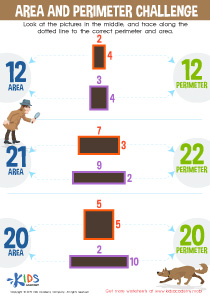
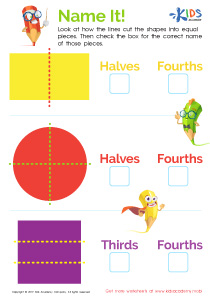
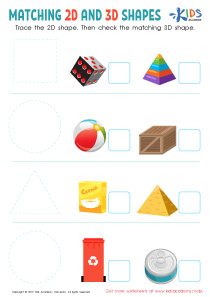
Basic geometry knowledge 2D Shapes Worksheets for Ages 6-8
3 filtered results
-
From - To
Discover our engaging 2D shapes worksheets designed for children ages 6-8, focusing on basic geometry knowledge. These interactive resources help young learners identify, classify, and understand shapes such as circles, squares, triangles, and rectangles. Each worksheet is crafted to reinforce geometric concepts through a variety of fun activities, including coloring, matching, and drawing shapes. By integrating colorful visuals and playful exercises, our resources promote critical thinking and encourage creativity in young minds. Ideal for home or classroom use, these worksheets are perfect for building foundational math skills while fostering a love for learning about shapes and geometry!
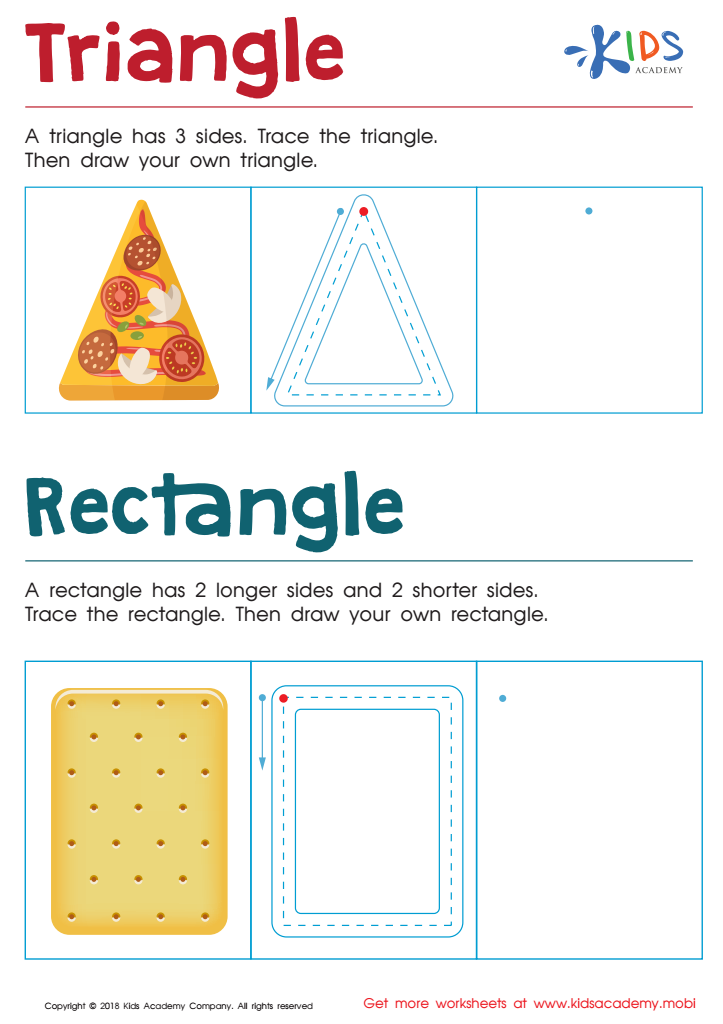
Triangle Rectangle Worksheet
 Assign to My Students

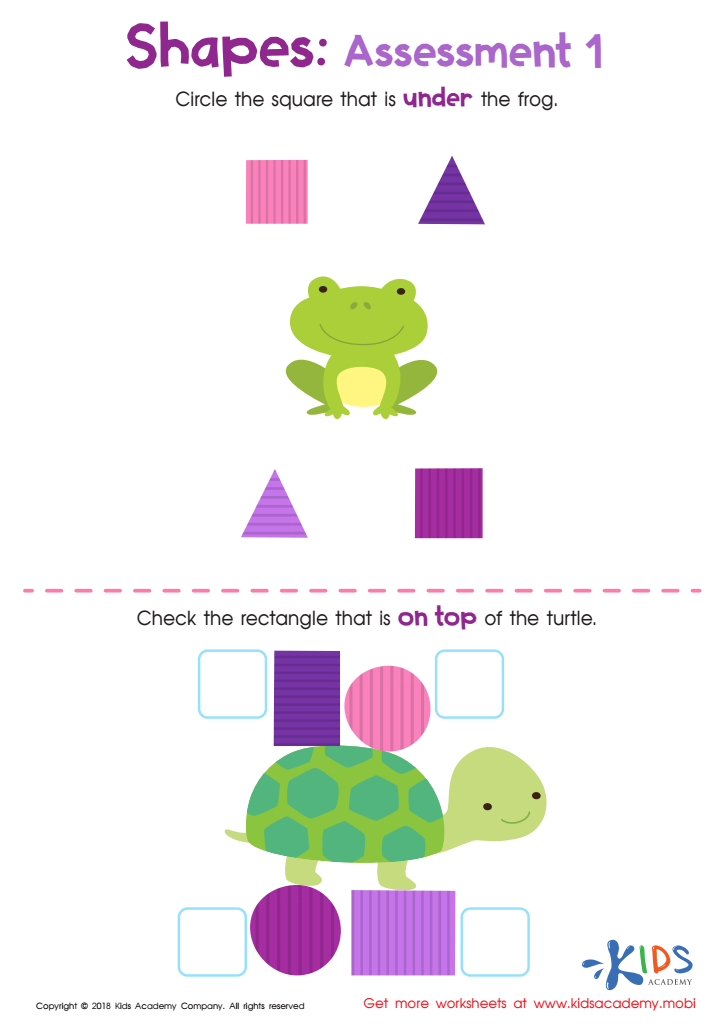
Geometry – Assessment 1 Worksheet
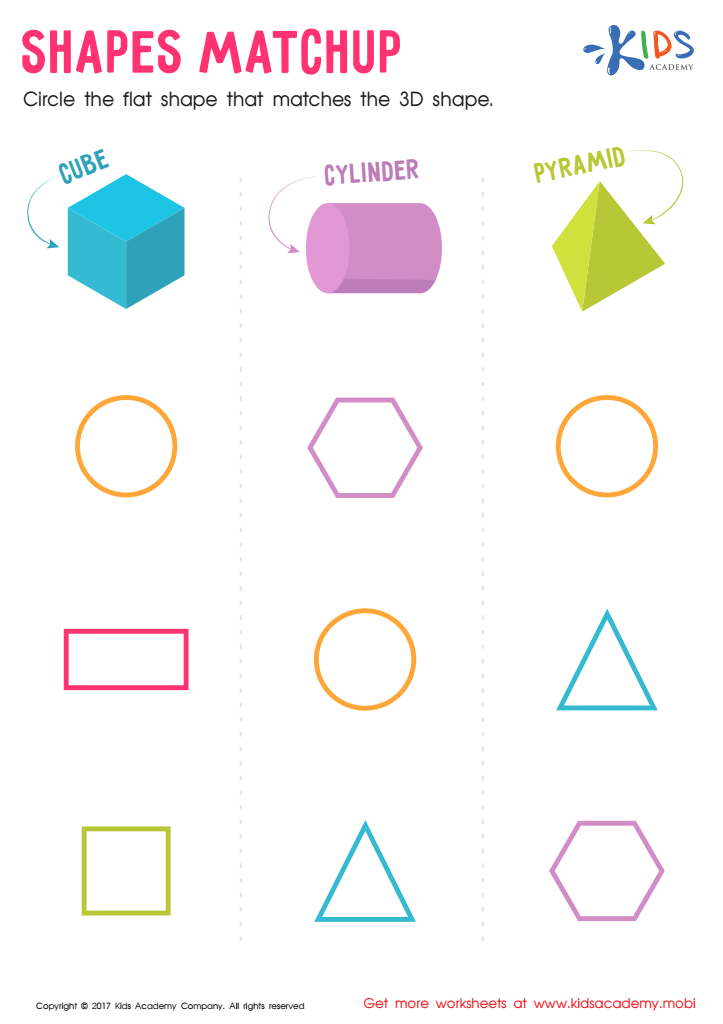
Shapes Matchup Worksheet






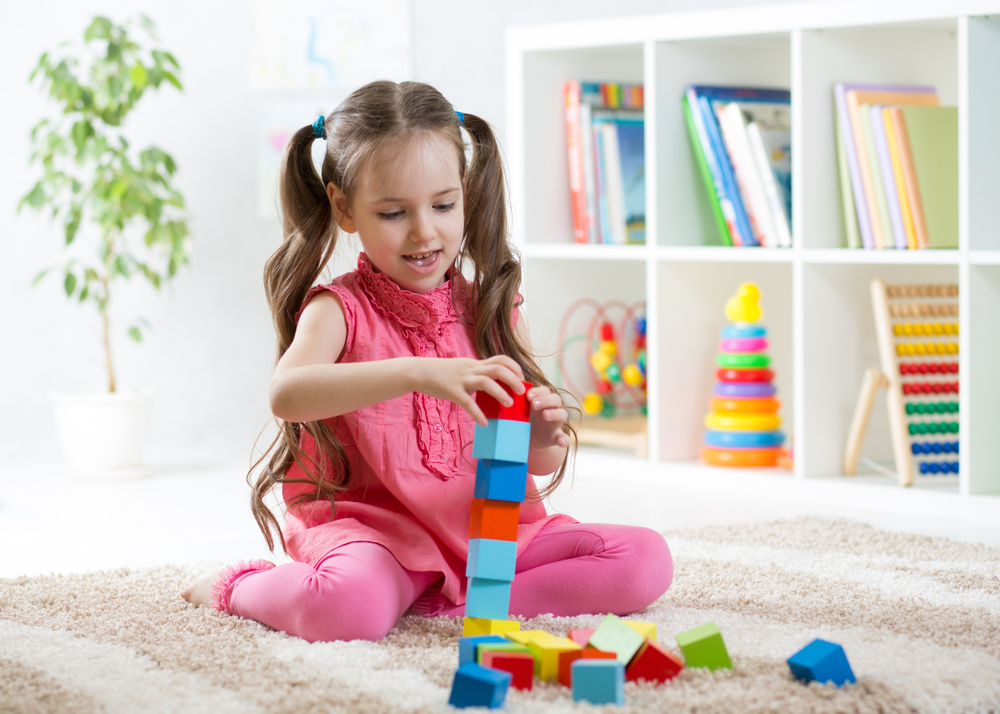

Understanding basic geometry, especially 2D shapes, is crucial for children aged 6-8, as it lays the foundation for critical thinking and problem-solving skills. At this developmental stage, children are naturally curious and eager to explore their environment. Learning about shapes—such as circles, squares, triangles, and rectangles—allows them to make sense of the world around them.
Recognizing and categorizing shapes fosters spatial awareness, which helps in future mathematical problem solving and more complex subjects like geometry and trigonometry. Additionally, familiarity with these basic shapes enhances cognitive development, as children begin to understand symmetry, congruence, and patterns.
Parents and teachers should emphasize these concepts because early exposure leads to improved mathematical abilities later in life. Incorporating 2D shape recognition into daily activities—such as cooking, building, or art—can enhance learning organically. Furthermore, the skills gained from mastering 2D shapes support later educational achievements in math and science. By nurturing an understanding of geometry at this stage, we are preparing children not just for academic success, but also for real-world application, creativity, and logical reasoning that benefits them throughout life.