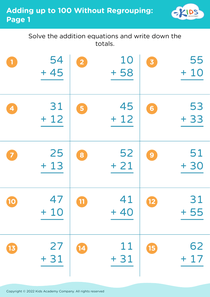
Recognize patterns Adding up to 100 with Regrouping Worksheets for Ages 6-8
3 filtered results
-
From - To
Explore our "Recognize Patterns: Adding Up to 100 with Regrouping" worksheets, tailored for children aged 6-8! These engaging resources are designed to help young learners develop essential math skills through pattern recognition and regrouping techniques. By practicing how to identify and utilize patterns in addition, kids will strengthen their understanding of numbers while building their confidence in solving problems. Our worksheets feature colorful visuals and interactive exercises, making learning fun and effective. Perfect for classroom use or at-home practice, these worksheets ensure that your child masters the art of adding up to 100. Start their math journey today!
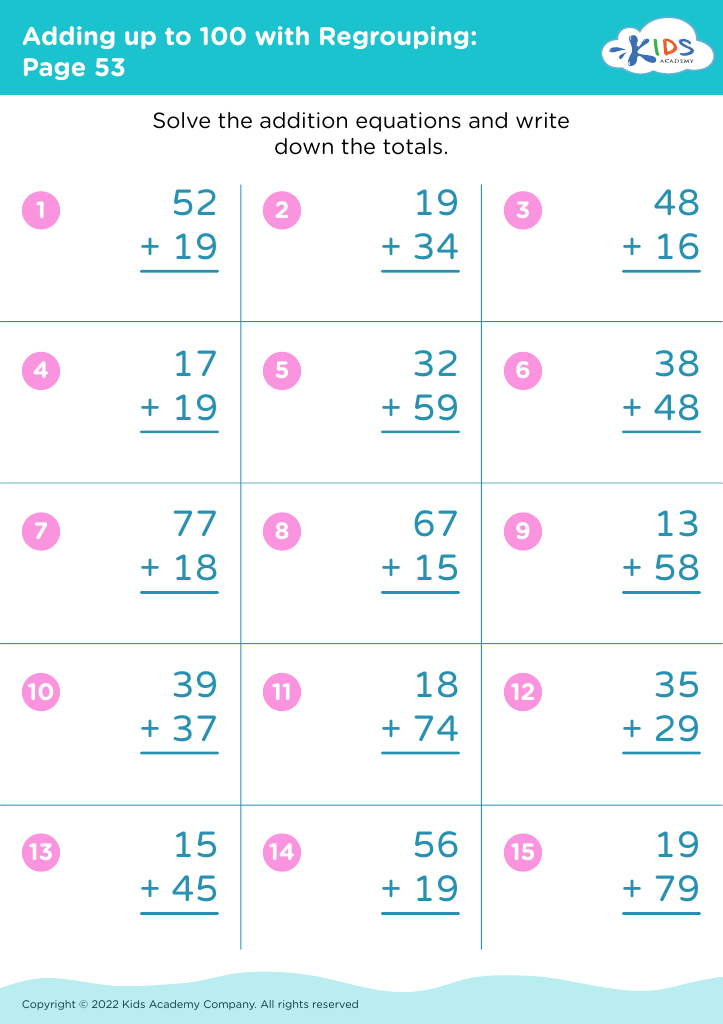
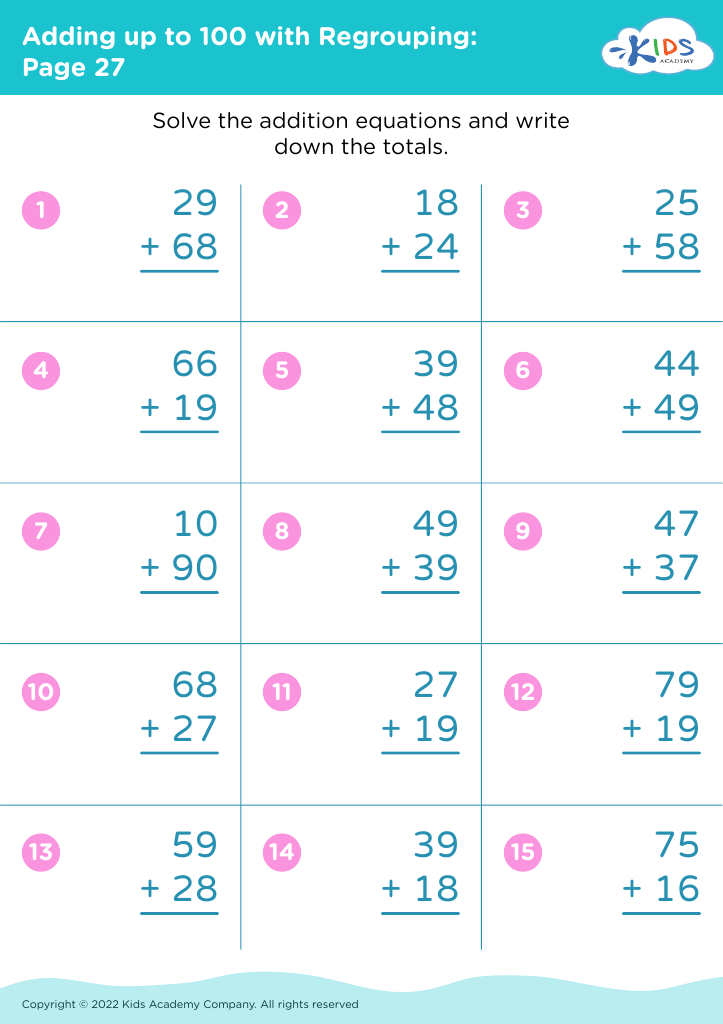
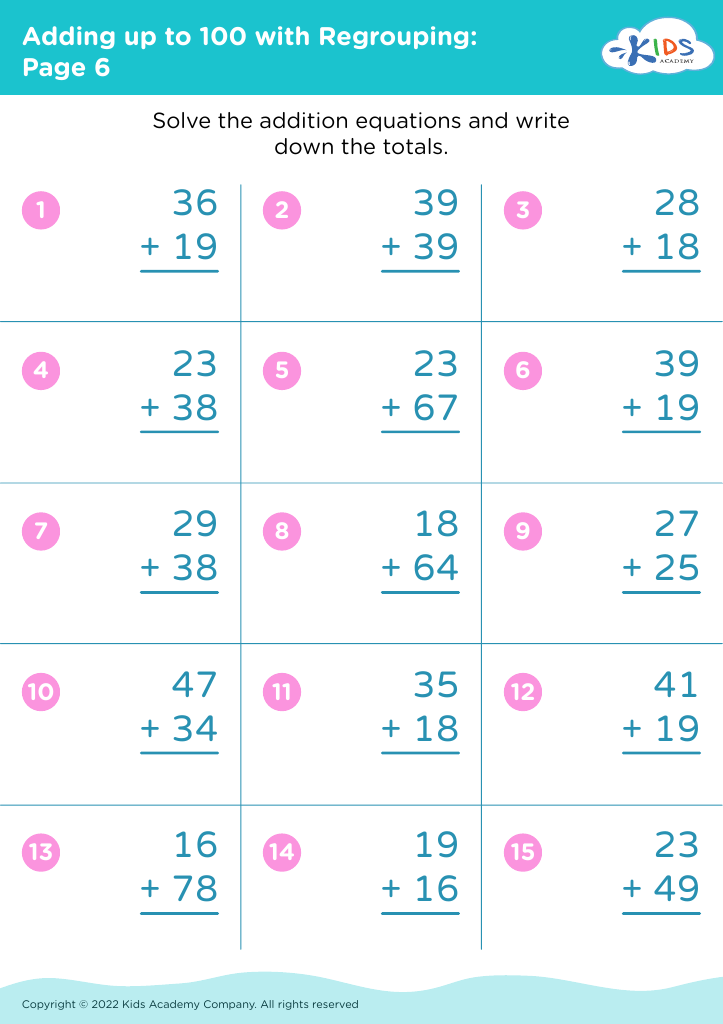




Recognizing patterns in addition, particularly when adding up to 100 with regrouping, is a crucial skill for young learners aged 6-8. This foundational concept not only strengthens their arithmetic abilities but also enhances their overall mathematical reasoning. When children learn to recognize patterns, they gain an understanding of number relationships, making complex calculations more manageable and intuitive.
For parents and teachers, fostering this skill can lead to increased confidence in children's math abilities. Mastering regrouping allows students to tackle larger numbers without fear, promoting a positive attitude toward mathematics. Moreover, pattern recognition encourages problem-solving, critical thinking, and analytical skills that are applicable across subjects.
In addition, the ability to break down and reconstruct numbers lays the groundwork for more advanced concepts, like multiplication and division. This critical early math skill bridges into higher mathematics, ensuring students are prepared for future challenges. Engaging children in games, activities, and discussions around these patterns can make learning enjoyable and effective, reinforcing the importance of teamwork between home and school. Ultimately, by prioritizing this skill, parents and teachers empower students to become proficient, resilient learners, setting them on a path for future academic success.