Basic Math Skills Adding up to 100 Without Regrouping Worksheets for Ages 6-8
4 filtered results
-
From - To
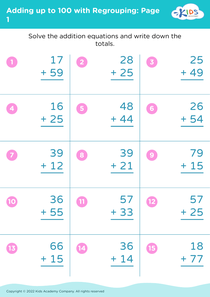
Enhance your child's math confidence with our "Basic Math Skills: Adding Up to 100 Without Regrouping Worksheets" designed specifically for ages 6-8. These engaging resources help young learners practice addition skills in a fun and interactive way, focusing on building foundational math abilities without the complexity of regrouping. Your child will enjoy developing essential arithmetic skills while solving colorful worksheets that cater to their age group. Each worksheet promotes number recognition and boosts confidence, providing a supportive learning environment. Help your child master addition and prepare them for future math challenges with these essential resources today!
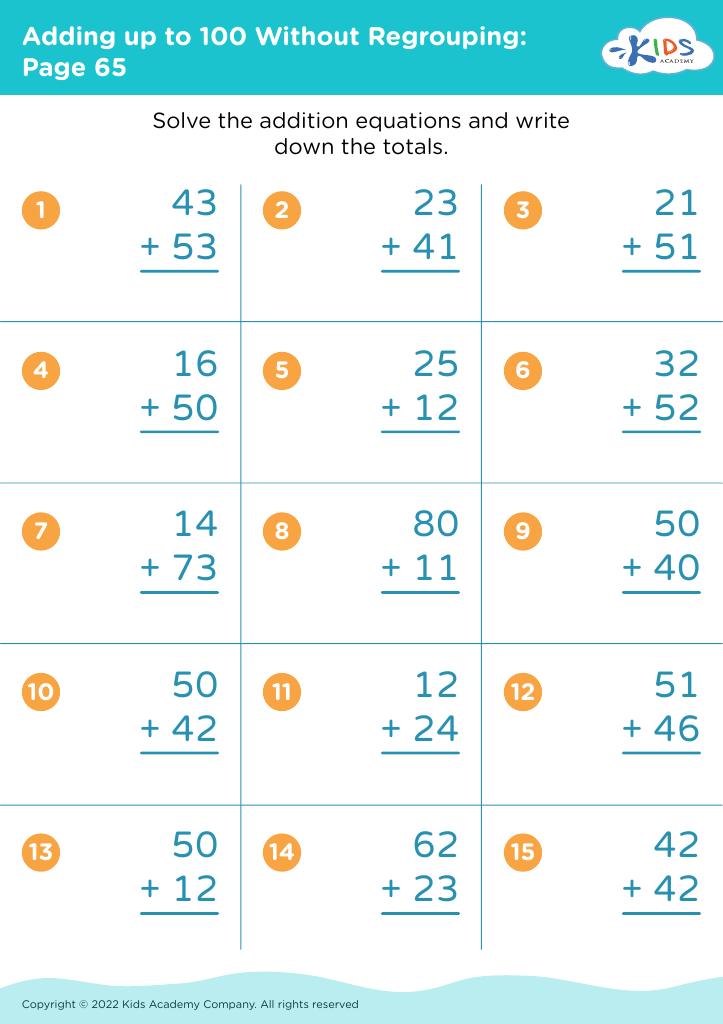
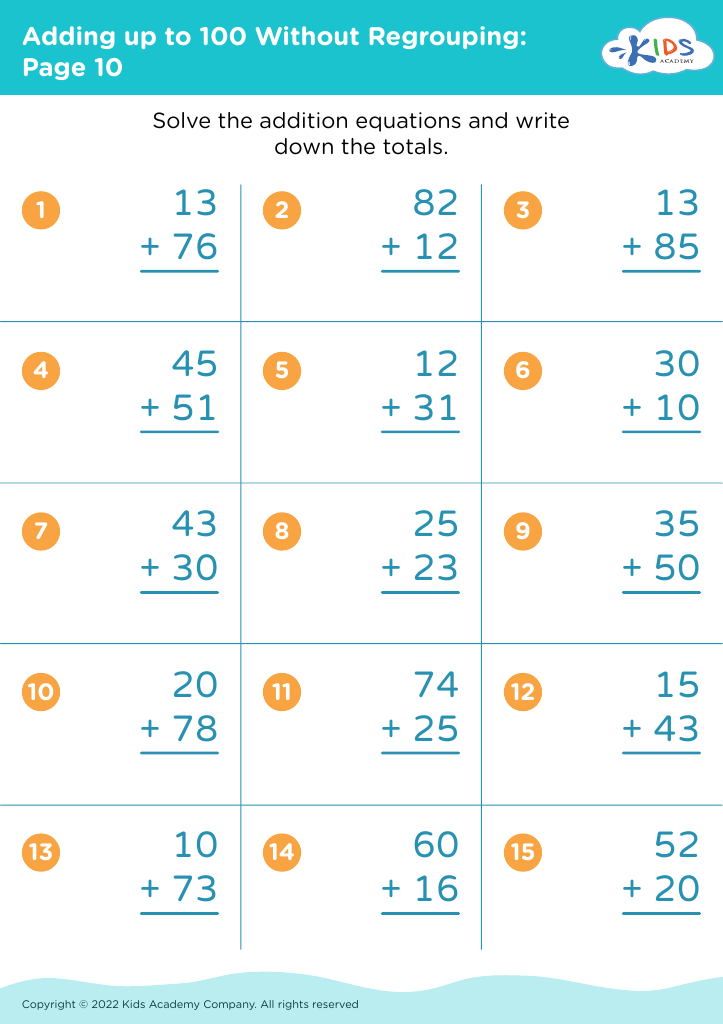
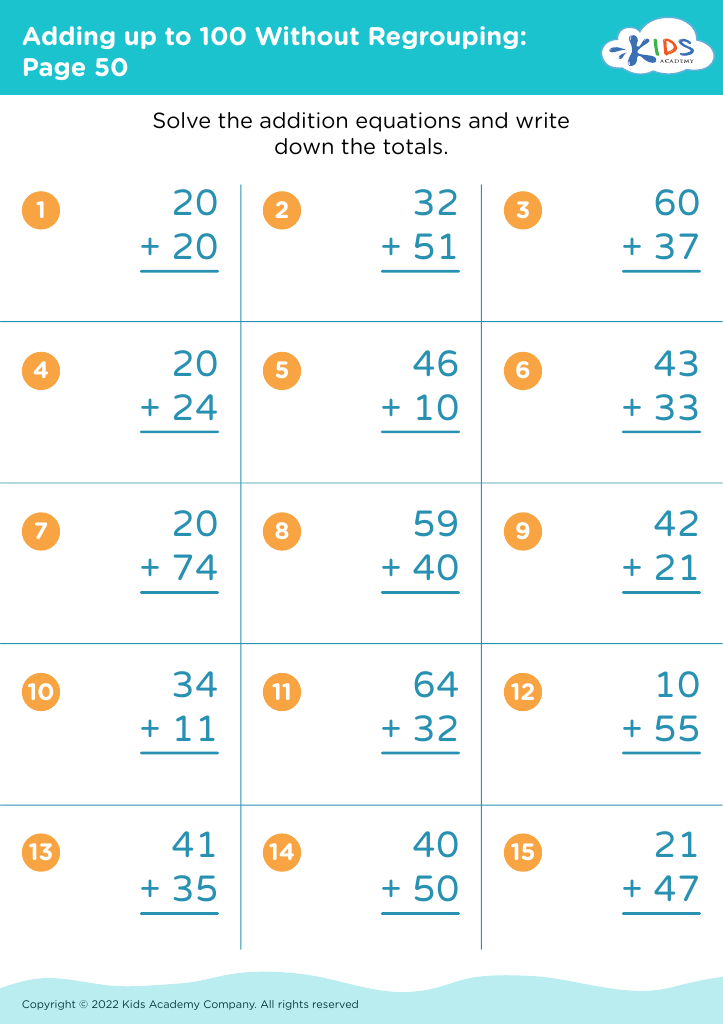
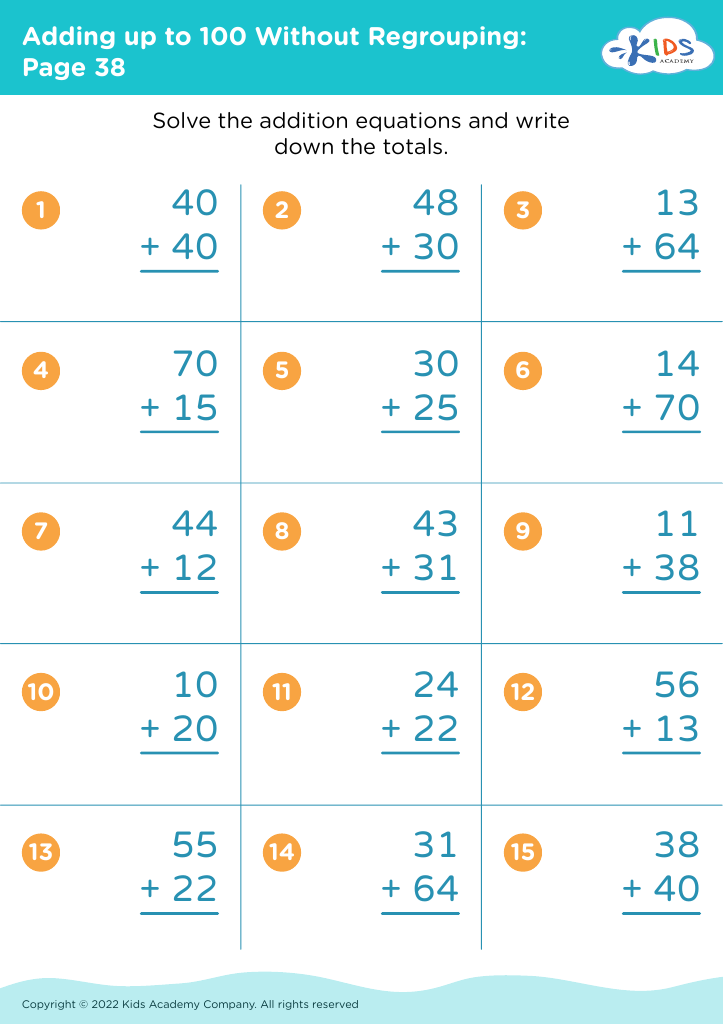




Basic math skills, particularly adding up to 100 without regrouping, are essential for children ages 6-8 as they lay the foundation for future mathematical understanding. Mastering these skills helps learners develop strong number sense, which is crucial at this stage in their education. Understanding how to add numbers up to 100 allows children to gain confidence in their ability to work with larger numbers, setting the stage for more complex mathematical operations in later grades.
Furthermore, addition without regrouping teaches children critical problem-solving skills. By practicing this skill, children learn to break numbers into parts, enhancing their ability to analyze problems and develop strategies. Additionally, this foundation supports their understanding of concepts such as place value and comparison and helps in developing their cognitive skills, including logical reasoning and critical thinking.
Parents and teachers should also note that these basic math skills are not confined to the classroom. Daily activities—shopping, cooking, and budgeting—require the ability to perform accurate addition. Ensuring mastery of these basic math skills empowers children for academic success and practical, everyday applications, reinforcing the essential role of education in holistic development.