Understanding fractions Adding up to 100 Without Regrouping Worksheets for Ages 6-8
19 filtered results
-
From - To
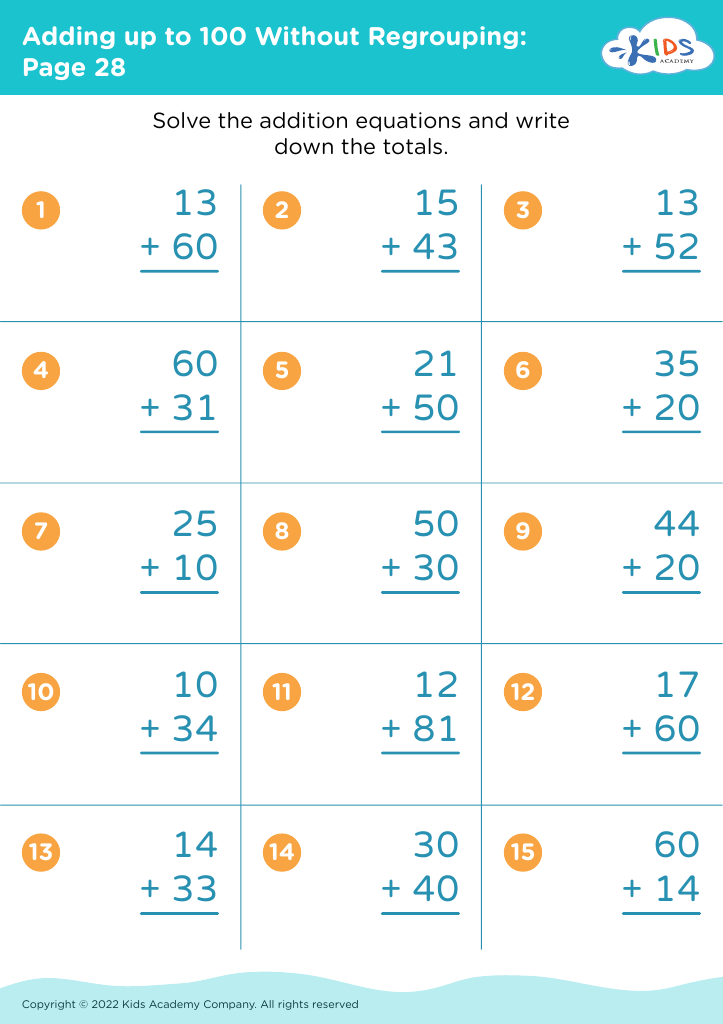
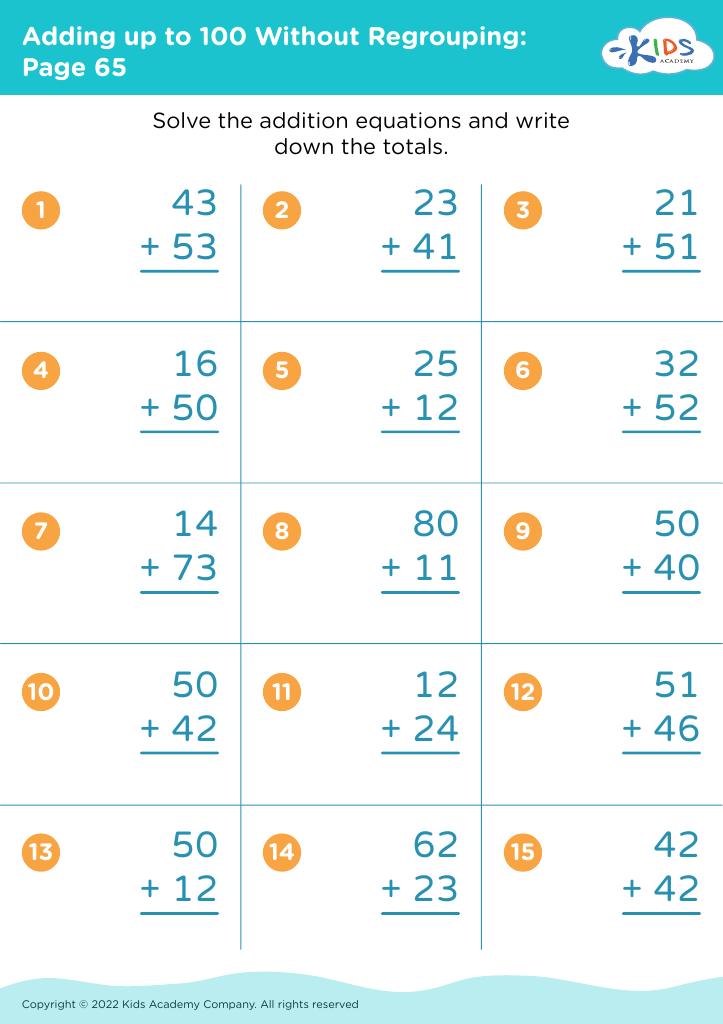
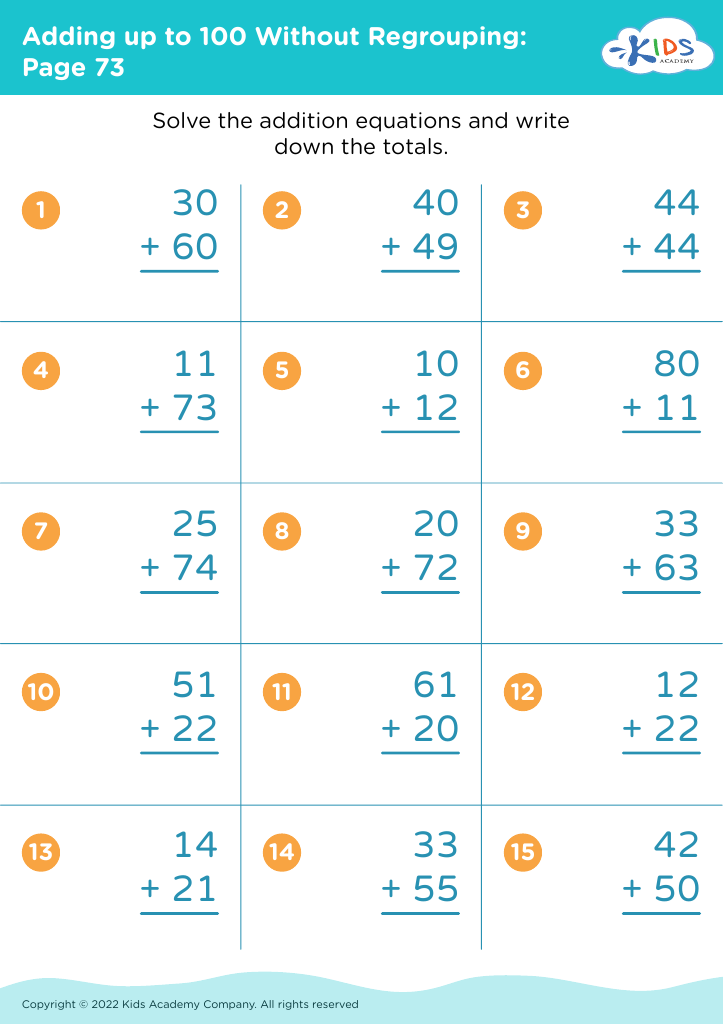
Dive into the world of fractions with our "Understanding Fractions Adding up to 100 Without Regrouping Worksheets for Ages 6-8." These engaging worksheets are designed to make learning fractions fun and easy for young learners. Perfectly tailored for kids aged 6-8, the exercises help students develop essential skills in adding whole numbers up to 100 without regrouping. Each colorful, interactive worksheet offers a hands-on approach to math, enhancing comprehension through visual aids and practice problems. Boost your child's confidence and proficiency in fractions with these meticulously crafted resources from Kids Academy. Explore now and watch your young mathematician flourish!
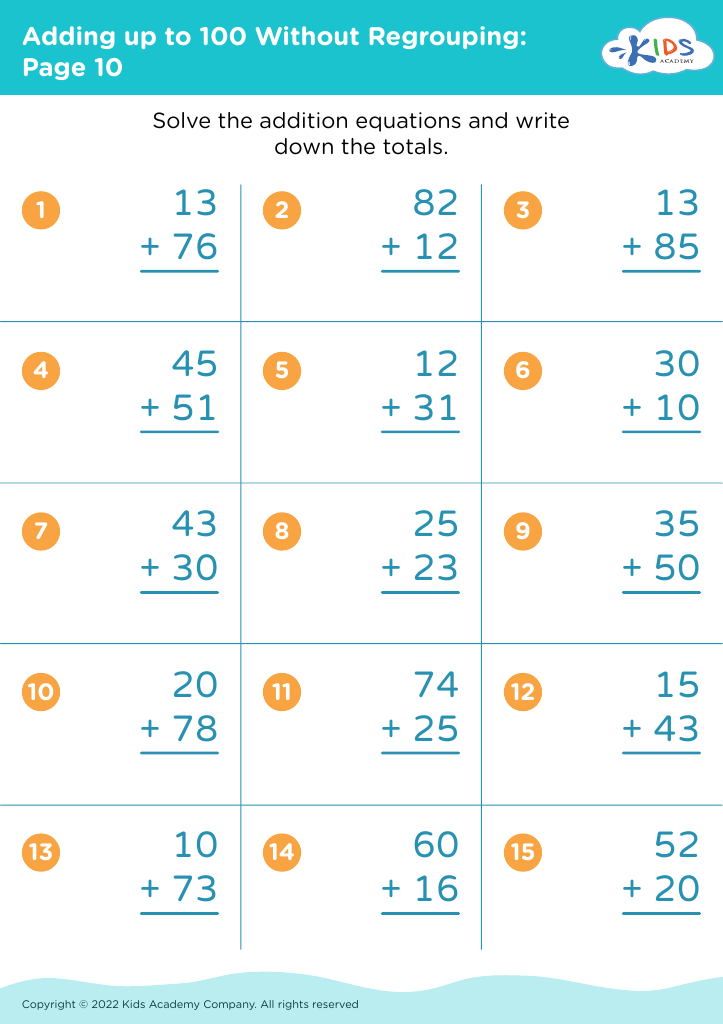
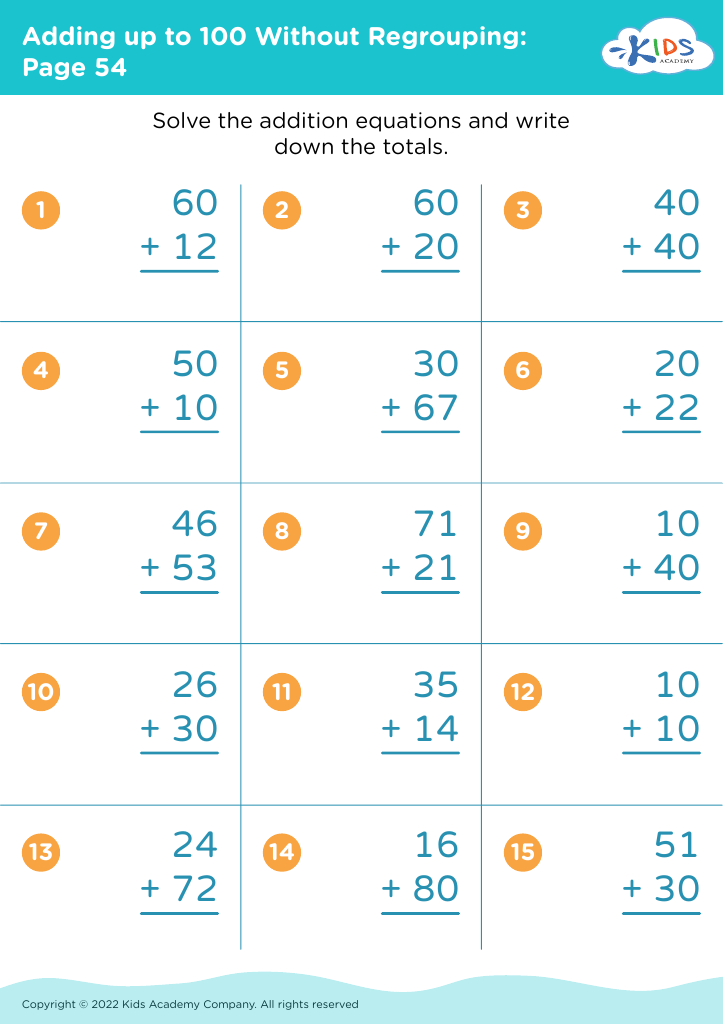
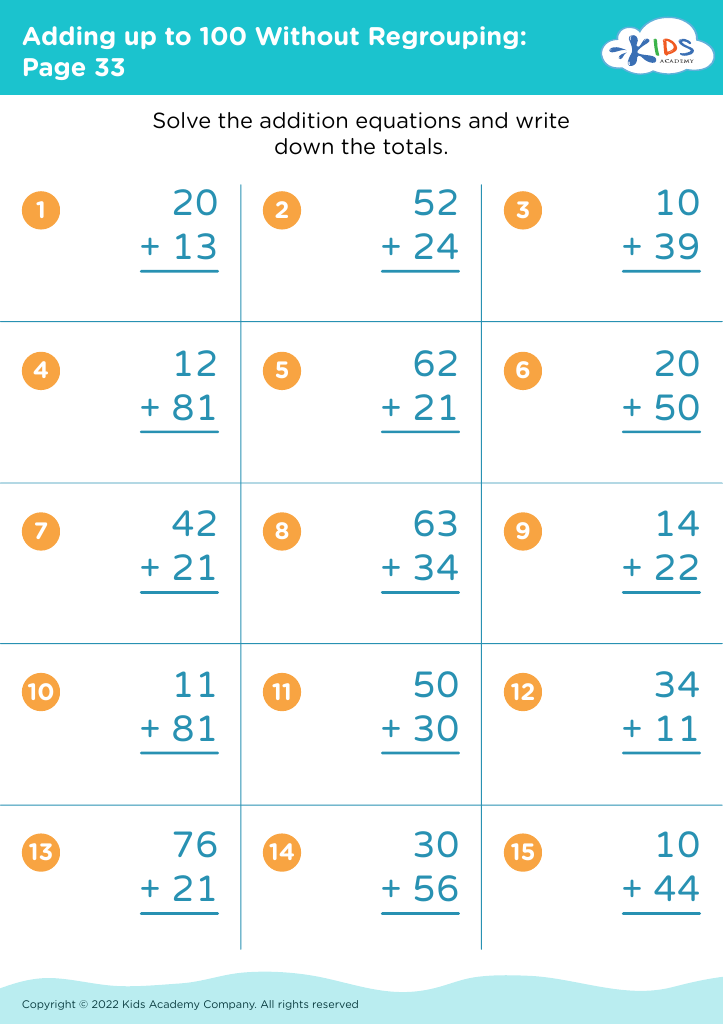
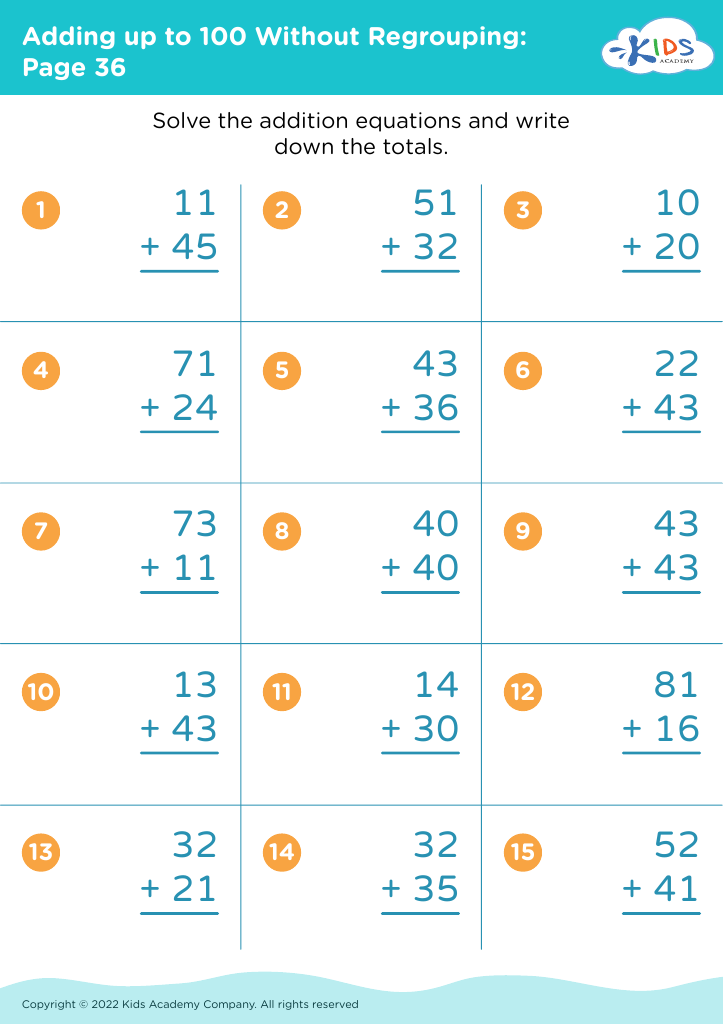
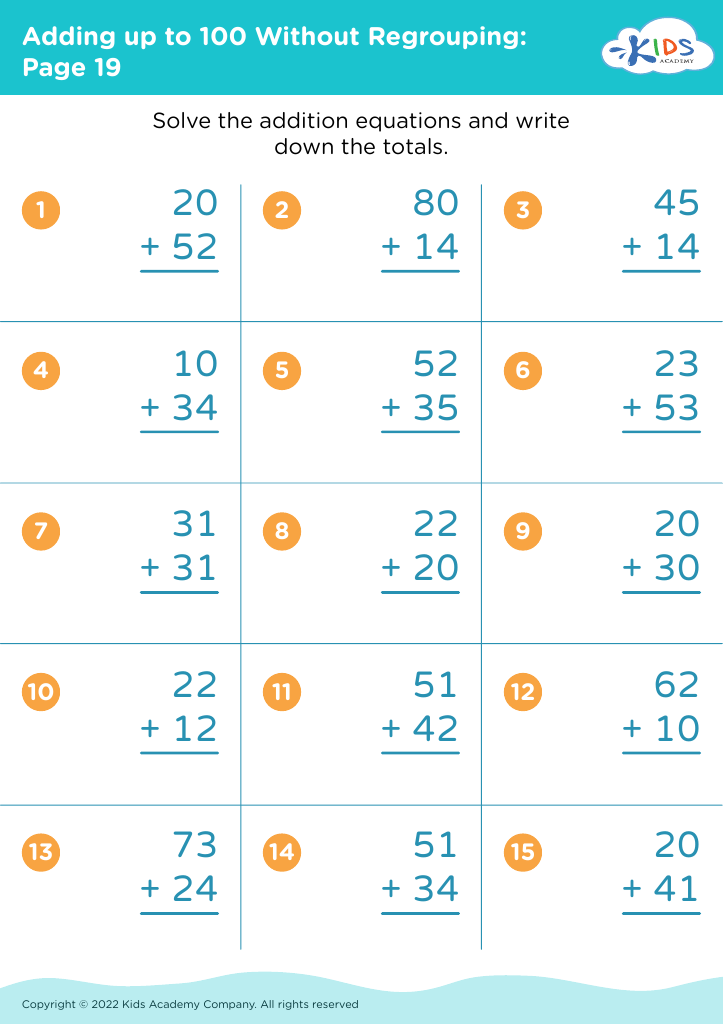
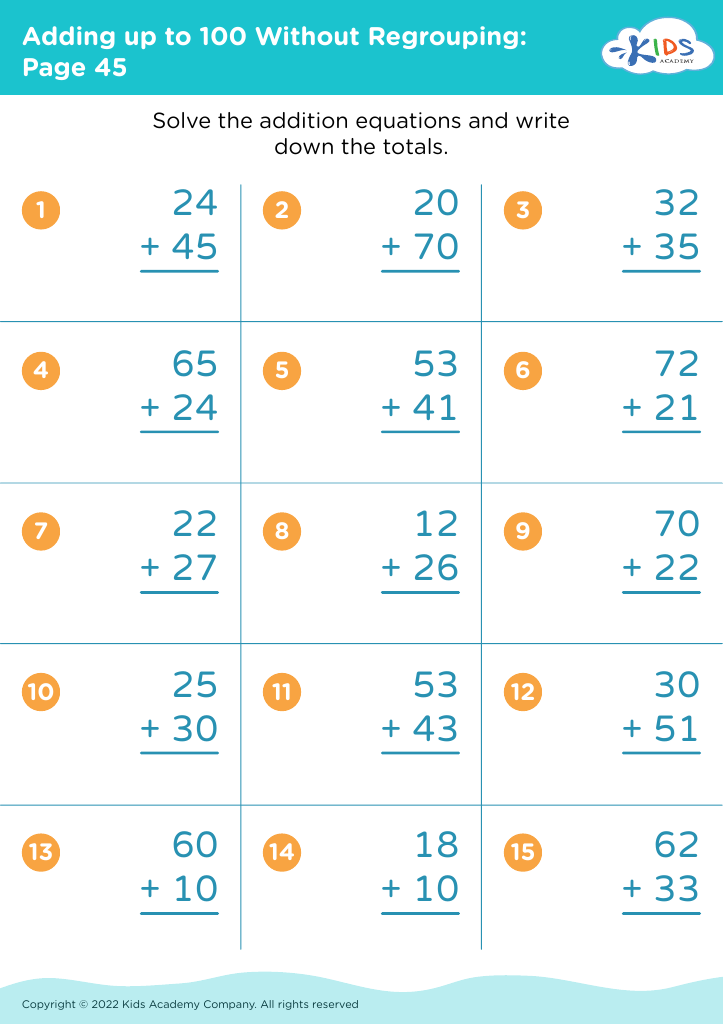
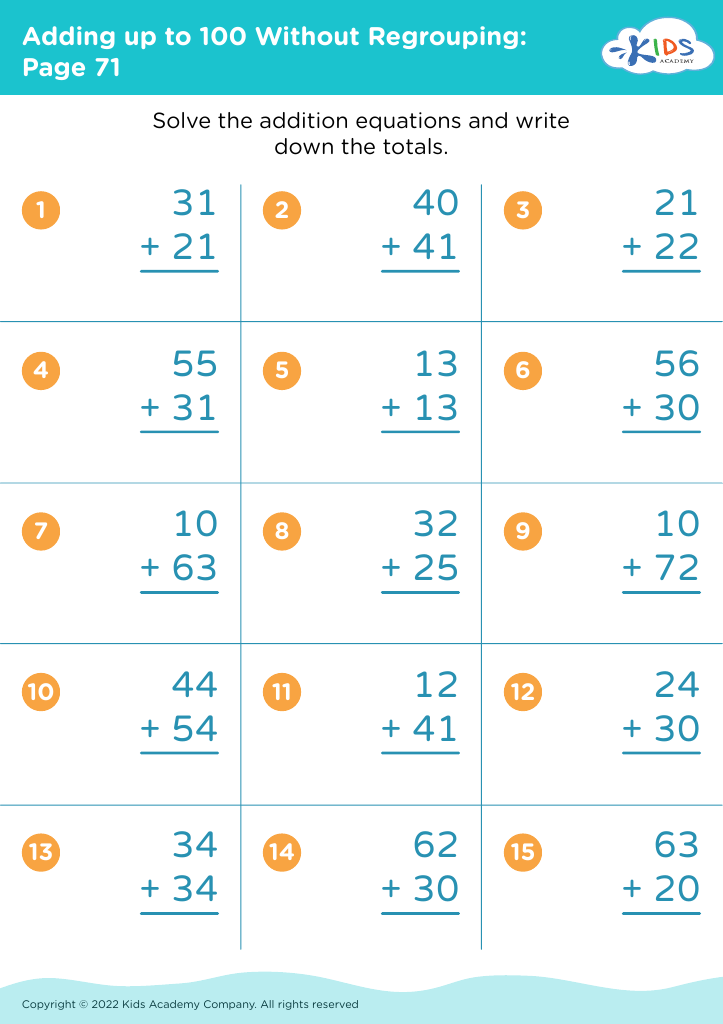
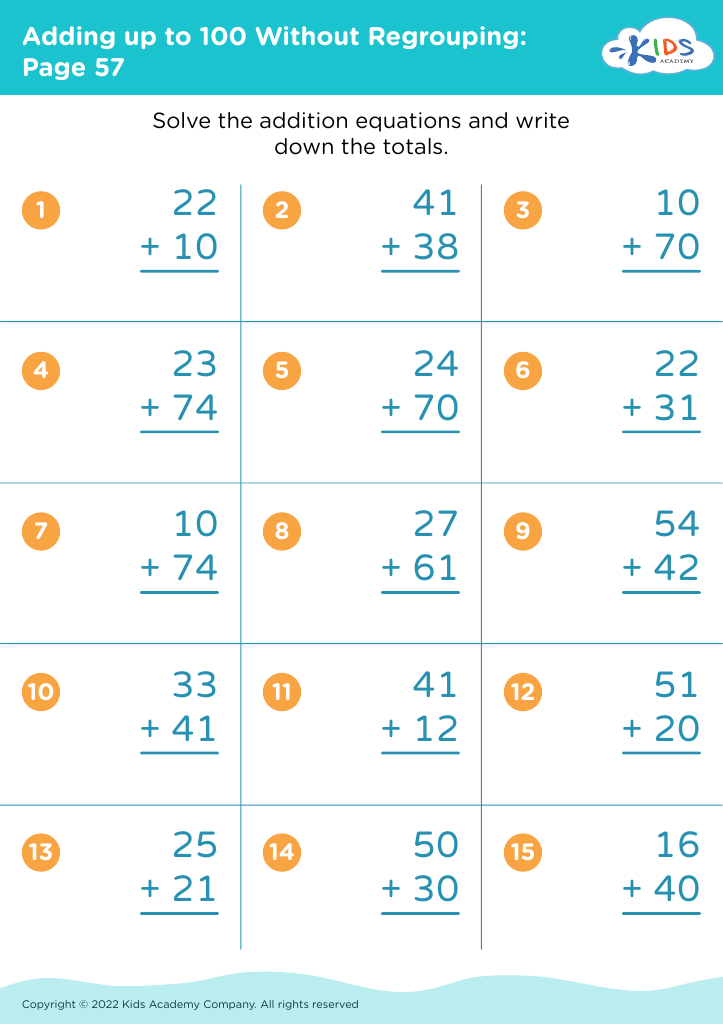
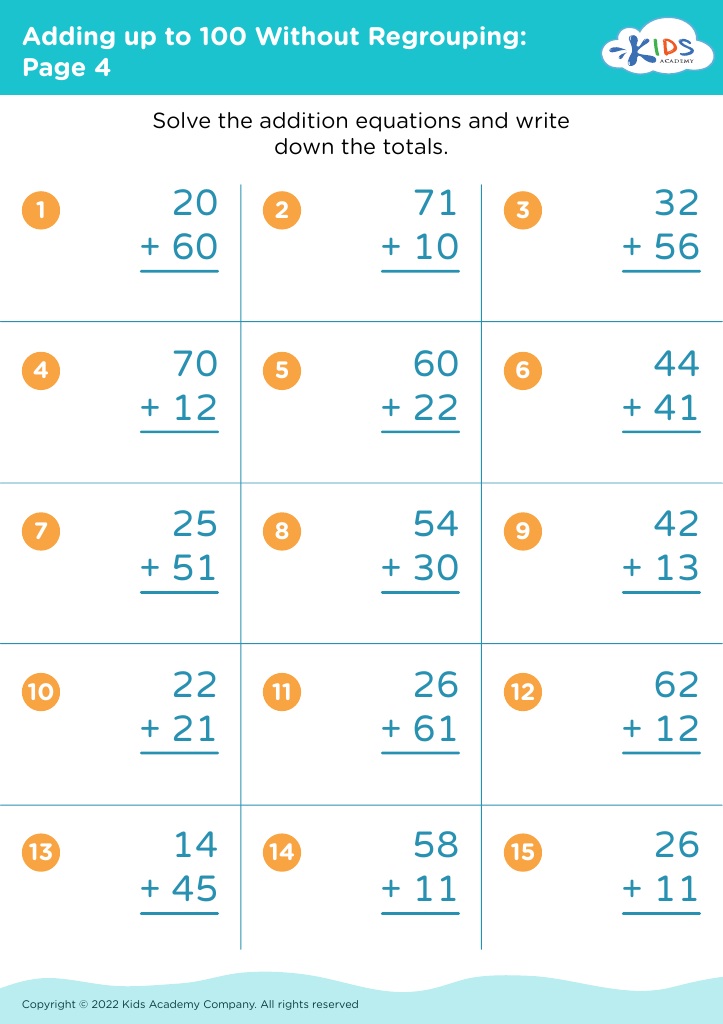
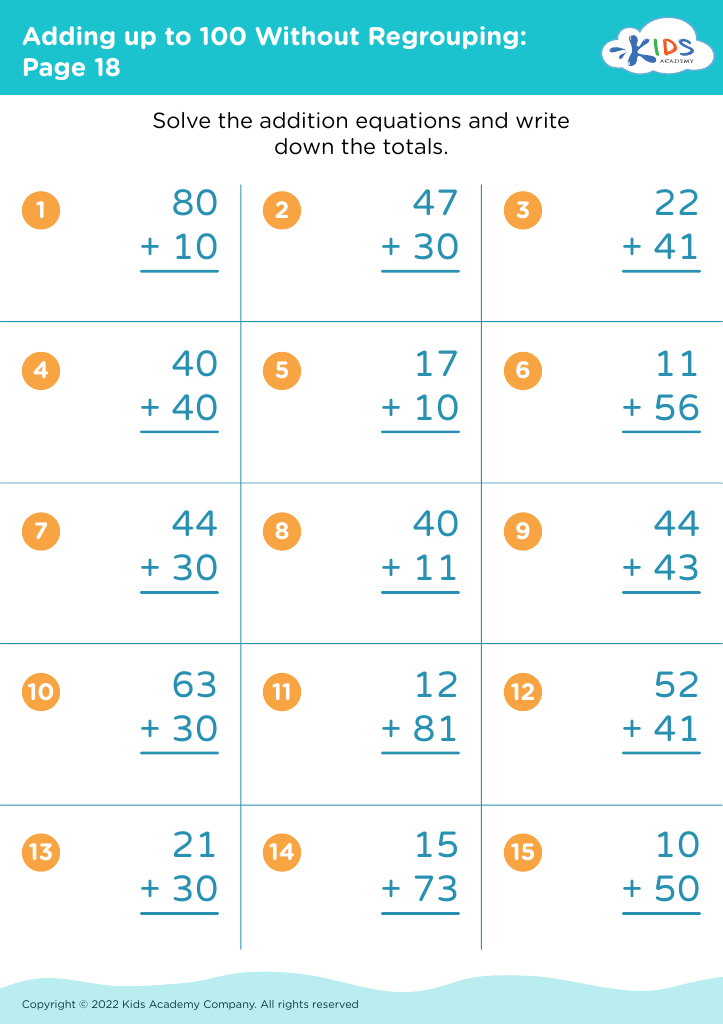
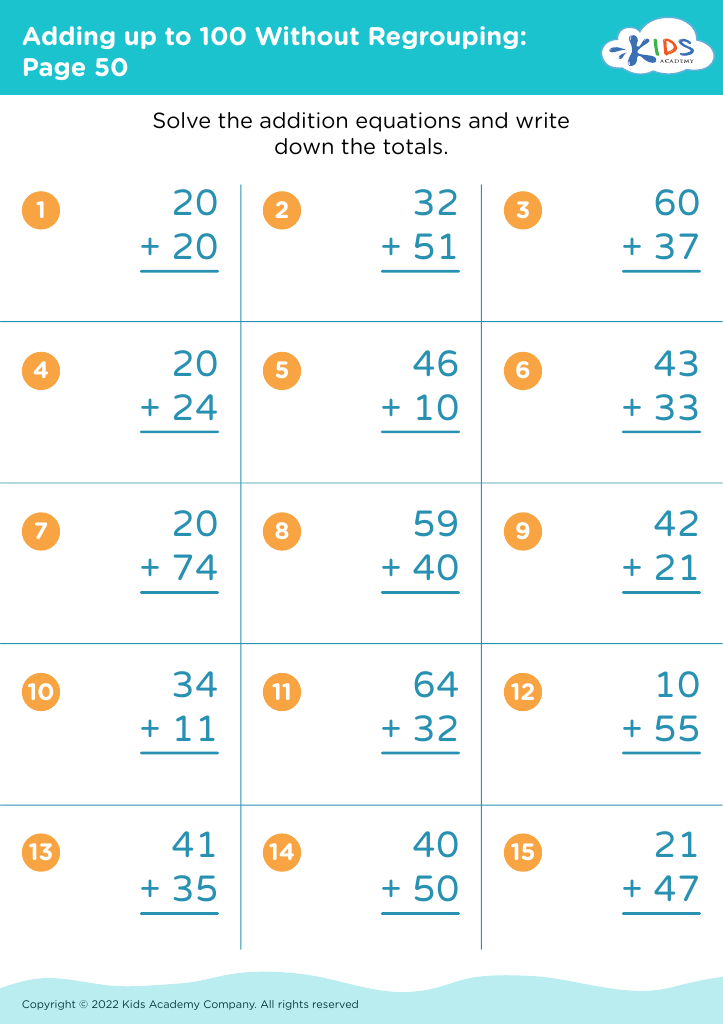
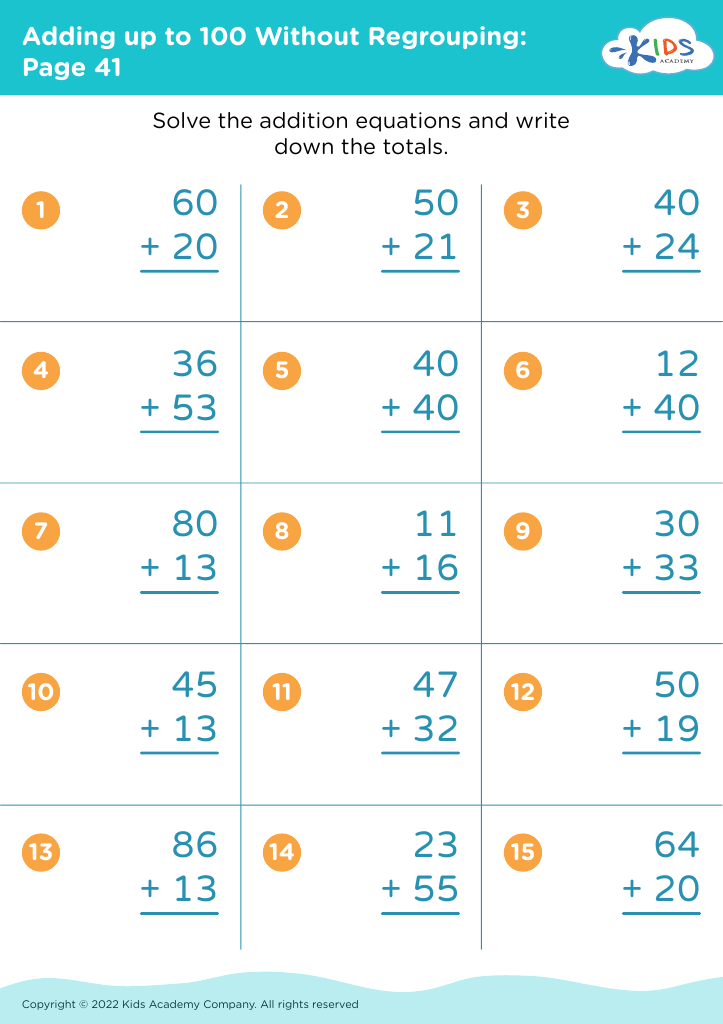
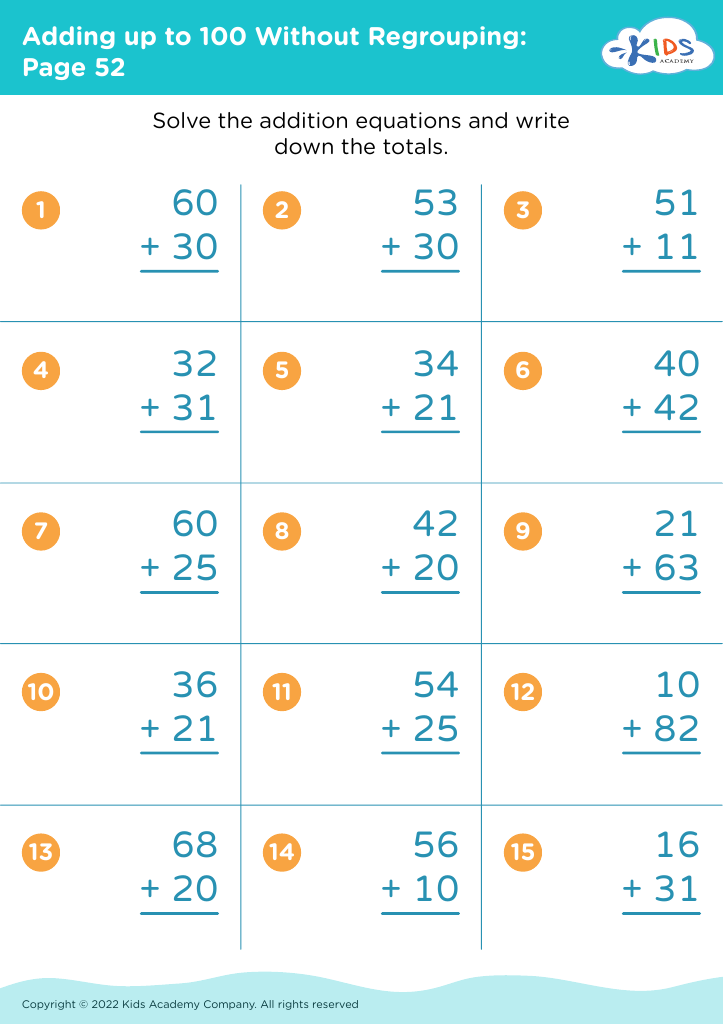
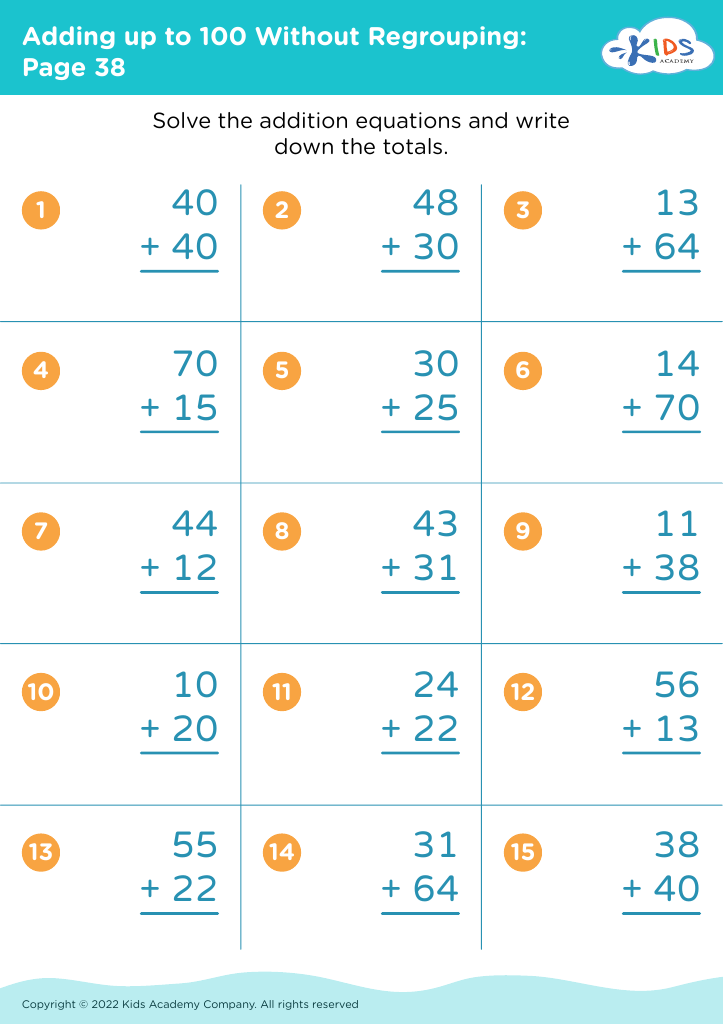
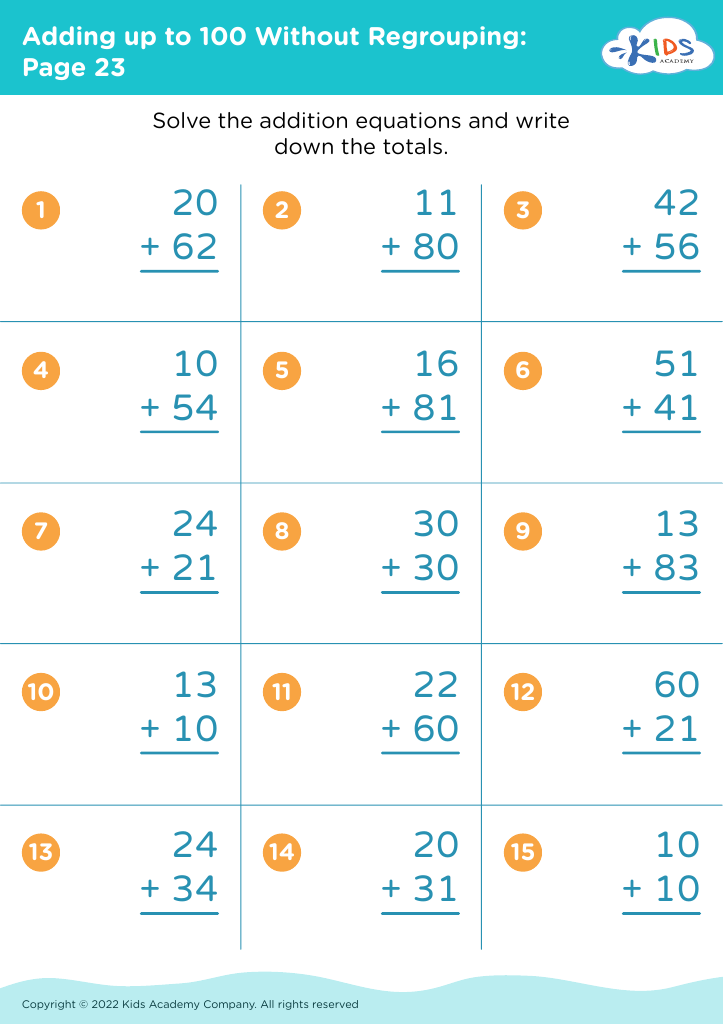
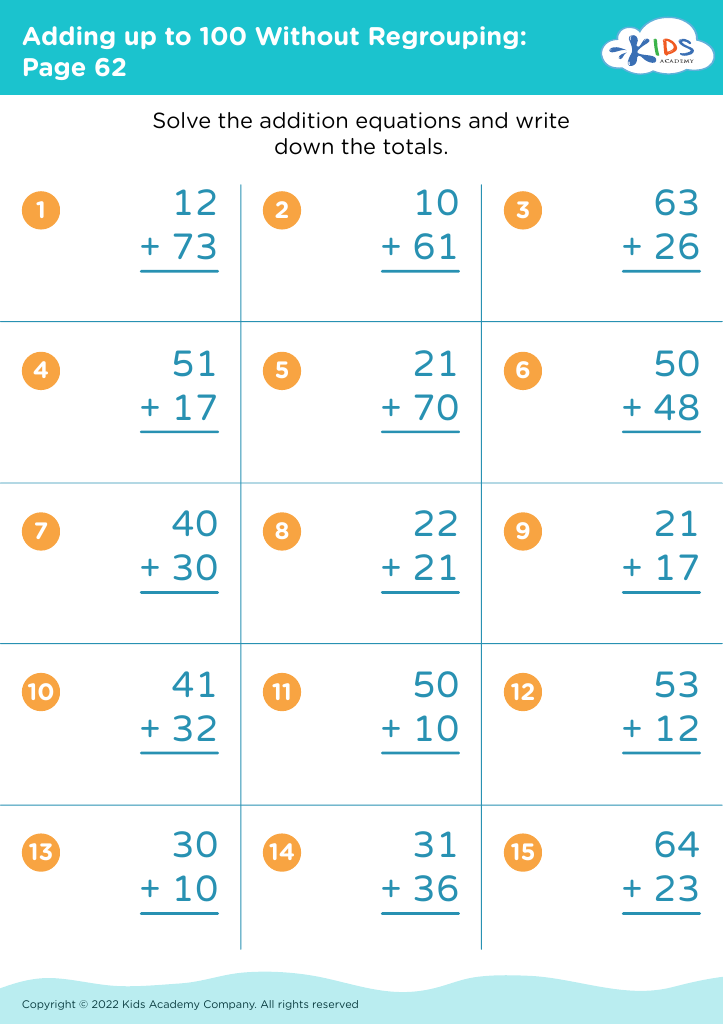




Understanding fractions and adding up to 100 without regrouping are fundamental skills for young children, aged 6-8, as they provide a strong mathematical foundation. These concepts not only emphasize the importance of numbers and their relationships but also set the stage for more complex problem-solving abilities later.
Firstly, learning fractions helps children grasp the idea of parts of a whole, enabling them to understand concepts of sharing and division. For example, recognizing that a half and another half make a whole is an essential life skill. This knowledge is crucial as it is applied in everyday scenarios, like cutting a cake or dividing a pizza.
Furthermore, being able to add up to 100 without regrouping reinforces place value comprehension. This skill enhances a child’s ability to break down complex tasks into simpler, manageable steps. It teaches them how to tackle problems systematically and build computational fluency. For instance, knowing that 45 plus 32 equals 77 without needing to regroup provides confidence in performing basic arithmetic accurately.
Lastly, mastering these skills fosters a positive attitude toward math, making future learning smoother and more enjoyable. When children are confident in their fundamental math skills, they are more likely to engage actively and succeed in more advanced mathematical concepts. Thus, a solid grasp of fractions and addition is essential for their academic and everyday life.