Fraction comparison Adding up to 100 Worksheets for Ages 6-8
6 filtered results
-
From - To
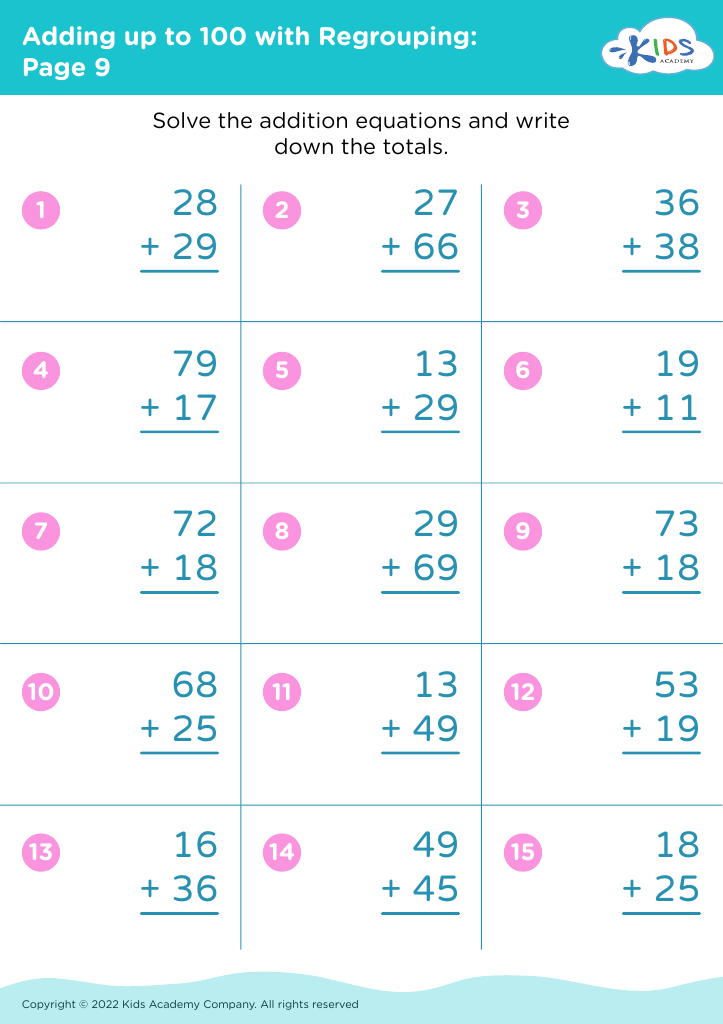
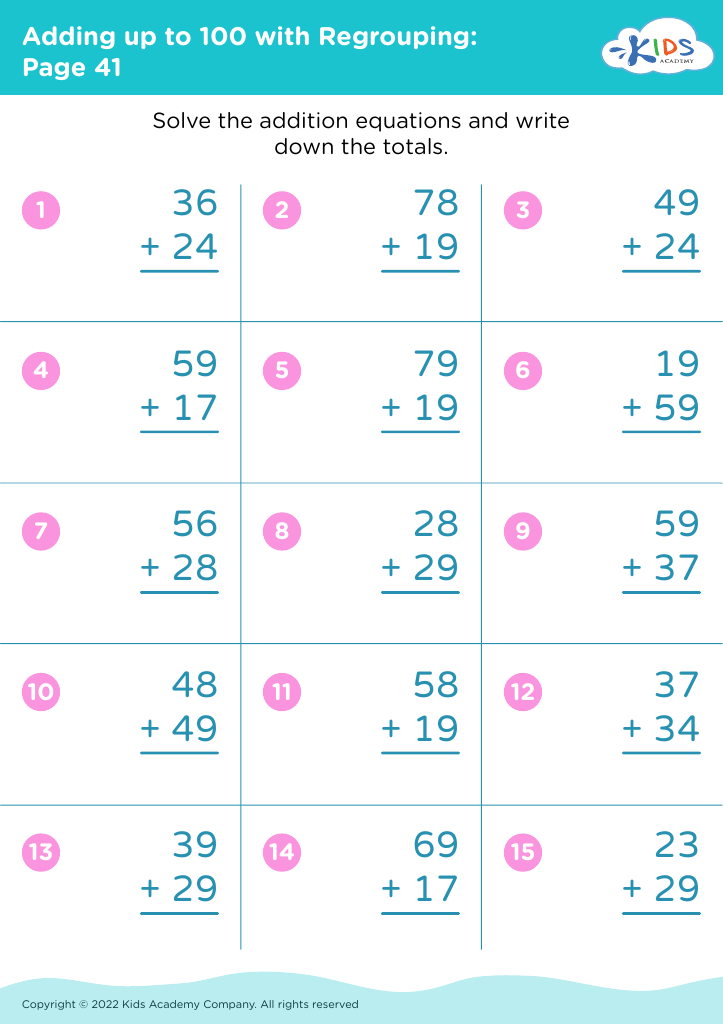
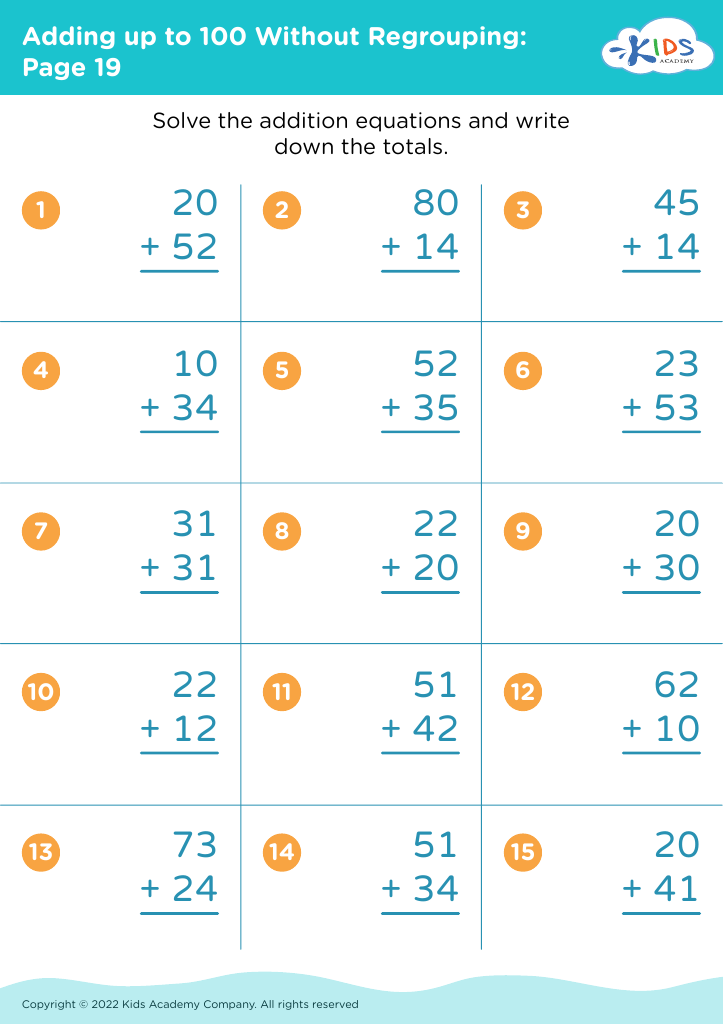
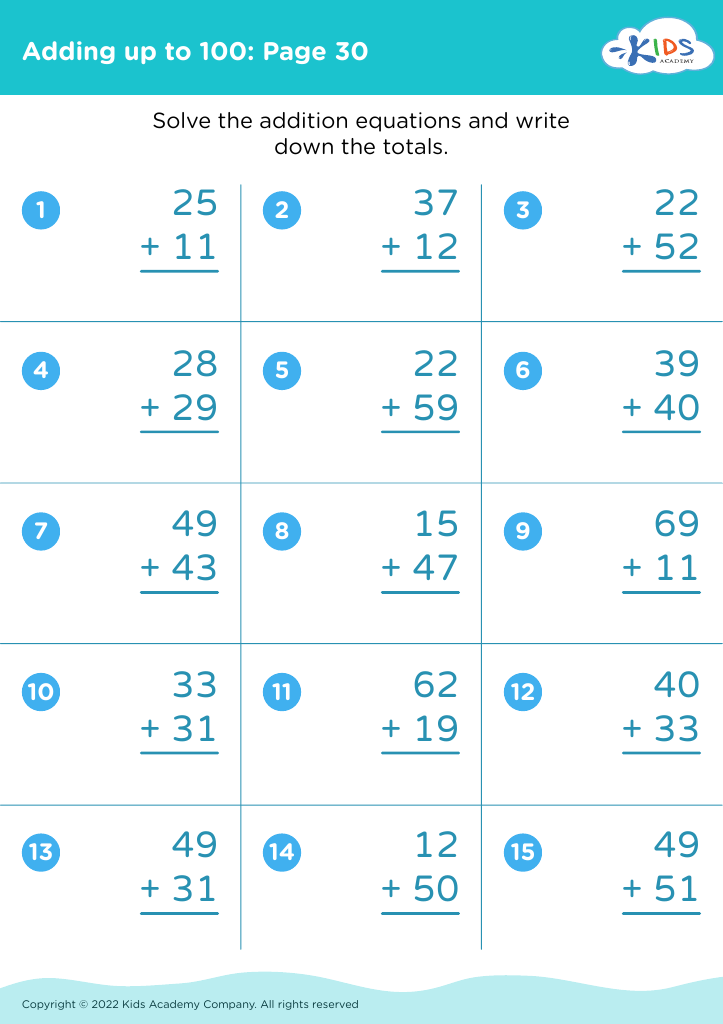
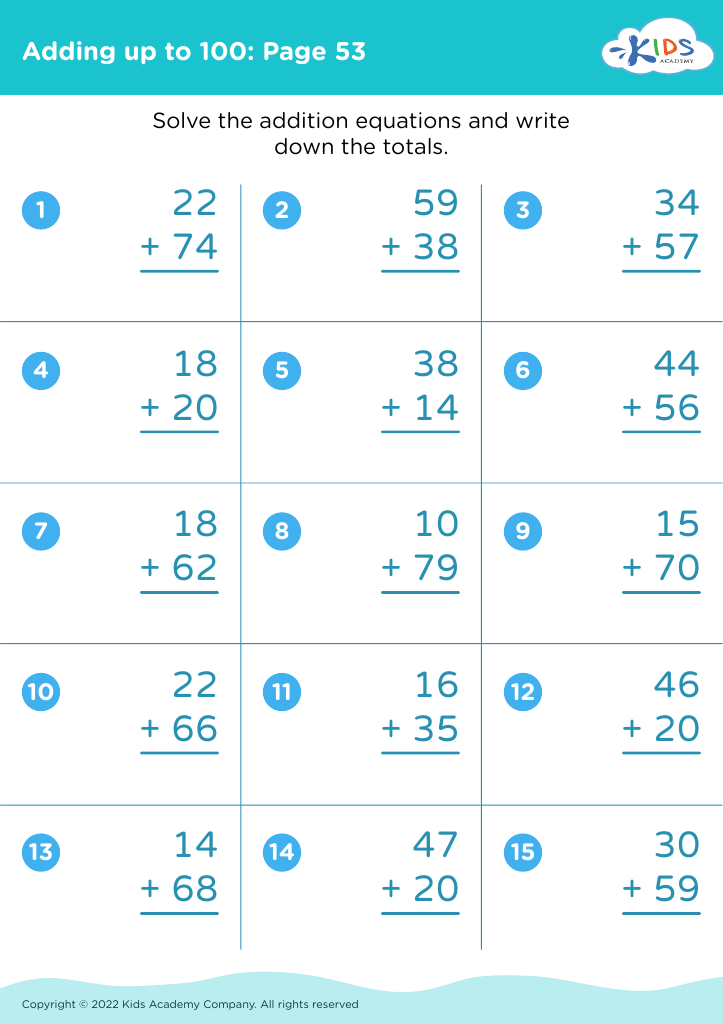
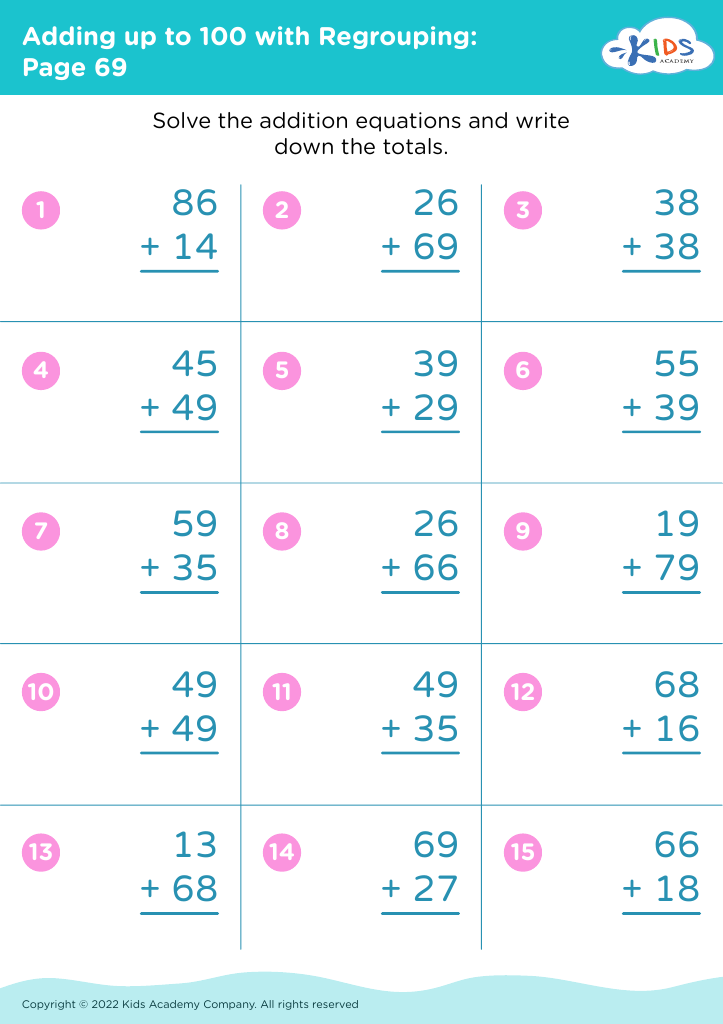
Enhance your child's understanding of fractions with our engaging "Fraction Comparison Adding Up to 100 Worksheets" designed for ages 6-8. These printable worksheets provide fun and interactive exercises to help kids practice comparing fractions while learning to add numbers up to 100. With colorful visuals and simple instructions, your little learners will develop essential math skills in a playful and effective way. Ideal for use at home or in the classroom, these worksheets cater to diverse learning styles, making math an enjoyable subject. Watch as your child gains confidence and mastery in fractions, setting a solid foundation for future math success!




%20(1).jpg)


Parents and teachers should care about teaching fraction comparison and the concept of adding up to 100 for children ages 6-8 because these foundational skills pave the way for more complex mathematical understanding. At this age, children are beginning to grasp basic concepts of number relationships and proportional reasoning. Understanding fractions helps children make sense of parts of a whole, which is critical not only in mathematics but also in real-world situations, such as cooking or budgeting.
Moreover, the idea of comparing fractions teaches kids to analyze and interpret information, enhancing their critical thinking abilities. It also serves as an introduction to concepts of equivalence and percentage, which they will encounter later in their education. Encouraging exercises that involve adding up to 100 enables clear connections to not only fractions but decimals and percentages too, fostering a more holistic understanding of the number system.
Finally, engaging with these concepts supports confidence and persistence in tackling mathematical challenges. By nurturing a love for math early on, parents and teachers set children on a path toward success in their academic journey, preparing them for future challenges in higher-level mathematics.








