Identifying equivalent fractions Adding up to 100 Worksheets for Ages 6-8
5 filtered results
-
From - To
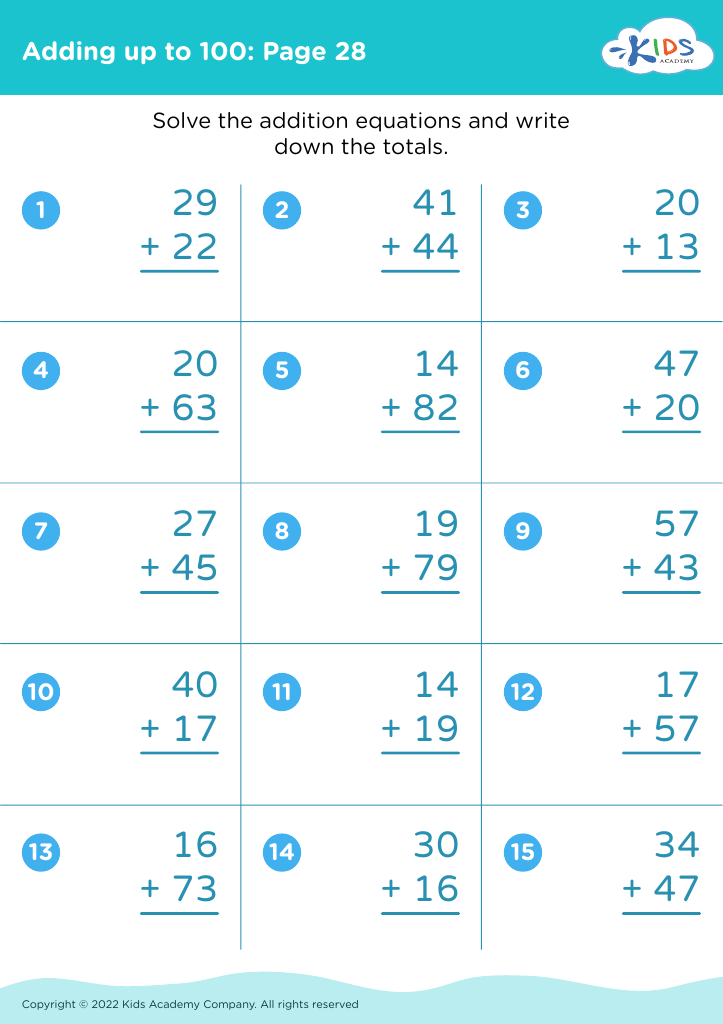
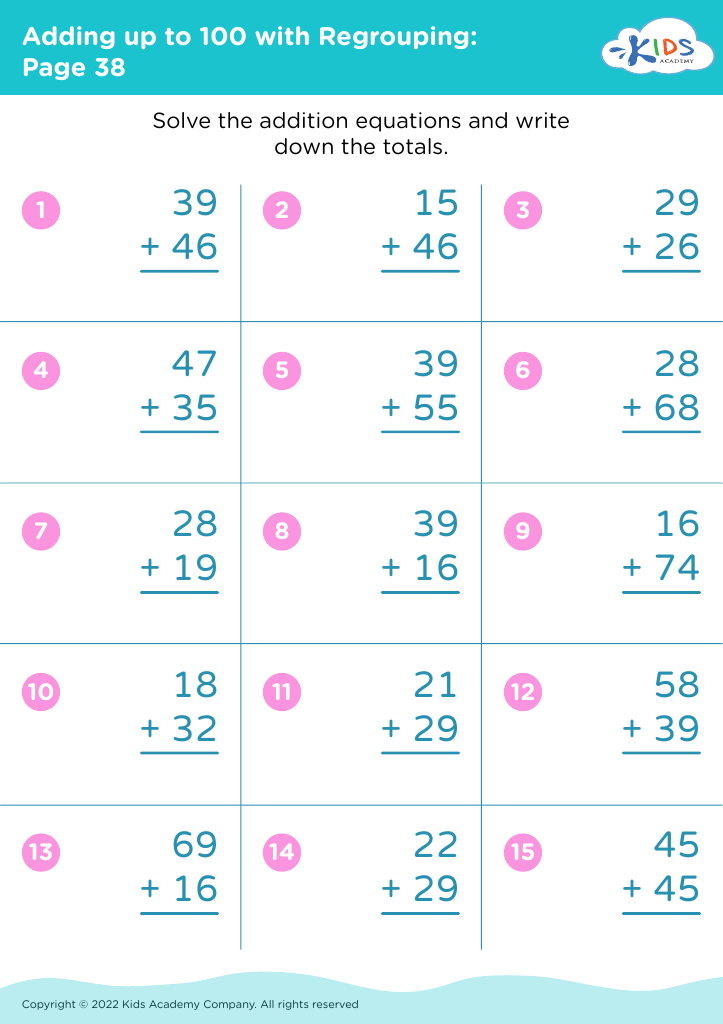
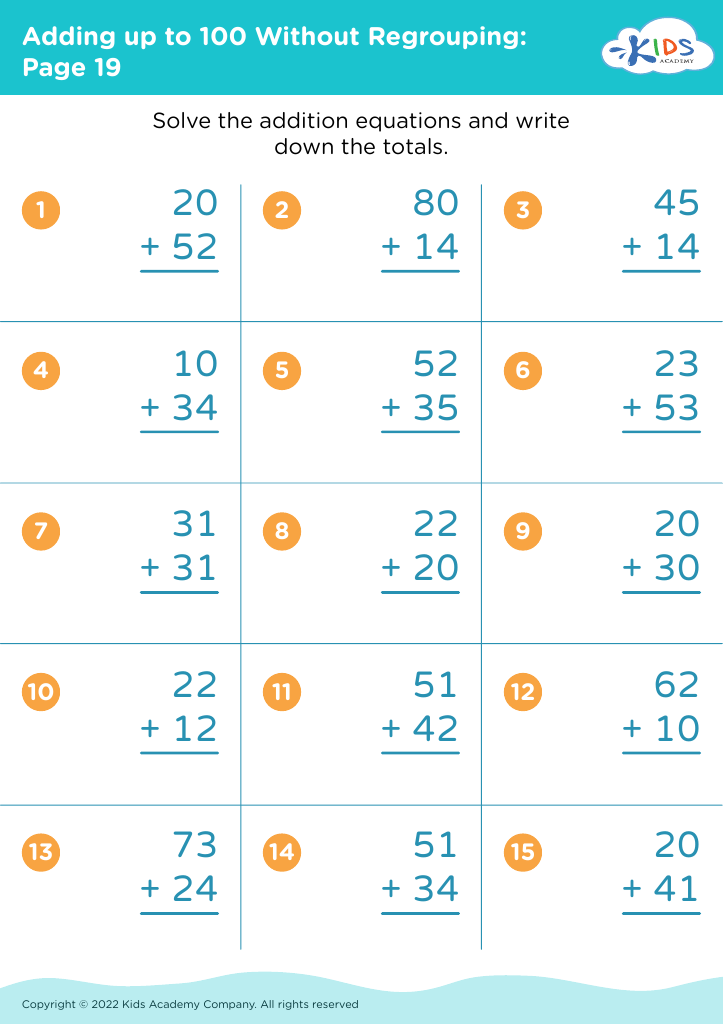
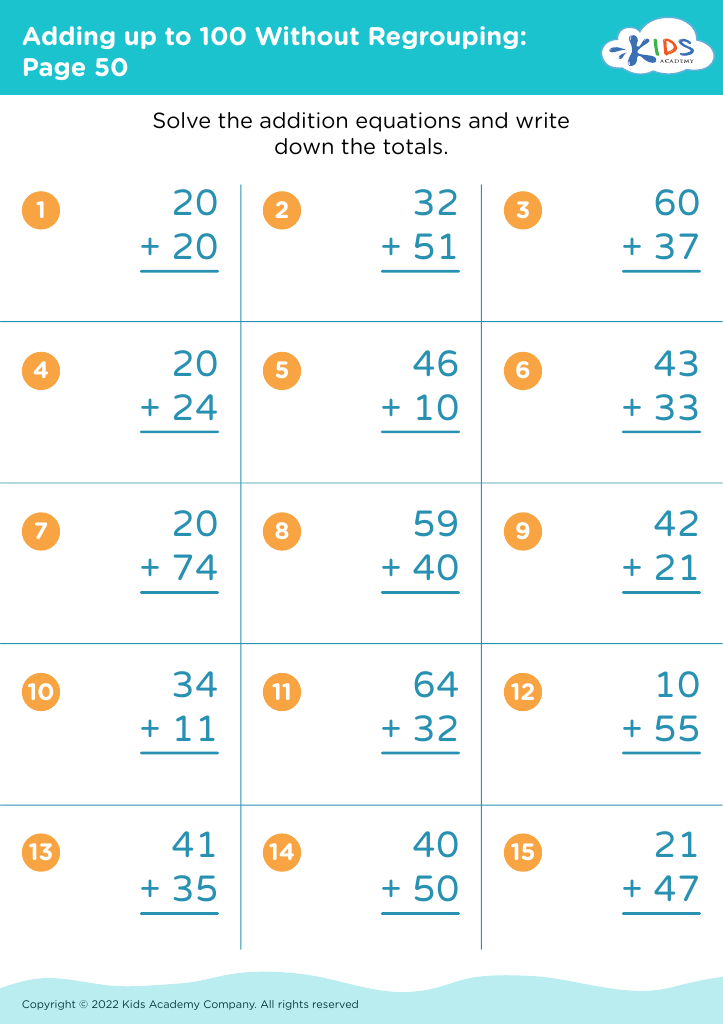
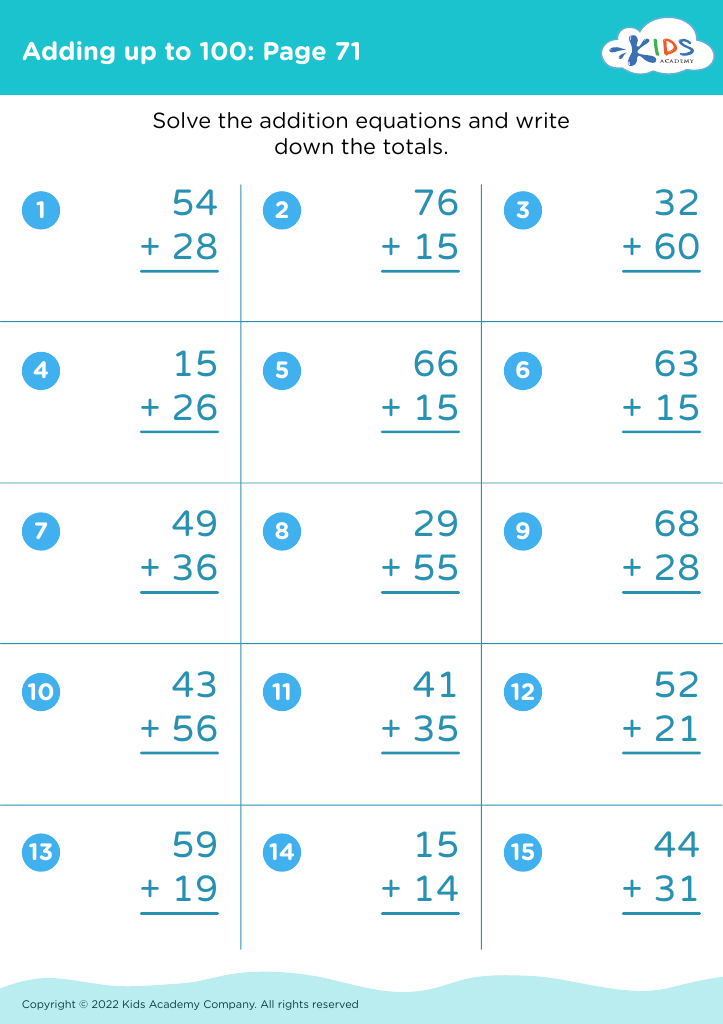
Unlock your child's potential in math with our "Identifying Equivalent Fractions Adding up to 100" worksheets designed for ages 6-8! These engaging worksheets build foundational skills, helping young learners recognize equivalent fractions while mastering addition up to 100. Our colorful, easy-to-follow activities make learning fun, encouraging children to enhance their numerical fluency and fraction comprehension. Perfect for both classroom and home learning, these resources are tailored to boost confidence and achieve your educational goals. Empower your child with the tools they need for math success today! Download now and start the educational adventure.


%20(1).jpg)




Identifying and understanding equivalent fractions, as well as mastering the concept of adding numbers up to 100, are foundational skills for children ages 6-8. Both skills play crucial roles in developing strong numerical literacy and analytical skills, which are essential for future mathematical learning and everyday problem-solving.
Fostering an understanding of equivalent fractions helps children grasp the concept of parts of a whole, crucial for learning more advanced mathematical operations involving fractions, ratios, and proportions. This skill paves the way for higher-order thinking, enabling children to simplify complex problems and recognize patterns in numbers, which are foundational for algebra and geometry in later grades.
On the other hand, proficiency in adding numbers up to 100 cultivates confidence and speed in arithmetic calculations, laying a solid groundwork for more complex mathematical operations such as multiplication and division. This competence aids in the understanding of place value and number sense, skills that are fundamental for various aspects of math literacy and real-life situations, like handling money or measuring.
Early competency in these areas helps build a positive attitude towards math, contributes significantly to academic success, and fosters a mindset geared toward problem-solving and logical reasoning. Therefore, focusing on these skills in early education is crucial for parents and teachers aiming to develop well-rounded, confident young mathematicians.








