Improve math skills Adding up to 100 Worksheets for Ages 6-8
6 filtered results
-
From - To
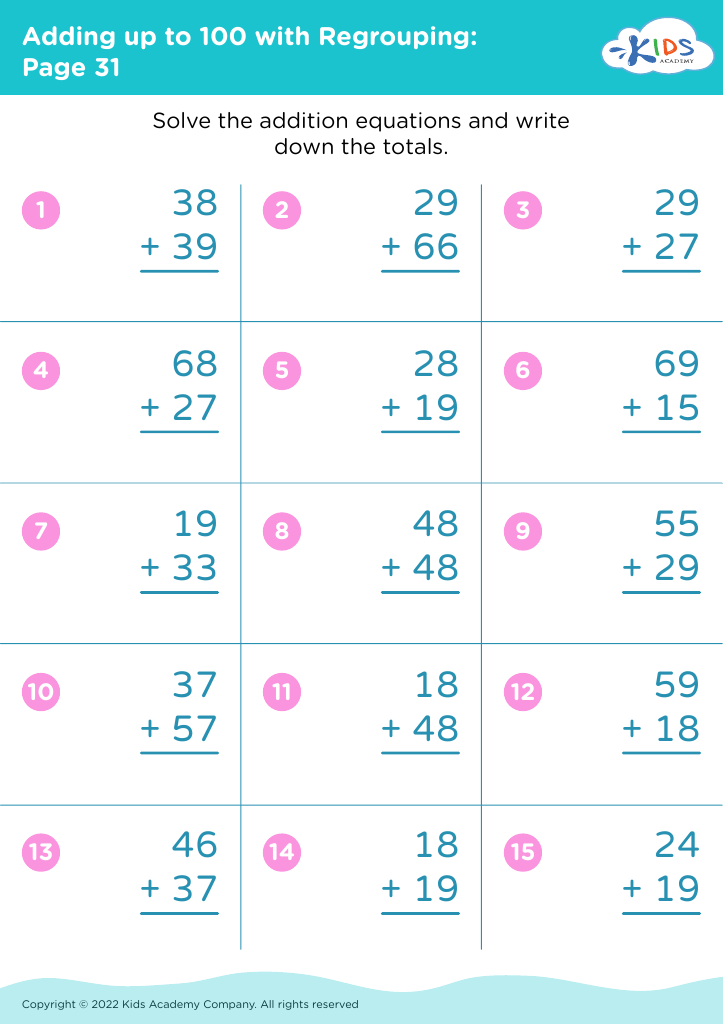
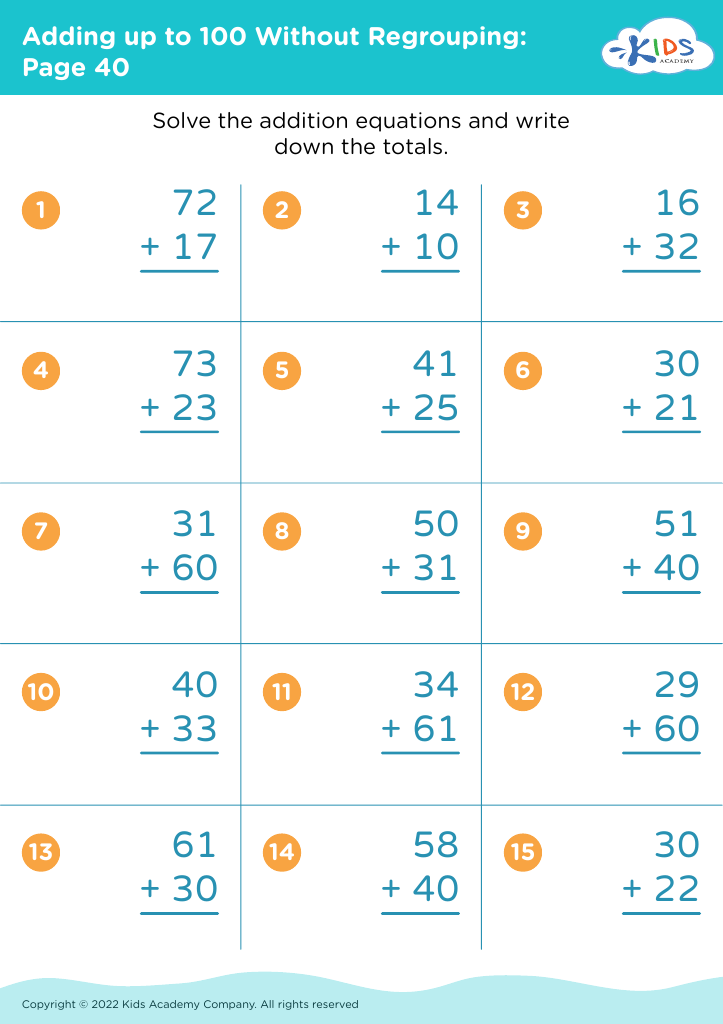
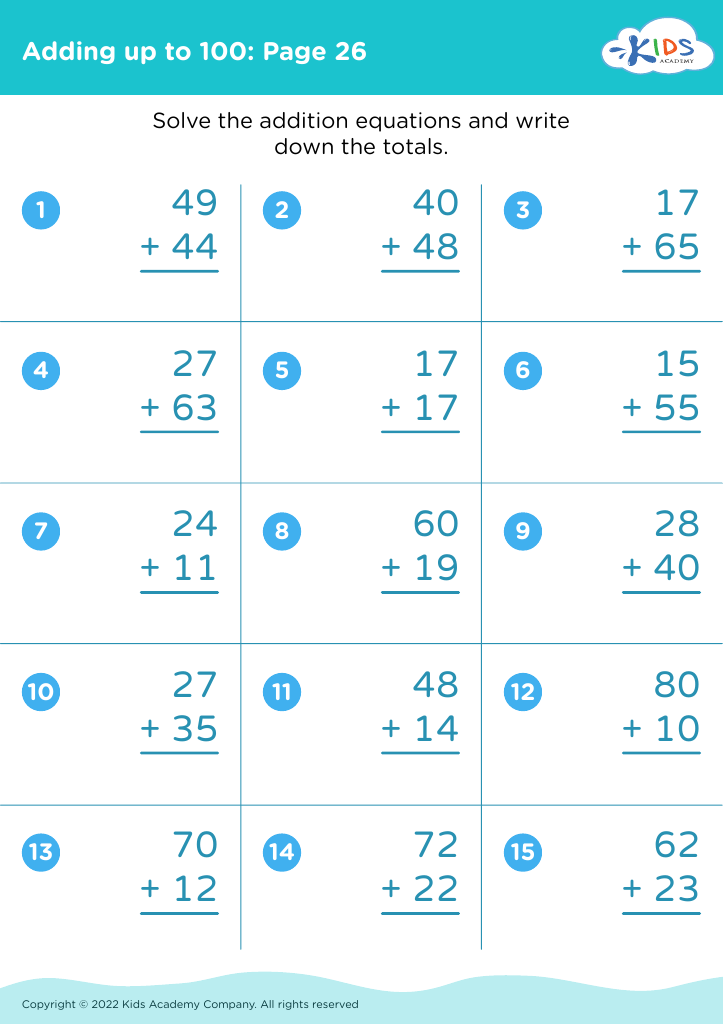
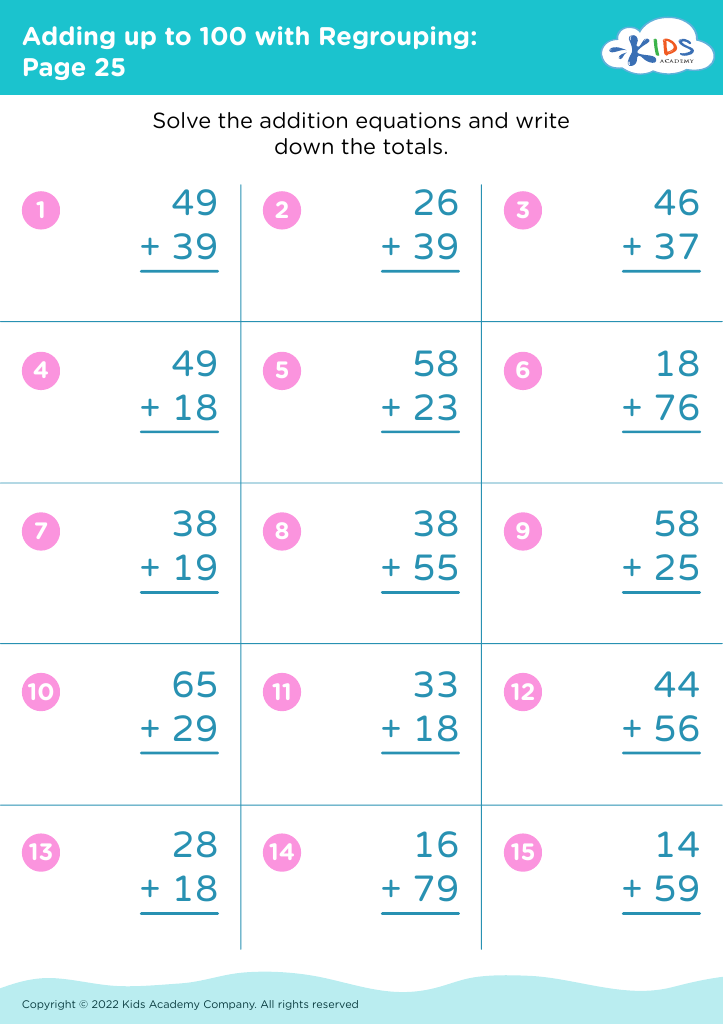
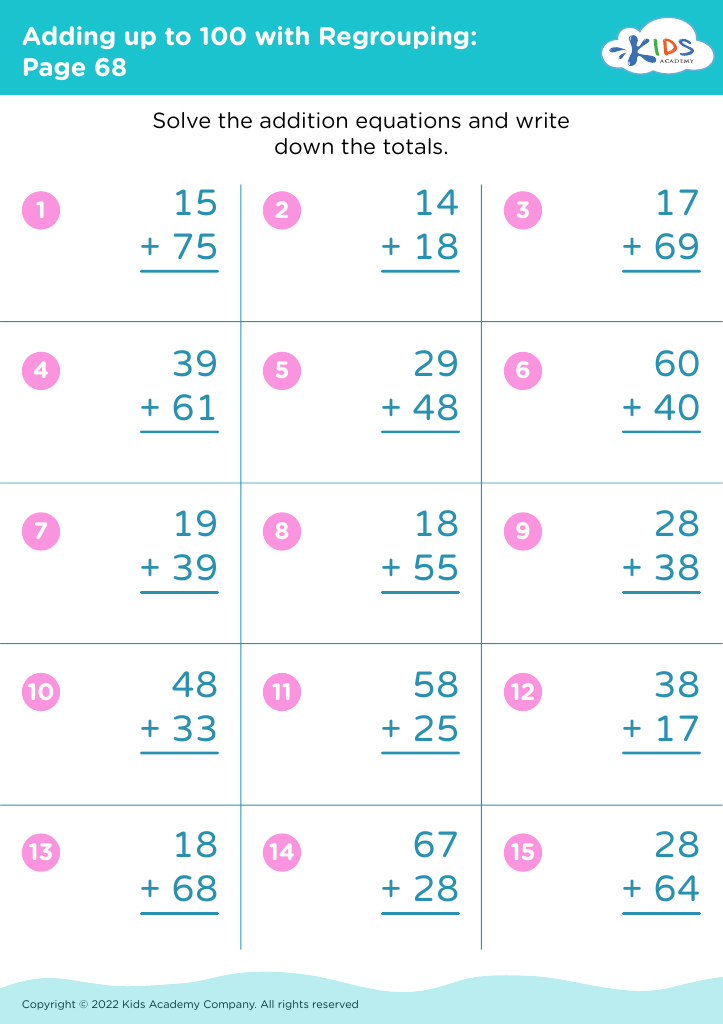
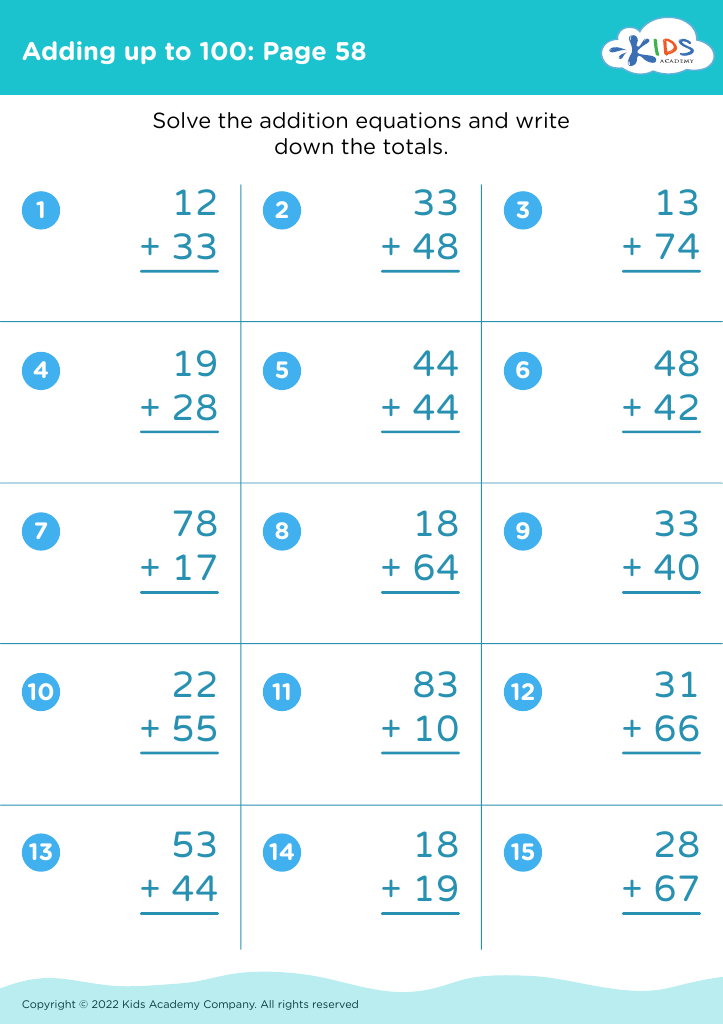
Boost your child's math prowess with our engaging "Adding Up to 100 Worksheets" designed for ages 6-8. These meticulously crafted worksheets offer a fun and interactive way for young learners to master addition and enhance their number sense. Step-by-step exercises progressively challenge students while reinforcing essential skills, ensuring they build confidence in math. Perfect for teachers and parents alike, these resources provide a balanced blend of practice and self-discovery. Encourage your child to explore the world of numbers and watch their math abilities blossom as they work towards achieving the goal of adding up to 100!



%20(1).jpg)



Improving math skills, particularly the ability to add up to 100, is essential for children aged 6-8 for several reasons. First, foundational math abilities are critical as they lay the groundwork for future learning. Mastery of addition and understanding numerical relationships bolster problem-solving skills in more complex mathematical concepts later on, like subtraction, multiplication, and division.
Second, learning to add numbers efficiently encourages confidence in children. As they practice, they become more secure in their abilities, leading to a positive attitude toward math. This boost in self-esteem can inspire a love for learning that extends beyond mathematics, helping foster a growth mindset.
Moreover, strong math skills are not just vital within the classroom; they also have real-world applications. Skills like budgeting, measuring, and assessing quantities are important in daily life. In nurturing these skills at an early age, parents and teachers can empower children for present and future challenges.
Finally, engaging children in activities that enhance their ability to add up to 100 promotes critical thinking and cognitive development. By concentrating on these early math skills, parents and teachers are not just teaching numbers; they are preparing children for success in all facets of their education and life.








